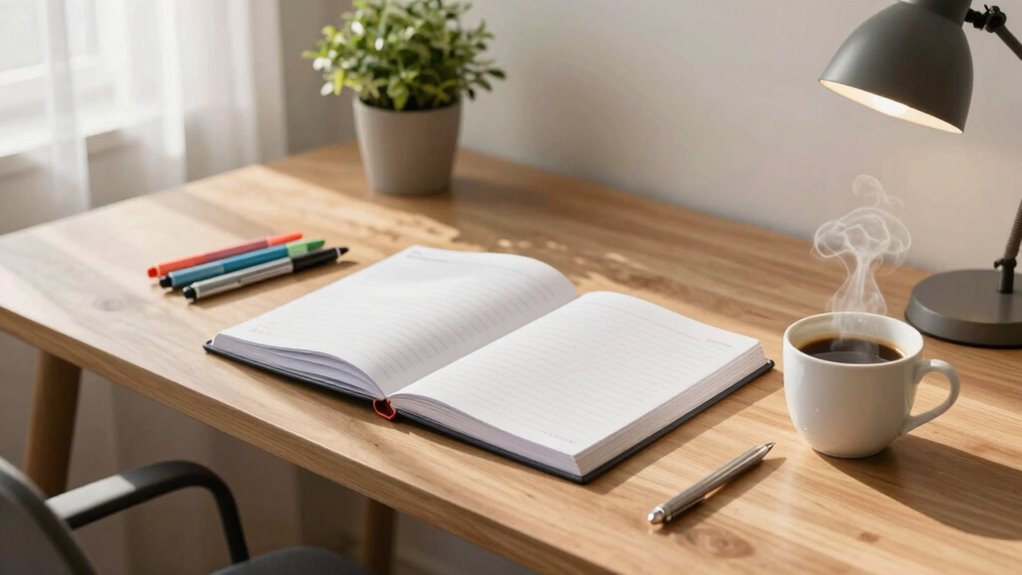

To improve your workspace for planning sessions, start by organizing your environment to minimize clutter and keep essential tools within easy reach. Use ergonomic furniture to support good posture and reduce fatigue, and set up soft, adjustable lighting to boost focus and reduce eye strain. Create boundaries by turning off notifications and silencing devices to eliminate distractions. Small adjustments can make a big difference, and if you keep exploring, you’ll discover even more ways to optimize your space.

Get your wardrobe favorites delivered free with Prime
- Fast, free delivery on millions of items
- Prime Video, Amazon Music and more included
- Member-only deals all year
Key Takeaways
- Keep your workspace tidy by organizing essential tools and minimizing visual clutter.
- Use ergonomic furniture to support proper posture and prevent discomfort during long sessions.
- Adjust ambient lighting to create a calm, well-lit environment that reduces eye strain.
- Turn off notifications and set boundaries to eliminate distractions and maintain focus.
- Incorporate inspiring elements like plants or motivational quotes to enhance motivation and creativity.
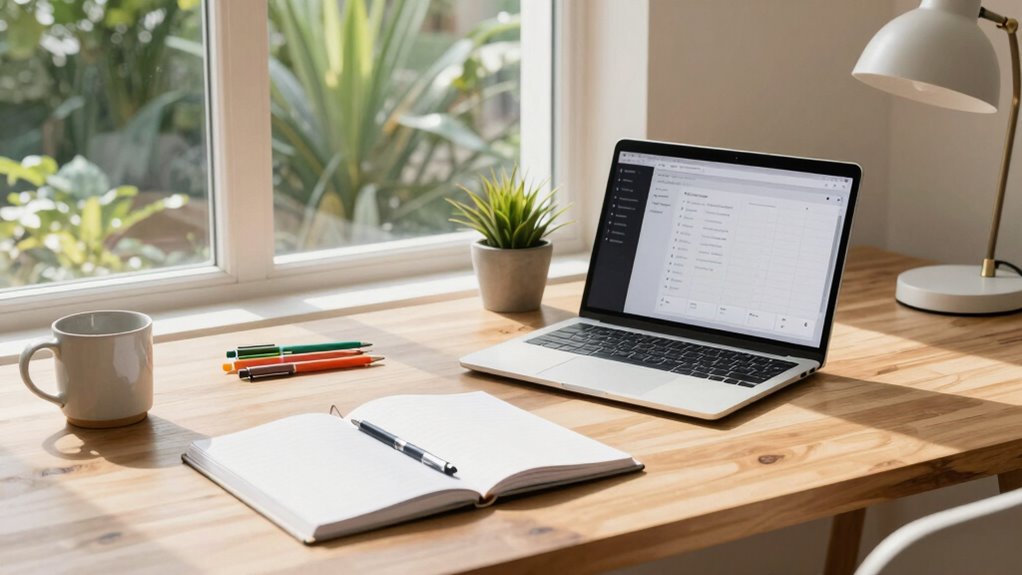
A well-organized workspace can substantially boost your productivity during planning sessions, making it easier to focus and generate ideas. When your environment is tidy and thoughtfully arranged, you’re less likely to be distracted by clutter or discomfort. One of the first steps to improving your workspace is investing in ergonomic furniture. Comfortable, supportive chairs and desks designed to align with your body help prevent strain and fatigue, allowing you to stay engaged longer. Ergonomic furniture isn’t just about comfort; it’s about creating a space that encourages good posture, which can improve your concentration and reduce the risk of aches that break your focus. When you sit properly, you can work more efficiently, especially during those extended planning sessions where mental stamina is imperative. Creating a healthy workspace environment can also boost your overall well-being and motivation.
Along with furniture, ambient lighting plays a vital role in creating an environment conducive to thinking and strategizing. Harsh, fluorescent lights can cause eye strain and fatigue, which diminishes your ability to think clearly. Instead, opt for soft, warm lighting that mimics natural daylight. Adjustable lamps or dimmable overhead lights allow you to customize the brightness based on your needs, helping you maintain alertness without feeling overwhelmed. Proper lighting not only reduces eye strain but also helps set a calm, focused mood that’s ideal for deep thinking and problem-solving. When your eyes aren’t tired or strained, your mind stays sharper and more receptive to new ideas. Incorporating appropriate lighting can significantly enhance your focus and comfort during long planning sessions. Additionally, maintaining a consistent lighting environment can help your brain associate specific conditions with focused work, improving productivity over time.
In addition to ergonomic furniture and ambient lighting, you should arrange your workspace to promote efficiency. Keep essential tools like notebooks, pens, and digital devices within easy reach, so you don’t waste time searching for them. Clear your desk of unnecessary items to minimize visual clutter, which can distract your thoughts. Consider adding inspiring elements, like motivational quotes or a small plant, to create a pleasant atmosphere that energizes you. Regularly decluttering your space ensures it remains a place where ideas flow freely. Incorporating organization strategies can further streamline your setup and boost your productivity.
Finally, don’t forget about the importance of a distraction-free environment. Turn off notifications, silence your phone, and set boundaries to protect your planning time. When your environment is comfortable, well-lit, and organized, you’ll find it much easier to focus, brainstorm, and develop actionable plans. Small adjustments like ergonomic furniture and ambient lighting can transform your workspace into a powerhouse of productivity, making your planning sessions more effective and enjoyable.
As an affiliate, we earn on qualifying purchases.
Frequently Asked Questions
What Are the Best Colors to Promote Focus During Planning?
For promoting focus during planning, you should choose colors based on color psychology that enhance visual focus. Blues and greens are ideal, as they create a calming effect and improve concentration. Avoid overly bright or distracting colors. Using these colors in your workspace helps you stay engaged and organized. Stick to a clean, balanced color scheme to optimize your planning sessions and boost productivity naturally.
How Can I Reduce Distractions in a Shared Workspace?
Imagine your workspace as a calm lake, undisturbed by ripples. To reduce distractions, manage noise levels by using noise-canceling headphones or white noise machines. Create personal zones by using dividers or designated areas, signaling clear boundaries. Encourage colleagues to keep conversations low and avoid unnecessary disruptions. These steps help you focus, making your shared workspace feel like a peaceful retreat amid the chaos.
What Technology Tools Enhance Planning Efficiency?
You can enhance planning efficiency by leveraging digital collaboration tools and project management software. These tools streamline communication, enabling real-time updates and file sharing, which keeps everyone aligned. Project management software helps you organize tasks, set deadlines, and track progress effortlessly. By integrating these technologies into your workspace, you foster smoother teamwork, reduce miscommunications, and accelerate planning processes, making your sessions more productive and focused.
How Should I Organize Supplies for Quick Access?
Sure, because rummaging through a cluttered desk is everyone’s idea of fun, right? To avoid that chaos, focus on stationery organization by using labeled containers, drawer dividers, or wall-mounted bins. Invest in supply storage solutions like stackable trays or magnetic strips for pens and scissors. Keep frequently used items within arm’s reach, and store extras elsewhere. This way, you’ll save time and keep your workspace neat, not a treasure hunt.
What Ergonomic Setups Prevent Fatigue During Long Sessions?
To prevent fatigue during long sessions, you should use an adjustable chair and an ergonomic desk. Adjust the chair height so your feet rest flat on the ground and your knees are at a 90-degree angle. Set the ergonomic desk at a height that allows your arms to relax and your wrists to stay neutral. These setups promote good posture, reduce strain, and help you stay comfortable and focused longer.
As an affiliate, we earn on qualifying purchases.
Conclusion
Creating a better workspace for planning sessions transforms chaos into clarity. Think of your workspace as a garden: the more you nurture it with organization and focus, the more your ideas will flourish. I once watched a team turn a cluttered table into a smooth-flowing hub, and their productivity skyrocketed. Remember, your environment shapes your mindset—so clear the weeds, plant fresh ideas, and watch your planning sessions bloom with success.
As an affiliate, we earn on qualifying purchases.
As an affiliate, we earn on qualifying purchases.
Fall Picks
fall essentials
As an affiliate, we earn on qualifying purchases.