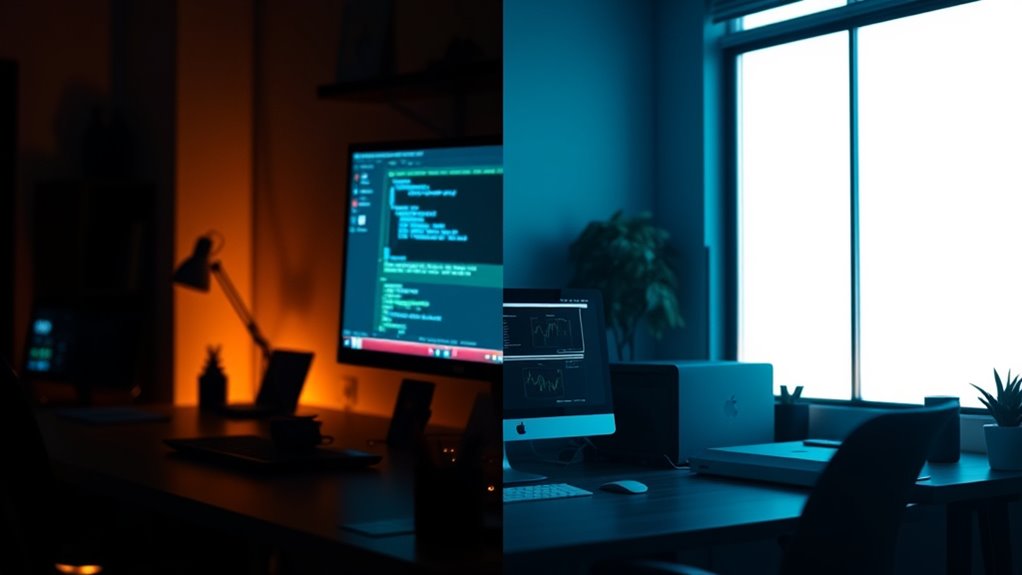

Choosing between dark mode and light mode depends on your environment and tasks. Dark mode reduces eye strain and is better in dim settings, helping you focus longer without fatigue. Light mode boosts visibility in bright spaces, making details clearer. Your comfort, habit, and workload influence which helps you work better. To discover more about optimizing your display for maximum productivity and eye health, continue exploring how each mode can serve your needs.
Key Takeaways
- Dark mode reduces eye strain in low-light environments and minimizes blue light exposure during prolonged use.
- Light mode improves visibility and readability in bright settings, enhancing focus and task accuracy.
- Personal comfort and ambient lighting influence which mode better supports long-term productivity.
- Task type matters: reading and editing may benefit from light mode, while coding or late-night work favors dark mode.
- Regularly switching modes based on environment and activity optimizes visual comfort and work efficiency.

Samsung 24" (S30GD) Essential Monitor with IPS Panel and Tilt Only Stand, 100Hz Refresh Rate, Ergonomic Design, Advanced Eye Care, Game Mode, LS24D304GANXZA
VIVID COLORS: Experience stunning colors across the entire display with the IPS panel. Colors remain bright and clear…
As an affiliate, we earn on qualifying purchases.
As an affiliate, we earn on qualifying purchases.
Understanding the Basics of Display Modes
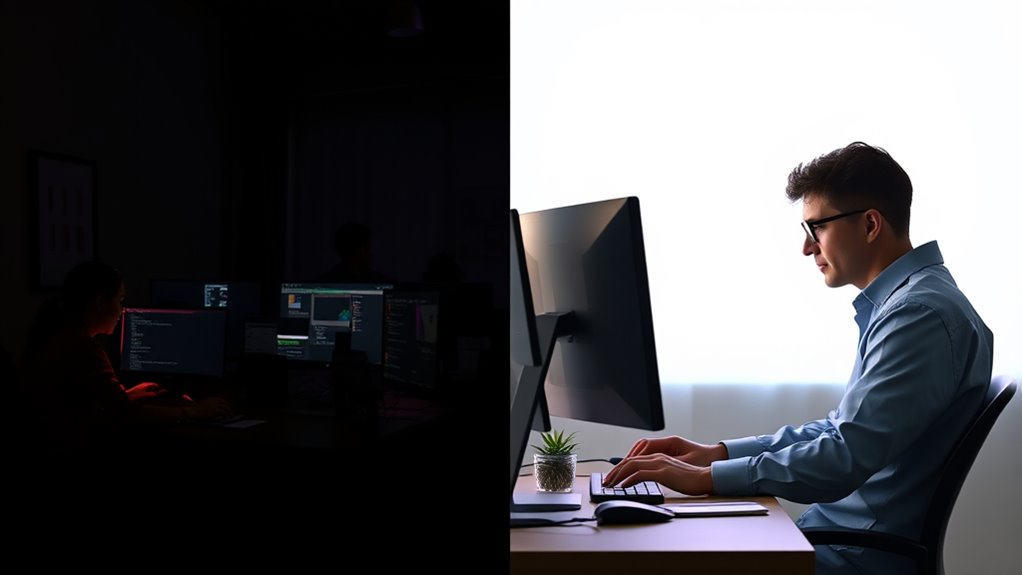
Have you ever wondered what differentiates dark mode from light mode on your devices? At its core, display modes alter how visuals appear on your screen, affecting color temperature and resolution. Dark mode features a low color temperature, producing cooler, darker backgrounds with light text, reducing glare. Light mode, on the other hand, uses a higher color temperature, creating brighter backgrounds with darker text. Display resolution remains consistent in both modes, but the way colors and brightness are presented impacts your viewing experience. Understanding these basics helps you choose the mode that best suits your environment and comfort. By adjusting color temperature, your device can minimize eye strain and improve readability, making your interaction more comfortable, especially during long periods of use. Additionally, display technology influences how these modes are rendered, affecting overall image quality and user experience, and the core traits of personality types can also influence individual preferences for display modes based on sensitivity to brightness and contrast. Moreover, being aware of software compatibility can help ensure your apps function optimally across different display modes, enhancing overall usability. Furthermore, awareness of AI security vulnerabilities can guide you in selecting devices with better safety features to protect your data. Recent studies also suggest that neural adaptation can play a role in how comfortable users feel with different display settings over time.

KTC 24 Inch Computer Monitor, FHD 144Hz Office Gaming Monitor, IPS, Adaptive-Sync, HDMI & DP Port, 1500:1 Contrast Ratio, Bluelight Filter, Tilt Adjustable, H24B9S
Full HD Resolution: KTC 24 inch monitor 144hz boasts 1920x1080p resolution and 16:9 aspect ratio, delivering stunning, high-quality…
As an affiliate, we earn on qualifying purchases.
As an affiliate, we earn on qualifying purchases.
The Impact of Brightness and Contrast on Eye Comfort
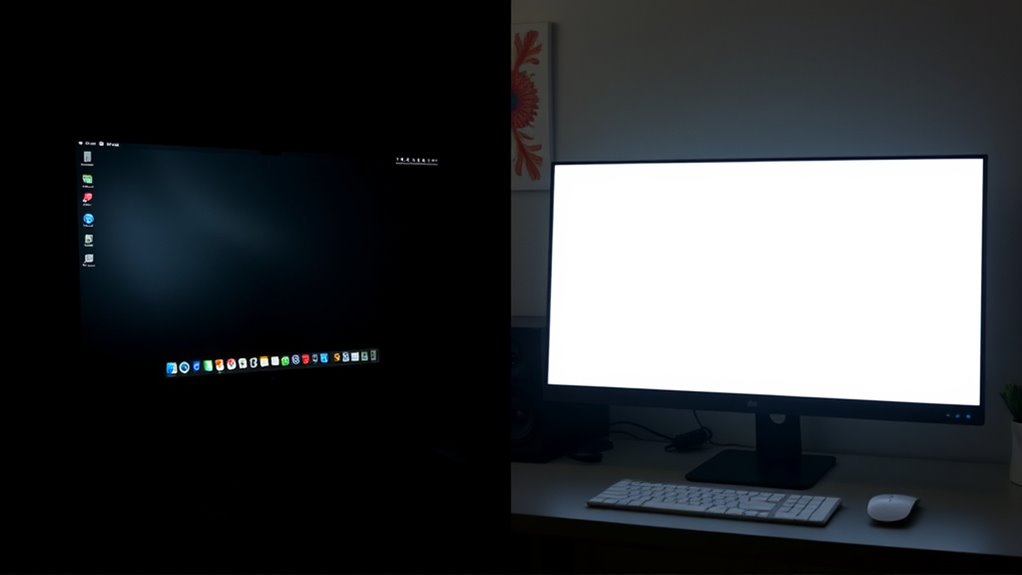
Brightness and contrast levels directly influence your eye comfort when using screens; improper settings can cause strain, fatigue, and discomfort. If the brightness is too high or too low, your eyes work harder to perceive details, affecting your overall comfort. Adjusting brightness helps optimize color perception, making colors appear more natural and reducing eye stress. Modern display technology offers features like automatic brightness adjustment to help maintain optimal settings based on ambient lighting conditions. Proper contrast plays an essential role in distinguishing text and images clearly; too little contrast can make things hard to read, while too much can be harsh. Display calibration ensures that your screen settings are fine-tuned for the best visual experience. Proper brightness adjustment guarantees your display isn’t overwhelming or underwhelming, helping your eyes stay comfortable during extended use. Additionally, understanding family photoshoot fails can remind us that unexpected visual elements can also influence perceptions, much like screen settings. Incorporating AI-enhanced display features can further optimize visual comfort by adapting to your specific viewing environment and leveraging Hyundai Tuning techniques to customize display performance.

livho High Tech Blue Light Glasses – Advanced Blue Light Blocking Computer Glasses – Screen Fatigue & UV Protection
Elevate your screen time comfort with these stylish women's/men's eyewear frame blue light blocking glasses, designed to reduce…
As an affiliate, we earn on qualifying purchases.
As an affiliate, we earn on qualifying purchases.
How Dark Mode Affects Focus and Productivity

Dark mode can enhance your focus and boost productivity by reducing visual distractions and minimizing glare. This environment helps sharpen your contrast sensitivity, making text easier to distinguish against backgrounds. When contrast sensitivity improves, your ability to quickly process information increases, supporting better cognitive focus. Additionally, comfort solutions for sofa beds and ergonomic support tools like top pillow toppers and braces can contribute to a more comfortable workspace, indirectly promoting focus. Some users find that digital workspace ergonomics are equally important in maintaining concentration during extended periods. Properly tuning your vehicle’s ECU can also reduce distractions caused by engine performance issues, further enhancing your focus on work-related tasks. Regular breaks and proper skincare routines that incorporate exfoliants like glycolic acid can also help maintain eye comfort during long work sessions. Moreover, choosing the right lighting conditions can significantly impact your ability to stay focused without straining your eyes. However, some may find that low contrast in dark mode can hinder readability for prolonged tasks. Consider this table for different scenarios:
| Situation | Effect on Focus |
|---|---|
| Well-lit environments | Enhances contrast, boosts focus |
| Low-light settings | Reduces eye strain, improves focus |
| Long reading sessions | May cause fatigue for some |

Calibrite Display Pro HL Monitor Calibration Colorimeter for LCD Mini LED and OLED Displays, Measure up to 3000 Nits, PROFILER Software, USB C with Adapter, Validation/Color Uniformity Tools
SPECIFICATIONS: HL high luminance sensor colorimeter measures up to 3000 nits, calibrates and profiles LCD mini LED OLED…
As an affiliate, we earn on qualifying purchases.
As an affiliate, we earn on qualifying purchases.
The Benefits of Light Mode in Bright Environments
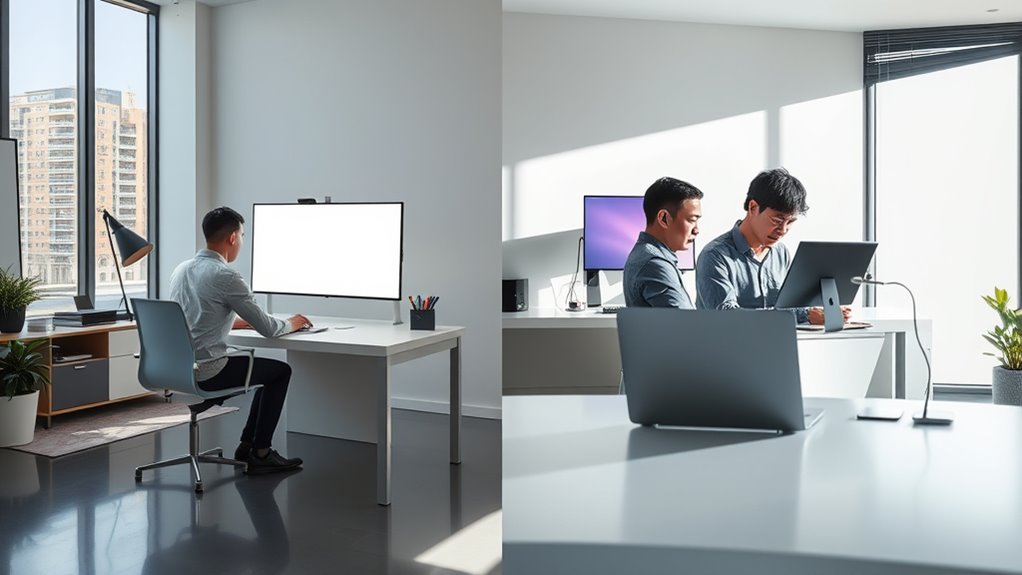
In bright environments, light mode offers clear advantages by making screens easier to read and reducing eye strain. Its high contrast enhances color accuracy, which is essential when working with detailed images or documents. Proper display calibration ensures that colors appear consistent and true to life, making light mode ideal for tasks requiring precise visuals. You’ll notice your screen remains clear even in well-lit settings, preventing glare and reflections that can hinder visibility. This setup minimizes the need to squint or strain your eyes, helping you stay comfortable during long work sessions. Additionally, understanding the importance of display calibration can further optimize your viewing experience in various lighting conditions. Incorporating visual comfort features can also significantly reduce fatigue and improve overall productivity. Paying attention to ambient lighting in your workspace can further enhance screen clarity and reduce discomfort, as proper lighting helps to prevent glare and reflections, making it easier to focus on your work.
Visual Strain and Long-Term Eye Health Considerations
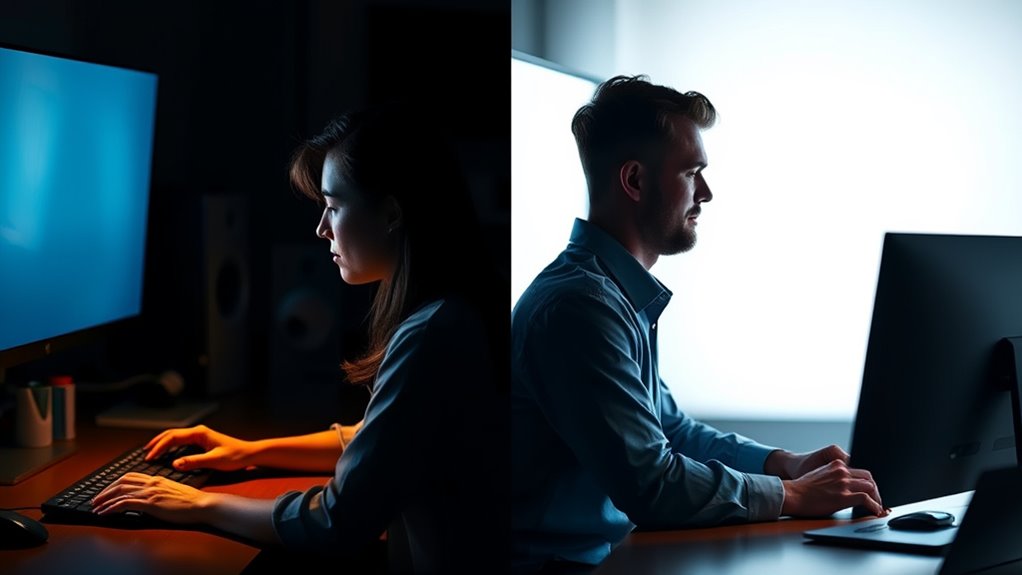
Prolonged exposure to screens can lead to visual strain, causing discomfort and fatigue in your eyes. Blue light exposure from screens contributes to this strain, potentially disrupting your sleep patterns and harming your eye health over time. When you stare at bright or high-contrast screens for extended periods, your eye muscles work harder to focus, resulting in eye muscle fatigue. Dark mode can reduce blue light exposure, easing the strain on your eyes and helping prevent long-term damage. Additionally, using screen filters or blue light glasses can further protect your eyes from harmful light exposure. A well-designed display can also minimize eye strain by optimizing contrast and brightness levels. Considering display settings such as adjusting contrast and brightness can significantly improve comfort during extended screen time. Regularly practicing the 20-20-20 rule—looking at something 20 feet away for 20 seconds every 20 minutes—can help reduce eye strain. Conversely, light mode’s brightness may increase eye strain in low-light conditions. To protect your vision, it’s essential to take regular breaks, adjust screen brightness, and consider modes that minimize eye muscle fatigue. Maintaining good eye habits supports your long-term eye health and aligns with best practices for eye care.
Compatibility and Accessibility Features in Both Modes
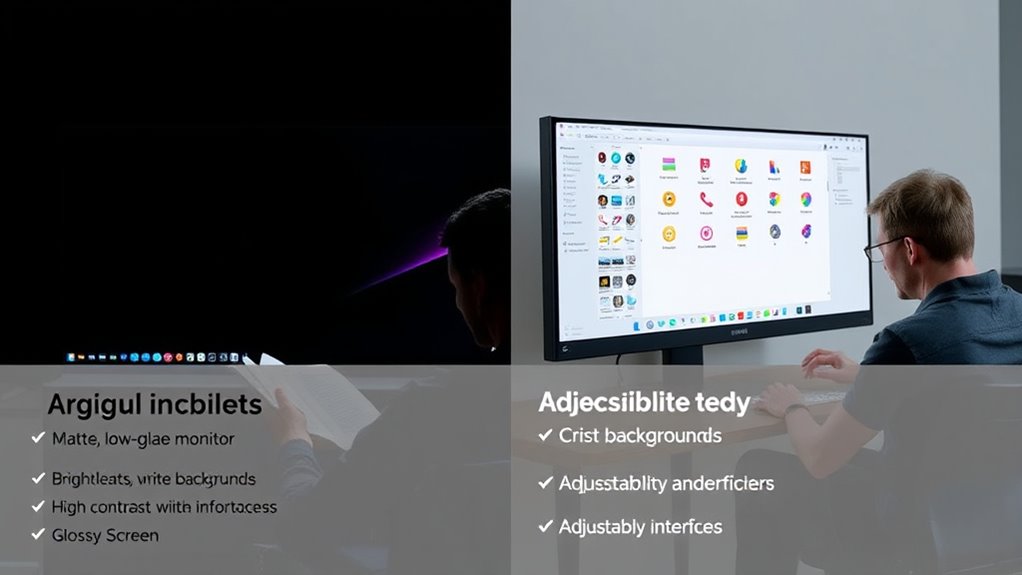
Both dark and light modes offer essential features to improve accessibility, but their effectiveness depends on compatibility. You’ll want to check if your screen reader works seamlessly with each mode, and if color contrast options are customizable to suit your needs. Additionally, support for keyboard navigation can make a big difference in how easily you interact with your device, regardless of the mode you choose. Incorporating visualization techniques can help you better adapt to different display settings and enhance your overall productivity.
Screen Reader Compatibility
Screen reader compatibility is essential for ensuring that users with visual impairments can navigate your device or app effectively. Both dark and light modes support accessibility features like voice recognition and gesture control, but their effectiveness varies. Dark mode often reduces glare, making it easier for screen readers to interpret text, while light mode provides clearer contrast for some visual cues. Compatibility depends on how well these modes integrate with screen readers like JAWS or NVDA.
| Feature | Dark Mode | Light Mode |
|---|---|---|
| Voice Recognition | Works well with minimal glare | Works well with high contrast |
| Gesture Control | Slightly less responsive in dark | Slightly more responsive in light |
Color Contrast Options
Color contrast options play a crucial role in confirming accessibility and readability across dark and light modes. When choosing between modes, pay attention to how colors interact to maintain proper color harmony, which reduces eye strain and enhances focus. Good contrast ensures text stands out clearly from backgrounds without causing discomfort, supporting visual ergonomics. Both modes offer adjustable contrast settings, allowing you to tailor your experience to your needs. Dark mode often emphasizes high contrast with lighter text on dark backgrounds, while light mode favors darker text on light backgrounds. Proper contrast not only improves readability but also makes it easier to distinguish interface elements, especially for users with visual impairments. Ultimately, effective color contrast options help you work efficiently while reducing fatigue.
Keyboard Navigation Support
Keyboard navigation support is vital for guaranteeing that users can efficiently move through interfaces without relying on a mouse. Both dark and light modes should seamlessly support keyboard shortcuts, allowing you to switch between menus, open files, and navigate pages quickly. Cursor visibility plays a key role in this process, helping you keep track of your position on the screen, especially in dark mode where contrast issues could obscure the cursor. Good accessibility features ensure that your keyboard commands work consistently across modes, reducing frustration and increasing productivity. Whether you prefer dark or light mode, check that the interface highlights focus areas clearly and maintains responsive cursor visibility. This support is essential for a smooth, efficient workflow and for users with limited mobility or visual impairments.
Personal Preferences and Habitual Use
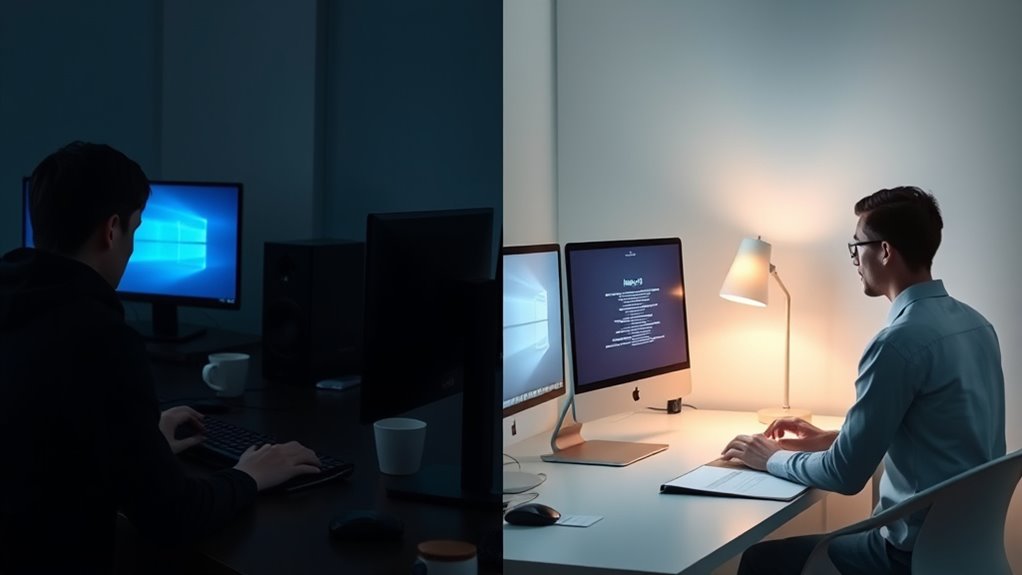
Your comfort and familiarity with a mode often shape your choices, making it feel more natural to stick with what you know. Routine and consistency play a big role in how you experience your device daily. Considering these personal habits can help you decide which mode suits your preferences best.
Comfort and Familiarity
Many people stick with their preferred display mode because it feels comfortable and familiar. Your choice often hinges on visual comfort—what reduces eye strain and feels easiest to look at for long periods. If you’ve been using light mode for years, your eyes are accustomed to the brighter background, making it easier to focus without discomfort. Conversely, if you prefer dark mode, your eyes become familiar with its softer contrast, reducing fatigue in low-light settings. User familiarity plays a big role; sticking with what you know helps you work more efficiently without the distraction of adjusting to new visuals. This comfort can boost productivity because you don’t have to consciously think about your display, allowing you to concentrate on your tasks instead.
Routine and Consistency
Routine and consistency often reinforce your display preferences, making it easier to stick with what feels familiar. If you’ve developed a habit of using dark mode, your eyes and brain associate it with productivity and reduced strain, influenced by color psychology. Similarly, light mode might evoke alertness and clarity, reinforcing your comfort with it. Ergonomic considerations also play a role—consistent use of one mode can help your eyes adjust better over time, reducing fatigue. Sticking to a routine minimizes the cognitive load of constantly switching, allowing your visual system to adapt. Ultimately, personal preferences shape your habitual use, so choosing a mode you can consistently rely on helps you work more efficiently and comfortably over the long term.
The Role of Ambient Lighting in Mode Effectiveness
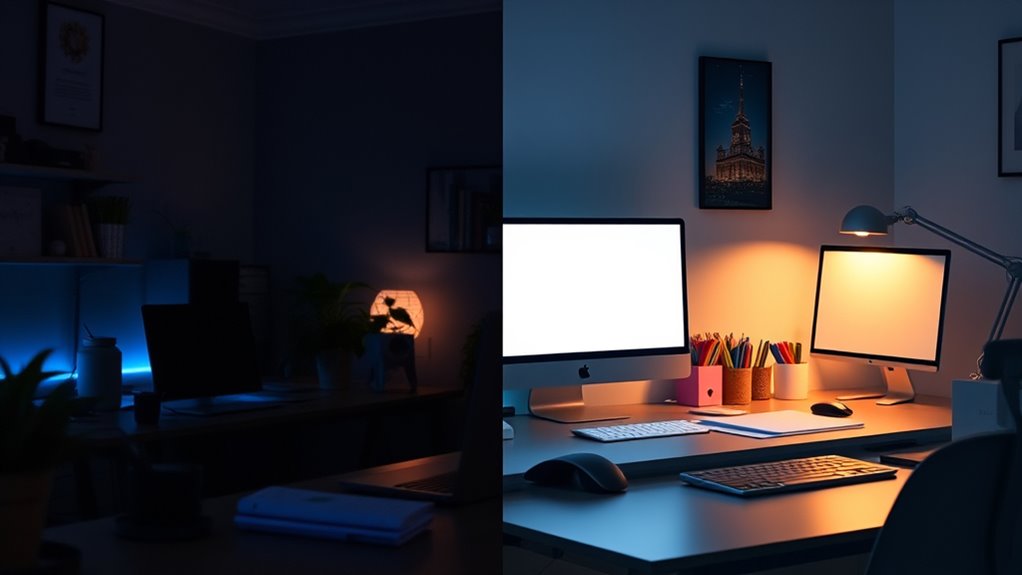
Ambient lighting plays a essential role in determining how effective dark and light modes are, as it directly influences screen visibility and user comfort. Good workspace illumination reduces glare and prevents eye strain, making it easier to switch between modes comfortably. In brightly lit environments, light mode tends to be more effective because it enhances screen clarity and readability. Conversely, in dimly lit settings, dark mode can reduce eye fatigue and create a more comfortable viewing experience. Your choice of mode should consider ambient lighting conditions; adjusting your workspace illumination accordingly can improve focus and reduce discomfort. Ultimately, understanding how ambient lighting interacts with your screen mode helps you optimize your environment for better productivity and comfort.
Research Findings on Performance and Mood
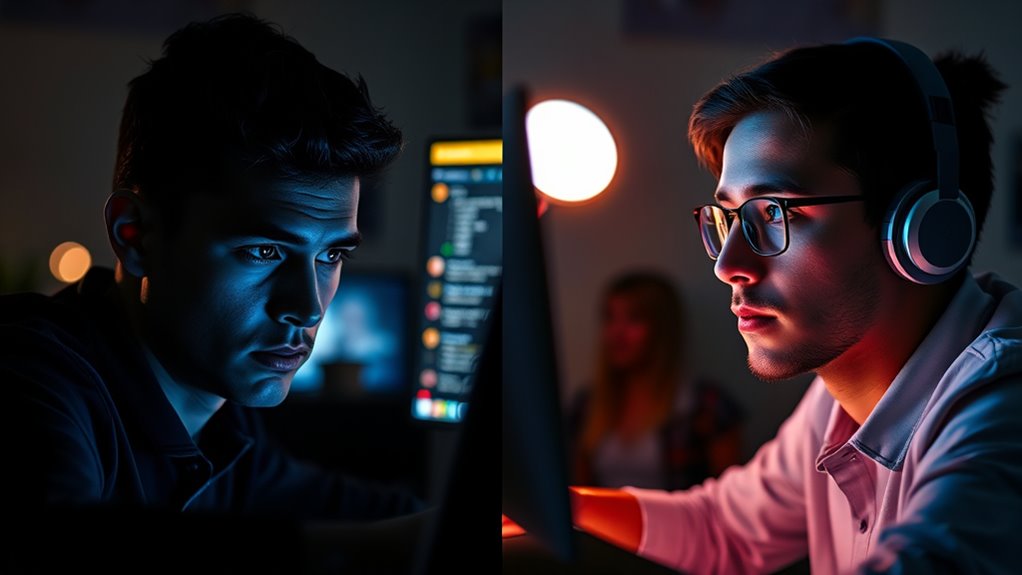
Research indicates that your choice of screen mode can notably impact both your performance and mood. Color perception plays a vital role, as dark mode reduces glare and minimizes eye strain, helping you stay focused. Light mode, on the other hand, can enhance visibility in bright environments, but might increase cognitive load by demanding more effort to distinguish details. Studies show that users often experience a more positive mood with dark mode, feeling calmer and less fatigued over extended periods. Conversely, some find light mode boosts alertness and clarity, especially during daytime tasks. Ultimately, your mood and performance depend on how well the mode aligns with your environment and cognitive needs, affecting how smoothly you process information and maintain motivation.
Tips for Choosing the Best Mode for Your Work Style
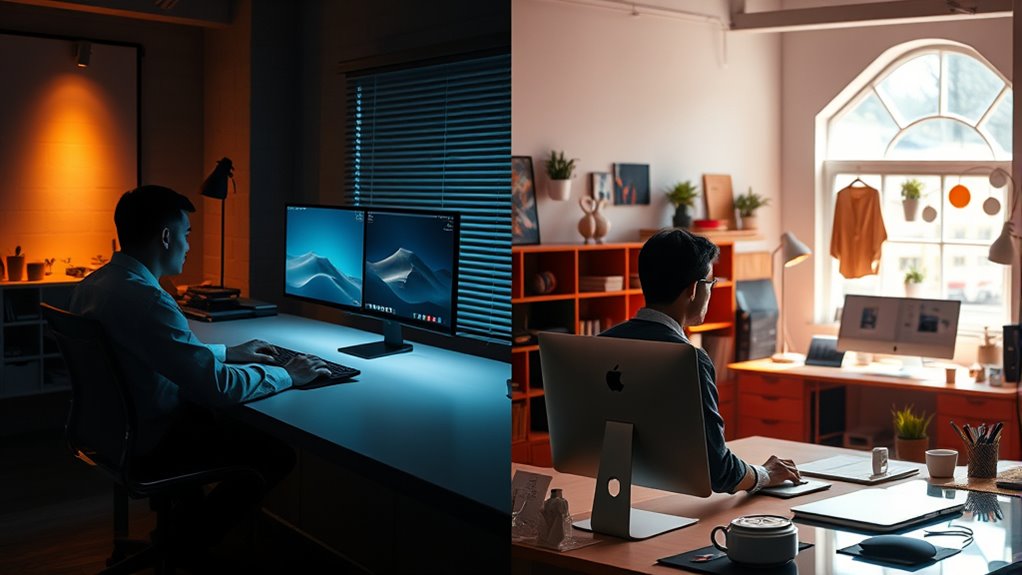
Choosing the right screen mode depends on understanding your work environment and personal preferences. Consider how different color schemes impact your focus and comfort. If you work late or in dim lighting, dark mode can reduce eye strain and improve interface design clarity. Conversely, if your workspace is bright, light mode may enhance visibility and reduce fatigue. Think about your typical tasks—reading, editing, or coding—and choose a mode that complements those activities. Experiment with both modes to see which feels more natural. Pay attention to how each mode affects your mood and productivity. Ultimately, selecting the best mode is about aligning interface design with your work style to boost efficiency and comfort.
Frequently Asked Questions
Can Switching Modes Improve Overall Computer Performance?
Switching modes can improve your overall computer performance by reducing eye strain and enhancing visual comfort. When you choose dark mode, your eyes work less hard in low-light environments, preventing fatigue. Conversely, light mode can be better in bright settings. By selecting the mode that suits your environment and preferences, you can work more efficiently, stay focused longer, and decrease discomfort, ultimately boosting your productivity.
Are There Specific Tasks Better Suited for Dark or Light Mode?
You’ll find that dark mode is better for tasks involving reading comfort and reducing eye strain, especially in low-light environments. It helps you focus on screens longer without discomfort. On the other hand, light mode suits tasks requiring high contrast, like detailed document editing or color work, making text clearer and easier to read. Choose based on your environment and task type to optimize your comfort and productivity.
How Do Display Modes Affect Battery Life on Mobile Devices?
Using dark mode can considerably extend your device’s battery life because it reduces screen brightness and minimizes blue light emissions. When you switch to dark mode, your display consumes less power, especially on OLED screens, helping your battery last longer. This means you can work longer without needing to recharge, making dark mode a practical choice if you want to preserve your device’s battery life and reduce eye strain.
Do Certain Age Groups Prefer One Mode Over the Other?
You might notice age preferences vary, with younger users often favoring dark mode for its sleek look and reduced eye strain, while older users may prefer light mode for clearer readability. Generational differences influence these choices, as comfort and visual clarity play key roles. Your preferences may change over time, but understanding these trends helps you choose the display mode that best suits your needs for better focus and less fatigue.
What Software or Apps Automatically Adapt to Ambient Lighting?
Many apps and software automatically adapt to ambient lighting through adaptive brightness and automatic mode switching. You’ll find features in operating systems like Windows and macOS, as well as apps like Google Photos and WhatsApp, that detect your environment and adjust display settings accordingly. This helps reduce eye strain and improves visibility, so you can work comfortably without manually changing your display modes all the time.
Conclusion
Choosing between dark and light mode depends on your environment and preferences. Did you know that 60% of users report reduced eye strain with dark mode? Ultimately, experiment to see what boosts your focus and comfort. Whether you prefer the sleekness of dark mode or the clarity of light, the key is finding what helps you work best. Your eyes—and your productivity—will thank you for making an informed choice.