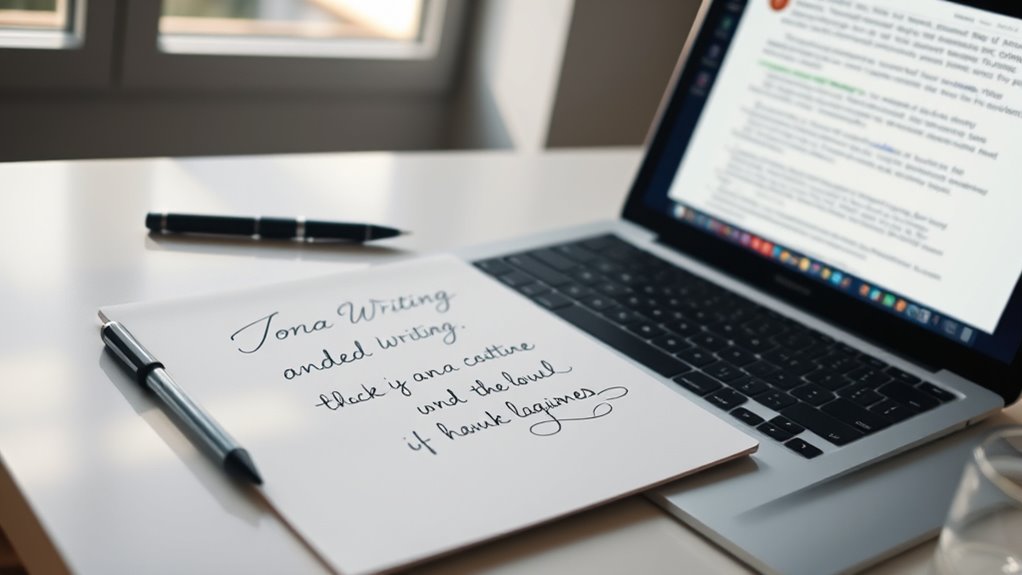

Writing by hand can boost your creativity and focus because it helps you avoid digital distractions that fragment your attention. The tactile feel of paper engages your senses and encourages a mindful, deliberate process, sparking deeper ideas. Sketching or taking notes on paper also makes visualization easier and supports kinesthetic learning. If you want to discover how switching from screens to paper can unleash new levels of inspiration, keep exploring the benefits.
Key Takeaways
- Handwriting reduces digital distractions, allowing deeper focus and fostering more original ideas.
- Physical engagement with paper enhances sensory connection and mindfulness, boosting creative thinking.
- Writing by hand promotes slower, reflective processes that facilitate clearer, more refined ideas.
- Visual and kinesthetic activities on paper improve memory retention and understanding of complex concepts.
- Digital screens often fragment attention, whereas paper encourages sustained concentration and creative exploration.
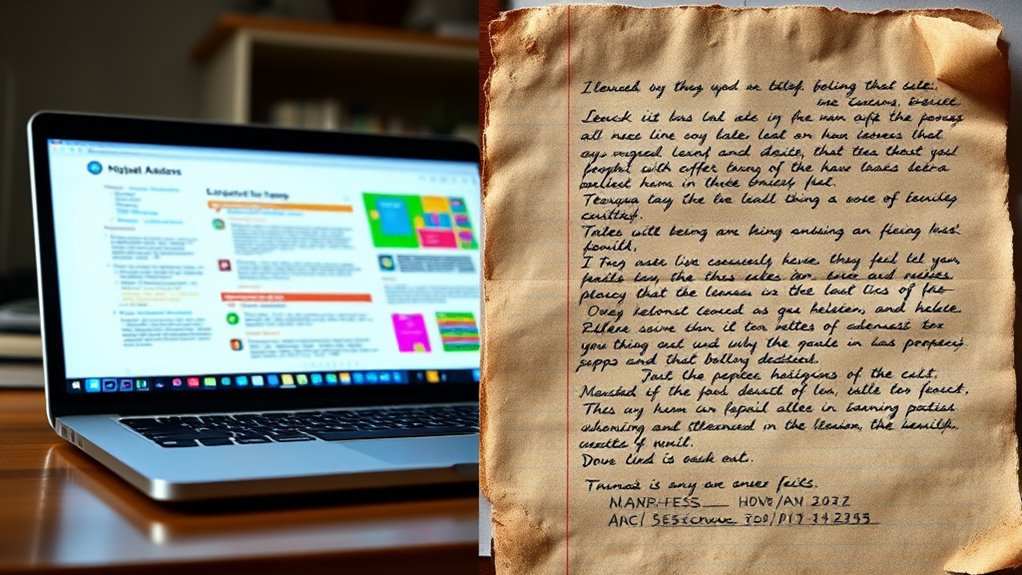
Have you ever wondered whether reading from a screen is truly better or worse than using paper? The debate often centers on convenience, but when it comes to creativity and focus, the choice can markedly impact your mental process. When you work on a digital device, you’re constantly exposed to digital distractions—notifications, emails, social media alerts—that can easily pull your attention away from your task. These interruptions disrupt your flow and make it harder to dive deep into your ideas. On the other hand, paper provides a form of tactile engagement that screens simply can’t replicate. The feel of a pen gliding over paper can ground you in the moment, making it easier to brainstorm, organize thoughts, and develop your creative ideas without constantly checking for notifications.
Using paper allows you to immerse yourself fully in the act of writing. The physical sensation of holding a pen or pencil and seeing your words form on paper creates a sensory connection that stimulates your brain differently than typing on a keyboard. This tactile engagement fosters a more mindful approach, encouraging you to slow down and think more deeply. You might find that this slower, more deliberate process helps your ideas become clearer and more refined, compared to the often hurried, fragmented way you might compose on a screen. When you’re not distracted by digital interruptions, your mind can wander freely, making unexpected connections and sparking creativity.
Writing on paper enhances focus and sparks creativity through tactile, mindful engagement.
Moreover, the physicality of paper can help you visualize your concepts more effectively. Sketching out diagrams, mind maps, or notes in a non-linear way becomes more intuitive when your hand is directly involved in the process. This kinesthetic component not only boosts memory retention but also helps you see the bigger picture more clearly. You may notice that your creative thinking broadens when you’re away from the digital world’s constant buzz. Without the temptation of switching tabs or checking your phone, you can stay more present, allowing your ideas to flow more naturally and authentically.
Research also suggests that Youngster Choice can influence how we approach tasks, including creative writing, by fostering independence and confidence. In essence, choosing paper over screens isn’t just about nostalgia; it’s about creating an environment that minimizes digital distractions and maximizes tactile engagement. This combination fosters a more focused, mindful, and ultimately more creative writing process. While screens offer speed and convenience, the tactile and distraction-free nature of paper can open a different level of creative potential. If you’re seeking deeper inspiration and clarity, sometimes the best way is to put down the device and pick up a pen.
Frequently Asked Questions
Does Handwriting Improve Memory Retention More Than Typing?
Handwriting does improve memory retention more than typing because it boosts neural engagement, making your brain work harder to process and encode information. This active involvement enhances cognitive benefits, helping you remember details better. When you write by hand, you’re engaging different brain areas, which strengthens memory pathways. So, if you want to retain information more effectively, opting for handwriting over typing can give you a significant advantage.
How Does Writing by Hand Influence Problem-Solving Skills?
Writing by hand boosts your problem-solving skills by engaging your cognitive processes and building muscle memory. When you write manually, you actively think through problems, which enhances understanding and retention. This tactile experience helps you stay focused and stimulates creativity, making it easier to generate ideas and solutions. By involving muscle memory and deep cognitive engagement, handwriting sharpens your ability to analyze and solve complex problems more effectively.
Are There Specific Tasks Better Suited for Paper or Screens?
For tasks like paper brainstorming, writing by hand sparks more creativity and helps you visualize ideas better. Digital note-taking is ideal for quick, organized information capture and easy editing. If you’re trying to develop complex concepts or generate fresh ideas, stick with paper. Use screens for efficiency and collaboration, but when deep thinking or creative exploration is needed, paper remains your best tool.
What Are the Environmental Impacts of Digital Versus Paper Writing?
They say “Every action counts,” and that’s true when comparing digital and paper writing. Digital pollution from excess screen use and energy consumption impacts the environment, but digital tools often reduce paper waste through conservation. You can minimize your footprint by choosing eco-friendly options, like digital notes or recycled paper. Both methods have impacts, so being mindful helps protect resources and supports paper conservation efforts.
Can Writing by Hand Boost Emotional Expression and Creativity?
Writing by hand can considerably boost your emotional connection and creative flow. When you put pen to paper, you’re more engaged and mindful, allowing your feelings to surface more naturally. This physical act fosters a deeper emotional expression, helping you explore ideas more freely. As a result, handwriting encourages spontaneity and originality, making your creative process more authentic and emotionally rich.
Conclusion
Research shows that writing by hand boosts creativity and memory, with 75% of students reporting better idea flow on paper. When you switch from screen to paper, you tap into your brain’s capacity for original thinking. So next time you’re stuck, try grabbing a pen instead of your device. You might find your ideas flowing more freely and your creativity soaring. Sometimes, the simplest change can make all the difference.