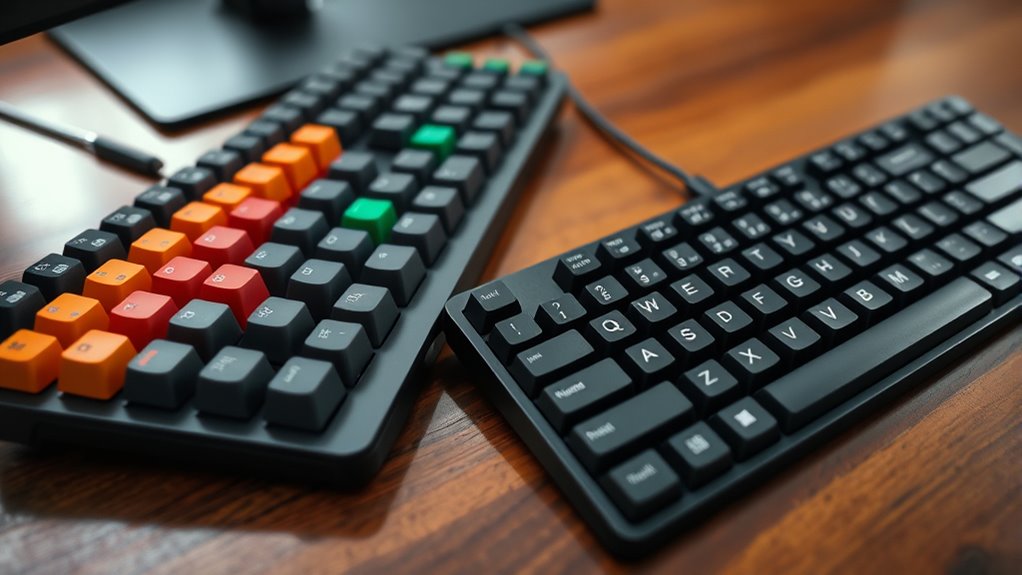

Dvorak and Colemak are designed to offer a more ergonomic typing experience by reducing finger movement and supporting natural hand positions. Many users find they experience less fatigue and strain after switching, making typing more comfortable over time. However, shifting can be challenging due to muscle memory with QWERTY, and it takes practice to regain speed and accuracy. If you’re curious about how these layouts could truly benefit you, there’s more to discover ahead.
Key Takeaways
- Dvorak and Colemak aim to reduce finger movement, potentially increasing typing comfort and efficiency.
- They promote ergonomic benefits by supporting natural hand positions and minimizing repetitive strain.
- Transitioning requires significant effort due to ingrained QWERTY muscle memory, with varying adaptation periods.
- Long-term users often experience decreased fatigue and lower risk of repetitive strain injuries.
- Personal suitability depends on individual needs; benefits may outweigh initial learning challenges for many users.
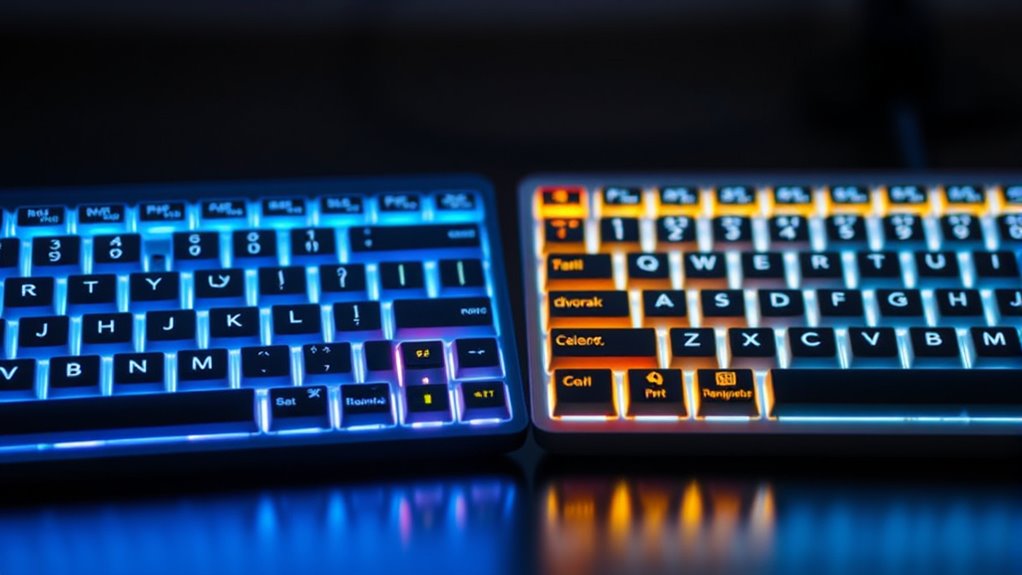
Have you ever wondered if there’s a better way to type than using the traditional QWERTY layout? If so, you’re not alone. Many people explore alternative keyboard layouts like Dvorak and Colemak, hoping they’ll improve comfort and efficiency. One of the main reasons for considering these options is the potential ergonomic benefits. Traditional QWERTY keyboards were designed centuries ago for typewriters, not for modern, prolonged computer use. This design often causes strain on your fingers, hands, and wrists because your fingers have to reach across awkward distances and move more than necessary. In contrast, alternative layouts aim to minimize finger movement, promote a more natural hand position, and reduce fatigue, which can lead to less discomfort during long typing sessions. If ergonomic benefits matter to you, these layouts could be worth exploring, especially if you spend hours at your keyboard daily. Additionally, floating on water in the context of ergonomic design emphasizes the importance of natural positioning and minimal strain, similar to how water supports movement with ease and reduced effort.
However, switching to Dvorak or Colemak isn’t without its challenges. One of the most significant hurdles is the learning curve challenge. Your muscle memory is deeply ingrained with QWERTY, so retraining your fingers to navigate a new layout takes time and patience. It’s a process that requires consistent practice and persistence. Many users experience initial setbacks, but over time, their speed and accuracy can improve as they adapt. Still, it’s important to recognize that the transition period varies from person to person—some adapt quickly, while others need weeks or even months to become comfortable.
Despite these challenges, many who switch find that the long-term ergonomic benefits outweigh the temporary inconvenience. Once you get past the initial learning curve challenge, you might notice less finger fatigue, fewer repetitive strain injuries, and a more comfortable typing experience overall. The key is to weigh the benefits against the effort needed to retrain yourself. If you’re willing to invest the time and patience, alternative layouts like Dvorak and Colemak can offer a smarter, more ergonomic way to type. Ultimately, it’s about finding what works best for your body and your productivity needs, even if that means stepping outside the familiar QWERTY world.
Frequently Asked Questions
Do Alternative Layouts Improve Typing Speed for Beginners?
Yes, alternative layouts can improve your typing speed as a beginner. They help develop better muscle memory and increase typing accuracy by reducing finger movement and strain. While it might take time to adapt, many users find that they become more efficient and comfortable over time. Switching early can give you a smoother learning curve, making it easier to master typing skills and boost your overall productivity.
Are Dvorak and Colemak Suitable for Programming Tasks?
You might find Dvorak and Colemak surprisingly suitable for programming, thanks to their ergonomic benefits and layout customization. These layouts reduce finger movement, decreasing fatigue during long coding sessions. While they offer advantages, adapting takes time, and some shortcuts or key placements may need re-learning. If you’re willing to customize your layout and invest effort, you’ll discover a more comfortable, efficient way to code that could transform your programming experience.
How Do Alternative Layouts Affect Ergonomic Health Long-Term?
Switching to Dvorak or Colemak can improve your ergonomic benefits and support long-term health by reducing finger movement and strain. You’ll notice less fatigue, decreased risk of repetitive strain injuries, and better posture over time. These layouts promote more natural hand positioning, which helps prevent long-term issues like carpal tunnel syndrome. By adopting an ergonomic approach with alternative layouts, you protect your hands and wrists while maintaining productivity.
Is Switching Layouts Difficult for Experienced Touch Typists?
Switching layouts is like learning a new dance—you might step on toes at first. As an experienced touch typist, your muscle memory resists the change, making layout adaptation feel awkward. You’ll need patience and practice to retrain your fingers, but once you adjust, your typing flow can become smoother and more efficient. It’s a challenge, but with persistence, your muscle memory will dance to the new rhythm.
What Is the Learning Curve Comparison Between Dvorak and Colemak?
You’ll find that Dvorak has a steeper learning curve initially because it markedly changes muscle memory and requires overcoming more shift challenges. Colemak, on the other hand, offers a gentler shift, making it easier for experienced touch typists to adapt. Both layouts demand practice, but Colemak’s design helps you retain much of your original muscle memory, resulting in a shorter and smoother transition period.
Conclusion
Think of your keyboard as a trusty ship steering rough seas. Dvorak and Colemak are like upgraded sails—potentially smoother and more efficient, but not guaranteeing a faster voyage. Ultimately, your comfort and practice steer your journey. Whether you stick with QWERTY or switch to something new, the true voyage is in your hands. Choose what feels right, and sail on confidently—your success depends on your own navigation, not just the sails.