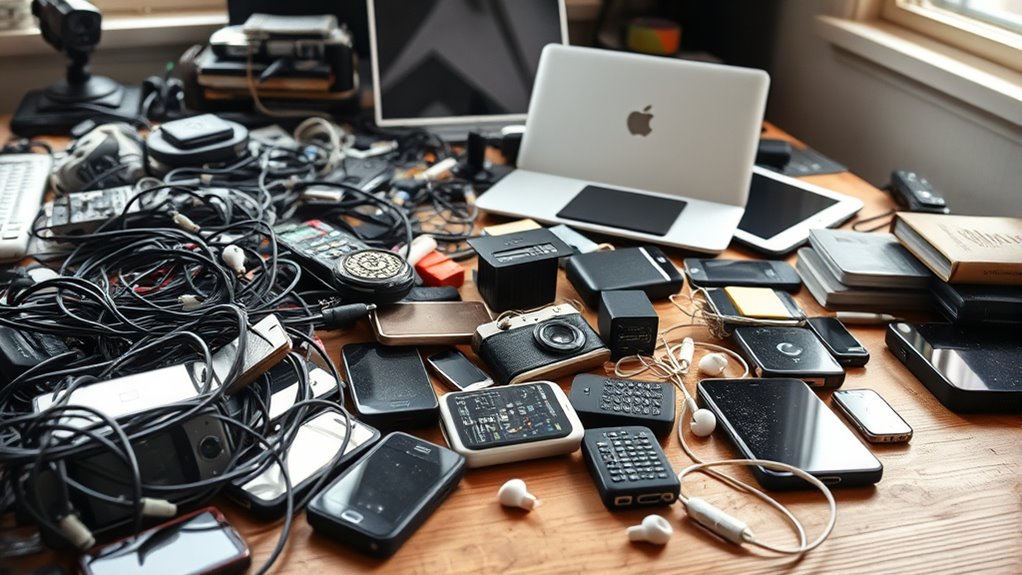

To avoid accumulating tech you don’t need, first identify gadgets that truly serve a purpose and remove those that don’t. Set boundaries by scheduling specific times to check devices and turn off unnecessary notifications. Practice intentional purchasing by questioning if new gadgets add real value before buying, and resist impulse trends. By focusing on quality over quantity and managing your digital environment, you’ll reduce clutter, stress, and regain control—discover more ways to streamline your tech use as you continue.
Key Takeaways
- Assess your actual needs and prioritize versatile, reliable gadgets to avoid unnecessary purchases.
- Set clear boundaries for device usage and turn off non-essential notifications to reduce impulsive checking.
- Practice digital decluttering regularly to identify and eliminate unused or redundant devices.
- Question the value of new gadgets before buying, ensuring they genuinely enhance your daily life.
- Limit the number of devices you own, focusing on quality over quantity to prevent digital clutter.
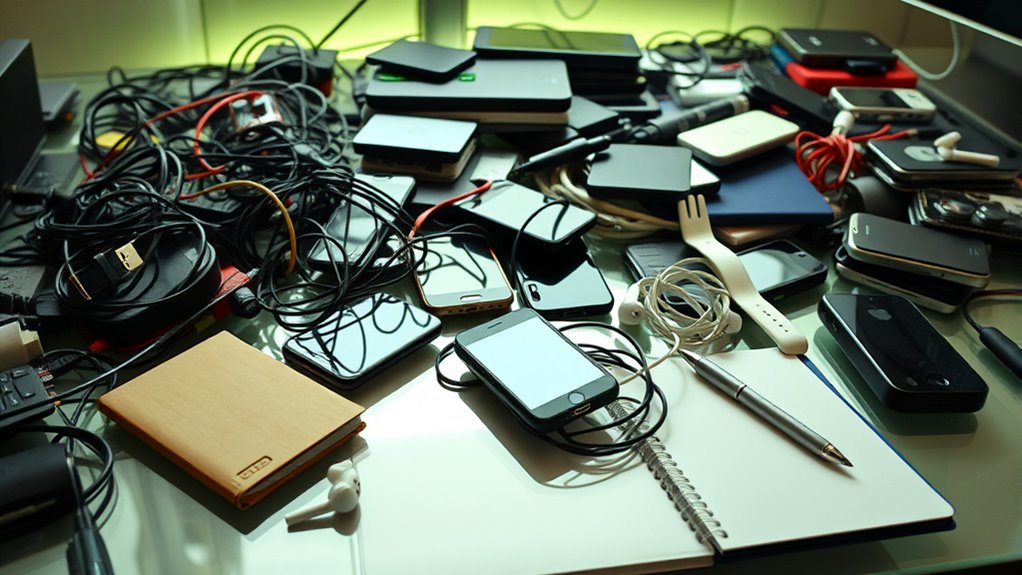
In today’s digital age, it’s easy to feel overwhelmed by the sheer number of gadgets vying for your attention. Every new device promises to make life easier or more enjoyable, but more often than not, it just adds to the clutter. Smartphone addiction is a common pitfall, as many find themselves glued to their screens, scrolling endlessly or checking notifications every few minutes. This constant connectivity can lead to stress, distraction, and a sense of being overwhelmed by the digital chaos around you. The key to avoiding this trap is embracing tech minimalism — a conscious effort to simplify your digital life by keeping only the devices and apps that truly add value.
The first step is to evaluate what gadgets you actually need. Ask yourself whether each device serves a specific purpose or if it’s just taking up space. If you find yourself rarely using a smartphone or tablet, consider downsizing or removing them altogether. It’s easy to fall into the trap of accumulating gadgets out of curiosity or the desire to stay ahead of the latest tech trends, but these additions often lead to clutter and distraction. Instead, focus on quality over quantity. For example, rather than owning multiple devices that do similar things, invest in one reliable, versatile gadget that simplifies your routines.
Another way to prevent gadget overload is to set boundaries around your device usage. Schedule specific times for checking your phone or social media, and stick to them. Turning off non-essential notifications helps reduce the constant pinging that fuels smartphone addiction. When you’re not actively using a device, keep it out of sight, preferably in a drawer or another room. This reduces the temptation to pick it up out of habit and helps you reclaim your focus. Practicing digital decluttering can also help you assess and reduce the number of devices and apps that contribute to digital clutter.
Practicing tech minimalism also involves being intentional with new purchases. Before buying a new gadget, ask yourself if it genuinely improves your life or if it’s just a fleeting desire. Consider whether the device adds meaningful value or if it will just become another unused piece of tech gathering dust. By adopting this mindset, you’ll avoid accumulating unnecessary gadgets and reduce the clutter that often accompanies overconsumption.
Ultimately, avoiding gadget overload requires conscious effort and intentional choices. Simplifying your digital environment not only lessens stress but also gives you more time and mental space for what truly matters. Cutting back on unnecessary devices and managing your usage habits will help you regain control, making your tech work for you instead of overwhelming you.
Frequently Asked Questions
How Can I Identify Genuine Tech Needs Versus Unnecessary Gadgets?
You can identify genuine tech needs by evaluating whether a gadget truly enhances your daily life, focusing on tech necessity. Ask yourself if it solves a problem or improves efficiency. During gadget evaluation, consider its long-term usefulness and whether it offers features you’ll actually use. Avoid impulse buys by researching and comparing options, ensuring each purchase aligns with your priorities and avoid cluttering your space with unnecessary gadgets.
What Are the Best Ways to Declutter My Existing Devices?
To declutter your devices, start with device organization by deleting unused apps and files, and organizing your folders. Regularly perform a digital detox by disconnecting from non-essential notifications and social media. Use app managers to identify and remove redundant apps, and clear your device cache to boost performance. This keeps your devices streamlined, reduces digital clutter, and creates a more efficient, stress-free tech experience.
How Often Should I Evaluate My Gadget Collection?
You should evaluate your gadget collection at least every six months, establishing a regular gadget review schedule. During these reviews, consider your tech upgrade frequency—if your devices no longer meet your needs or feel outdated, it’s time to declutter. Regular assessments help you stay current without overloading, ensuring you only keep gadgets that truly add value to your life. Make reviews a routine to maintain an organized, efficient tech collection.
Are There Eco-Friendly Options for Disposing of Unused Electronics?
Yes, you can find eco disposal options for your unused electronics. Many recycling programs accept old gadgets, guaranteeing they’re properly disposed of or repurposed. Look for local recycling centers or manufacturer take-back programs that promote eco-friendly disposal options. This way, you prevent environmental harm and contribute to sustainability. Always check if your electronics qualify for specific recycling programs in your area to ensure responsible disposal.
How Can I Resist Impulse Buying of New Tech Gadgets?
Did you know that 79% of consumers admit to impulse buying? To resist this, practice mindful shopping by pausing before making a purchase. Set a budget and stick to it, avoiding temptations like flashy ads or showroom displays. When you’re tempted, ask yourself if you really need the gadget, or if it’s just a fleeting desire. This approach helps you save money and prevents unnecessary tech clutter.
Conclusion
So, next time you buy that shiny new gadget, remember—you’re just collecting tiny pieces of plastic and circuits, not life-changing magic. Ironically, all those devices meant to simplify your life often turn it into a cluttered, tech-filled chaos. Instead of becoming a digital hoarder, maybe try enjoying what you already have. After all, the real upgrade isn’t in more gadgets, but in appreciating the simplicity you already possess.