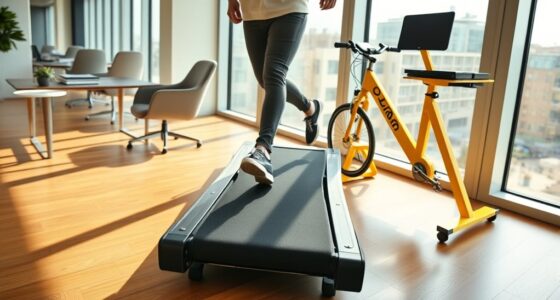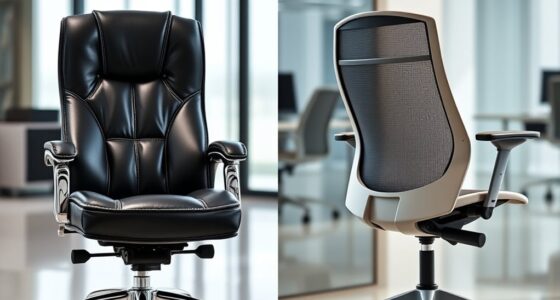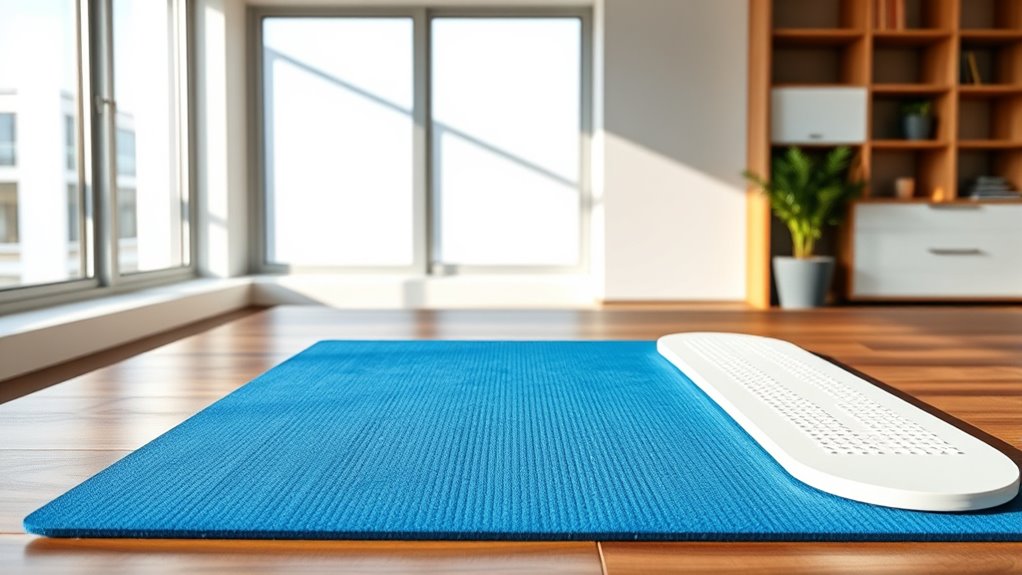

Using anti-fatigue mats and balance boards is a smart move for your standing desk setup. They help reduce fatigue, prevent discomfort, and promote better posture by encouraging micro-movements and engaging stabilizing muscles. These tools support your overall health, lower the risk of musculoskeletal issues, and keep you alert during long shifts. If you want to learn how these ergonomic accessories can transform your workspace, keep exploring the benefits they offer.
Key Takeaways
- Anti-fatigue mats reduce foot and lower limb fatigue, supporting longer, more comfortable standing periods at desks.
- Balance boards enhance core strength, stability, and posture, preventing musculoskeletal issues over extended standing.
- Both tools promote micro-movements and muscle activation, decreasing static muscle fatigue and improving circulation.
- They help maintain proper body mechanics, reduce joint pressure, and promote ergonomic standing habits.
- Investing in these accessories supports overall health, comfort, and productivity during prolonged desk work.
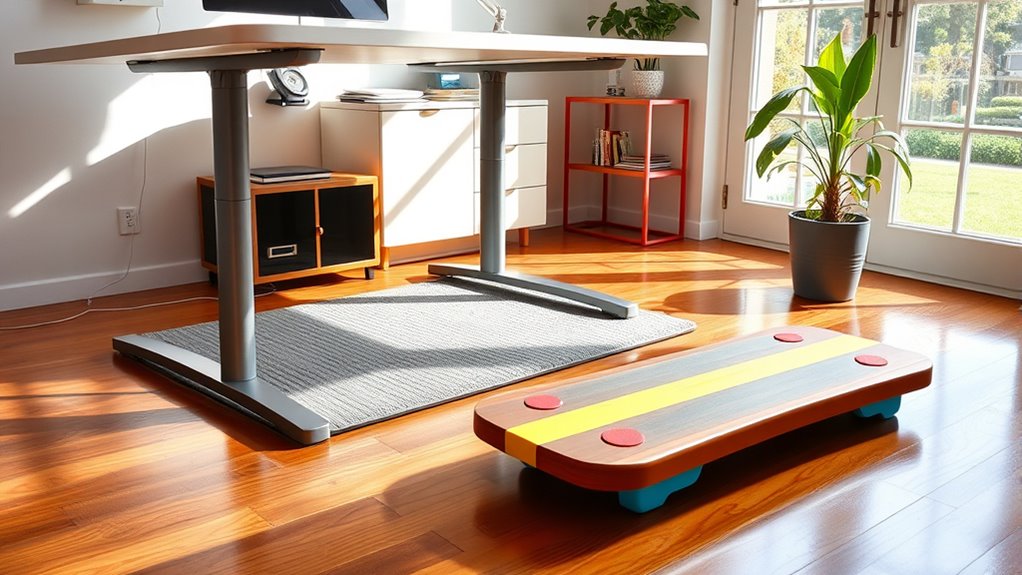
If you spend long hours standing at work or during household tasks, investing in anti-fatigue mats and balance boards can make a significant difference. These tools are designed to improve your comfort and reduce fatigue, but they also offer important ergonomic benefits. When you stand for extended periods without proper support, you risk putting undue strain on your legs, back, and joints. Anti-fatigue mats cushion your feet, encouraging subtle movements that promote better blood flow and reduce discomfort. Balance boards, on the other hand, engage your core muscles and improve stability, which helps maintain proper posture and prevents muscle fatigue over time. Incorporating ergonomic design principles into your workspace can further enhance these benefits and create a healthier standing environment. From a health considerations perspective, standing on hard surfaces can lead to issues like varicose veins, foot pain, and lower back discomfort. Anti-fatigue mats help mitigate these risks by absorbing shock and distributing your weight more evenly. They also reduce pressure on your feet and knees, which can be especially beneficial if you have existing joint problems or arthritis. Balance boards add another layer of health benefits by encouraging movement and muscle activation. By challenging your stability, they help strengthen core muscles and improve balance, which can translate into better overall posture and reduced injury risk.
Using anti-fatigue mats and balance boards isn’t just about comfort; it’s a proactive approach to safeguarding your health. When you stand on a hard surface for hours, your muscles tend to stiffen and tire quickly. An anti-fatigue mat acts as a cushion, encouraging micro-movements that prevent static muscle fatigue. This can lead to increased alertness and concentration, especially during long work shifts or household chores. Balance boards serve to break the monotony of static standing by engaging stabilizing muscles that often go unused. Over time, this can lead to better coordination and reduced risk of falls or strains.
Moreover, incorporating these tools into your daily routine demonstrates awareness of ergonomic principles. They support proper body mechanics, helping you avoid poor posture that can cause chronic pain. Proper ergonomics isn’t just about equipment; it’s about how you use it to support your body’s natural alignment. Anti-fatigue mats and balance boards are simple, effective investments that promote a healthier, more comfortable standing experience. They empower you to stand longer without discomfort, reduce the likelihood of developing musculoskeletal issues, and foster habits that enhance your overall well-being. If you’re looking to improve your standing routine, these tools should definitely be on your list.
Frequently Asked Questions
How Do Anti-Fatigue Mats Affect Long-Term Foot Health?
Anti-fatigue mats improve long-term foot health by reducing strain on your plantar fascia and boosting foot circulation. When you stand on these mats, they absorb shock and provide cushioning, preventing fatigue and discomfort. This support helps prevent issues like plantar fasciitis and encourages better blood flow, which benefits overall foot health. Regular use keeps your feet more comfortable, even during extended periods of standing, promoting healthier feet over time.
Can Balance Boards Help Improve Core Strength Over Time?
Yes, using a balance board can help improve your core strength over time. It encourages constant core engagement as you maintain stability, which naturally enhances your posture. By regularly incorporating a balance board into your standing desk routine, you strengthen your core muscles and develop better balance and coordination. This leads to improved posture, reduced fatigue, and increased overall stability during long work hours.
Are There Specific Mats Suited for Different Types of Flooring?
Sure, you’ll find mats tailored for every flooring type, from plush carpets to slick hardwoods. Don’t settle for a one-size-fits-all—think about flooring compatibility and mat material options. A rubber mat grips vinyl floors, while cushioned foam works wonders on tile. It’s almost like choosing the perfect shoe—if only your office floors could give fashion advice—so pick wisely, and your standing desk will thank you.
How Often Should I Replace My Balance Board for Safety?
You should replace your balance board when it shows signs of wear or damage, typically every one to two years, to maintain safety. Regular balance board maintenance involves checking for cracks, loose parts, or worn-out surfaces. Follow safety guidelines by inspecting it before each use and avoiding it if any issues arise. Doing this guarantees you stay safe, prevent accidents, and get the most out of your balance board’s benefits.
Do Anti-Fatigue Mats Reduce Back Pain for Standing Desk Users?
While anti-fatigue mats may not completely eliminate back discomfort, they considerably improve your ergonomic posture and promote better circulatory benefits. By cushioning your feet, you reduce strain on your back, helping you stay comfortable during long standing periods. This supportive surface encourages movement and reduces fatigue, ultimately contributing to a healthier, more balanced stance. Incorporating an anti-fatigue mat can make a noticeable difference in your overall comfort and spinal well-being.
Conclusion
So, are anti-fatigue mats and balance boards truly essential for your standing desk setup? While they promise comfort and improved posture, the real question is: could neglecting them be silently affecting your health? The choice is yours—will you take the chance and risk discomfort or invest in your well-being? Remember, sometimes the smallest addition can make the biggest difference. Don’t wait until discomfort catches up—you might be surprised what’s waiting just around the corner.