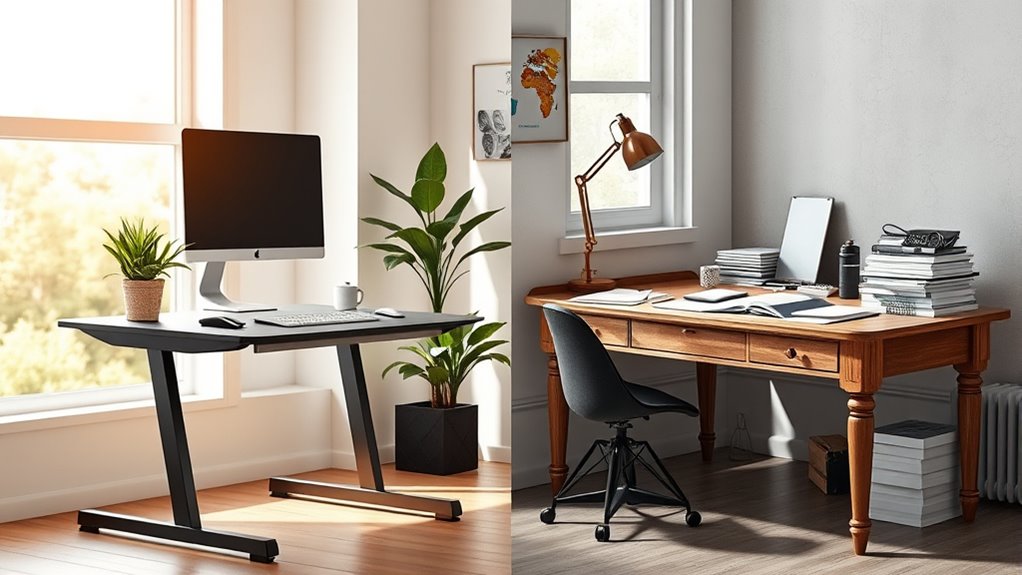

Standing desks can boost your productivity by promoting better posture, reducing discomfort, and encouraging movement throughout your workday. They support ergonomic alignment, lessen aches that distract you, and help you stay alert longer. Alternating between sitting and standing prevents fatigue and keeps your energy levels steady. Choosing the right desk depends on your work habits and preferences. Keep going to find out how to pick the best option for your to optimize your focus and efficiency.
Key Takeaways
- Standing desks promote better posture and movement, reducing discomfort that can hinder focus and productivity.
- Alternating between sitting and standing helps prevent fatigue and maintains higher energy levels throughout the day.
- Ergonomic adjustments in standing desks support personalized comfort, leading to improved concentration and efficiency.
- Traditional desks may limit movement, potentially causing discomfort and decreasing long-term work productivity.
- The ability to switch positions easily with standing desks encourages regular breaks, boosting mental clarity and work output.
Health and Comfort Considerations
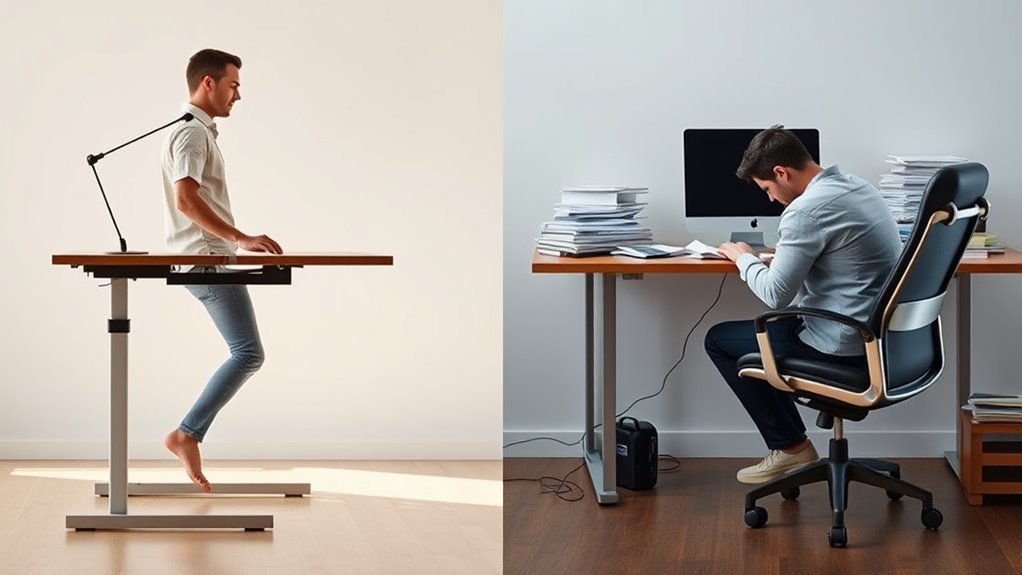
When choosing between a standing desk and a traditional desk, your comfort and health should be top priorities. Standing desks often come with ergonomic accessories, like anti-fatigue mats and keyboard trays, that help reduce strain. Adjustable features allow you to switch between sitting and standing, promoting better posture and reducing the risk of musculoskeletal issues. Proper ergonomic setup ensures your monitor is at eye level, and your feet are flat on the ground, preventing discomfort during long hours. A height-adjustable desk encourages movement and flexibility, which can alleviate tension and improve circulation. Incorporating necessary cookies and other ergonomic tools helps you create a workspace that supports your well-being, making it easier to stay comfortable and healthy throughout your workday. Additionally, integrating body awareness practices can further enhance your comfort and prevent strain during extended periods of work. Paying attention to your posture habits during work can also make a significant difference in avoiding long-term discomfort. Using AI-powered ergonomic assessments can provide personalized recommendations to optimize your workspace setup. Being mindful of workstation ergonomics can significantly contribute to long-term comfort and productivity.
Impact on Productivity and Focus
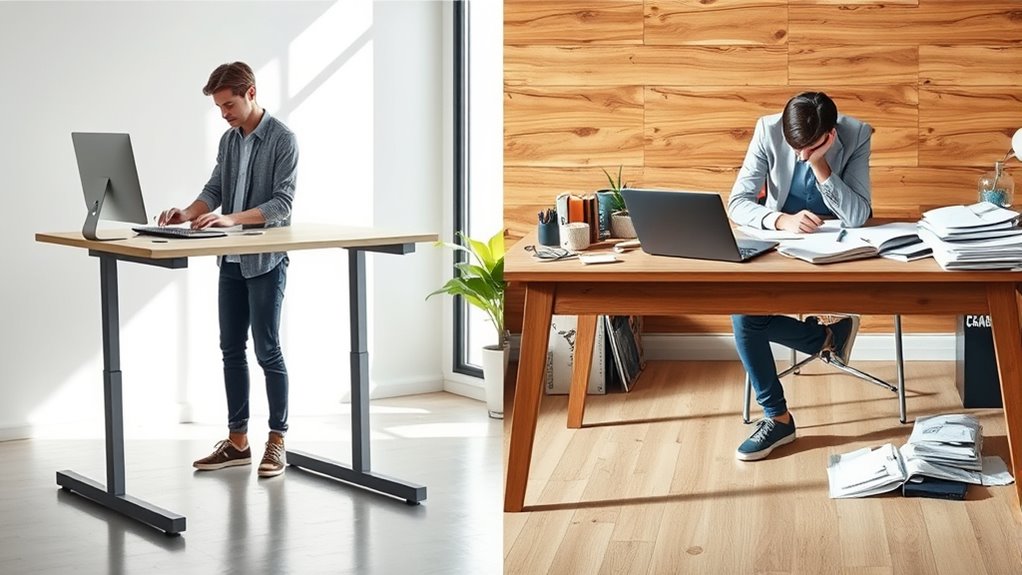
Using a standing desk can boost your concentration levels and help you stay engaged throughout the day. You’ll notice fewer fatigue symptoms, making it easier to maintain focus on your tasks. Plus, better posture support means you can work longer without discomfort disrupting your productivity. Incorporating ergonomic design into your workspace further enhances comfort and reduces strain, supporting sustained focus and efficiency. Additionally, understanding data management can help optimize your workspace setup by ensuring your equipment and accessories are organized for maximum comfort and productivity. Proper placement of tools and accessories is essential to prevent strain and maintain healthy posture during extended work sessions. Adopting ergonomic principles can also contribute to overall mental well-being, fostering a more productive work environment.
Enhances Concentration Levels
Standing desks can markedly boost your concentration levels by promoting better posture and reducing discomfort that often distracts you during work. An ergonomic design guarantees your body stays aligned, minimizing aches that can break your focus. When you stand, your visual focus improves because you’re less likely to strain your neck or eyes, which helps you stay engaged with your tasks. You can also increase your physical activity during the workday, which supports overall well-being and mental clarity. The ability to easily shift positions keeps your mind alert and prevents the sluggishness that comes with prolonged sitting. This ergonomic setup encourages you to stay attentive longer, enhancing your overall productivity. As your body remains comfortable and well-supported, you’re less prone to interruptions caused by physical discomfort, allowing you to maintain steady focus and perform at your best throughout the day. Understanding city dynamics can also contribute to creating a more conducive workspace environment. Additionally, being aware of performance tuning principles can help optimize your workstation setup for maximum efficiency, including considerations like appliance connection options or ergonomic accessories to improve your setup.
Reduces Fatigue Symptoms
Reducing fatigue symptoms is a key way standing desks boost your productivity and focus. When you switch between sitting and standing, you prevent muscle strain and lessen overall tiredness. Ergonomic accessories like adjustable monitor arms and anti-fatigue mats support comfort, making it easier to stay energized. Limiting sitting durations helps avoid sluggishness and reduces discomfort caused by prolonged sitting. Standing desks encourage movement, which boosts circulation and cuts down on fatigue-related symptoms. Incorporating movement strategies and ergonomic accessories can significantly enhance your energy levels and reduce exhaustion. By staying more alert and comfortable, you can maintain better concentration throughout your workday. Less fatigue means you spend less time recovering from exhaustion and more time being productive. Incorporating ergonomic accessories and managing sitting durations effectively makes it easier to enjoy these fatigue-reducing benefits, ultimately enhancing your focus and work output. Additionally, being aware of common goal tracking pitfalls can help you maintain consistent productivity and avoid setbacks. Regular movement and posture adjustments further support energy levels and reduce fatigue, contributing to sustained focus during your work hours. Incorporating breaks and stretching into your routine can also help prevent stiffness and maintain your overall well-being during extended periods of work. Utilizing proper ergonomic setup can further optimize comfort and minimize fatigue over long work sessions.
Promotes Better Posture
Maintaining proper posture is essential for sustaining your productivity and focus throughout the workday. Standing desks with adjustable height allow you to find the most suitable position, reducing strain and promoting better alignment. Using ergonomic accessories like supportive mats or monitor stands further encourages good posture, preventing slouching and discomfort. Here’s how adjustable height and ergonomic accessories work together:
| Feature | Benefit |
|---|---|
| Adjustable height | Customizes desk to your body for comfort |
| Ergonomic accessories | Supports natural posture and reduces fatigue |
| Proper monitor placement | Keeps neck aligned and prevents strain |
| Anti-fatigue mats | Absorbs impact and encourages movement |
| Adjustable keyboard tray | Promotes neutral wrist positioning |
This setup not only improves your posture but also boosts focus and productivity.
Effects on Energy Levels Throughout the Day
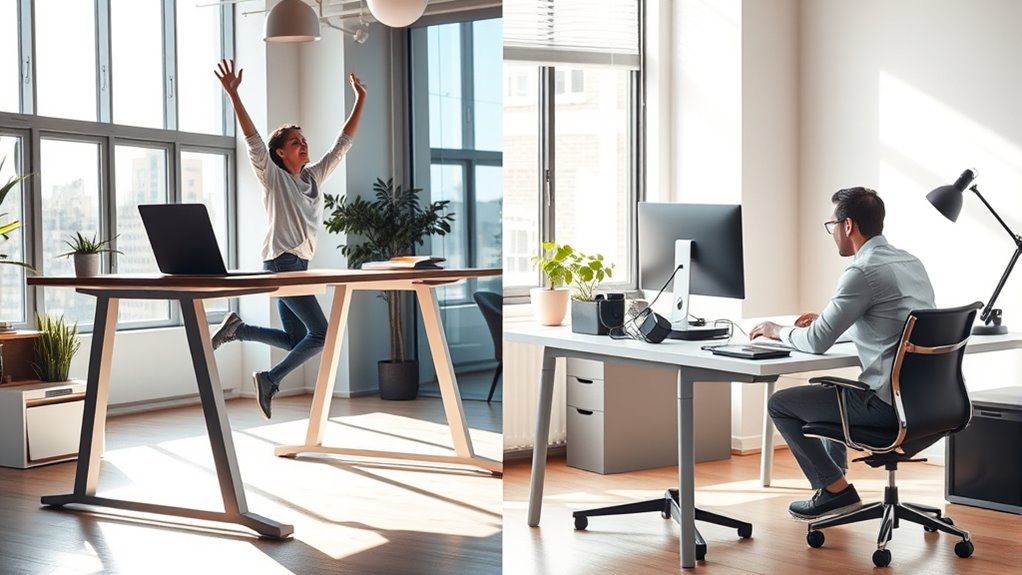
Your energy levels can fluctuate throughout the day, with noticeable spikes and dips that affect your focus. Poor posture from sitting too long may increase fatigue, making you feel more drained. Taking regular breaks and changing positions can help maintain steady energy and reduce tiredness. Incorporating ergonomic workspace design can further promote better posture and sustained alertness throughout the day. Additionally, maintaining proper desk setup can prevent discomfort and support overall productivity. Ensuring your workspace is optimized for comfort can also reduce physical strain and enhance focus.
Energy Spikes and Dips
Switching between a standing desk and a traditional desk can substantially impact your energy levels throughout the day. An ergonomic design promotes better posture, helping prevent muscle fatigue that often causes energy dips. When you stand, your body stays more alert, reducing sluggishness and encouraging steady energy flow. However, prolonged standing without proper support can lead to muscle fatigue, causing energy dips later on. Alternating between sitting and standing helps stabilize your energy, preventing sharp spikes and crashes. Incorporating regular movement into your routine can further enhance circulation and reduce fatigue. Additionally, understanding the importance of GMC tuning techniques can guide you in optimizing your workspace setup for maximum comfort and productivity. This balance keeps you focused and productive, rather than experiencing sudden dips that disrupt your workflow. Recognizing the significance of ergonomic design can further help in creating a workspace that minimizes discomfort and maintains energy levels. Using home decor elements like ergonomic accessories and supportive furniture can also contribute to sustained energy and comfort. By paying attention to your body’s signals and adjusting your posture, you can maintain more consistent energy levels and avoid the rollercoaster of highs and lows that hinder your productivity.
Posture’s Impact on Fatigue
Proper posture plays a crucial role in preventing fatigue and keeping your energy levels steady throughout the day. When you maintain good ergonomic alignment, your muscles work more efficiently, reducing unnecessary muscle strain that can drain your energy. Slouching or improper positioning forces certain muscles to overcompensate, leading to quicker fatigue and decreased alertness. Sitting or standing with correct posture ensures your spine, neck, and shoulders stay aligned, minimizing tension and discomfort. This alignment helps sustain your focus and prevents the sluggishness that often accompanies muscle fatigue. By paying attention to your posture, you support your body’s natural energy flow, allowing you to stay active and alert longer. Good ergonomic habits are essential for maintaining high energy levels during extended work periods.
Break Frequency and Rest
How often you take breaks considerably influences your energy levels throughout the day. Regular short breaks help prevent fatigue and maintain focus. Incorporate stretch routines during these breaks to reduce muscle tension and boost circulation. Using ergonomic accessories, like adjustable desks or supportive mats, makes it easier to move comfortably. Stand or stretch every 30 minutes to reset your posture and refresh your mind. Avoid staying stagnant for long periods, whether sitting or standing, as it drains your energy. Rest periods don’t have to be lengthy; even quick movement can revitalize you. Keeping a consistent break schedule helps sustain productivity and minimizes discomfort. Remember, your body benefits most when you listen to its signals and prioritize movement throughout your workday.
Flexibility and Adaptability of Workspace
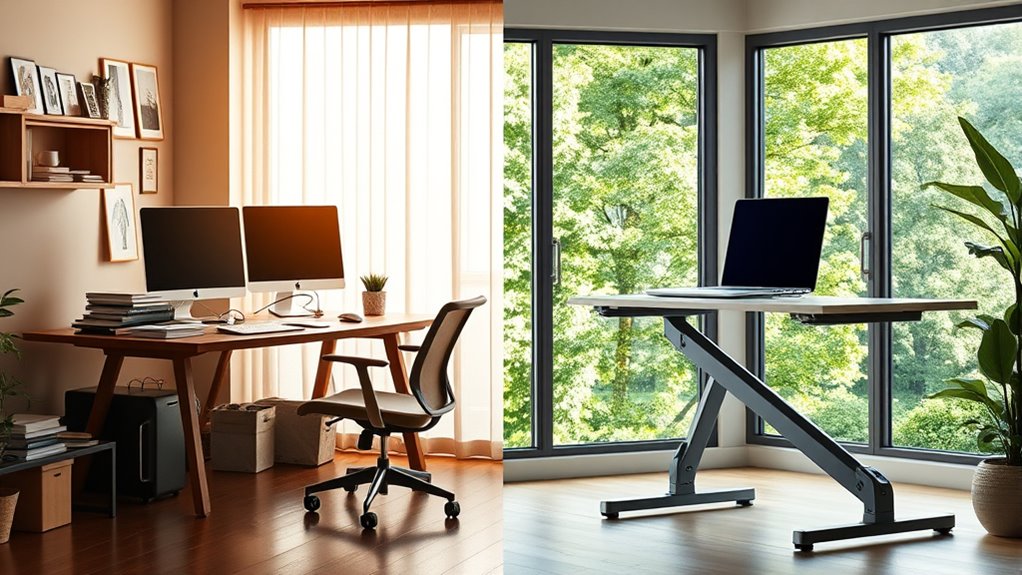
Flexibility and adaptability are key factors when choosing between a standing desk and a traditional desk, especially as your work habits evolve. Standing desks often offer greater ergonomic adjustments, allowing you to switch between sitting and standing positions easily, which supports diverse tasks and comfort needs. They also provide enhanced spatial flexibility, enabling you to customize your workspace layout to fit your preferences and equipment. Traditional desks tend to be more static, offering limited options for ergonomic adjustments or reconfiguration. If you value a workspace that adapts to your changing routines or allows quick customization, a standing desk might be more suitable. Overall, your choice should reflect how easily you can modify your workspace to improve comfort and efficiency over time.
Cost and Investment Aspects
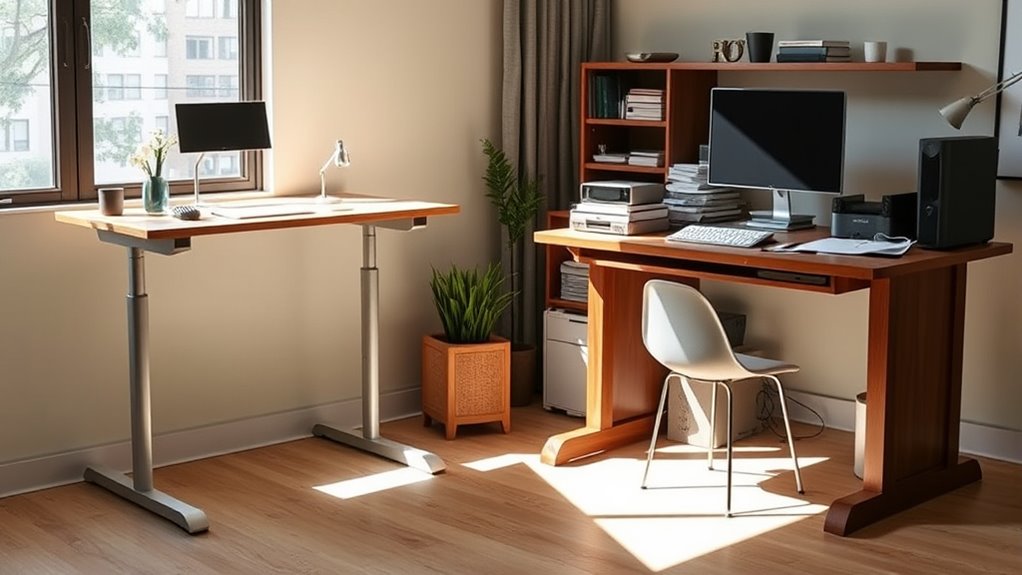
Choosing between a standing desk and a traditional desk often hinges on your budget and long-term investment considerations. A thorough cost analysis helps you evaluate the initial investment required for each option. Standing desks tend to be more expensive upfront, especially for adjustable models with advanced features. Traditional desks are generally more affordable initially, making them a popular choice for budget-conscious setups. However, consider the potential savings over time; standing desks can reduce health-related costs and improve productivity, possibly offsetting their higher price. If you’re looking for a cost-effective solution now, a traditional desk might be best. But if you’re willing to invest more upfront for better ergonomics and long-term benefits, a standing desk could be a smarter financial decision.
Long-term Health Benefits and Risks

Investing in a standing desk can offer significant long-term health benefits, though it also comes with certain risks that you should consider. Standing more often may reduce issues like back pain, joint discomfort, and poor posture, especially when combined with ergonomic accessories and proper workspace customization. However, prolonged standing without breaks can lead to fatigue, leg pain, or varicose veins. To maximize benefits and minimize risks, you need to tailor your workspace to support your posture and comfort. Incorporating adjustable features and ergonomic accessories ensures you can switch between sitting and standing. Being mindful of your body’s signals and maintaining proper ergonomics helps you enjoy the long-term health advantages of a standing desk without adverse effects.
User Experience and Personal Preferences
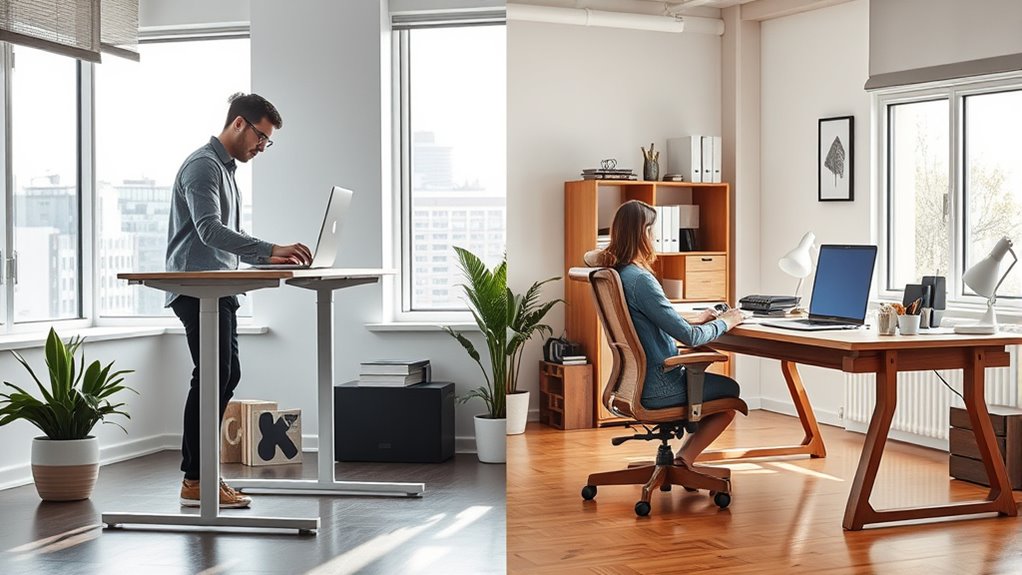
Have you ever wondered how your personal preferences influence your experience with a standing desk? Your comfort and satisfaction largely depend on factors like ergonomic design, which guarantees proper posture and reduces strain. If a standing desk feels awkward or uncomfortable, you might find it difficult to stay engaged or productive. Aesthetic appeal also plays a role; a desk that complements your workspace can boost your motivation and make you more likely to use it consistently. Personal preferences shape how you perceive the overall experience—whether you feel energized or distracted. Ultimately, choosing a desk that aligns with your style and comfort needs enhances your user experience, making it easier to integrate the setup into your daily routine and maintain productivity.
Making the Right Choice for Your Work Style
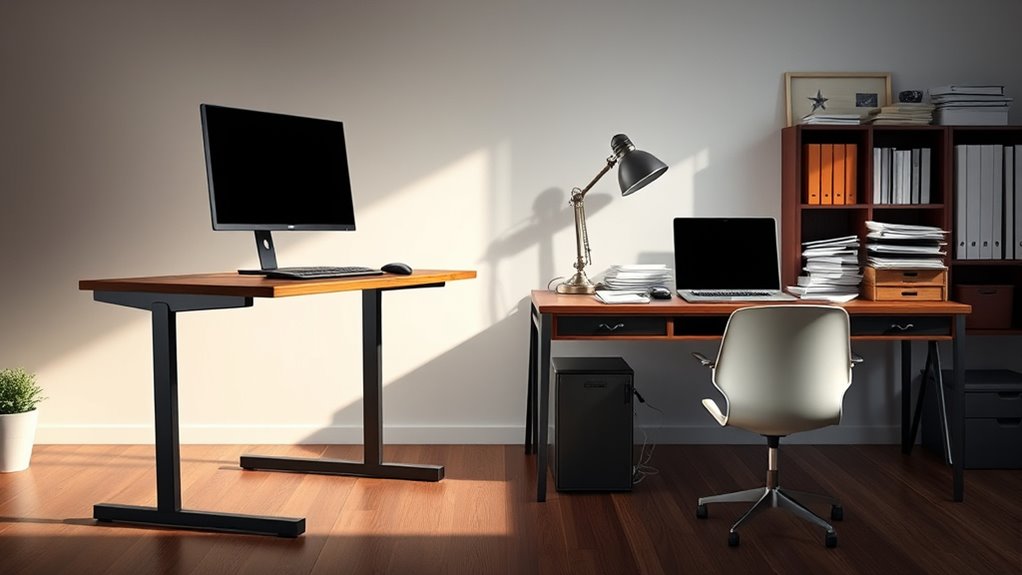
Your work style plays a significant role in determining whether a standing desk or a traditional desk suits you best. Consider how you prefer to work—do you need movement, or do you value stability? Incorporate ergonomic accessories like adjustable monitors and supportive mats to enhance comfort. Desk customization also helps tailor your workspace to your needs, whether adding storage or accessories that boost efficiency. Use the table below to identify what fits your work habits:
| Work Style Preference | Recommended Setup |
|---|---|
| Need movement throughout | Standing desk with ergonomic accessories |
| Focus on stability | Traditional desk with desk customization |
| Frequent breaks | Adjustable options for both types |
| Ergonomic support priority | Invest in ergonomic accessories and setup |
Choosing based on your habits ensures better productivity and comfort.
Frequently Asked Questions
Are Standing Desks Suitable for All Types of Work Tasks?
Standing desks are suitable for many work tasks, especially when combined with ergonomic accessories and adjustable features. You can easily switch between sitting and standing, making them versatile for activities like typing, reading, or collaborating. However, for tasks requiring intense focus or detailed work, traditional desks might offer better stability. Ultimately, choose a desk that supports your specific needs and enhances your comfort and productivity.
How Do Standing Desks Impact Team Collaboration and Communication?
Standing desks can enhance team collaboration and communication by creating an ergonomic benefits that encourage more dynamic interactions. When you stand during discussions, you’re more engaged and approachable, fostering a collaborative environment. This setup promotes open dialogue, quick exchanges, and a sense of equality among team members, ultimately boosting productivity. So, adopting standing desks may help break down barriers and facilitate better teamwork through increased comfort and improved ergonomic benefits.
Can Switching Between Desk Types Prevent Ergonomic Issues?
Have you ever wondered if switching desk types can truly prevent ergonomic concerns? Yes, alternating between standing and traditional desks offers significant health benefits and helps reduce strain, preventing issues like back pain and repetitive stress injuries. By varying your posture, you keep your muscles active and improve circulation. This simple change can make a big difference in maintaining your overall well-being and avoiding common ergonomic concerns.
What Are the Maintenance Requirements for Standing Versus Traditional Desks?
You should regularly clean your standing or traditional desk to keep it tidy and functioning well. For standing desks, check the height adjustment mechanisms to guarantee smooth operation and stability. Both types benefit from dusting the surface and cleaning any electronic components. Maintaining your desk involves routine checks of moving parts, keeping surfaces clean, and ensuring the height adjustment features work properly, so your workspace remains safe and efficient.
How Do Standing Desks Affect Long-Term Posture Correction?
Standing desks can markedly enhance ergonomic benefits, aiding your posture improvement over time. By encouraging you to shift positions and reduce prolonged sitting, they help correct slouching and strain. Consistently using a standing desk promotes better spinal alignment and strengthens core muscles, which benefits your long-term posture. Incorporate proper ergonomics, and you’ll likely notice a positive impact on your overall comfort and health as you adopt this healthier workstation setup.
Conclusion
Choosing between a standing and traditional desk is like finding the perfect dance partner—each has its rhythm, benefits, and quirks. By considering your health, focus, and comfort, you can align your workspace with your work style. Remember, the right desk isn’t one-size-fits-all but a tool to help your productivity bloom. So, weigh your options carefully, and let your workspace be the stage where your best performance unfolds.