
Wireless charging and cable-free desks are rapidly advancing, making clutter-free, seamless workspaces more realistic. Today, innovations in resonant inductive coupling and integrated furniture are bringing more devices into the wireless fold. However, challenges remain, like compatibility issues, cost, and environmental factors. While full wireless workspaces aren’t here just yet, ongoing tech improvements suggest they may soon become common—and there’s more to explore on how close we really are.
Key Takeaways
- Wireless charging tech has advanced to support multiple devices with improved range and efficiency using resonant inductive coupling.
- Integration of wireless pads into desks and furniture is increasing, enabling cable-free workspaces.
- Challenges remain, including safety concerns, interference issues, and the need for standardized protocols for device compatibility.
- High initial costs and compatibility gaps limit widespread adoption, though prices are expected to decrease over time.
- Fully wireless, clutter-free workspaces are promising but still face technical and practical hurdles before becoming mainstream.
The Evolution of Wireless Power Technology
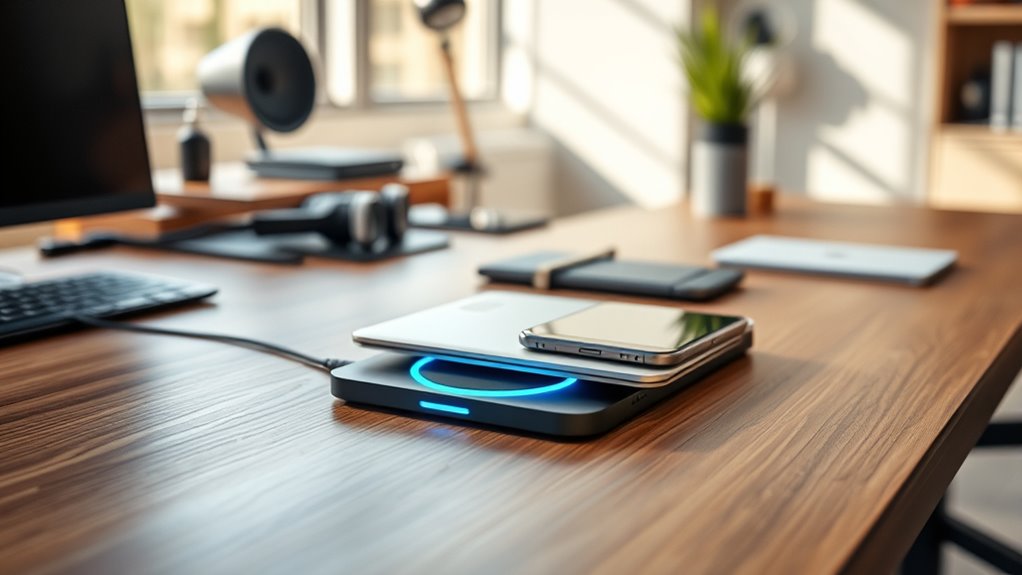
Wireless power technology has rapidly evolved from simple inductive charging pads to sophisticated systems capable of powering multiple devices simultaneously. Initially, inductive charging relied on magnetic fields to transfer power over short distances, mainly for smartphones and small gadgets. As technology advanced, engineers developed more efficient power transfer methods, enabling seamless charging experiences. Today’s systems use resonant inductive coupling, which extends the range and improves efficiency, allowing you to place devices on a pad or within a designated area without precise alignment. These innovations mean you don’t need cords or connectors, making your workspace cleaner and more flexible. Advances in materials have also contributed to more durable and efficient wireless charging components. Wireless power transfer technology continues to improve in both range and speed, promising even more convenience in the near future. With ongoing improvements, wireless power is becoming more reliable, versatile, and capable of supporting a growing array of devices in both personal and professional environments.
Current Innovations in Cable-Free Workspaces

Recent innovations are transforming workspaces into fully cable-free environments, allowing you to focus on tasks without the clutter of cords. Wireless charging pads integrated into desks and furniture now support multiple devices simultaneously, boosting battery life without interruption. These advancements guarantee your devices stay powered longer, so you don’t have to worry about frequent recharging. Additionally, ergonomic design plays a key role, with wireless setups promoting better posture and comfort. Wireless charging surfaces are crafted to be seamless and unobtrusive, reducing strain caused by tangled cords. Smart desks now incorporate built-in charging zones, enabling you to move freely while staying connected. As part of creating a comfortable bedroom environment, these innovations contribute to a more organized and stress-free workspace. Moreover, integrating smart home technology into workspaces can further enhance automation and convenience. These technological improvements also support wireless energy transfer, making the workspace truly cable-free and clutter-free. The ongoing development of wireless charging standards ensures compatibility and efficiency across various devices. For example, advances in wireless power transfer enable faster and more reliable charging experiences. Together, these innovations create a cleaner, more efficient workspace that prioritizes your comfort and enhances productivity.
Practical Challenges and Limitations

Despite the promising advancements, implementing wireless charging and cable-free desks still faces significant practical challenges. One major concern is battery safety; improper design or faulty components could lead to overheating or damage, risking user safety. Additionally, interference concerns pose hurdles: wireless signals can disrupt other electronic devices or be affected by metal objects and liquids nearby, reducing charging efficiency. You might find that charging zones require precise alignment, which can be inconvenient and impractical for daily use. Furthermore, inconsistent power delivery can frustrate users who expect seamless, reliable charging. These limitations highlight that, while technology has advanced, real-world application still needs refinement to ensure safety, reduce interference, and offer a hassle-free experience. The contrast ratio of the charging devices and setup environments can also impact overall performance and user satisfaction. Improving wireless power transfer efficiency remains a crucial area for future development, especially as charging standards evolve to accommodate new devices. Moreover, ongoing research into electromagnetic compatibility is essential to mitigate interference issues and enhance system reliability. Enhancing cookie management practices could also improve user trust and experience with these emerging technologies.
Cost and Accessibility of Wireless Solutions

Although wireless charging and cable-free desks offer convenience, their high costs can be a significant barrier to widespread adoption. Price barriers limit many users from accessing these advanced solutions, creating notable accessibility gaps. The initial investment for compatible furniture and charging stations remains steep, making it less appealing for budget-conscious consumers and businesses. Additionally, the lack of affordable options hampers efforts to integrate wireless tech into everyday environments. This affordability challenge widens the accessibility gap, leaving some groups behind. To bridge this divide, manufacturers need to lower costs and develop more budget-friendly alternatives. As the cost of wireless charging technology decreases over time, broader adoption becomes more feasible. Furthermore, the cost-benefit analysis of wireless solutions is essential for businesses to justify the investment. Considering the growing emphasis on universal design and inclusivity in workspace environments, making these technologies more affordable will promote wider adoption. As technological advancements continue, the manufacturing costs are expected to decline, enabling more affordable options in the future. Without such changes, widespread adoption will stay limited, and the promise of cable-free, wireless workspaces will remain out of reach for many.
Compatibility and Standardization Issues
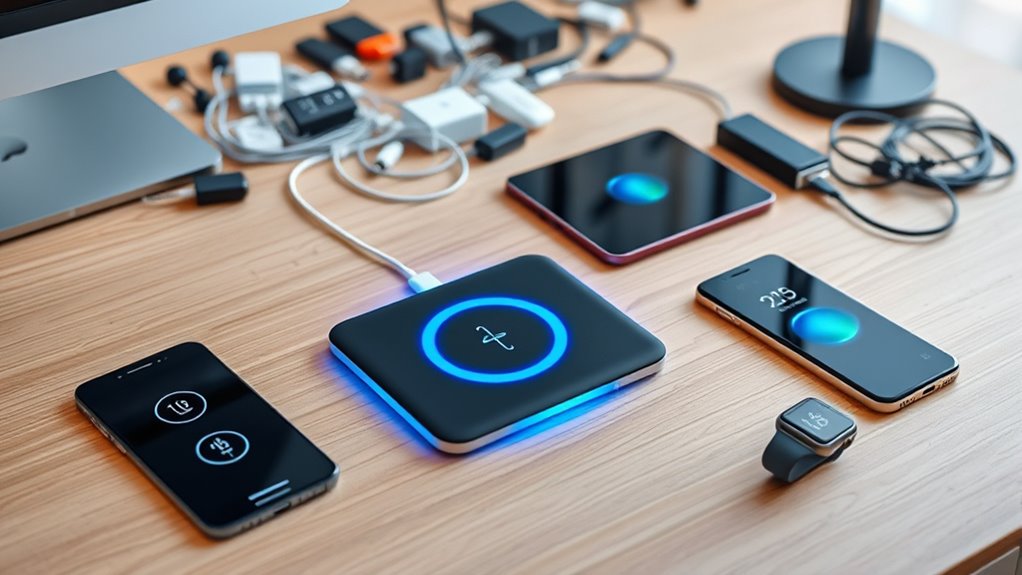
You might find that different wireless charging devices don’t always work together, which can be frustrating. While standardization efforts are making progress, compatibility remains a key challenge. Understanding these issues helps you navigate the evolving landscape of cable-free desks more effectively. Additionally, standardization efforts highlight how targeted solutions can improve specific areas of concern, similar to how standardization aims to streamline wireless charging compatibility. As the industry advances, interoperability standards are expected to further enhance device compatibility and user experience, especially as industry trends emphasize seamless device integration. Moreover, ongoing sound recording techniques development is crucial for ensuring reliable performance across various devices and environments.
Universal Compatibility Challenges
Universal compatibility remains a significant hurdle in the widespread adoption of wireless charging and cable-free desks. Different device interoperability issues and regional standards create confusion and limit seamless use across various products. You might find your device charges in one setup but not another, frustrating your experience. Manufacturers often adopt different wireless standards, making cross-device compatibility difficult. Additionally, regional standards vary, further complicating global deployment and user convenience. Without universal standards, you’ll face inconsistent charging speeds and compatibility limits. This fragmentation hampers consumer confidence and slows adoption rates. Overcoming these challenges requires aligning device interoperability and regional standards, so your devices work together smoothly regardless of brand or location. Standardization efforts are underway in the industry but have yet to produce a universally accepted solution. Achieving true wireless standardization could significantly enhance user experience and accelerate the transition to fully cable-free workspaces.
Standardization Efforts Progress
Recent efforts in standardization are making strides toward resolving compatibility issues in wireless charging and cable-free desks. Industry groups are developing interoperability standards to guarantee devices from different brands work seamlessly together. These standards aim to create a unified framework, reducing fragmentation and improving user experience. Additionally, discussions around patent licensing are progressing to address legal barriers that hinder widespread adoption. By establishing clear licensing agreements, manufacturers can avoid costly patent disputes and accelerate innovation. These advancements foster a more open ecosystem where consumers benefit from broader device compatibility and easier integration. Furthermore, nutritional considerations from related industries are influencing design choices to ensure safety and efficacy in wireless power transfer. While challenges remain, ongoing collaboration among industry stakeholders signals a promising move toward a more standardized, cable-free future.
Future Prospects and Emerging Trends

As wireless charging technology continues to evolve, future trends point toward even greater integration and convenience in our daily workspaces. You’ll see smart furniture seamlessly combining charging capabilities with ergonomic design, making devices more accessible and reducing clutter. Energy harvesting innovations will also play a key role, capturing ambient energy from light, heat, or motion to power devices sustainably. These advancements will create more self-sufficient work environments, minimizing reliance on traditional power sources. You might soon work at desks embedded with charging surfaces that automatically detect and power your devices. Additionally, the rise of intelligent furniture will enhance your productivity by providing smarter, adaptable workspaces that anticipate your needs. Overall, these emerging trends promise a wireless, cable-free future that’s more connected and efficient.
Is a Fully Wireless Workspace Achievable?

Achieving a fully wireless workspace is an exciting prospect, but it still faces significant technical and practical hurdles. Wireless aesthetics is key; you want a clean, clutter-free environment without visible cables. Energy efficiency remains a challenge, as wireless power transfer can waste energy and generate heat. To visualize this, consider the following:
| Aspect | Challenge | Solution |
|---|---|---|
| Wireless aesthetics | Maintaining a sleek workspace | Use integrated wireless tech |
| Energy efficiency | Reducing power loss during transfer | Improved coil and signal tech |
| Device compatibility | Ensuring all devices work wirelessly | Standardized wireless protocols |
| Cost | High initial setup expenses | Economies of scale |
While progress is promising, fully wireless workspaces require advances in both aesthetics and energy efficiency to become mainstream.
Frequently Asked Questions
How Secure Is Wireless Charging Against Potential Cybersecurity Threats?
Wireless charging can be fairly secure, but you should stay aware of cybersecurity vulnerabilities. While most systems use encryption to protect against data interception, malicious actors could exploit weak points. To stay safe, verify your wireless chargers and connected devices have updated security features. Avoid using public or untrusted charging zones, and consider additional protections like VPNs. Staying vigilant helps minimize the risk of cybersecurity threats affecting your wireless charging experience.
What Environmental Impacts Do Wireless Charging Technologies Have?
Wireless charging impacts environmental sustainability by reducing electronic waste, as it minimizes cable clutter and device damage. It also enhances energy efficiency by transferring power directly, reducing wasted energy. However, production of wireless chargers involves resource extraction and manufacturing processes that can harm the environment. You can help by choosing energy-efficient devices and supporting technologies that prioritize eco-friendly materials, making wireless charging a greener option overall.
Can Wireless Power Transfer Support High-Power Devices Effectively?
Wireless power transfer can support high-power devices effectively, but device efficiency varies. You might notice slower charging speeds or heat buildup with some high-power gadgets. Advances in technology are improving power transfer capabilities, making it more feasible for larger devices like laptops or even appliances. However, to get ideal performance, guarantee your device and charger are compatible and designed for high-power transfer, maximizing efficiency and minimizing energy loss.
How Do Wireless Charging Standards Influence Global Device Compatibility?
Did you know that over 90% of new smartphones support Qi, a leading wireless charging standard? This shows how standards influence global device compatibility by enabling standard interoperability across brands and regions. When standards align, you experience seamless regional compatibility, reducing hassle and ensuring your devices work wherever you go. Without unified standards, you risk incompatibility and frustration, so global cooperation in standard development remains essential for the future of wireless charging.
Are There Ergonomic Concerns With Completely Wireless Workspaces?
Yes, completely wireless workspaces can pose ergonomic concerns. You might struggle to maintain proper ergonomic posture if devices and chargers aren’t positioned ideally, leading to discomfort. The lack of defined workspace boundaries could reduce flexibility, forcing you into awkward postures. To avoid these issues, prioritize adjustable setups and guarantee your workspace promotes comfort, allowing you to benefit from the convenience of wireless tech without sacrificing ergonomics.
Conclusion
Just like Icarus reaching for the sun, we’re closer than ever to a fully wireless workspace, but pitfalls remain. While innovation soars, practical hurdles and standards still pose challenges. You might wonder if the dream of a cable-free desk is just over the horizon or if we’re flying too close to the sun. As technology advances, the promise of seamless wireless power beckons—yet, the journey to true freedom from cables continues.