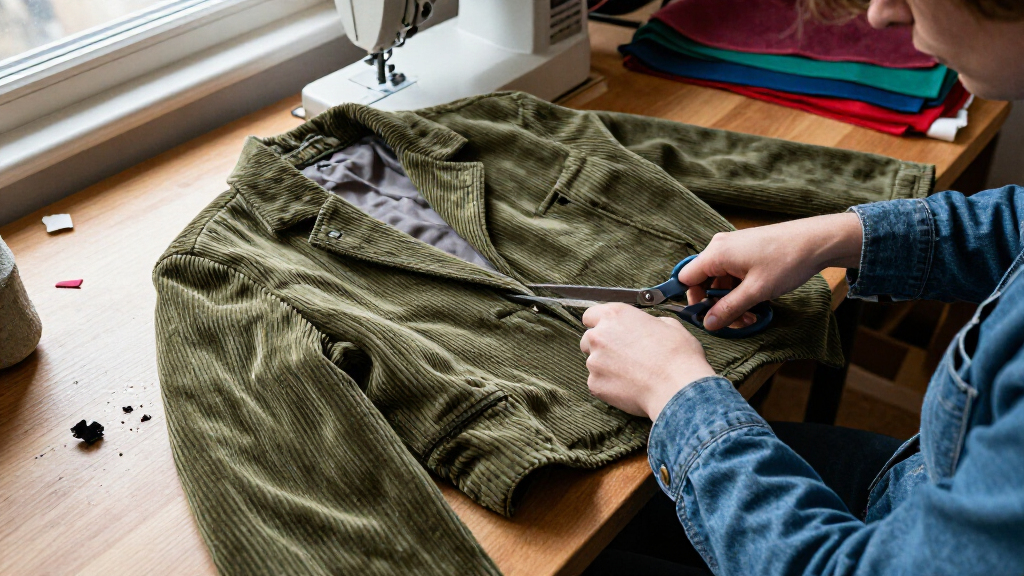
TL;DR

Get your wardrobe favorites delivered free with Prime
- Fast, free delivery on millions of items
- Prime Video, Amazon Music and more included
- Member-only deals all year
Esquire published a guide to corduroy, covering the fabric’s history, wale widths and styling options for jackets, trousers, shirts and suits. The article describes corduroy as durable and warm, while advising readers to account for its heavier feel and casual texture.
Esquire has published a guide to corduroy that explains how the ribbed fabric is made, how wale width affects its appearance and how readers can wear it. The piece presents corduroy as a warm, durable option for jackets, trousers and other wardrobe staples, while acknowledging that its texture and weight can make it less suitable for some outfits or weather.
The guide traces corduroy to fustian, a category of heavy cloth historically made largely from cotton, with wool and linen versions also found over time. Corduroy is distinguished by its raised vertical ribs, called wales. According to the article, those ridges are formed by weaving extra thread into the base fabric and trimming it to create a tufted surface.
The number of wales per inch indicates how fine or broad the ribs are: a lower wale count means thicker ridges, while a higher count produces finer ribs. Esquire says standard corduroy commonly falls around 11 to 13 wales per inch; chunky versions have lower counts, and pinwale or needlecord is generally around 16 or higher. The guide associates wider ribs with a more rugged look and finer ribs with a more refined one.
For readers new to the fabric, the article suggests starting with a corduroy jacket or five-pocket trousers. Other options include an overshirt, button-up shirt or full suit. It advises pairing corduroy with clothes that share its casual character rather than highly technical or especially formal pieces. The article also notes that corduroy can feel warmer than other fabrics and that its ribs make a noticeable sound as they rub together.
Choosing Corduroy for Everyday Wear
The guide turns a fabric that some shoppers may find difficult to style into a set of practical choices: select a garment, consider the wale width and pair it with clothes of a similar level of formality. That can help readers decide whether to try corduroy as a single jacket or pair of trousers rather than committing to a full suit.
Its advice also focuses on comfort and use, not just appearance. Corduroy’s warmth and substantial texture may suit cooler conditions, but could be uncomfortable in warmer weather or feel out of place beside lightweight, technical clothing. The article’s recommendations are style guidance, not claims that one combination is universally correct; personal taste and the garment’s cut and fabric weight still matter.
Popular right now

Dyson Cyclone V10 Origin Cordless Vacuum

Samsung 42-Inch Class OLED S90F 4K Smart TV (2025)

iRobot Roomba Max 715 Pet Robot Vacuum with AutoEmpty Dock
As an affiliate, we earn on qualifying purchases.
From Workwear to Wardrobes
Esquire says modern corduroy developed in Manchester around the mid-18th century, alongside other cotton fabrics produced there. Its durability and warmth helped it become workwear before it moved into British country clothing and spread more widely. In the United States, the article traces its presence in academic dress through the first half of the 20th century, including the familiar image of a professor in a worn corduroy jacket.
The fabric later appeared in 1960s counterculture and became especially prominent in the 1970s, according to the guide. Its popularity has since risen and fallen, but Esquire argues that it remains a recurring wardrobe staple. The article also distinguishes corduroy from Bedford cord: both have vertical ridges, but Bedford cord’s are created through the weave of the base fabric rather than by adding and trimming extra threads.
The guide cautions against treating the popular explanation that “corduroy” comes from the French phrase “corde du roi,” or “cord of the king,” as established fact. It says the word’s origin is not known with certainty and describes that derivation as likely apocryphal. The article likewise presents the proposed link between “fustian” and Fustat, near Cairo, as uncertain.
““some guys are confounded by corduroy.””
— Esquire’s corduroy guide
Origins and Styling Limits
The supplied article does not give a publication date, sales data or evidence that corduroy is undergoing a measurable rise in popularity. Its description of the fabric’s current appeal and styling advice should be read as editorial guidance, not as a report on market demand or a universal dress rule.
The word’s origin remains uncertain, and the article does not establish a definitive alternative. The proposed derivation from “corde du roi” is described as likely apocryphal; the possible connection between fustian and Fustat is also presented as unresolved. The guide offers general information about wale counts but does not compare particular products, prices, care requirements or performance across brands.
Trying the Fabric in One Piece
The article’s practical next step for readers is to start with one corduroy item, such as a jacket or five-pocket trousers, and build an outfit around its weight and casual texture. A wider wale can give an overshirt a more pronounced, rugged appearance, while finer ribs can make the fabric look more restrained. Those are broad styling cues; the specific garment and the wearer’s preferences will affect the result.
No product launch, sales event or follow-up announcement is identified in the supplied material. Readers looking for buying advice beyond the guide’s general principles would need product-specific details, including fabric composition, fit, care instructions and price, none of which are established here.
Key Questions
What is corduroy?
Corduroy is a ribbed fabric whose raised vertical ridges, called wales, are made by weaving extra thread into a base cloth and trimming it. The Esquire guide traces it to the broader fabric category known as fustian.
What does the wale number mean?
The number describes how many ridges fit into an inch. Lower numbers mean wider, thicker ribs; higher numbers indicate finer ribs. The guide puts standard corduroy at roughly 11 to 13 wales per inch and pinwale or needlecord at around 16 or more.
What is a simple way to start wearing corduroy?
Esquire suggests beginning with a jacket or five-pocket trousers. An overshirt or button-up is another option. The guide recommends pairing the fabric with clothes that feel similarly casual rather than highly technical or especially formal pieces.
Is Bedford cord the same as corduroy?
No. Both fabrics have vertical ridges, but Bedford cord’s ridges come from the way its base cloth is woven. Corduroy’s ridges are formed by adding extra thread and trimming it, according to the guide.
Is “cord of the king” the origin of the word corduroy?
The article says that explanation is likely apocryphal and that the word’s origin is not known for sure. It does not establish a definitive alternative etymology.
Source: esquire.com