TL;DR

Get your wardrobe favorites delivered free with Prime
- Fast, free delivery on millions of items
- Prime Video, Amazon Music and more included
- Member-only deals all year
Esquire’s product guide compares four art TVs: Samsung’s Frame Pro and 2026 Frame, Hisense’s 2026 CanvasTV, and a 75-inch TCL model. The options differ on price, art fees, screen sizes, picture quality and cable concealment; the rankings reflect Esquire’s editorial testing and preferences, not a universal standard.
Esquire has published a guide to four art-style televisions, recommending models from Samsung, Hisense and TCL for shoppers who want a screen that can display artwork when not in use. The picks range from Samsung’s Frame Pro and updated Frame to a 50-inch Hisense CanvasTV and a 75-inch TCL, with different trade-offs in picture quality, art access, price and installation.
Samsung’s Frame Pro is the guide’s top pick. Esquire highlights its matte, glare-reducing screen, sound, magnetic snap-on bezels and One Connect Box, which lets users place connected devices away from the TV and reduce visible cabling. Its main drawback, according to the review, is that access to the full art catalog requires a $4.99 monthly subscription. The guide says a smaller free library adds about 30 works a month and describes the paid catalog as real art rather than AI-generated images.
The 2026 Samsung Frame offers many of the same design features at a lower price, but Esquire says its picture and sound do not match the Pro. The guide also recommends the 2026 Hisense CanvasTV for shoppers seeking a screen smaller than 55 inches: its 50-inch size, Google TV interface and art library without a subscription are cited as advantages. Esquire’s team says its testing found the Hisense the best-looking art TV for the money, while noting that cord concealment takes effort and the sound is not its strongest feature.
TCL’s 75-inch model is presented as a value option for buyers seeking a large 4K screen. Esquire praises its thin profile, free art and Google TV tools for sharing personal photos. The review flags weaker color and contrast than the Samsung and Hisense models, a single bezel choice, and the fact that smaller sizes are no longer available. TCL also offers AI-generated art, a feature the guide distinguishes from its collection of other artwork.
Choosing Between Art and TV Priorities
The guide’s comparisons show that an art TV purchase is not just about screen size. Buyers are weighing how the display looks on a wall against picture performance for regular viewing, the cost and source of artwork, and the practical work of hiding cables. Samsung’s One Connect Box addresses installation aesthetics, while Hisense and TCL offer art access without a recurring subscription, according to Esquire.
Those differences can shape the total ownership experience. A subscription may be acceptable to someone who values a large curated catalog, while shoppers who prefer personal photos or free art may favor another model. The guide also advises matching size to the wall and room: the Hisense is the listed option at 50 inches, while the other choices begin at larger sizes or are available in the reviewed guide as a 75-inch TCL. These are editorial recommendations, not evidence that one TV is best for every household.
Popular right now

Samsung 42-Inch S90H OLED 4K Smart TV Bundle

Apple AirPods Pro 3 Wireless Earbuds with Active Noise Cancellation

LG C2 Series 65-Inch OLED evo 4K Smart TV (OLED65C2PUA, 2022)
As an affiliate, we earn on qualifying purchases.
What Makes a TV Look Like Art
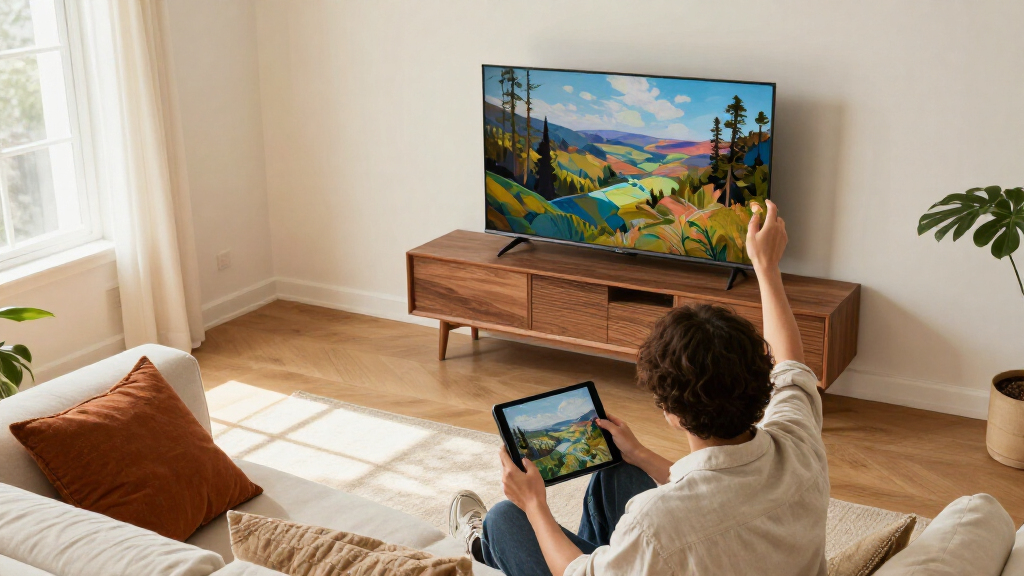
Esquire describes art TVs as televisions designed to resemble framed artwork when idle. Common features include an art display mode, anti-reflective matte screen, thin frame-like bezel and wall-flush mounting. Such features affect both appearance and setup; cable placement can be especially visible when a screen is intended to look like a picture.
The guide compares products across different priorities rather than presenting four identical models. Samsung’s lineup emphasizes its art catalog and concealed connections, while Hisense’s pitch includes a no-fee art library and smaller screen size. TCL’s reviewed option is a larger, relatively thin 75-inch set. Esquire also notes that smart-TV operating systems shape how users navigate apps and settings: Samsung has its own interface, while the Hisense and TCL models run Google TV.
“Samsung still makes the best art TV out there.”
— Esquire’s product guide on the Samsung Frame Pro
Prices and Performance Caveats
Current prices and discount terms may change; the source page displays discount labels but does not provide a dated price comparison for every model in the supplied material. The guide also does not give standardized measurements for picture quality, sound or glare, so its rankings should be read as editorial assessments based on its testing and experience.
Some product details are not specified in the supplied report, including the full model numbers, all available sizes and the precise terms of art-library access beyond the stated Samsung subscription. Buyers should check current retailer listings and manufacturer details before purchase. Esquire’s comments about its preferred size and interface are reviewer opinions rather than requirements for every room or user.
Check Fit Before Buying
Shoppers can use the four picks as a shortlist, then compare current prices, available sizes, art fees and installation needs for their own room. Esquire’s guide suggests that 55 inches is a common minimum for art TVs, with the 50-inch Hisense as an exception, and says the right size depends on the wall and viewing space. Before ordering, buyers should confirm whether the chosen model includes the desired art access, bezel options and cable setup, and whether its interface suits their preferences.
Key Questions
Which art TV does Esquire recommend overall?
Esquire names Samsung’s Frame Pro as its top art-TV pick, citing its matte screen, sound, magnetic bezels and One Connect Box. The guide also notes the subscription fee for the full art catalog and says the interface may take getting used to.
Which option has art access without a subscription?
Esquire says the Hisense CanvasTV offers art without a subscription. Its TCL review also describes free artwork and options for sharing personal photos; the guide separately mentions TCL’s AI-generated art offering.
Is there an art TV smaller than 55 inches in this guide?
Yes. The guide identifies the 50-inch Hisense CanvasTV as its choice for shoppers who need a screen below 55 inches.
What should buyers check before choosing an art TV?
Compare screen size, picture quality, art-library costs, bezel choices and cable concealment. Also check current prices and model availability, since discounts and product listings can change.
Source: esquire.com