To keep your workspace minimal like many creatives, start by using labeled containers and designated zones for different tools and supplies. Adopt routines for regular decluttering, disposing of unused items, and reorganizing when needed. Embrace a “less is more” mindset, focusing only on essential tools and materials. Simplify your environment to boost clarity and focus. Stay tuned to discover more tips on creating a clutter-free, inspiring space that sparks your creativity.
Key Takeaways
- Creatives use labeled containers and designated zones to keep supplies organized and easily accessible.
- They prioritize decluttering routines, regularly discarding unused items to maintain a tidy workspace.
- Many adopt a “less is more” mindset, limiting tools and materials to essential, favorite items only.
- Digital organization plays a key role, utilizing cloud storage and tidy digital files to reduce physical clutter.
- Maintaining a minimalist environment boosts focus, enhances creativity, and creates a calming space for innovation.
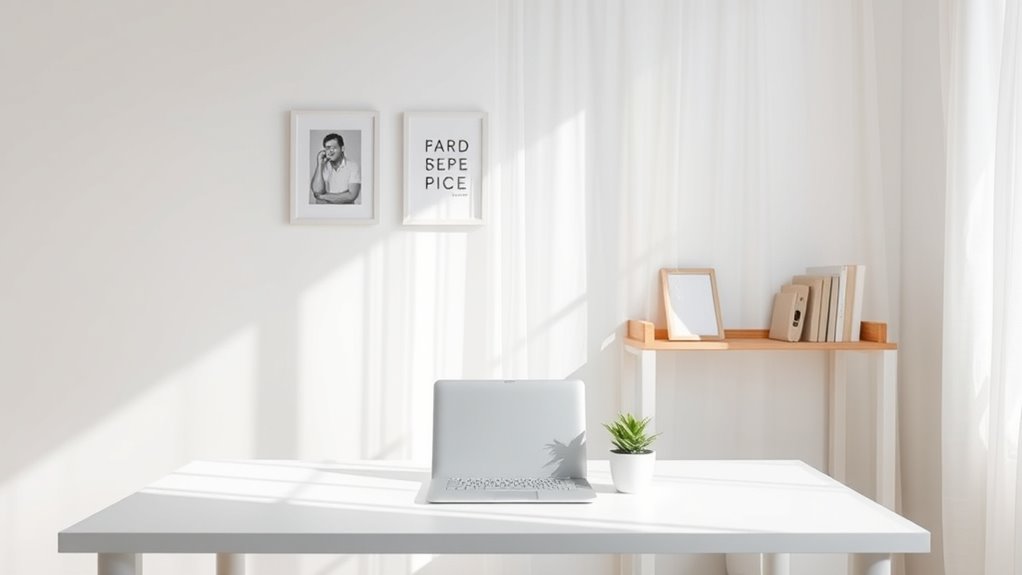
A cluttered workspace can hinder your creativity and focus, but many creatives have found simple ways to maintain minimal, inspiring environments. Central to their success are effective organizational strategies and consistent decluttering routines. When your space is organized, you free your mind from distraction, making it easier to channel your energy into your projects. These creatives often start by designing systems that keep everything in its place, such as using labeled containers, wall-mounted organizers, or designated zones for different tools and materials. This way, they don’t waste time searching for supplies or dealing with unnecessary clutter. Instead, they focus on what truly matters—creating.
Organize your space with labeled containers and designated zones to boost creativity and focus.
Establishing decluttering routines is vital for maintaining this minimal environment. Many creatives set aside a few minutes at the end of each day or week to tidy up their workspace. This habit prevents accumulation of unnecessary items and ensures that their workspace stays aligned with their creative flow. They might routinely go through their supplies, discarding or donating items that are no longer useful, or reorganize their storage so that everything remains accessible. The key is consistency—by making decluttering a regular part of their routine, they avoid the chaos that can derail their productivity.
Some creatives also adopt a “less is more” mindset, intentionally limiting the number of tools or materials they keep at hand. For example, they might choose only a handful of favorite pens, notebooks, or brushes rather than cluttering their desk with everything they own. This not only simplifies their workspace but also helps them develop a more intentional approach to their work. When you reduce the number of distractions and streamline your environment, you foster a clearer headspace for ideas to flow freely.
Additionally, they often incorporate digital organization into their routines, using apps or cloud storage to minimize physical clutter. Keeping digital files tidy and well-organized ensures that their creative process remains smooth and unencumbered by misplaced files or endless folders. It’s about creating a harmony between physical and digital spaces, so nothing pulls your attention away from your work. Furthermore, understanding the importance of innovative cloud solutions can enhance their ability to keep digital assets organized and accessible, supporting a seamless creative workflow.
Ultimately, maintaining a minimal workspace isn’t a one-time effort but a continuous practice. By implementing effective organizational strategies and sticking to decluttering routines, you can create a workspace that inspires rather than distracts. When your environment is streamlined and orderly, your creative energy flows more freely, making every project feel more manageable and enjoyable. This intentional approach transforms your workspace into a sanctuary for innovation, helping you stay focused and motivated to bring your ideas to life.

caktraie Makeup Organizer Storage with 16 Drawers, 4 Pcs Desktop Office Supplies, Desk Organizers, Clear Accessories, Dustproof Storage Drawer and for Make Up, Jewelry, Pen, Stationary
4 Pack Desk Organizers with 16 Drawers – This Maximize space on shelves, dressers ,under the sink,and bathroom…
As an affiliate, we earn on qualifying purchases.
As an affiliate, we earn on qualifying purchases.
Frequently Asked Questions
How Do Creatives Handle Clutter That Accumulates Over Time?
To handle clutter that builds up over time, you should adopt effective storage solutions and decluttering routines. Regularly set aside time to sort through your supplies, discarding what you no longer need and organizing essentials with bins or shelves. Keep a habit of tidying up daily or weekly, so clutter doesn’t accumulate. This approach helps you maintain a clean, inspiring workspace that fuels your creativity and productivity.
What Are Some Budget-Friendly Ways to Maintain Minimalism?
To keep your workspace minimal on a budget, use budget-friendly storage options like inexpensive bins or shelves. Incorporate DIY organization by repurposing containers or creating custom dividers from cardboard. Regularly declutter, keeping only essentials, and schedule quick tidy-up sessions. These simple, cost-effective strategies help you maintain a clean, inspiring environment without overspending, making it easier to stay focused and creative every day.
How Do Minimal Workspaces Influence Creativity and Productivity?
Imagine a clean, uncluttered desk bathed in soft light, where every item sparks inspiration. Minimal workspaces boost your creativity and productivity by enhancing workspace aesthetics and fostering mental clarity. With less distraction, your mind stays focused on ideas rather than chaos. This simplicity encourages innovative thinking, making it easier to generate fresh concepts and complete tasks efficiently. A tidy environment becomes a fertile ground for your best work to thrive.
Do Creatives Recommend Specific Organizational Tools or Systems?
Yes, creatives recommend using digital storage solutions to keep your workspace clutter-free. They suggest adopting labeling systems to organize files efficiently, making it easy to find what you need quickly. You should also consider cloud-based platforms for seamless access and backup. Regularly review and declutter your digital space to maintain minimalism. These tools and systems help you stay focused, boost productivity, and keep your creative environment inspiring.
How Can Minimalism Be Adapted for Collaborative Workspaces?
To adapt minimalism for collaborative workspaces, focus on digital decluttering by regularly organizing shared files and tools. Use color coordination to create visual harmony, making the space feel calm and focused. Encourage team members to keep their areas tidy and limit unnecessary items. Implement clear systems for communication and storage, ensuring everyone understands and maintains the minimal environment, which boosts productivity and reduces distractions for everyone involved.

Jakyitvi File Organizer Wall Mounted, 4 Tiers Durable Adjustable Metal Desk Organizer, Desktop Hanging File Holder with 4 Pen Slots Stable, 4 Pull-Out Divider for File, Mail, Black, Patent Pending
【Durable Metal Construction】Selected with premium metal material, this 4 tiers Wall File Organizer is not only equipped with…
As an affiliate, we earn on qualifying purchases.
As an affiliate, we earn on qualifying purchases.
Conclusion
Now that you’ve glimpsed these creative champions’ secrets, it’s clear that simplicity sparks productivity and passion. By blending balance, banishing clutter, and embracing intentionality, you can craft a workspace that’s both inspiring and inviting. Let their lessons lead you to a space that’s sleek, serene, and seamlessly suited to your style. Remember, minimalism isn’t just a method; it’s a mindset that makes your work more wonderful and your world more welcoming.

ACEES Gel Pens, 6 Pcs 0.5mm Fine Point Black Ink Pen With Smooth Writing, Office Desk Accessories, Writing Supplies Gifts for Men Women, Quick Dry Pens Ballpoint For Journaling, Black/Gray/White
[Gel Pens Package] You will receive 6pcs quick-drying ink pens with a modern minimalist design, Soft silicone features…
As an affiliate, we earn on qualifying purchases.
As an affiliate, we earn on qualifying purchases.

Five Star Expanding File Organizer + Study App, 7-Pocket Accordian File Organizer, Zipper Closure, Holds 8-1/2" x 11" Paper, Amethyst Purple (350099G-ECM)
LASTS ALL YEAR. GUARANTEED! Guarantee is valid for one year from purchase or delivery date, whichever is longer….
As an affiliate, we earn on qualifying purchases.
As an affiliate, we earn on qualifying purchases.