
Silicon Valley offices have evolved from private cubicles designed for individual focus to open, collaborative spaces that encourage spontaneous interaction. Tech culture influences sleek, minimalist designs and social zones like cafes and lounges that foster connection and relaxation. Modern workspaces now emphasize flexibility, with features supporting remote work and clean, clutter-free desks. To discover how these changes create inspiring environments that boost innovation and well-being, keep exploring this dynamic transformation.
Key Takeaways
- Silicon Valley offices evolved from private cubicles focusing on individual work to open, collaborative spaces promoting team interaction.
- The shift emphasizes flexible, adaptable layouts that support hybrid work models and spontaneous collaboration.
- Modern designs incorporate social areas like cafes and lounges to enhance employee well-being and informal interaction.
- Sustainability and eco-friendly features, such as green roofs and energy-efficient systems, are now integral to office design.
- Technological advancements and wellness initiatives foster healthier, inspiring environments that prioritize comfort, creativity, and productivity.
The Era of Cubicles: Privacy and Personal Space

During the rise of the cubicle era, companies prioritized creating designated personal spaces for employees, believing it would boost productivity and focus. You’d find private booths and personalized cubicles designed to give you a sense of ownership and control over your workspace. These cubicles typically featured partitions, allowing for some privacy while still being part of a larger office environment. You could customize your space with personal items, making it feel more comfortable and familiar. The goal was to reduce distractions and improve concentration. With these dedicated areas, you might have felt more productive and focused, knowing you had your own territory within the bustling office. This approach marked a shift towards valuing individual workspaces and the importance of personal privacy at work. Additionally, the use of office partitions helped to maximize privacy and define personal boundaries in open-plan layouts. Creating a sense of personal territory was central to fostering employee satisfaction and efficiency during this period, which reflected the broader trend of workspace customization gaining popularity in office design. Furthermore, advancements in cubicle design contributed to improved acoustic privacy and ergonomics, enhancing overall employee comfort. This focus on personalized workspaces was often supported by innovations in ergonomic furniture that aimed to improve comfort and health for employees working in cubicles.
The Rise of Open-Plan Designs and Collaborative Areas
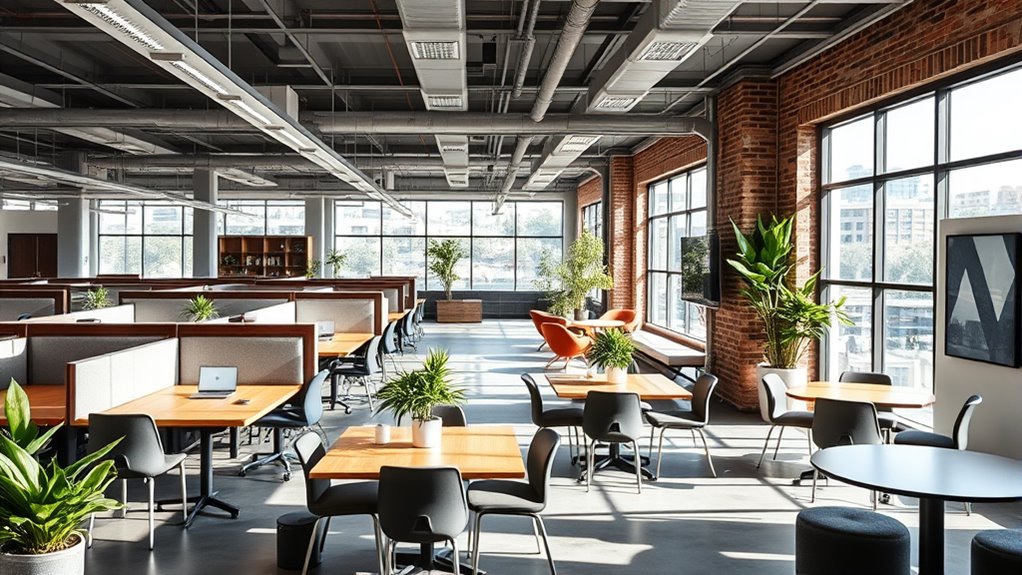
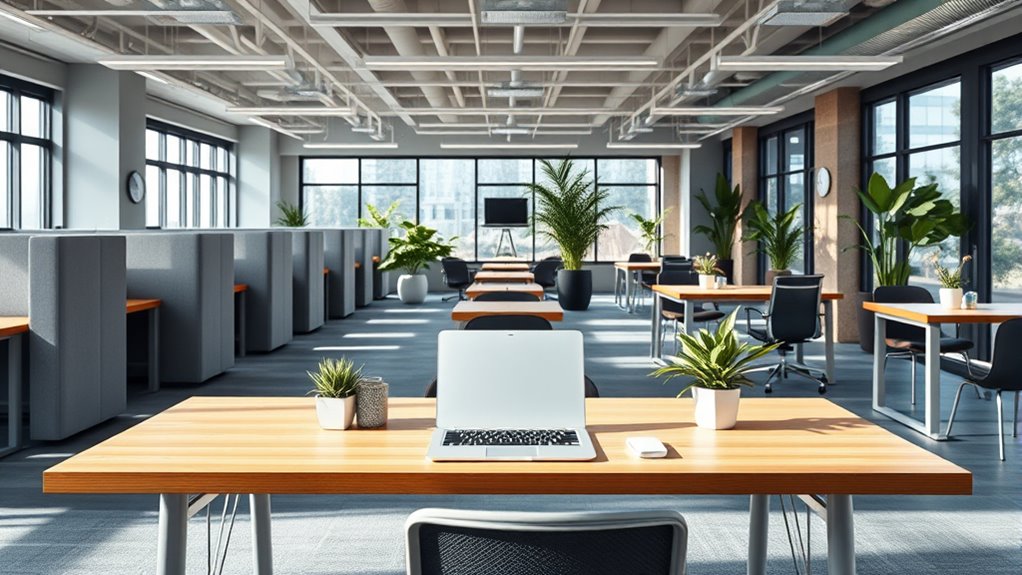
Open-plan designs have transformed Silicon Valley offices by boosting team interaction and communication. Spacious collaborative zones encourage spontaneous ideas and teamwork, breaking down barriers. As a result, these layouts foster a more dynamic and connected work environment. Incorporating natural light and ergonomic furniture further enhances employee well-being and productivity in these open spaces. Additionally, integrating advanced audiovisual systems can facilitate seamless presentations and remote collaboration, making these environments even more versatile and efficient. Recognizing the importance of emotional support can also contribute to a healthier workplace atmosphere, promoting employee satisfaction and collaboration. Understanding collaborative environments is essential for designing spaces that maximize teamwork and innovation. Furthermore, paying attention to acoustic design can significantly improve focus and reduce distractions in open-plan offices.
Enhanced Team Interaction
As Silicon Valley companies seek to boost collaboration, open-plan designs and dedicated collaborative areas have become essential features of modern office spaces. These setups encourage spontaneous conversations, idea sharing, and teamwork. You’ll notice that ergonomic furniture is often integrated to keep team members comfortable during long brainstorming sessions. With virtual collaboration tools now common, physical space isn’t the only way teams connect; open areas facilitate face-to-face interactions that strengthen relationships and trust. Collaborative zones are flexible, allowing teams to adapt spaces for different projects or group sizes. This shift fosters a dynamic environment where interaction flows naturally, boosting creativity and productivity. You’ll find that these design choices support both in-person and remote teamwork, keeping teams aligned and engaged.
Spacious Collaborative Zones
The trend toward spacious collaborative zones has transformed office environments by prioritizing openness and flexibility. Instead of isolated cubicles, you’ll find large, airy areas designed to foster teamwork and creativity. These spaces often feature private pods, giving you a quiet spot to focus or have one-on-one discussions without disrupting others. Ergonomic chairs are standard, ensuring comfort during extended brainstorming sessions. Open-plan designs encourage spontaneous interactions, boosting innovation and communication among team members. You’re encouraged to move freely between different zones, choosing the best environment for your task—whether collaborative or private. This shift promotes a more dynamic, engaging work atmosphere that adapts to your needs and enhances overall productivity. Spacious collaborative zones exemplify how office design evolves to support modern work styles. Comfort and support solutions also play a key role in creating a productive environment, ensuring employees remain comfortable and engaged throughout their workday. Additionally, incorporating ergonomic furniture can help reduce fatigue and prevent strain during long periods of work. Furthermore, the use of flexible layouts allows spaces to be easily reconfigured for different activities, supporting diverse work preferences. Modern office designs increasingly incorporate adaptable spaces to meet the evolving needs of dynamic teams and leverage data-driven marketing strategies to optimize workspace utilization.
The Influence of Tech Culture on Office Aesthetics

You notice how tech companies often prioritize innovative office designs that foster creativity. The casual atmosphere in these workplaces reflects a shift toward relaxed, collaborative cultures. This approach influences every aspect of office aesthetics, shaping environments that encourage openness and interaction. Incorporating modern design principles can further enhance these innovative spaces, promoting productivity and employee well-being. Emphasizing employee comfort has become a key aspect of this evolving office environment, aligning with the broader trend of prioritizing mental health and job satisfaction. Additionally, promoting mindful decluttering can help maintain an organized and inspiring workspace, supporting overall office efficiency and employee satisfaction. For example, incorporating plant life through self watering plant pots can improve air quality and create a calming atmosphere. As part of this aesthetic evolution, utilizing ergonomic furniture ensures comfort and reduces physical strain for employees throughout their workday.
Innovative Office Designs
Innovative office designs in Silicon Valley reflect the region’s vibrant tech culture, where creativity and collaboration drive physical spaces. You’ll notice how artificial intelligence influences layouts, making work environments smarter and more adaptable. Open-plan offices, modular furniture, and tech-integrated features foster interaction and flexibility. Sustainability initiatives also shape these designs, with solar panels, green roofs, and energy-efficient systems becoming standard. These features demonstrate a commitment to reducing environmental impact while enhancing employee well-being. You might see communal areas that encourage spontaneous conversations or quiet zones for focused work. The emphasis on innovation pushes companies to rethink traditional office setups, blending cutting-edge technology with eco-conscious solutions. Navigation and mapping technologies are increasingly integrated into office spaces to optimize layout efficiency and employee movement. This approach creates dynamic spaces that reflect Silicon Valley’s forward-thinking, tech-driven identity, emphasizing office space adaptability and user-centered design principles. Additionally, the integration of sustainable materials highlights the industry’s focus on environmental responsibility and long-term durability.
Casual Workplace Atmosphere
As Silicon Valley companies embrace a more relaxed work culture, office aesthetics increasingly reflect a casual, approachable vibe. This shift promotes a sense of community and supports employee wellness. You’ll notice several key features:
- Open, flexible spaces that encourage collaboration and spontaneous conversations.
- Lounge areas with comfy seating, fostering informal interactions and relaxation.
- Integration of remote work options, allowing employees to choose environments that boost comfort and productivity.
- Incorporating elements of office design that prioritize comfort and flexibility further enhances the casual atmosphere.
This casual atmosphere helps reduce stress, boosts morale, and supports work-life balance. It signals that the company values employee well-being, making the workspace more inviting. As a result, tech firms attract talent seeking a less rigid, more human-centered environment that adapts to modern work habits.
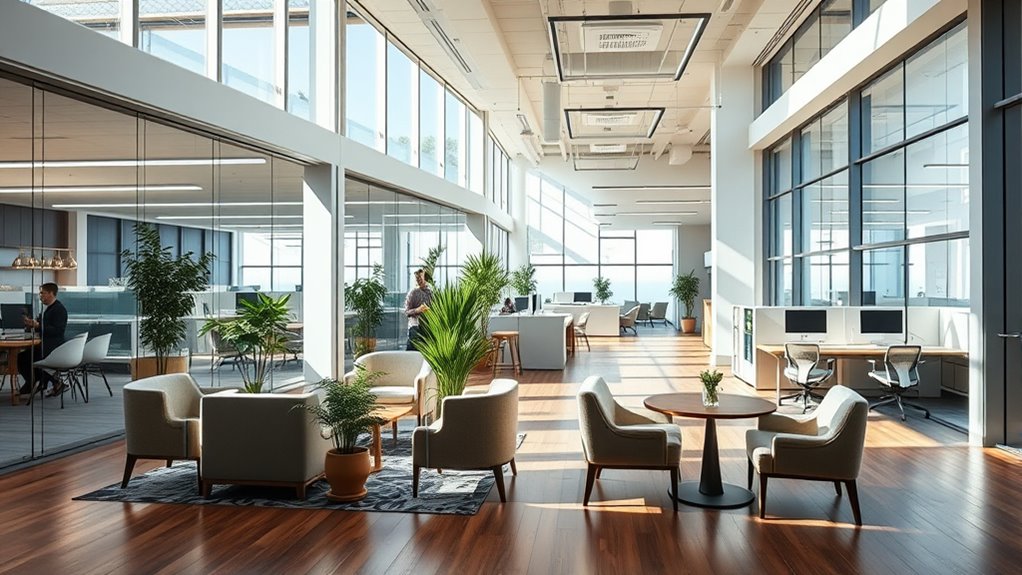
Incorporating social spaces like cafes and lounge areas has become a key trend in Silicon Valley office design, fostering collaboration and boosting employee well-being. These spaces encourage spontaneous interactions and creative thinking, making them an essential part of the work environment. To enhance comfort and usability, designers often incorporate ergonomic furniture that supports better posture during breaks. Additionally, artificial lighting in these areas is carefully curated to create a welcoming atmosphere while reducing eye strain. By blending functional design with inviting aesthetics, cafes and lounges become more than just休息 spots—they serve as informal collaboration hubs. This approach helps break down traditional office boundaries, creating a vibrant, engaging space where employees can recharge and connect more naturally. Recognizing the importance of inner wisdom in fostering a positive work culture can further enhance these communal spaces.
The Shift Toward Flexibility and Remote Work Integration
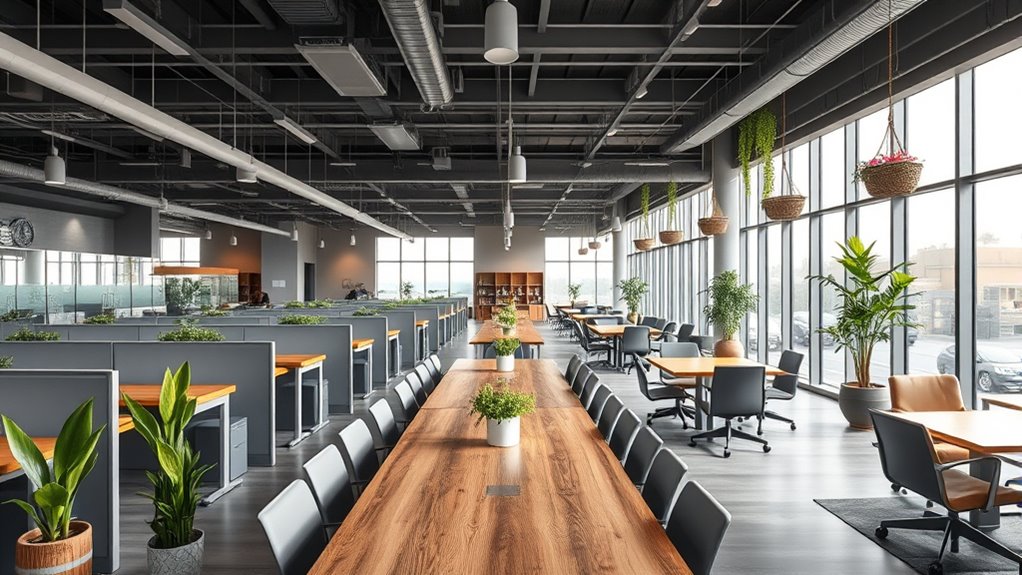
The rise of flexible work arrangements and remote options is reshaping how Silicon Valley companies design their office spaces. You now see spaces that support digital nomadism, allowing employees to work from anywhere. This shift encourages virtual collaboration, making physical proximity less essential. To adapt, companies are focusing on:
- Creating hybrid work models that blend in-office and remote work.
- Designing flexible layouts that can easily accommodate changing team sizes.
- Investing in technology for seamless virtual collaboration, enabling employees to stay connected regardless of location. These changes reflect a broader move toward accommodating diverse work styles and increasing productivity. As a result, offices serve more as hubs for collaboration than fixed workstations, aligning with the evolving needs of modern workers.
Modern Trends: Clean Desks and Innovative Work Environments
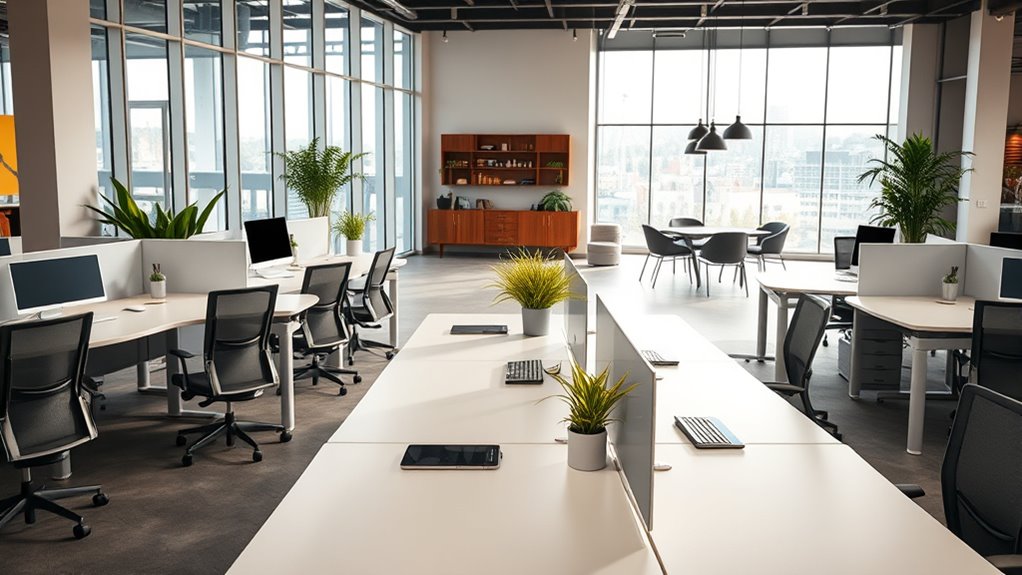
Modern trends in Silicon Valley office design emphasize clean, clutter-free workspaces that promote focus and efficiency. You’ll notice a shift toward minimalist setups, where artificial intelligence tools help organize tasks and optimize workflows. This streamlined environment reduces distractions, allowing you to concentrate on innovation. Wellness initiatives also play a key role, encouraging employees to maintain healthy habits through ergonomic furniture and dedicated relaxation areas. These spaces foster collaboration while supporting individual productivity. Companies are investing in environments that balance technology and well-being, recognizing that a tidy workspace and holistic health initiatives boost creativity and morale. As a result, modern offices are not just about aesthetics but about creating sustainable, inspiring settings that enable you to perform at your best.
Frequently Asked Questions
How Have Office Designs Impacted Employee Productivity and Satisfaction?
You’ll notice that open plan layouts boost collaboration and creativity, but they can also cause distractions. Private retreats offer you a quiet space to focus and recharge, improving overall satisfaction. When your office design balances these elements, your productivity increases, and you feel more engaged. Overall, thoughtful office designs foster a positive environment, making you more motivated and satisfied with your work.
What Role Does Technology Play in Transforming Office Environments?
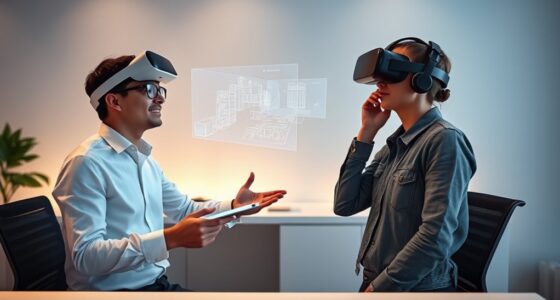
Technology transforms your office environment by enabling virtual collaboration, so you can work seamlessly with colleagues worldwide. Wearable devices help monitor your health and boost productivity by providing real-time feedback. These innovations create flexible, connected spaces where you feel more engaged and efficient. As technology evolves, your workspace adapts to support innovation, collaboration, and well-being, making your daily work experience more dynamic and satisfying.
Are Eco-Friendly Office Practices Incorporated Into Modern Silicon Valley Workspaces?
Yes, eco-friendly practices are integrated into modern Silicon Valley workspaces. You’ll notice green building designs that maximize energy efficiency and use sustainable materials, reducing environmental impact. Companies also focus on waste reduction by promoting recycling, composting, and minimal packaging. These initiatives create healthier work environments, lower carbon footprints, and demonstrate a commitment to sustainability, aligning with the tech industry’s innovation and responsibility.
How Do Companies Measure the Success of Flexible Work Arrangements?
You measure the success of flexible work arrangements by tracking employee engagement levels and innovation metrics. When employees feel more engaged, productivity and satisfaction rise. You also look at how often new ideas are generated and implemented, indicating innovation. Regular surveys, performance data, and feedback help you assess if flexible policies foster collaboration and creativity, ensuring they support your company’s goals and culture effectively.
What Challenges Do Companies Face When Redesigning Traditional Office Spaces?
When redesigning traditional office spaces, you face challenges like balancing office zoning to foster collaboration and privacy, ensuring furniture ergonomics for employee comfort, and managing costs. You also need to think about flexibility for future changes and address employee preferences. Managing these aspects requires careful planning, clear communication, and investment in adaptable solutions to create a productive, comfortable environment that supports your company’s evolving needs.
Conclusion
As you step through the evolving landscape of Silicon Valley offices, think of it as a journey from cozy caves to bustling city squares. Each shift reflects a desire for connection, creativity, and comfort. Embrace these changes like a traveler exploring new territories—adapting, discovering, and finding your own space within the vibrant mosaic. The office world keeps transforming, but ultimately, it’s about creating a place where you can thrive and innovate.