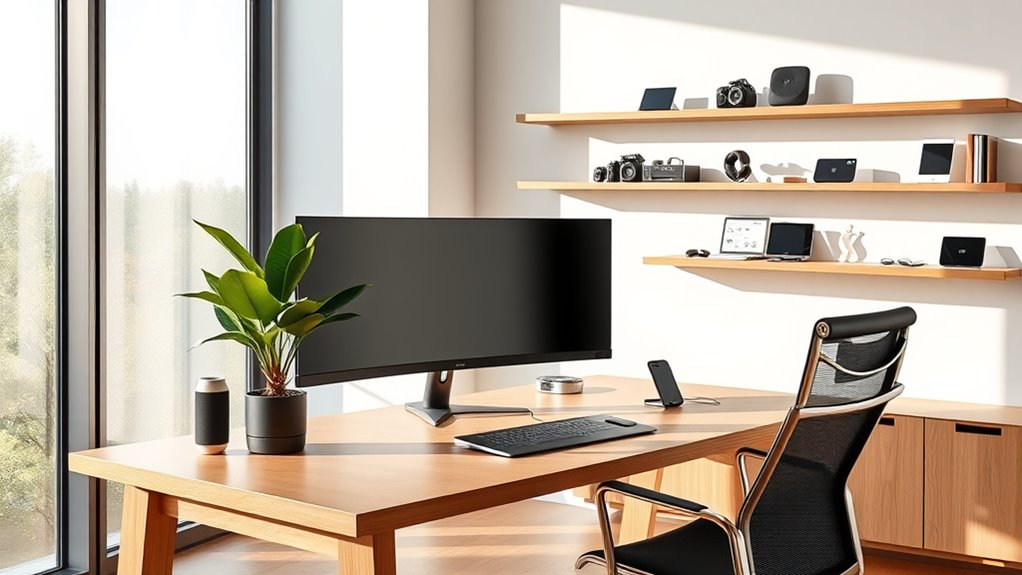

In 2025, flexible hybrid work arrangements and ergonomic, tech-enhanced workspaces are key trends. You’ll see smart home devices like voice assistants, adaptive lighting, and AR displays helping you stay productive and comfortable. Virtual collaboration tools are essential, and digital wellness apps support mental health. Out will be rigid office setups and outdated tech. To stay ahead, explore how these innovations can transform your home office experience. Keep going to discover more about these exciting shifts.
Key Takeaways
- Hybrid work models and flexible schedules will dominate, emphasizing ergonomic furniture and dedicated workspaces.
- Smart home office technologies like voice assistants and augmented reality will enhance productivity and engagement.
- Workspace organization and digital wellness tools will be essential for reducing stress and boosting efficiency.
- Visual and environmental enhancements such as adaptive lighting and projector integrations will create dynamic remote setups.
- Security and performance tuning of digital tools will be prioritized to ensure safe and effective hybrid work environments.
The Rise of Hybrid Work Models and Flexible Schedules

As organizations continue to adapt to changing work dynamics, hybrid work models and flexible schedules are becoming the norm rather than the exception. You’ll find that balancing in-office and remote work requires the right setup, starting with ergonomic furniture to support your comfort during long hours. This flexibility allows you to choose when and where you work, but it also emphasizes the importance of effective virtual collaboration tools. With hybrid models, you need a dedicated workspace that promotes productivity and reduces distractions. By investing in ergonomic furniture, you’ll improve your posture and focus, while seamless virtual collaboration keeps you connected with colleagues. Embracing these trends ensures you stay agile, efficient, and well-supported in today’s evolving work environment. Incorporating proper workspace organization can also enhance your overall comfort and efficiency. Additionally, maintaining a clean and organized space helps reduce stress and improves productivity levels, which is essential for a successful remote or hybrid setup. Using ergonomic principles to design your workspace can further boost comfort and prevent strain during long work sessions. Implementing smart home technology such as adaptive lighting can further optimize your environment for comfort and focus during work hours. Moreover, considering projector integration can create versatile visual setups that enhance your home office experience.
Smart Home Office Technologies and Digital Wellness Tools
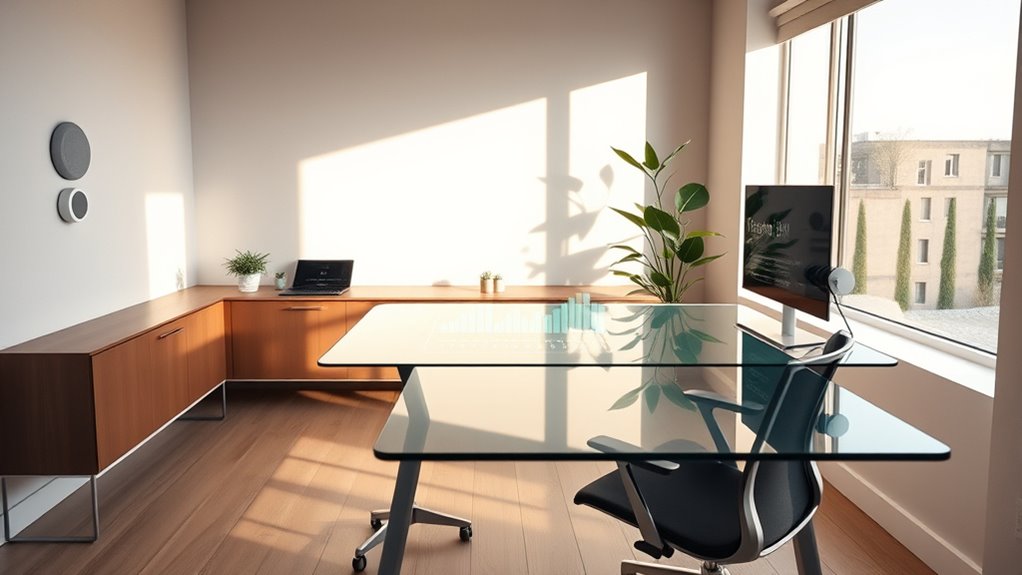
Have you explored how smart home office technologies and digital wellness tools can transform your workday? These innovations boost productivity and well-being simultaneously. Voice activated assistants help you manage schedules, control lighting, and set reminders effortlessly. Augmented reality displays enable immersive virtual meetings, making collaboration more engaging. Smart thermostats maintain ideal comfort, while wellness apps monitor stress levels and encourage breaks. Consider integrating these tools:
- Voice activated assistants for hands-free control
- Augmented reality displays for immersive experiences
- Smart lighting adjustable to circadian rhythms
- Wellness apps to promote mental health
Incorporating performance tuning and thorough due diligence into your selection of these tools can help ensure they meet your specific work needs and security standards. Additionally, understanding the importance of digital security can help protect your data in an increasingly connected workspace.
Frequently Asked Questions
How Will Hybrid Work Impact Employee Productivity Long-Term?
Hybrid work boosts your productivity long-term by offering flexibility and reducing burnout. You’ll benefit from ergonomic furniture that supports your health and comfort, making long hours easier. Virtual collaboration tools improve communication, keeping you connected with colleagues regardless of location. This setup encourages focus and innovation, helping you stay engaged and efficient. Over time, hybrid work’s adaptability fosters a healthier work-life balance, ultimately enhancing your overall productivity.
What Are the Privacy Concerns With Smart Home Office Tech?
Imagine your smart speaker accidentally records a private conversation, raising data privacy issues. Smart home office tech heightens surveillance concerns because devices like cameras and microphones monitor your activities continuously. This data collection can be exploited or hacked, compromising your privacy. You should be aware of these risks, guarantee devices have strong security measures, and understand how your data is used to protect yourself from potential privacy breaches.
How Can Digital Wellness Tools Improve Mental Health at Home?
Digital wellness tools like mindfulness apps can help you manage stress and improve focus at home. Pair them with ergonomic accessories to support your physical health, reducing discomfort and fatigue. By integrating these tools into your daily routine, you’ll boost your mental well-being, foster better work-life balance, and create a healthier, more productive home office environment. These simple steps make a significant difference in maintaining your overall mental health.
Will Flexible Schedules Affect Team Collaboration and Communication?
Like a well-conducted orchestra, flexible schedules can enhance remote teamwork, but they also pose communication challenges. You’ll find that when team members manage their time, collaboration becomes more efficient, yet staying in sync requires intentional effort. To succeed, prioritize clear communication and flexible tools, ensuring everyone’s on the same page. Embrace the rhythm of adaptable hours, and you’ll foster stronger teamwork while overcoming potential hurdles.
What Are the Cost Implications of Integrating New Home Office Technologies?
Integrating new home office technologies can lead to significant cost savings by reducing expenses like commuting, office space, and utilities. While initial technology investments may seem high, they often pay off through increased productivity and efficiency. You’ll need to budget for quality equipment and ongoing support, but the long-term benefits of streamlined communication and remote collaboration outweigh the upfront costs. Ultimately, smart tech investments boost your team’s performance and save money.
Conclusion
As you embrace the future of home offices in 2025, staying adaptable is key. Imagine switching to a smart desk that automatically adjusts for your comfort or using digital wellness tools to maintain focus. For example, Sarah, a remote worker, integrated voice-activated devices and flexible hours, boosting her productivity and well-being. By adopting these trends, you’ll create a workspace that’s not just functional but also supports your overall health and happiness.