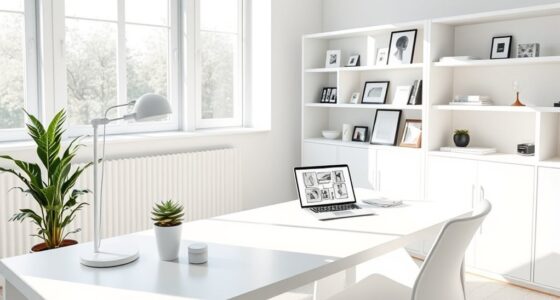
To tidy up your office using Marie Kondo’s method, start by evaluating each item to see if it sparks joy or serves a purpose. Discard things you no longer need, like old notes or broken supplies, and thank each item before letting it go. Keep only what truly benefits your workspace, and organize the rest mindfully. If you keep practicing these steps, you’ll discover more ways to create a calm, productive environment.
Key Takeaways
- Evaluate each item in your workspace to determine if it sparks joy or serves a purpose before keeping it.
- Remove unnecessary clutter, such as outdated notes, broken supplies, or unused digital files, to create a more mindful environment.
- Store only essential items within arm’s reach, placing less-used materials out of sight to reduce visual clutter.
- Regularly reassess your workspace, discarding items that no longer bring joy or function to maintain order.
- Practice gratitude for your belongings during decluttering to foster a mindful and purposeful approach to organization.

A cluttered office can hinder your productivity and increase stress. When your workspace is chaotic, it’s harder to focus on your tasks and feel motivated. The first step to transforming your office is to tackle desk organization. Clear off your desk and remove everything that doesn’t serve a specific purpose. Group similar items together—pens, papers, chargers—so you can easily find what you need without digging through clutter. Use trays, drawer dividers, or containers to keep small items tidy. Keep only the essentials within arm’s reach and store the rest out of sight. This simple act of decluttering your workspace creates a sense of order and makes your desk a welcoming environment for work.
Once your physical space is organized, it’s time to think about digital decluttering. Your digital files, emails, and desktop icons can quickly become overwhelming if left unchecked. Start by deleting files you no longer need and organizing important documents into clearly labeled folders. Use a consistent naming system so you can locate files effortlessly later. Unsubscribe from unnecessary email lists to reduce inbox clutter and set up filters to prioritize important messages. Regularly schedule time to review and tidy your digital workspace, just as you would with physical clutter. This process prevents digital chaos from sapping your productivity and helps you maintain a clean, efficient workspace. Incorporating organization strategies can further enhance your ability to stay on top of clutter and maintain order over time.
Applying Marie Kondo’s method to both physical and digital clutter involves asking yourself if each item sparks joy or serves a purpose. If it doesn’t, it’s time to let it go. For your desk, this might mean removing old notes, broken office supplies, or outdated tech. For your digital files, it could mean deleting duplicates, archiving completed projects, or clearing out unused apps. As you declutter, take a moment to thank each item for its service before letting it go—this mindful approach makes the process less about discarding and more about creating a space that truly supports you.
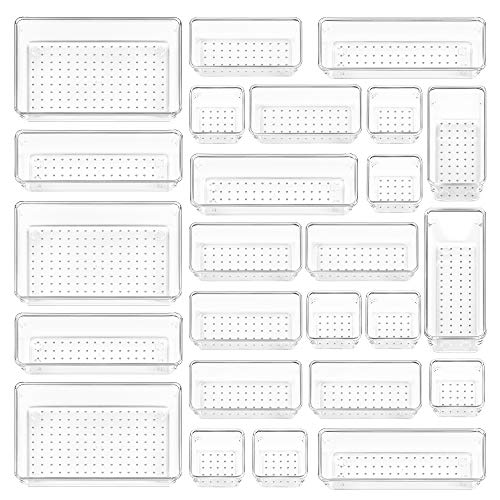
Vtopmart 25 PCS Clear Plastic Drawer Organizers Set, 4-Size Versatile Bathroom and Vanity Drawer Organizer Trays, Storage Bins for Makeup, Bedroom, Kitchen Gadgets Utensils and Office
✔Make Everything Organized — These clear versatile drawer dividers trays are perfect for any place in your home….
As an affiliate, we earn on qualifying purchases.
As an affiliate, we earn on qualifying purchases.
Frequently Asked Questions
How Long Does a Full Office Decluttering Typically Take?
A full office decluttering usually takes anywhere from a few hours to a full day, depending on the size and clutter level. You’ll want to allocate enough time for sorting, using effective storage solutions, and maintaining good time management. Break the process into manageable blocks, so you stay focused and avoid burnout. This way, you can create a tidy, inspiring workspace without feeling overwhelmed or rushing through the task.
What Should I Do With Items That Are Sentimental but Unnecessary?
You should consider keeping sentimental items that truly spark joy, even if they seem unnecessary keepsakes. For those that don’t, take a moment to thank them for their role in your life, then let go. Store the most meaningful sentimental items in a special box or display. This way, you honor your memories while maintaining a clutter-free workspace. Trust your intuition to decide what’s truly important to keep.
How Can I Maintain Organization After Tidying Up?
Think of maintaining your workspace like tending a garden; it requires ongoing care. To keep organized, you should build habit formation into your daily routine—spend a few minutes each day tidying and evaluating your space. Regular ongoing maintenance prevents clutter from taking over again. Set reminders or create a quick checklist to help stay consistent, ensuring your workspace stays tidy, functional, and inspiring over time.
Is It Okay to Discard Items That Might Be Useful Later?
Yes, it’s okay to discard items that might be useful later, but consider their sentimental value first. If an item has little sentimental value and you haven’t used it in a long time, it’s likely best to let it go. Holding onto too many useful items can clutter your workspace and hinder productivity. Trust your judgment, and only keep what genuinely serves a purpose or holds meaningful sentimental value.
How Do I Handle Digital Clutter During Office Organization?
Imagine your digital space as a cluttered attic; a digital cleanup helps you find what truly sparks joy. Start by deleting unnecessary files and organize important ones into folders. Use cloud storage to keep backups accessible and reduce local clutter. Regularly review and tidy your digital files, just like you would physical items, to keep your workspace clear and focused. This way, your digital world remains neat and inspiring.

Marbrasse 2 Pack Desk Drawer Organizer, Mesh Drawer Organizer Tray with 8 Adjustable Compartments, Desk Organizers and Accessories, 5 Dividers Drawer for Office Supplies, Makeup & Vanity (Black)
【2 Pack Drawer Organizer】: Marbrasse discovered the customer's demand for drawers and quickly launched the 2-pack mesh drawer…
As an affiliate, we earn on qualifying purchases.
As an affiliate, we earn on qualifying purchases.
Conclusion
So, go ahead, embrace Marie Kondo’s magic and turn your cluttered chaos into a pristine sanctuary. Because nothing says productivity like desperately trying to thank your old coffee mug before tossing it out. Remember, a tidy office might just be your secret weapon—or at least a great excuse to avoid actually doing work. So, thank your junk, fold your worries away, and watch your productivity magically appear… or at least look a lot better.

My Analog Vault for My Digital Life: Offline Password Keeper Notebook to Track Usernames, Passwords, Websites & Digital Accounts
As an affiliate, we earn on qualifying purchases.
As an affiliate, we earn on qualifying purchases.

IRIS USA File Box, Plastic File Boxes With Lids, Document Organizer for Letter/Legal File, Document Box, Storage Bin For Hanging Files, Secure Latching Lid Stackable BPA-Free, Clear 35 Qt. 1 Pack
HANGING FILE LEDGE: File storage container fits either letter or legal hanging file folders easily with a ledge…
As an affiliate, we earn on qualifying purchases.
As an affiliate, we earn on qualifying purchases.