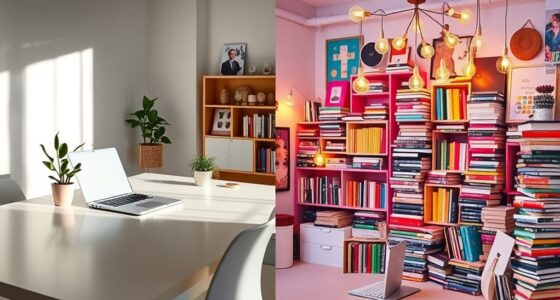

Sparse spaces can both help and hinder your imagination, depending on your personal style and preferences. A minimal environment reduces distractions and creates a calm setting, boosting focus and deep thinking. However, if you need visual cues or stimulating details to spark ideas, a too-sterile space might feel uninspiring. Finding the right balance tailored to your needs can release your creative potential—there’s more to discover if you keep exploring.
Key Takeaways
- Minimalistic spaces reduce distractions, fostering focus and deeper creative thinking for many individuals.
- Neutral and muted colors in minimal environments evoke calmness but may limit visual stimulation for some.
- Personal preferences influence whether sparse spaces inspire or hinder creativity; personalization enhances effectiveness.
- Excessive simplicity can feel sterile and uninspiring, potentially dampening imaginative processes.
- Balancing minimalism with subtle visual elements supports diverse creative needs and optimizes inspiration.
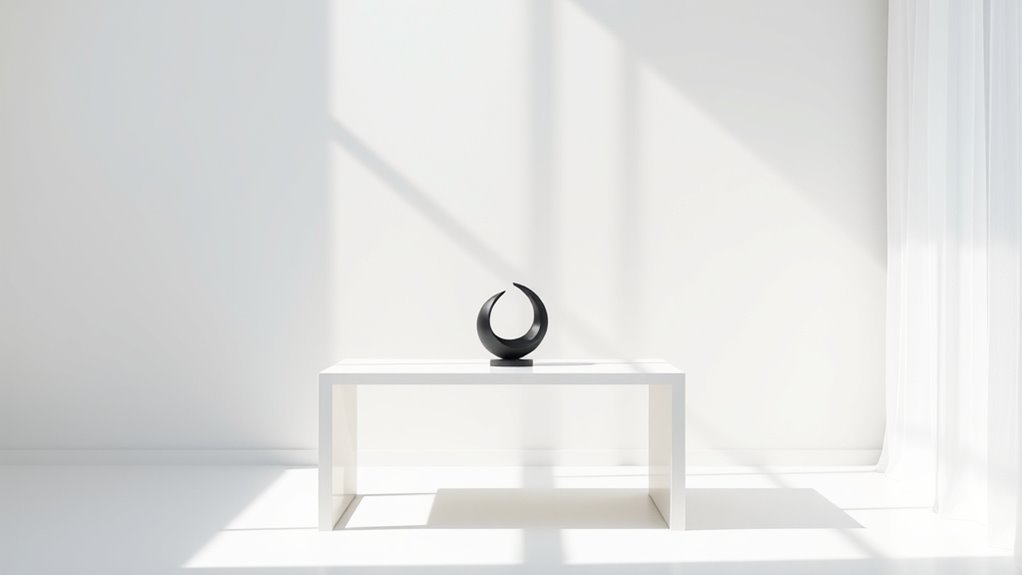
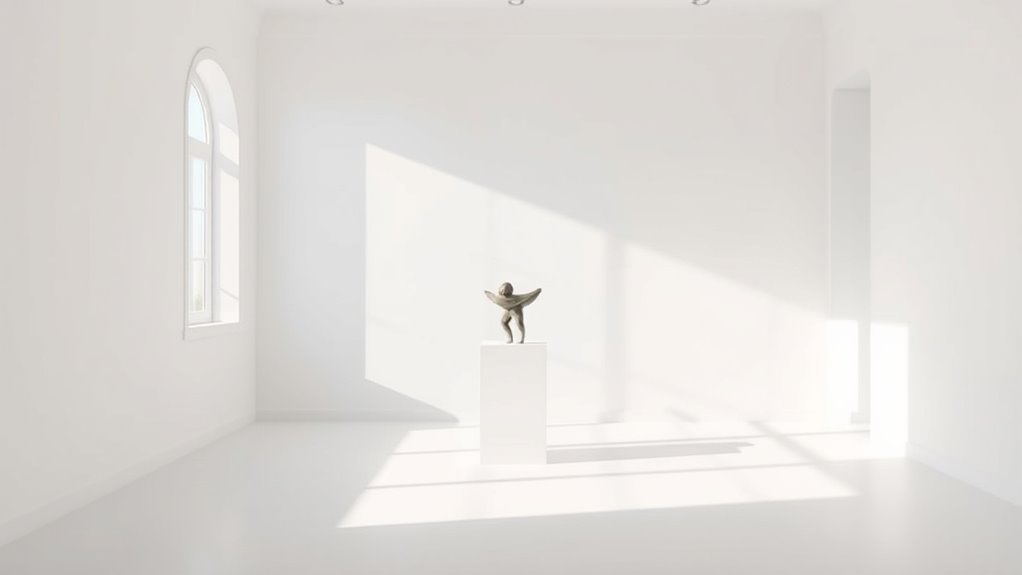
Have you ever wondered if simplicity stifles innovation or fuels it? When you walk into a minimalistic space, the clean lines and uncluttered surfaces immediately catch your eye, but it’s natural to question whether such sparse environments limit your creative potential. One thing to contemplate is how color psychology plays a role in these settings. With fewer objects and neutral tones, your mind isn’t overwhelmed by a barrage of vivid hues, allowing you to focus better. Soft, muted colors in minimal spaces can evoke calmness and clarity, making it easier to concentrate on your ideas. Conversely, some argue that a lack of vibrant stimuli might dampen creative sparks, as color often acts as an emotional catalyst. Still, the impact of color varies from person to person; some thrive in subdued palettes, while others flourish amid bold, energetic shades.
Another aspect to consider is environmental distraction. A cluttered or chaotic environment can be a significant barrier to creative flow, pulling your attention away from your work. Minimalism reduces this environmental distraction, creating a quiet backdrop where your thoughts can unfold more freely. When your surroundings are streamlined, your mind isn’t constantly darting to misplaced objects or visual noise, which helps maintain focus and encourages deeper thinking. This deliberate simplicity can serve as a blank canvas, fostering space for new ideas to take shape. Additionally, environmental psychology shows that our surroundings profoundly influence cognitive processes and emotional states, which can either enhance or hinder creativity. However, it’s also true that some individuals find a certain level of clutter or visual stimulation inspiring, as it provides visual cues or sparks associations that fuel creativity. The challenge is finding a balance—what minimizes distraction for one person might feel sterile or uninspiring for another.
Ultimately, minimalism’s impact on creativity depends heavily on your personality and working style. If you thrive in environments with fewer environmental distractions and prefer calm, neutral color schemes, minimalism can be a powerful tool to enhance your imagination. It creates an atmosphere where you aren’t sidetracked by excess, allowing your mind to explore ideas more freely. On the other hand, if you find that sparse spaces leave you feeling uninspired, you might need to incorporate subtle pops of color or visual interest to stimulate your creativity. The key is understanding that minimalism isn’t a one-size-fits-all solution; it’s about tailoring your environment to support your unique creative process.
Frequently Asked Questions
Can Minimalism Improve Focus Without Limiting Creative Ideas?
Yes, minimalism can improve your focus without limiting your creative ideas. By reducing mental clutter, minimal spaces foster mental clarity, making it easier for you to concentrate on your tasks. A sparse environment minimizes distractions, helping you stay present and engaged. This clarity can spark fresh ideas and innovative thinking, proving that a minimalist setting supports both focus and creativity simultaneously, rather than hindering either.
How Does Clutter Influence Creative Thinking Differently Across Individuals?
Clutter influences your creative thinking differently depending on your personality. Visual clutter can overwhelm some, reducing mental clarity and stifling ideas. Others find it sparks inspiration or helps them brainstorm by providing visual cues. You may notice that a tidy space boosts your focus, while a bit of clutter fuels your creativity. Understanding how clutter impacts your mental clarity allows you to optimize your environment for better ideas.
Are There Specific Art Forms That Benefit From Minimalistic Environments?
You’ll find that art forms like abstract expressionism and multimedia art thrive in minimalist environments. These sparse spaces gently encourage your creativity to flourish without distraction, allowing your ideas to breathe and evolve freely. With fewer visual noise, your mind can focus on the essence of your work, making the process more intuitive. So, a clean, simple space can be a perfect canvas for your most expressive and innovative artistic pursuits.
What Role Does Personal Preference Play in Minimalism Versus Creative Spaces?
Your personal taste and cultural influences shape whether you prefer minimalism or creative spaces. If you value simplicity, sparse environments might spark your imagination by reducing distractions. Conversely, if you thrive on vibrant, cluttered surroundings, a more creative space fuels your ideas. Ultimately, your background and preferences determine which setting enhances your creativity, so trust your instincts to create a space that aligns with what inspires you most.
Can Minimalism Foster Innovation in Collaborative Work Settings?
Imagine you’re in the Renaissance, where clarity and focus sparked innovation. Minimalism can indeed foster innovation in collaborative work by enhancing visual clarity, reducing distractions, and streamlining team dynamics. When spaces are uncluttered, your team can think more clearly, share ideas efficiently, and build on each other’s insights. This environment encourages creativity and problem-solving, making minimalism a powerful tool for driving innovation within collaborative settings.
Conclusion
So, next time you step into a sparse space, imagine it as a blank canvas waiting for your imagination to fill it. Minimalism strips away distractions, inviting your creativity to breathe freely. But it’s not about hindrance; it’s about focus. Whether sparse or cluttered, your mind has the power to turn any environment into a haven of innovation. Ultimately, it’s you who shapes the space—making minimalism a tool, not a barrier, to your imagination.