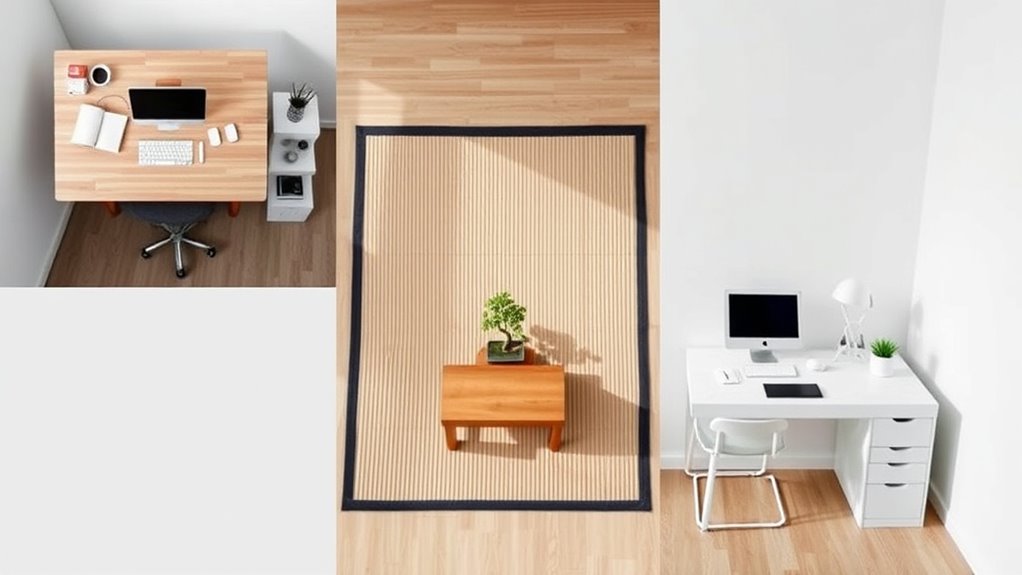

Across the globe, cultures interpret workplace simplicity uniquely—Scandinavians value natural materials, clean lines, and environmental harmony, while Japanese focus on harmony, mindfulness, and natural elements with low-profile furniture. Americans emphasize practicality, versatility, and maximizing space. These approaches reflect each culture’s values, shaping minimalist designs that foster focus, well-being, and efficiency. Exploring these diverse philosophies can reveal the deeper cultural roots behind minimalism, offering insights into how your workspace can reflect your own values and style.

Get your wardrobe favorites delivered free with Prime
- Fast, free delivery on millions of items
- Prime Video, Amazon Music and more included
- Member-only deals all year
Key Takeaways
- Scandinavian culture emphasizes natural materials, understated designs, and environmental harmony for a simple, functional workspace aesthetic.
- Japanese minimalism integrates tranquility, mindfulness, natural elements, and low-profile furniture to foster mental clarity.
- American minimalism prioritizes efficiency, multi-purpose furniture, and maximizing space for practical, versatile work environments.
- Cultural values influence furniture choices, such as Scandinavian sustainability, Japanese harmony, and American practicality, shaping workspace simplicity.
- Sustainable materials and ergonomic designs reflect regional cultural priorities, creating functional, stress-reducing minimalist workspaces worldwide.

Minimalist workspaces are gaining popularity worldwide as professionals seek clutter-free environments that boost focus and productivity. When designing a minimalist workspace, the choice of furniture plays a crucial role. Ergonomic furniture, in particular, ensures comfort and supports health during long hours of work. You might opt for a sleek, adjustable chair that encourages good posture or a simple, spacious desk that minimizes distractions. These pieces not only contribute to a clean aesthetic but also promote efficiency and well-being. The emphasis on ergonomic furniture reflects a broader cultural shift toward valuing self-care and functional design, which varies across different regions. In Scandinavian countries, for example, minimalism is deeply rooted in cultural influences that prioritize simplicity, natural materials, and balance. Here, furniture tends to be understated yet highly functional, emphasizing clean lines and comfort that blend seamlessly with the environment. Meanwhile, in Japan, the concept of minimalism intertwines with cultural values of harmony and mindfulness. Japanese workspaces often feature low-profile furniture, sliding screens, and natural elements that promote tranquility. These influences shape how minimalism is perceived—not just as an aesthetic but as a way to foster mental clarity and focus. In contrast, American minimalism tends to highlight efficiency and versatility. You might find multi-purpose furniture that maximizes small spaces, reflecting a cultural tendency toward practicality and innovation. Across regions, cultural influences inform not only the selection of furniture but also the overall philosophy of workspace design. It’s about creating an environment that resonates with local values while maintaining a clean, clutter-free look. Additionally, the integration of sustainable materials in furniture design is becoming increasingly significant, reflecting a growing cultural priority for environmental responsibility. It’s about creating an environment that resonates with local values while maintaining a clean, clutter-free look. This cultural interplay influences your choices, encouraging you to select furniture that aligns with your personal and cultural preferences. As you design your workspace, consider how these influences can inspire your setup. Incorporate ergonomic furniture that supports your health, and draw from cultural principles to craft a space that feels both functional and meaningful. By doing so, you’re not just creating a minimalist environment—you’re shaping a sanctuary that enhances your focus, reduces stress, and reflects your cultural identity. Whether you prefer Scandinavian simplicity, Japanese serenity, or American practicality, understanding the cultural influences behind minimalist design helps you craft a workspace that truly works for you. Ultimately, a well-designed minimalist workspace isn’t just about aesthetics; it’s about fostering a productive mindset rooted in comfort, clarity, and cultural appreciation.
ergonomic adjustable office chair
As an affiliate, we earn on qualifying purchases.
As an affiliate, we earn on qualifying purchases.
Frequently Asked Questions
How Do Cultural Values Influence Workspace Minimalism?
Cultural values strongly shape how you see workspace minimalism. You might find that cultural aesthetics emphasize harmony, order, and clean lines, reflecting broader traditional practices. In some cultures, simplicity is linked to mindfulness and spiritual well-being, influencing workspace design. Your environment likely mirrors these values, balancing functionality with aesthetics, and prioritizing clarity and calmness. This cultural lens guides your approach to creating a workspace that feels authentic and aligned with your cultural identity.
Are There Universal Design Principles for Minimalist Workspaces?
Yes, there are universal design principles for minimalist workspaces. You should focus on achieving aesthetic consistency by maintaining a cohesive look, and prioritize spatial efficiency to maximize functionality. Keep clutter minimal, use clean lines, and select versatile furniture. By balancing form and function, you’ll create a workspace that feels open, organized, and inspiring, regardless of cultural differences. These principles help foster productivity and calmness in any environment.
What Role Does Technology Play in Different Cultures’ Workspaces?
Technology shapes your workspace dramatically, influencing every detail from digital detox strategies to ergonomic essentials. In some cultures, tech is minimized to promote focus, while others embrace cutting-edge gadgets to boost efficiency. You might find yourself surrounded by sleek, clutter-free setups that foster simplicity or immersed in high-tech environments that demand constant digital engagement. Either way, technology’s role is crucial, balancing innovation with the need for calm and clarity in your workspace.
How Do Climate and Environment Affect Workspace Simplicity?
Climate and environment directly influence your workspace simplicity by encouraging climate adaptability and the use of natural materials. In hot climates, you might opt for open, airy designs with natural ventilation, while colder regions favor insulated, cozy setups. Natural materials like wood or stone help you stay connected to your environment and promote sustainability. By adapting your workspace to local conditions, you create a functional, straightforward environment that suits your needs and reflects cultural values.
What Are the Environmental Impacts of Minimalist Office Designs?
Imagine a workspace where sunlight streams through large, unobstructed windows, illuminating sleek surfaces made from sustainable materials like bamboo and recycled metal. This minimalist design reduces waste and promotes energy efficiency, lowering your carbon footprint. By choosing eco-friendly materials and optimizing natural light, you help preserve the environment while creating a calm, clutter-free space. Your simple office becomes a powerful statement for sustainability, balancing productivity with environmental responsibility.
As an affiliate, we earn on qualifying purchases.
Conclusion
As you explore minimalist workspaces worldwide, you’ll notice how culture shapes simplicity, from clutter-free desks to streamlined designs. notably, a recent survey found that 68% of professionals in Japan prioritize minimalism for productivity and mental clarity. Embracing these diverse approaches can inspire you to cultivate a workspace that not only looks clean but also boosts your focus and creativity. Ultimately, simplicity isn’t just aesthetic—it’s a way to enhance your everyday work experience.
low profile Japanese style furniture
As an affiliate, we earn on qualifying purchases.
As an affiliate, we earn on qualifying purchases.
multi-purpose workspace furniture
As an affiliate, we earn on qualifying purchases.
As an affiliate, we earn on qualifying purchases.
Halloween Picks
halloween
As an affiliate, we earn on qualifying purchases.