
Essentialism and minimalism both promote simplicity and intentional living, but they focus on different aspects. Essentialism emphasizes prioritizing what truly matters, making deliberate choices to focus on core values and meaningful activities. Minimalism revolves around decluttering physical possessions to create space and clarity. While they overlap in promoting purpose-driven lives, essentialism targets mental and emotional focus, whereas minimalism concentrates on physical simplicity. Explore further to see how these philosophies can shape your lifestyle.
Key Takeaways
- Essentialism focuses on prioritizing core values and meaningful pursuits, while minimalism emphasizes reducing material possessions.
- Essentialism originates from ancient philosophies emphasizing purposeful living; minimalism stems from Eastern philosophies promoting simplicity and detachment.
- Essentialism involves deliberate decision-making to focus on high-value activities; minimalism centers on decluttering physical space.
- Essentialism aims for a meaningful life through purposeful choices; minimalism seeks stress reduction by simplifying surroundings.
- Both philosophies promote intentionality, but essentialism emphasizes purpose-driven living, whereas minimalism emphasizes material and environmental simplicity.
Defining the Core Principles of Essentialism and Minimalism

Essentialism and minimalism both focus on simplifying life, but they approach this goal from different angles. Essentialism emphasizes focusing on the essentials by carefully selecting what truly matters, reducing distractions and unnecessary commitments. Its core principle is material simplicity—eliminating excess possessions and clutter to create space for what’s meaningful. Minimalism, on the other hand, centers on reducing material possessions to achieve a simpler, more intentional lifestyle. It encourages you to declutter your environment, stripping away anything that doesn’t add value or joy. While both philosophies promote simplicity, essentialism is about intentional prioritization, and minimalism is about reducing physical clutter. Material simplicity can be achieved through mindful organization and thoughtful design choices that reflect personal values. Together, they guide you toward a more focused, meaningful existence by emphasizing what’s truly important. Color accuracy and contrast ratio are technical aspects that can significantly impact the quality of the visual experience, whether in home theaters or projectors. Unplanned weather changes can sometimes lead to humorous moments during family photoshoots, reminding us that embracing imperfection can add charm to our memories.
Origins and Historical Development of Each Philosophy
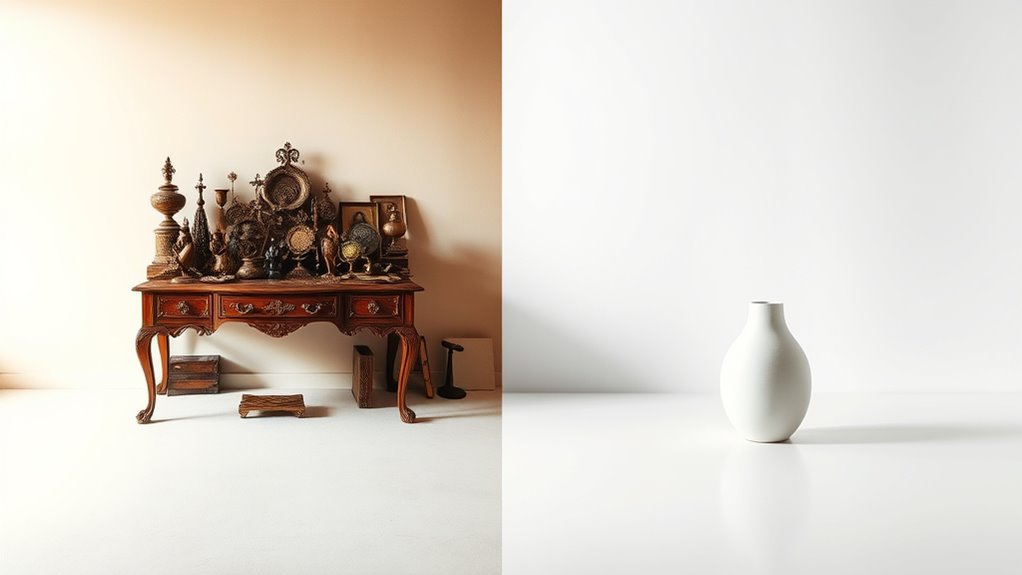
The roots of these philosophies reveal distinct historical paths that shaped their development. Essentialism traces back to ancient philosophies emphasizing the importance of core truths and purposeful living, influenced by classical Greek and Stoic ideas. Minimalism, meanwhile, emerged through cultural influences from Eastern philosophies like Buddhism and Taoism, advocating simplicity and detachment. These differing origins reflect their unique evolution: High-pressure application is a hallmark of airless paint sprayers, which contrasts with the more deliberate approach of traditional painting methods. | Essentialism | Minimalism |
| —————- | ————– |
|---|---|
| Ancient philosophies | Eastern philosophies |
| Focus on purpose | Focus on simplicity |
| Greek and Stoic roots | Buddhism and Taoism |
| Emphasis on core truths | Emphasis on detachment |
Understanding these origins helps you see how their historical influences continue to shape modern perspectives. Both philosophies, though distinct, stem from rich cultural influences that guide their principles today.
Practical Applications in Daily Life and Decision-Making
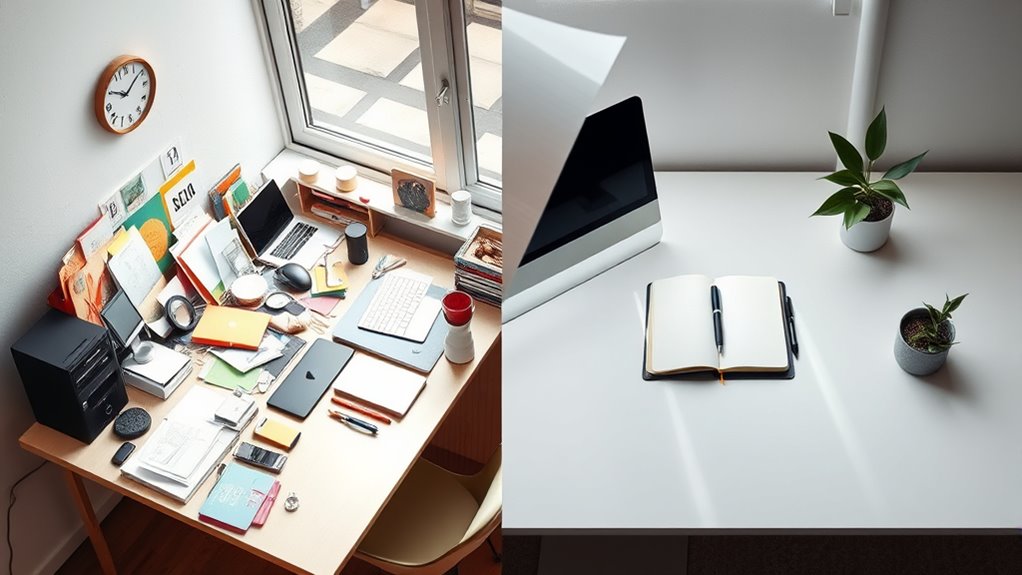
When applying these philosophies to daily life, understanding their core principles can help you make more intentional decisions. Essentialism encourages you to prioritize what truly matters, improving your time management by focusing on high-value activities and saying no to distractions. Minimalism, on the other hand, promotes clutter reduction by simplifying your environment, which can lead to greater clarity and less stress. Both approaches support streamlining your choices—essentialism through deliberate prioritization, minimalism through physical and mental decluttering. Incorporating these philosophies means being mindful about what you allow into your life, making space for meaningful pursuits. Additionally, embracing dedicated plant containers can enhance your home’s aesthetic and promote healthier growth, aligning with the principles of minimalism and essentialism. Practicing consistent support hours for your needs can also ensure that resources and assistance are available when you require them, fostering a more balanced approach to decision-making. Embracing digital platforms for collaboration can enhance your ability to participate in remote hackathons, fostering creativity and expanding your network. This not only enhances efficiency but also fosters a sense of calm, helping you navigate daily decisions with purpose and confidence.
The Impact on Mental Well-Being and Productivity
Focusing on what truly matters and reducing clutter can substantially boost your mental well-being and productivity. When you simplify your environment, you create space for mindfulness practices that keep you present and centered. This clarity helps manage stress and strengthens your emotional resilience, allowing you to bounce back from setbacks more easily. As you prioritize essential tasks and eliminate distractions, your focus sharpens, leading to higher efficiency and better decision-making. With less mental clutter, you’re less overwhelmed and more motivated to pursue meaningful goals. Additionally, understanding the importance of proper storage and handling of your environment can prevent unnecessary stressors that impact mental clarity. Regularly inspecting your bike and its components, such as tires and gears, ensures smooth operation and reduces the chances of unexpected issues that could cause frustration. Practicing mindfulness and being aware of your surroundings can further enhance your ability to stay present and avoid feeling overwhelmed by clutter. Ultimately, minimalism and essentialism foster a healthier mental state that supports sustained productivity and overall well-being.
Common Misconceptions and Overlaps Between the Two
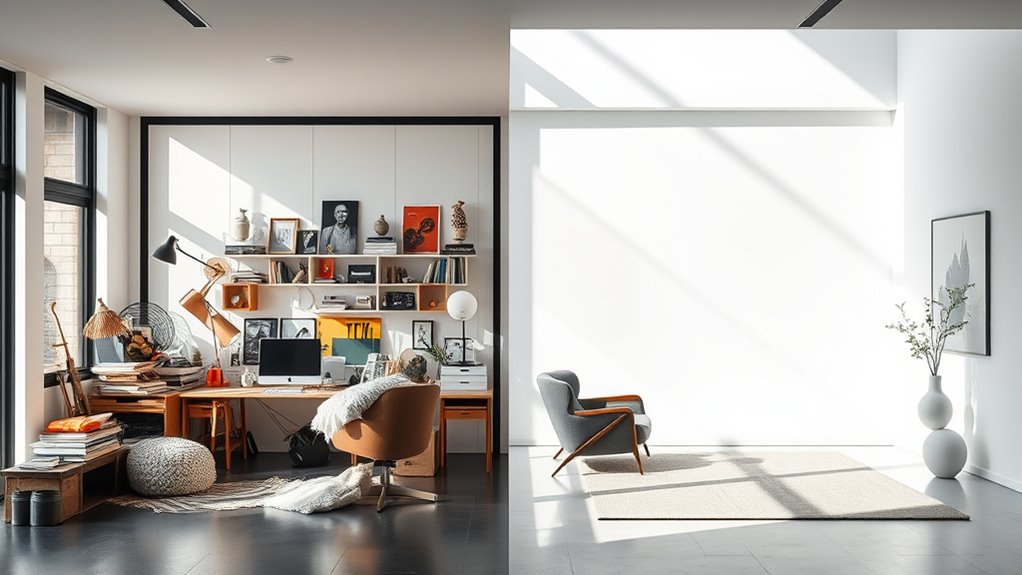
Although essentialism and minimalism are often viewed as distinct philosophies, many people mistakenly see them as interchangeable or assume that one automatically leads to the other. Famous misconceptions include believing that minimalism is solely about owning fewer possessions, while essentialism is about doing less. In reality, they share overlapping concepts like intentionality and focus, but their core goals differ. Minimalism emphasizes decluttering physical space, whereas essentialism centers on prioritizing what truly matters in all areas of life. These overlaps can cause confusion, leading some to adopt one approach thinking it covers both. Recognizing these misconceptions helps clarify their differences, ensuring you choose what best aligns with your personal values and lifestyle. Additionally, understanding the foundations of each philosophy can help individuals apply them more effectively to achieve their personal or professional goals. For example, exploring how nutritional value of juices informs a balanced lifestyle can be an aspect of applying minimalism and essentialism in health choices. Moreover, engaging with existential themes can deepen your understanding of what truly matters, enhancing your ability to focus on meaningful pursuits.
Choosing the Right Approach for Your Lifestyle
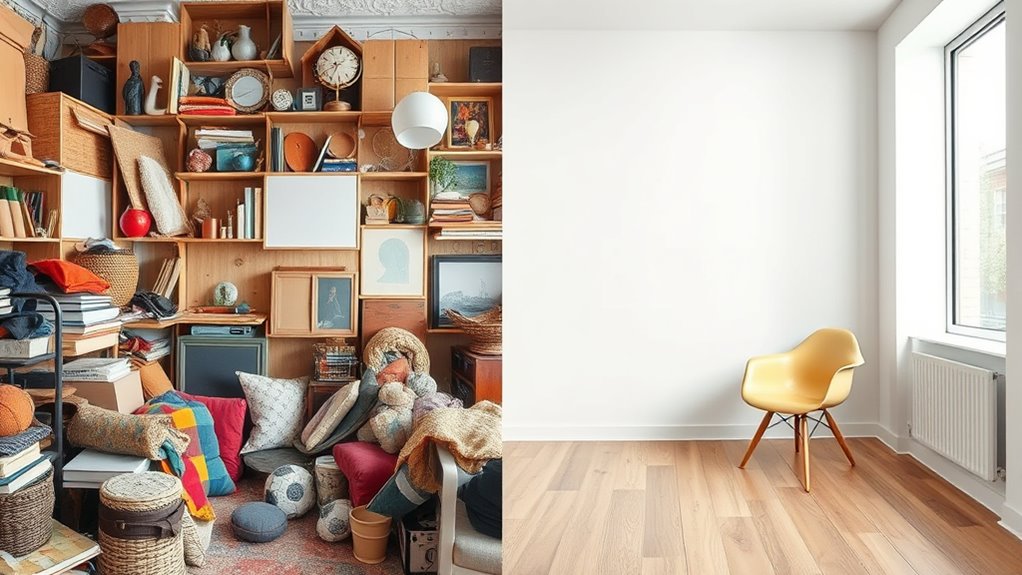
Choosing the right approach depends on your personal goals and lifestyle priorities. If you crave luxury indulgence and curated experiences, essentialism might suit you better, focusing on quality over quantity. Conversely, if clutter elimination and simplicity resonate, minimalism offers a straightforward path to a clutter-free life. Consider these factors:
- Do you value intentional living with select possessions?
- Are you aiming to reduce stress from clutter?
- Is your focus on creating a serene, organized space?
- Do you prefer investing in experiences over things?
- Are you comfortable with simplifying your lifestyle gradually?
- Understanding the principles of minimalist environments can help you create spaces that promote relaxation and clarity. Additionally, exploring business strategies like those used in Greek Sceptic can inspire ways to optimize your lifestyle choices for better financial and personal well-being.
Frequently Asked Questions
How Do Essentialism and Minimalism Influence Financial Management?
Essentialism and minimalism influence your financial management by shaping your spending habits and savings strategies. You focus on what truly matters, avoiding unnecessary expenses and prioritizing essential purchases. This approach helps you save more, reduce debt, and build a stronger financial foundation. By embracing these philosophies, you make intentional decisions, ensuring every dollar spent aligns with your long-term goals, leading to greater financial stability and peace of mind.
Can Essentialism and Minimalism Be Combined Effectively?
Combining essentialism and minimalism can be a game-changer, almost like revealing a secret to life! By balancing priorities and streamlining routines, you create a powerful synergy that maximizes your focus and reduces stress. Embrace essentialism’s deliberate choices while adopting minimalism’s clutter-free mindset. This fusion helps you live intentionally, cut unnecessary distractions, and truly enjoy what matters most—making your life simpler, more meaningful, and incredibly fulfilling.
What Are Cultural Differences in Adopting These Philosophies?
You’ll find that cultural perceptions and societal influences shape how you adopt essentialism or minimalism. In some cultures, simplicity is valued for spiritual or communal reasons, making minimalism appealing. In others, essentialism’s focus on prioritizing what truly matters aligns with societal expectations of productivity and success. Recognizing these differences helps you understand that embracing these philosophies varies globally, influenced by deep-rooted traditions and social norms.
How Do These Approaches Impact Long-Term Life Goals?
Research shows that these approaches influence long-term goals by shaping your prioritization strategies and goal alignment. Essentialism sharpens focus on what truly matters, helping you eliminate distractions and stay committed. Minimalism simplifies your environment, fostering clarity and intentionality. By applying these philosophies, you build a sustainable foundation for long-term success, ensuring your actions consistently reflect your core values and aspirations, ultimately guiding you toward a more focused and fulfilling life journey.
Are There Specific Personality Types Better Suited for Each?
You might find that your personality traits and behavioral tendencies influence whether essentialism or minimalism suits you best. If you’re detail-oriented, disciplined, and value focus, essentialism aligns well with your traits. Conversely, if you’re creative, adaptable, and prefer simplicity, minimalism could suit your tendencies. Recognizing these traits helps you choose the approach that naturally supports your lifestyle and long-term goals, making it easier to stay committed and fulfilled.
Conclusion
Understanding the difference between essentialism and minimalism helps you make intentional choices that suit your lifestyle. Did you know that a 2020 study found that decluttering can boost mental clarity and reduce stress by up to 30%? By choosing the approach that resonates most with you, you can simplify your life, enhance your well-being, and boost productivity. Ultimately, it’s about crafting a space and mindset that support your happiness and growth.