
TL;DR

Get your wardrobe favorites delivered free with Prime
- Fast, free delivery on millions of items
- Prime Video, Amazon Music and more included
- Member-only deals all year
A Who What Wear writer says she spent a week in Switzerland’s Jungfrau Region with a carry-on-only selection of jackets, base layers, hiking boots, leggings and cold-weather accessories. Her account describes what she wore during fall hikes, railway rides and dinners; it is a personal packing report, not a general forecast or product test.
A Who What Wear writer has shared a carry-on packing list from a week-long fall trip to Grindelwald and Switzerland’s Jungfrau Region, describing the layers and footwear she wore for hikes, railway rides and dinners. Her account offers practical ideas for travelers facing changes in temperature and activity across the Alps, though it reflects one person’s experience rather than a universal packing rule.
The writer says she visited Grindelwald last month, traveling between Interlaken, Männlichen and other parts of the region by Jungfrau Railway. Her itinerary included scenic hikes, visits to ice palaces, local exploration and meals out. She says she packed only a carry-on and wore every piece she brought during the week.
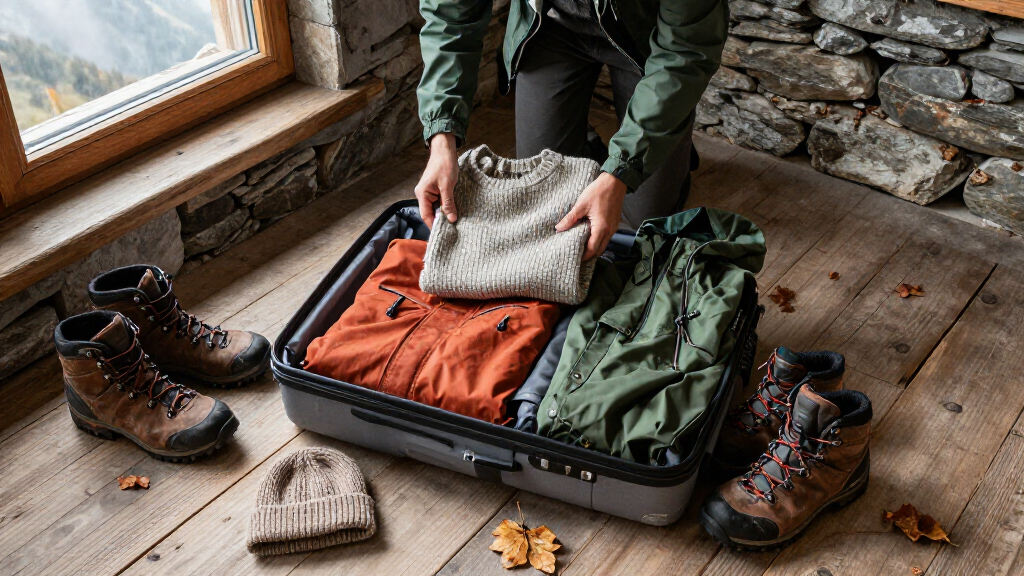
Her list centers on fleece-lined jackets and lightweight windbreakers, which she layered as conditions changed with altitude. She also packed long-sleeved base layers, including cashmere and sweat-wicking options, and says neutral colors helped her combine outfits. A packable shell, she reports, was useful on cooler hikes and as an extra layer in stronger winds.
For footwear, she relied mainly on outdoor hiking boots, which she paired with leggings and wide-leg denim. She also brought supportive leggings, cable-knit sweaters for evenings and travel, and a small set of accessories: a scarf, headband or beanie, and gloves. The article names products from several brands, but the packing advice is based on the writer’s own trip, not comparative product testing.
Layering for Alpine Fall Conditions
The report illustrates a practical challenge for fall travel in mountainous areas: conditions can differ between valleys and high elevations, while an itinerary may combine outdoor activity, transport and indoor dining. A light base layer, insulating jacket and wind-resistant outer layer can be combined or removed as circumstances change, according to the writer’s experience.
Her approach may help readers plan a compact suitcase without assuming that one outfit suits every stop. The account also suggests that comfortable footwear and portable cold-weather accessories can be useful beyond the trail. Individual needs will vary with the forecast, route, planned activities and how long a traveler expects to spend outdoors.
Popular right now

Apple AirPods Pro 3 Wireless Earbuds with Active Noise Cancellation

Philips 2200 Series Fully Automatic Espresso Machine with Classic Milk Frother, 2 Coffee Varieties, Intuitive Touch Display, Ceramic Grinder

Dyson W1 PencilWash Wet and Dry Cleaner with Dok Cordless Wet Floor Cleaner
As an affiliate, we earn on qualifying purchases.
A Week Across the Jungfrau Region
The writer describes a trip based in Grindelwald, a village in Switzerland’s Alps, with rail travel connecting parts of the Jungfrau Region. The reported itinerary ranged from valley walks to visits at higher elevations, including Männlichen. That variety is the reason her packing list emphasizes adjustable layers rather than a single heavy coat.
She says she visited in fall and used the same small selection of clothing for hiking, sightseeing and meals. The source does not provide exact travel dates, a daily weather log or a full itinerary, so the list should be read as a personal account of that particular week.
“I wore every piece I brought.”
— Who What Wear writer
What the Packing Account Cannot Establish
The source does not identify the exact dates of the trip, the weather on individual days or the specific trails and elevations covered. It also does not report product testing, independent performance comparisons or whether every traveler would find the listed items suitable.
The writer’s description of conditions and clothing is personal experience, not a current forecast. Travelers should check local weather and route conditions before departure and adapt clothing, footwear and safety equipment to their plans. The report does not provide prices, sizing details or availability for the products it names.
Check Conditions Before Packing
The source provides no announced follow-up or next reporting milestone. For readers planning a similar trip, the practical next step is to check current forecasts and mountain conditions for each planned elevation, then adjust layers and equipment accordingly. A packing list based on one fall week cannot predict conditions for another date.
Anyone using the named products should check each brand’s current specifications and fit guidance. Clothing sizes and fit vary by brand; the report does not offer a standard sizing comparison or purchasing recommendation.
Key Questions
What did the writer pack for Switzerland?
The list included fleece-lined jackets, windbreakers, long-sleeved layers, hiking boots, leggings, cable-knit sweaters and lightweight accessories such as a scarf, gloves and a headband or beanie.
How long was the reported trip?
The writer describes packing for a week in the Jungfrau Region and says she wore every item she brought. The source does not give exact travel dates.
Why did the packing list include multiple jackets?
The writer says conditions changed with altitude and activity. She layered a windbreaker over a fleece-lined jacket when she wanted more protection from cold wind.
Is this an official recommendation for hiking in the Swiss Alps?
No. It is a first-person travel and packing report, not official hiking guidance or a weather forecast. Travelers should check current local conditions and select equipment suited to their routes.
Source: whowhatwear.com