
Owning less helps the planet by reducing waste, lowering resource consumption, and cutting energy use. When you simplify your belongings, you minimize clutter and support eco-friendly materials like bamboo or recycled metals. This mindful approach encourages sustainable choices, such as using energy-efficient appliances and maximizing natural light. By embracing minimalism, you create a more environmentally responsible lifestyle that benefits the planet in many ways. Keep exploring to discover more ways your simple life can make a big difference.
Key Takeaways
- Owning fewer items reduces waste and clutter, minimizing environmental impact from manufacturing and disposal.
- Minimalism decreases resource consumption by encouraging durable, multifunctional products, lowering the demand for raw materials.
- Simplified living promotes energy efficiency through fewer gadgets and better-designed spaces that utilize natural light and insulation.
- Less consumption leads to decreased carbon emissions associated with production, transportation, and energy use.
- Embracing minimalism supports sustainable practices and eco-friendly materials, fostering a healthier planet.
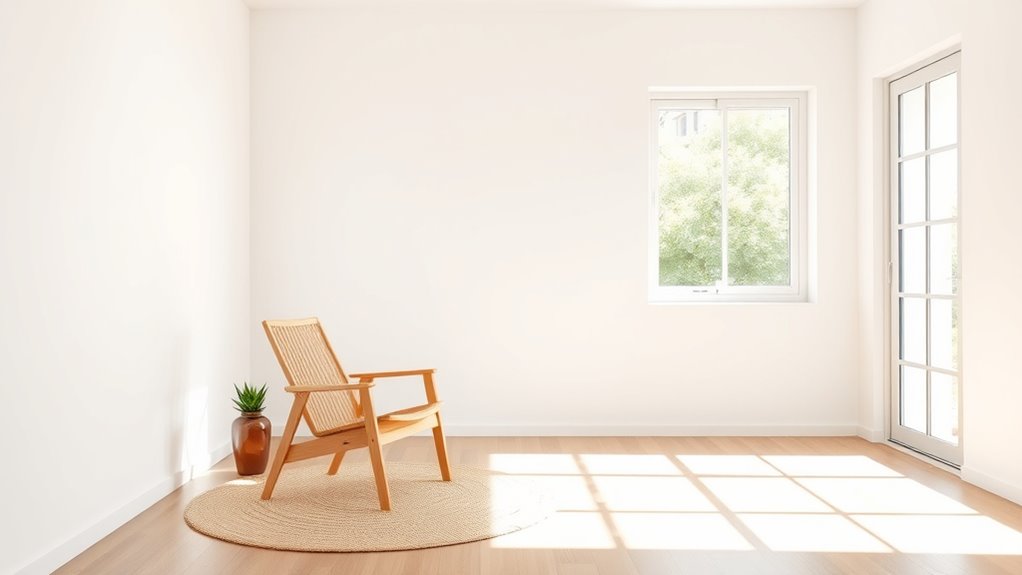
Minimalism and sustainability are increasingly intertwined as more people recognize how simplifying their lives can benefit the environment. When you choose to own less, you naturally reduce waste, lower your carbon footprint, and support more sustainable practices. This shift isn’t just about decluttering; it’s about making mindful decisions that have a lasting positive impact on the planet. One way to amplify these benefits is by prioritizing eco friendly materials in your purchases and home design. Instead of opting for cheap, disposable products, you can select items made from sustainable resources like bamboo, reclaimed wood, or recycled metals. These materials are not only better for the environment but often more durable, meaning you won’t need to replace them frequently. Incorporating eco friendly materials into your living space demonstrates a commitment to reducing resource extraction and waste generation, aligning your lifestyle with a greener future. Additionally, choosing durable, sustainable products supports the broader goal of promoting sustainable consumption and reducing overall environmental impact. Alongside choosing sustainable materials, energy efficient design plays a vital role in minimizing your environmental impact. When you design your home or workspace with energy efficiency in mind, you consume less power and reduce greenhouse gas emissions. Simple measures like installing LED lighting, using energy-efficient appliances, and maximizing natural light through strategic window placement can considerably cut your energy consumption. This isn’t just good for the environment; it also saves you money over time. You might consider adding insulation or choosing appliances with high energy star ratings, which are designed to use less energy without sacrificing performance. These choices create a space that’s both minimalist and eco-friendly, emphasizing function while reducing excess. Living minimally also encourages you to reevaluate your overall energy use. Instead of filling your home with unnecessary gadgets or decorative items that demand constant power, you focus on essential, high-quality pieces that last and serve multiple purposes. This approach reduces the frequency of replacements and repairs, further decreasing waste. When you combine the use of eco friendly materials with an energy efficient design, you create a living environment that’s sustainable from the ground up. It becomes a reflection of your values — prioritizing quality over quantity, efficiency over excess. Ultimately, adopting a minimalist lifestyle grounded in eco friendly choices and energy efficiency helps you contribute to a healthier planet. You take control of your environmental impact by making intentional decisions, reducing consumption, and supporting sustainable practices. This approach not only benefits the environment but also leads to a more mindful, simplified life where every item and design element serves a purpose. As you embrace this mindset, you’ll discover that owning less isn’t just about decluttering — it’s a powerful way to create a more sustainable, harmonious world.
Frequently Asked Questions
How Does Minimalism Reduce Individual Carbon Footprints?
You reduce your carbon footprint by embracing minimalism, which encourages mindful consumer habits and decreases unnecessary purchases. When you own fewer items, you conserve resources like water, energy, and raw materials used in production. Less clutter means less waste, and your reduced consumption helps lower greenhouse gas emissions from manufacturing and transportation. Overall, minimalism promotes a sustainable lifestyle by making you more conscious of resource conservation and environmental impact.
Are Minimalist Lifestyles Cost-Effective Long-Term?
Yes, a minimalist lifestyle is cost-effective long-term. You’ll notice significant cost savings by buying less and focusing on quality over quantity. It encourages financial discipline, helping you avoid impulse purchases and unnecessary expenses. Over time, these habits lead to lower overall spending, meaning you save money while reducing clutter and environmental impact. Embracing minimalism not only benefits your wallet but also promotes a more sustainable and mindful way of living.
Can Minimalism Influence Global Environmental Policies?
Your choices as a consumer can ripple outward like a stone thrown into a pond, shaping global environmental policies. By embracing minimalism, you influence consumer behavior, encouraging companies to prioritize sustainability. This shift can inspire policymakers to implement eco-friendly regulations. When enough people adopt minimalist lifestyles, it creates a powerful momentum, turning individual actions into collective change that drives policy implications for a healthier planet.
What Challenges Do People Face Adopting Minimalism Sustainably?
You might face challenges adopting minimalism sustainably because changing your consumer habits isn’t easy, especially when societal pressures push you to buy more. You may struggle with waste reduction, as reducing possessions often means finding sustainable alternatives or repurposing items. Additionally, balancing minimalism with your lifestyle can be tough, but staying committed helps you minimize waste and promote a healthier planet. Stay mindful of your choices to overcome these hurdles effectively.
How Can Communities Promote Sustainable Minimalism Practices?
Imagine a garden thriving because each plant contributes to its health. Your community can foster sustainable minimalism through local initiatives like workshops and swap events, encouraging shared resources and mindful consumption. By promoting community engagement, people learn from each other’s experiences, making eco-friendly practices more appealing and accessible. Together, you create a supportive environment where reducing excess becomes a collective effort, benefiting both the planet and your neighborhood’s well-being.
Conclusion
As you let go of excess, you’ll notice how the world around you begins to breathe easier—cleaner air, clearer skies, and a sense of calm settling in. It’s no coincidence that owning less often leads to a more sustainable planet. When you choose simplicity, you’re not just decluttering your life; you’re planting seeds for a brighter future. So, embrace minimalism—because the small choices you make today can create a ripple of change tomorrow.