To balance work and life in a minimalist home office, focus on essential items that promote clarity and comfort, like an adjustable chair and natural light. Set clear boundaries by designating specific work hours and creating designated spaces. Use multi-functional furniture to switch easily between work and relaxation. Incorporate soothing colors and calming light to enhance focus. Maintaining organization and routines helps you avoid burnout. Keep exploring simple tips to create a space that supports both productivity and well-being.
Key Takeaways
- Designate specific work hours and clear boundaries to prevent work from encroaching on personal time.
- Create a dedicated, clutter-free workspace with ergonomic furniture to enhance focus and comfort.
- Use visual cues and routines to signal the start and end of work, reinforcing work-life separation.
- Incorporate calming decor, natural light, and soothing colors to promote relaxation and mental clarity.
- Schedule regular breaks and quality downtime to recharge, ensuring a healthy balance between work and personal life.
Defining Your Essential Workspace Items

To create a minimalist home office that supports productivity without clutter, you need to identify your essential workspace items. Focus on ergonomic accessories that keep you comfortable during long work sessions, like an adjustable chair, a supportive keyboard, and a monitor stand. These items boost your efficiency and reduce strain. Keep decorative accents simple and purposeful, such as a small plant or a framed photo, to add personality without overwhelming the space. Prioritize quality over quantity, selecting only what you truly need to work effectively. By streamlining your tools and accessories, you create a clear, focused environment that promotes concentration and reduces distractions. Understanding cryptocurrency trends can also inspire innovative ways to enhance your workspace with modern tech. Incorporating well-being tips into your daily routine can further improve your overall productivity and mental clarity. Additionally, choosing the right lighting can significantly impact your visual comfort and overall mood during work hours. Proper grocery savings strategies can help you allocate resources toward ergonomic and health-enhancing items for your workspace. Maintaining proper nutrient intake can also contribute to sustained energy levels, even during busy workdays. Remember, a well-curated space enhances your ability to stay productive while maintaining a clean, minimalist aesthetic.
Creating Clear Boundaries Between Work and Personal Time
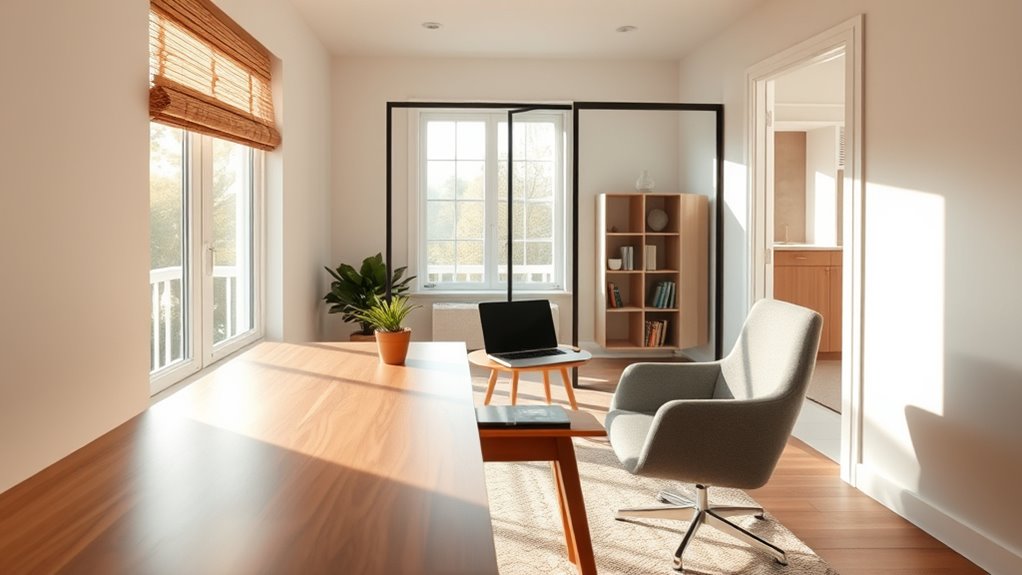
Establishing clear boundaries between work and personal time is essential for maintaining a balanced and stress-free lifestyle. Effective boundary setting helps you manage your time better, preventing work from spilling into personal moments. Start by designating specific work hours and sticking to them, so your brain recognizes when it’s time to focus or relax. Use visual cues, like a closed door or a designated workspace, to reinforce these limits. Avoid checking work emails or messages outside your set hours to protect your personal time. Prioritize quality downtime to recharge, ensuring you’re fully present during non-work hours. Recognizing the importance of boundary setting can enhance your overall well-being and create a healthy separation that fosters productivity and happiness. Additionally, implementing simple home organization strategies can help reinforce these boundaries by making your workspace distinct from your personal living areas. Incorporating digital detox practices during your off-hours can further prevent work-related distractions and support your boundary efforts. Understanding the importance of Gold IRA options can also provide financial flexibility, allowing you to better disconnect from work-related stressors without financial concern.
Utilizing Multi-Functional Furniture for Flexibility
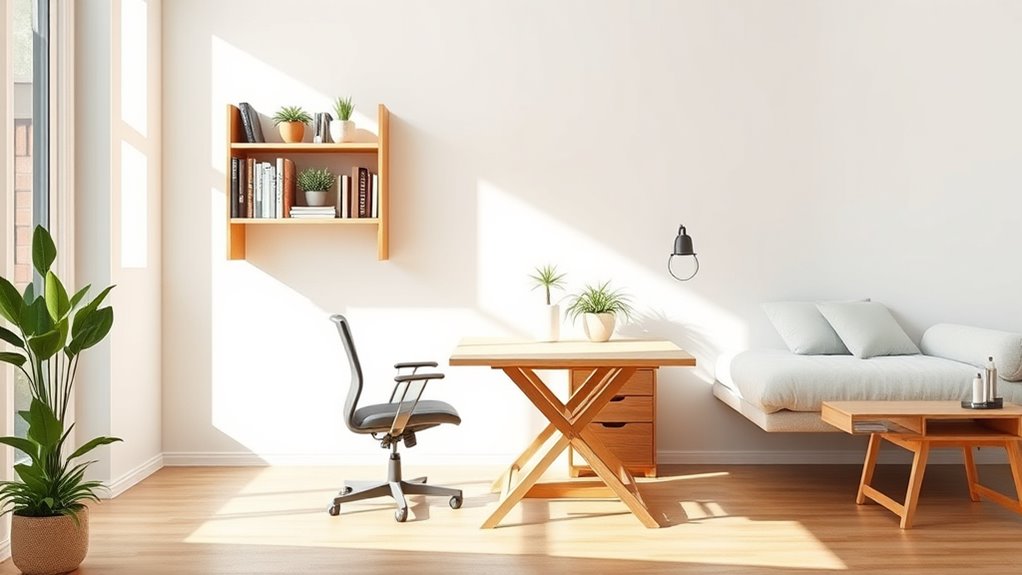
In a minimalist home office, using multi-functional furniture can dramatically increase your space’s versatility. These space-saving solutions allow you to switch seamlessly between work and relaxation areas without cluttering your environment. For example, a fold-away desk or a wall-mounted table provides a dedicated workspace that can be tucked away when not in use, freeing up valuable room. Incorporate ergonomic considerations by choosing furniture that supports proper posture, such as adjustable height desks or chairs with lumbar support. Multi-purpose pieces not only optimize limited space but also promote a clean, organized look that aligns with minimalist principles. By selecting smart, versatile furniture, you create a flexible environment that adapts to your needs while maintaining a calm, uncluttered atmosphere.
Incorporating Natural Light and Calming Colors
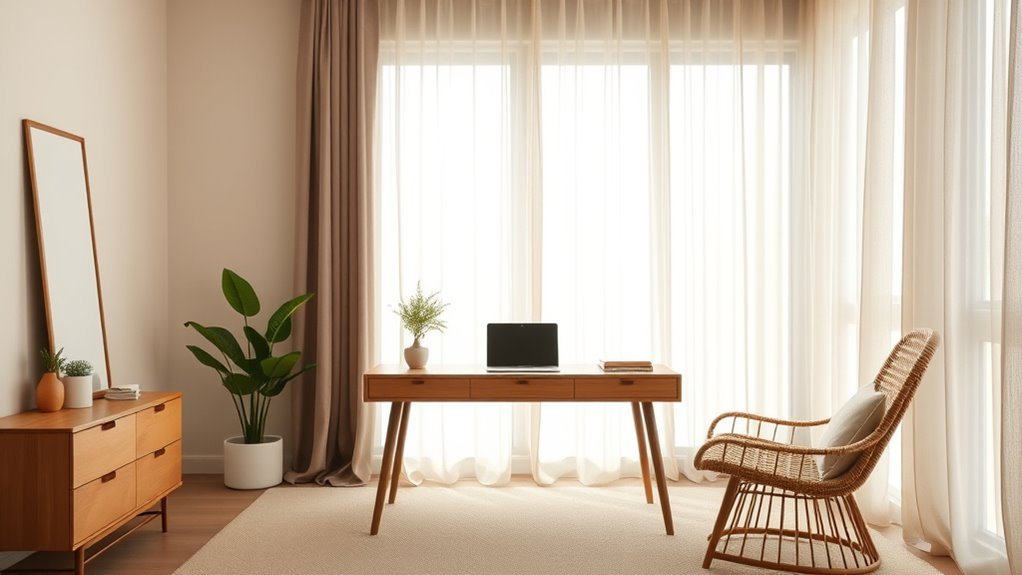
You can enhance your home office by strategically placing windows to let in plenty of natural light. Opt for calming color palettes like soft blues or gentle greens to create a peaceful atmosphere. Incorporate light-reflecting decor, such as mirrors or glossy surfaces, to amplify brightness and maintain a serene space. Paying attention to ergonomics ensures that your workspace supports both comfort and productivity throughout your workday. Additionally, selecting self watering plant pots can help keep your plants healthy with minimal maintenance, contributing to a tranquil environment. Using wall finishes that reflect light or add texture can further enhance the overall ambiance of your home office. Considering smart home accessories can also help automate lighting and climate control, making your workspace more efficient and comfortable.
Maximizing Window Placement
Maximizing window placement is essential for creating a home office that feels open and energizing. By paying attention to window orientation, you can harness natural light to its fullest potential, reducing the need for artificial lighting during the day. Position your desk near windows that face east or south to optimize daylight, which helps boost your mood and productivity. Avoid placing your workspace directly in front of harsh, direct sunlight that can cause glare; instead, use sheer curtains or blinds to diffuse the light. Proper window placement also allows for better airflow and a connection to the outside environment, contributing to a calming atmosphere. Incorporating natural light strategies can further enhance the space by maximizing daylight and minimizing energy use. Utilizing window placement effectively can create a space that feels more spacious and balanced while promoting well-being and focus. Additionally, incorporating window treatments can help control light levels and add a layer of insulation for comfort. Involving smart window solutions can also improve energy efficiency and adapt to changing light conditions throughout the day.
Choosing Soothing Color Palettes
Harnessing natural light through well-placed windows can considerably influence the overall mood of your home office. To enhance this effect, choose soothing color schemes that promote relaxation and focus. Soft, calming paint choices like gentle blues, muted greens, or warm neutrals help create a peaceful environment. These colors reflect natural light beautifully, making your space feel brighter and more inviting. Avoid overly bright or dark hues that can cause visual fatigue or stress. Instead, opt for shades that gently soothe your mind during work and encourage unwinding afterward. When selecting your palette, consider how the colors interact with the light throughout the day. Incorporating natural light in your design can significantly boost your mood and productivity. Additionally, understanding home office design principles can help you create a more efficient and calming workspace. A thoughtfully chosen soothing color scheme can transform your minimalist home office into a calming refuge that balances productivity and relaxation. To further enhance the environment, incorporating lighting techniques can also improve the overall ambiance and functionality of your workspace. Additionally, selecting appropriate personality traits can help tailor your workspace to better suit your individual work style and needs. Furthermore, integrating evidence-based design principles can optimize comfort and efficiency in your office setup.
Using Light-Reflecting Decor
Incorporating light-reflecting decor into your home office can markedly enhance natural brightness and create a soothing atmosphere. Use reflective surfaces like glass or polished wood to bounce light around the space, making it feel more open and airy. Positioning mirrors strategically helps amplify ambient lighting, reducing the need for artificial light during the day. Choose calming colors that complement natural light to reinforce a peaceful vibe. Incorporate ambient lighting options, such as soft lamps or diffused fixtures, to maintain a gentle glow without harsh shadows. These elements work together to maximize natural light, minimize clutter, and foster a minimalist aesthetic that promotes focus and relaxation. Understanding pool lighting techniques can also inspire creative ways to enhance lighting in your workspace. Additionally, considering automation in business can help optimize your lighting setup for energy efficiency and ease of use. The result is a balanced environment that enhances productivity while supporting your well-being.
Establishing a Routine to Transition Between Roles

Creating clear shift signals helps you switch smoothly between work and personal life. Using designated work zones in your home reinforces boundaries and signals when you’re in work mode. Consistently following a routine makes it easier to mentally shift roles and maintain balance.
Clear Transition Signals
Establishing clear shift signals helps you shift seamlessly from work mode to personal time, which is essential in a minimalist home office. Use simple routines to mark the changeover, like turning off your computer or unplugging devices. Incorporate technology integration by setting alarms or notifications that signal the end of your workday. Invest in ergonomic accessories that remind you to relax, such as adjustable desks or comfortable chairs. Here are four effective transition signals:
- Powering down your work devices
- Changing into casual clothes or taking a brief walk
- Using a specific sound or music cue to mark the switch
- Setting a designated time for ending work tasks daily
These signals create clear boundaries, helping you maintain balance and prevent burnout in your minimalist space.
Designated Work Zones
Designated work zones help you clearly separate your professional and personal spaces within a minimalist home office. By creating specific areas for work, you can establish routines that signal the start and end of your workday. Use ergonomic seating to stay comfortable and focused during work hours, and guarantee your setup promotes good posture. Cable management is essential; keep cords tidy and out of sight to maintain a clutter-free environment that minimizes distractions. When you finish your work, physically leaving your designated zone helps reinforce boundaries and signals your brain to switch to personal time. Consistently adhering to this routine will make shifting between roles smoother, helping you maintain a healthy balance between work and life within your minimalist space.
Minimizing Digital Distractions for Focused Work

Digital distractions can quickly derail your focus, especially when your home office is cluttered with notifications and open tabs. To stay on track, consider a digital detox by silencing non-essential alerts. Effective app management helps you limit interruptions and streamline your workflow. Here are four strategies:
- Turn off notifications for non-urgent apps.
- Use website blockers during work sessions.
- Schedule specific times for checking emails and messages.
- Keep your digital workspace minimal, closing unnecessary tabs and apps.
Maintaining Your Space to Support Long-Term Balance
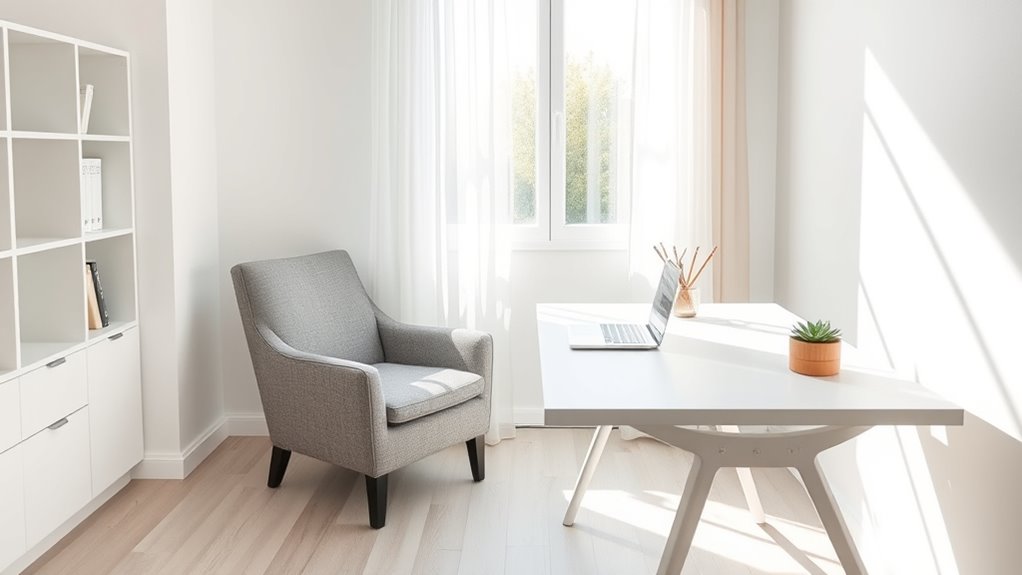
To sustain long-term balance in your home office, it’s essential to regularly maintain and organize your space. Start by checking that your ergonomic seating remains comfortable and supportive, preventing strain during long work sessions. Keep your workspace clutter-free by managing cables effectively; use cable management tools to hide cords and reduce visual distractions. This not only maintains a clean look but also prevents accidents or damage. Regularly reassess your layout to ensure your desk setup promotes good posture and ease of movement. Clearing away unnecessary items and keeping essentials within reach helps you stay focused and balanced. Consistent upkeep of your minimalist environment reinforces your work-life boundaries and supports sustained productivity and well-being.
Frequently Asked Questions
How Can I Prevent Work From Invading Personal Space in a Small Home Office?
You can prevent work from invading your personal space by establishing clear boundary setting and creating designated zones for work and relaxation. Use physical cues like a different rug or a divider to define your workspace. Set specific work hours and communicate these boundaries to others. When work hours end, disconnect completely to maintain your personal space, making it easier to enjoy downtime without work encroaching on your home life.
What Are Effective Ways to Disconnect From Work After Hours?
Ever feel like work is never truly gone? To disconnect after hours, try a digital detox by turning off work notifications and setting clear boundaries. Establish a routine that signals the end of your workday, like a walk or meditation. Avoid checking emails or messages, and create a dedicated space for relaxation. These steps help you reclaim your personal time and maintain a healthy work-life balance.
How Do I Manage Household Chores Without Disrupting My Work-Life Balance?
To manage household chores without disrupting your work-life balance, focus on time management and task prioritization. Schedule specific times for chores, preferably during breaks or after work hours, so they don’t interfere with your productivity. Break tasks into smaller steps, and tackle high-priority chores first. This way, you stay organized, reduce stress, and maintain a clear boundary between work responsibilities and household duties.
What Strategies Help Maintain Motivation in a Minimalist Workspace?
Imagine a sleek, clutter-free workspace that sparks your creativity. To stay motivated, try motivational techniques like setting small goals and rewarding yourself. Personalize your workspace with inspiring images or meaningful objects, keeping it simple yet engaging. Regularly changing your environment or adding fresh elements helps maintain enthusiasm. By creating a balanced mix of focus and personalization, you’ll find it easier to stay motivated and productive in your minimalist home office.
How Can I Incorporate Wellness Practices Into My Daily Routine at Home?
To incorporate wellness practices into your daily routine at home, start with mindful breathing sessions to reduce stress and boost focus. Take ergonomic stretches every hour to prevent tension and improve circulation. You can set reminders on your phone or workspace. Make these practices a non-negotiable part of your day, and you’ll feel more energized and balanced, creating a healthier, more productive home environment.
Conclusion
Balancing work and life in a minimalist home office isn’t just about decluttering; it’s about creating a sanctuary that fosters focus and relaxation simultaneously. By defining boundaries, choosing versatile furniture, and embracing natural light, you craft a space that supports your goals and well-being. The simplicity might seem stark, but it’s precisely this clarity that brings harmony—reminding you that sometimes, less truly is more in both work and life.