To reduce echo in your minimal home office, add acoustic panels with slim, neutral designs to key surfaces for sound absorption. Place softer furniture like plush rugs and textile-covered chairs to naturally break up sound waves. Carefully position larger furniture away from reflective walls and avoid placing desks directly against bare surfaces. Using soft furnishings and thinking about how materials interact with sound can make a big difference. Keep exploring for more tips to create the perfect acoustic environment.

Get your wardrobe favorites delivered free with Prime
- Fast, free delivery on millions of items
- Prime Video, Amazon Music and more included
- Member-only deals all year
Key Takeaways
- Install slim, neutral-colored acoustic panels on key surfaces to absorb sound without cluttering the minimalist aesthetic.
- Incorporate soft furnishings like rugs and textile-covered chairs to naturally dampen sound reflections.
- Position larger furniture away from reflective walls and avoid placing desks against bare surfaces to minimize echo.
- Use textured or plush decor items to break up sound waves and enhance sound absorption subtly.
- Combine acoustic panels with thoughtful furniture placement for an optimized, clutter-free acoustic environment.

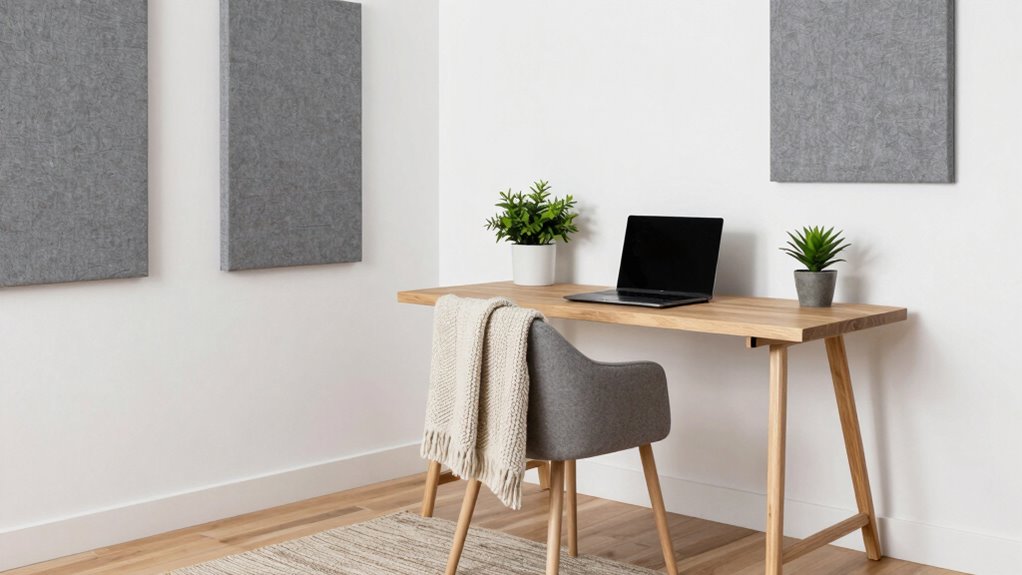
If your minimal home office feels overly echoey, it can make working uncomfortable and distract you from your tasks. Echoes occur when sound waves bounce off hard surfaces like walls, floors, and ceilings, creating a hollow or reverberant environment. To tackle this, you need to dampen those sound reflections without cluttering your clean, streamlined space. Acoustic panels are a highly effective solution. They absorb sound waves, reducing echo and creating a more focused atmosphere. You don’t have to cover every inch of your walls; strategically placing a few sleek, modern acoustic panels on key surfaces can make a noticeable difference. Choose panels that blend with your minimalist aesthetic—thin, unobtrusive designs or neutral colors work best—so they don’t disrupt your clean look.
Alongside acoustic panels, furniture placement plays an essential role in controlling sound. Hard furniture like desks, shelves, and filing cabinets can reflect sound, intensifying the echo. Instead, opt for softer, textured furniture pieces that absorb sound naturally. Placing a plush rug or a textile-covered chair in your office can help break up sound waves and reduce reverberation. Positioning larger furniture away from reflective walls also minimizes sound bouncing back and forth, creating a more balanced acoustic environment. Avoid placing your desk directly against a bare wall or in a corner, as these spots can amplify sound reflections. Instead, situate your workspace so that sound waves have more surfaces to absorb or disperse, which diminishes echo. Incorporating sound-absorbing materials into your space can further improve acoustics and create a calmer environment. Additionally, experimenting with the placement of soft furnishings can help you find the optimal setup for reducing echoes effectively. Paying attention to room acoustics and how different materials interact with sound can lead to more effective soundproofing strategies. Being mindful of the materials used in your office furniture and decor can also contribute significantly to controlling sound reflections. Small adjustments, like repositioning a bookshelf or hanging a few acoustic panels, can greatly improve your environment. Furthermore, choosing soundproofing techniques that suit your space can make a significant difference in reducing echo and enhancing comfort. Ultimately, by thoughtfully combining acoustic panels with strategic furniture placement and soft furnishings, you’ll create a more comfortable, focused workspace free from distracting echoes.
slim acoustic panels for home office
As an affiliate, we earn on qualifying purchases.
As an affiliate, we earn on qualifying purchases.
Frequently Asked Questions
Can Plants Help Improve Sound Absorption in My Home Office?
Yes, plants can help improve sound absorption in your home office. Acoustic plants with dense leaves and thick stems are especially effective. You should place them strategically around your workspace, such as near walls or windows, to break up sound waves. Incorporate a variety of acoustic plants in different sizes and shapes to maximize sound absorption and create a more comfortable, echo-free environment for focused work.
Are There Specific Materials Best for Soundproofing Minimal Spaces?
Think of your space as a quiet pond—certain materials can help keep it calm. Acoustic panels act like gentle ripples, absorbing sound waves and reducing echo, while soundproof curtains act as a barrier, blocking outside noise. For minimal spaces, choose lightweight, dense materials that fit seamlessly without cluttering. Combining acoustic panels with soundproof curtains creates a cocoon of tranquility, transforming your home office into a serene sanctuary.
How Does Furniture Placement Affect Echo Reduction?
Furniture arrangement plays a vital role in acoustic balancing and reducing echo. By strategically placing pieces like bookshelves, desks, and chairs, you can break up sound waves and prevent them from bouncing around freely. Opt for irregularly shaped or textured furniture to absorb sound better, and avoid overcrowding, which can trap sound. Thoughtful furniture placement creates a more balanced acoustic environment, minimizing echo and improving your home office’s sound quality.
What DIY Solutions Are Effective for Echo Control?
You can tame your home office’s echo by trying DIY soundproofing projects, like creating acoustic panels from foam or fabric-covered boards. Imagine hanging plush blankets or thick curtains on walls to absorb sound. These simple solutions are affordable and effective, transforming your space into an oasis of clarity. With some creativity, you’ll reduce echo, improve sound quality, and make your office a more comfortable, productive environment.
Does Ceiling Height Influence Echo Levels in Small Offices?
Yes, ceiling height influences echo levels in small offices. Higher ceilings can increase echo because sound waves have more space to bounce around. To counteract this, consider ceiling design choices like adding acoustic treatments such as panels or suspended baffles. These solutions absorb sound, reducing echo and improving sound quality. Properly designed ceilings with strategic acoustic treatments make your small office more comfortable and acoustically balanced.
neutral color sound absorbing panels
As an affiliate, we earn on qualifying purchases.
As an affiliate, we earn on qualifying purchases.
Conclusion
Now that you’ve discovered simple ways to tame the echo, imagine your home office transforming into a quiet haven where focus comes effortlessly. But what if there’s an even more effective trick hiding just beyond the surface? Think about the subtle change that could make your space feel instantly warmer and more inviting—an upgrade you hadn’t considered. Stay tuned, because the next step might just redefine how you experience your workspace every day.
soft furnishings for sound dampening
As an affiliate, we earn on qualifying purchases.
As an affiliate, we earn on qualifying purchases.
As an affiliate, we earn on qualifying purchases.
Halloween Picks
halloween
As an affiliate, we earn on qualifying purchases.