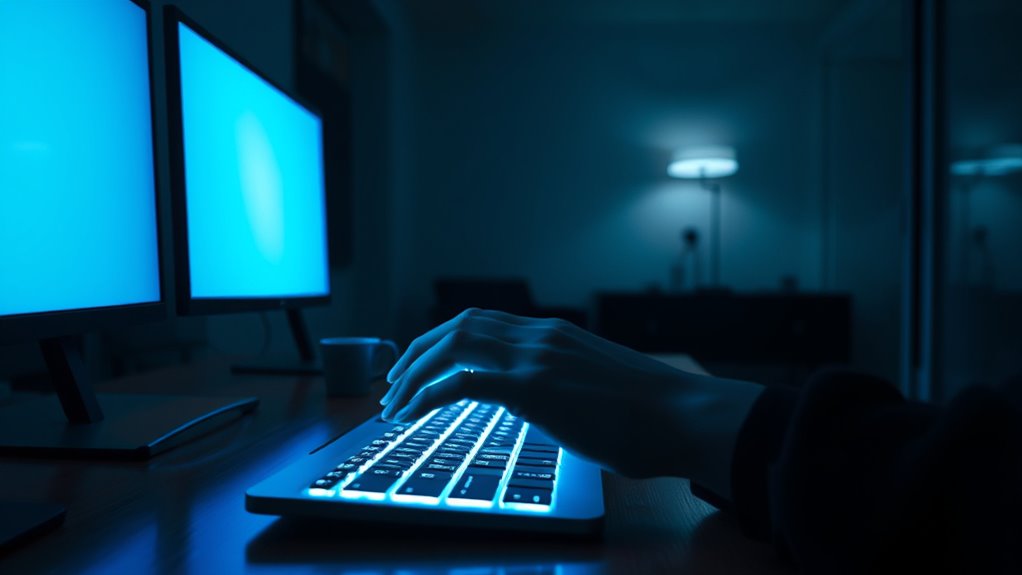

Using screens after dark exposes you to blue light, which can interfere with your sleep cycles and reduce melatonin production. Poor sleep makes it harder for you to focus, stay alert, and perform well during the day. Over time, this can decrease your productivity and mood. By limiting evening screen use and employing blue light filters, you can boost your focus and overall well-being. Keep going to discover more ways to protect your focus and health.
Key Takeaways
- Screens emit blue light that disrupts circadian rhythms, leading to poorer sleep quality and decreased daytime focus.
- Late-night screen use suppresses melatonin, making it harder to fall asleep and impairing cognitive performance the next day.
- Reduced sleep caused by blue light exposure results in grogginess, lower alertness, and decreased productivity.
- Using blue light filters or limiting screen time after dark can improve sleep quality and enhance focus during the day.
- Better sleep from reduced blue light exposure boosts mood, decision-making, and overall work efficiency.
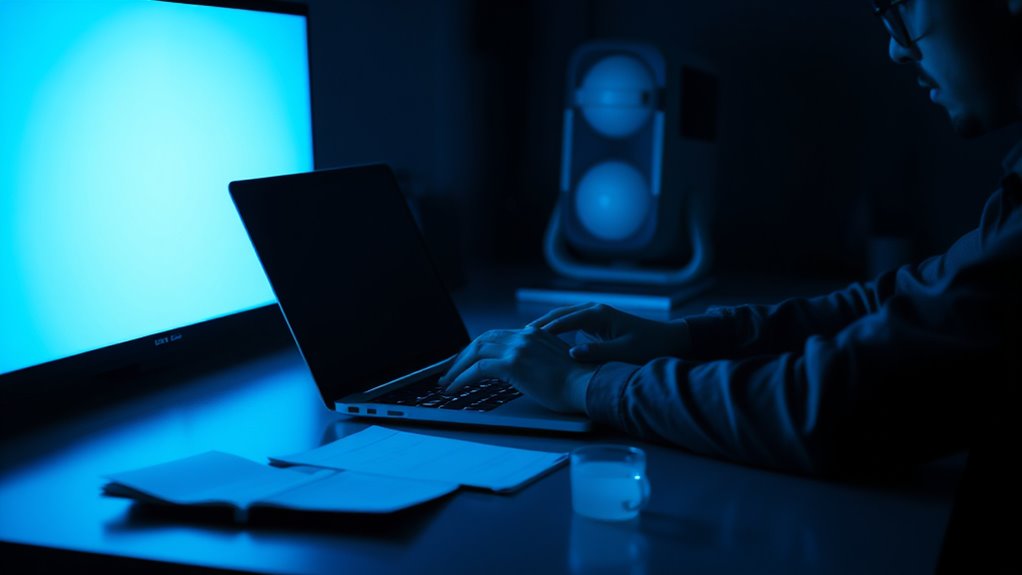
Blue light, emitted by screens from smartphones, computers, and tablets, has become an integral part of modern life. As you spend more time on your devices, especially during evening hours, you might notice a decline in your sleep quality. That’s because excessive screen time exposes you to high levels of blue light, which can interfere with your body’s natural sleep signals. When you’re glued to your devices late into the night, your brain receives a message that it’s daytime, making it harder to wind down and fall asleep. This disruption doesn’t just affect your rest; it also impacts your productivity the next day. Poor sleep quality leaves you feeling groggy, less focused, and less capable of handling complex tasks, which can hinder your overall performance.
Reducing your screen time before bed can considerably improve your sleep quality. Setting a cut-off time for device use at least an hour before sleeping allows your body to produce enough melatonin, the hormone responsible for regulating sleep-wake cycles. When your melatonin levels are high, falling asleep becomes easier, and your sleep tends to be more restorative. Better sleep means you wake up feeling more refreshed, alert, and ready to tackle the day’s challenges. Without the constant stimulation from screens and blue light exposure, your brain can relax, leading to deeper sleep cycles and improved cognitive function. Additionally, choosing the right screen technology can also reduce blue light emission and further support healthy sleep patterns.
You might also consider using blue light filters or glasses if you can’t avoid screens late at night. These tools can block or reduce blue light exposure, helping to protect your sleep and keep your circadian rhythm in sync. However, the most effective strategy remains limiting screen time during the hours leading up to bedtime. Not only does this support better sleep quality, but it also helps you maintain higher productivity levels during your waking hours. When you get enough quality sleep, your focus sharpens, your mood stabilizes, and your decision-making improves, all of which contribute to a more productive day.
In the end, understanding the relationship between screen time, blue light exposure, and sleep quality can empower you to make smarter choices. Cutting back on evening screen use isn’t just about protecting your eyes; it’s about safeguarding your overall well-being and maximizing your productivity. So, next time you’re tempted to scroll late into the night, remember that giving your eyes and mind a break can lead to better sleep and, ultimately, better results in your daily life.
Frequently Asked Questions
Can Blue Light Exposure Improve Nighttime Alertness?
Yes, blue light exposure can improve nighttime alertness by boosting your cognitive alertness. When you’re exposed to blue light, especially in the evening, it signals your brain to stay awake and alert, helping you focus better during late hours. However, prolonged exposure might interfere with sleep quality. Use blue light strategically, such as through specialized glasses or controlled screen time, to balance alertness without disrupting your sleep cycle.
What Are the Long-Term Health Effects of Blue Light?
Blue light toxicity could cause serious long-term health issues, including retinal damage that might lead to vision loss. You might not notice the damage until it’s too late, and your eyes are permanently affected. Constant exposure accelerates retinal damage, risking irreversible harm. Protect your eyes now by reducing screen time, especially at night, and wearing blue light glasses. Don’t underestimate blue light’s potential to cause lasting damage!
Does Blue Light Affect Sleep Quality Differently for Adults and Teens?
Yes, blue light affects sleep quality differently for adults and teens. For teens, it causes more melatonin suppression, leading to greater circadian disruption and difficulty falling asleep. Adults also experience melatonin suppression, but their circadian rhythms are more stabilized, so the impact is slightly less severe. Both groups should limit screen time before bed to reduce blue light exposure and improve sleep quality.
Are There Specific Screen Settings That Reduce Blue Light Impact?
Yes, you can reduce blue light impact by adjusting your screen calibration and using blue light filters. Many devices offer built-in settings to shift color temperature toward warmer tones, helping lessen blue light exposure. Additionally, installing blue light filter apps or enabling night mode can block or dim blue light, making it easier on your eyes, especially during late hours. These settings improve comfort and may help preserve your focus.
How Does Blue Light Influence Eye Strain and Visual Comfort?
Ironically, blue light is often blamed for ocular fatigue and visual discomfort, but it’s actually the strain from prolonged screen time that hurts your eyes. Blue light can contribute to eye strain, causing dryness and blurred vision. It disrupts your sleep, making your eyes work harder. To reduce discomfort, take breaks, adjust screen brightness, and use blue light filters. Your eyes will thank you for the extra care.
Conclusion
As the night whispers like a fading lullaby, remember that too much blue light can dim your focus, much like a shadow creeping at dusk. Just as the moon guides the tide, your habits shape your productivity—choose to turn off screens when darkness falls. Embrace the quiet, let your mind rest, and you’ll find that your focus rises again, brighter and clearer, like dawn breaking after a long night. Your brightest work begins with a mindful pause.