
To declutter your mind, start by evaluating your workspace and removing all items to see the full surface. Categorize and prioritize what to keep, toss, or relocate, and use effective storage solutions to maintain organization. Establish a daily cleanup routine to keep things tidy and avoid clutter triggers. Incorporate mindful organization and personal touches thoughtfully, and stay consistent. Continue exploring these steps to transform chaos into clarity and boost your focus.
Key Takeaways
- Assess and optimize your workspace ergonomics and digital organization to reduce physical and mental clutter.
- Clear all items to create a blank slate, then categorize and store them efficiently for easy access.
- Use digital tools and labels to organize files, emails, and supplies, maintaining clarity and quick retrieval.
- Clean and reset your environment regularly, minimizing distractions and visual clutter for better focus.
- Establish daily routines and mindful organization habits to sustain a tidy, motivating workspace long-term.
Assess Your Current Workspace

Before you begin decluttering, it’s important to assess your current workspace to understand what’s working and what’s not. Start by evaluating your workspace ergonomics—are your chair, desk, and computer setup comfortable and supporting good posture? Poor ergonomics can cause discomfort and distraction, hindering productivity. Next, look at your digital clutter: are your files, emails, and desktop organized or overwhelming? Digital clutter can cause stress and waste time searching for documents. Take note of clutter hotspots, both physical and digital, and identify what items or setups contribute to chaos or inefficiency. Additionally, staying informed about AI security vulnerabilities can help you implement smart digital organization strategies. This assessment helps you prioritize what needs immediate attention and creates a clear plan for decluttering, setting the foundation for a functional and calming workspace. Recognizing and addressing paint sprayer maintenance needs can also inspire a mindset of regular upkeep, which applies to maintaining an organized workspace. Moreover, understanding the fatherhood lessons can motivate you to nurture a supportive environment that encourages ongoing organization and growth. Furthermore, incorporating vetted organization tools and methods ensures your decluttering efforts are both safe and effective.
Clear Your Desk Completely

Start by removing everything from your desk so you can see the full space. Then, sort and categorize items into groups, deciding what to keep, toss, or relocate. To maintain a clutter-light environment, consider establishing simple daily routines to prevent buildup. Additionally, you might explore storage solutions that help organize your essentials more effectively. Incorporating regular cleaning into your routine can further prevent dust and debris from accumulating. For added organization, you could also consider using portable storage options to keep frequently used items within reach. Finally, clean the surface thoroughly and reset your workspace for a fresh start.
Remove All Items
Have you ever noticed how cluttered surfaces can make your mind feel overwhelmed? To truly reset your space, start by removing all items from your desk. This clears the physical space and encourages digital minimalism, helping you focus on what matters most. As you clear everything, practice emotional detachment by letting go of attachments to objects that no longer serve a purpose. Don’t just move items aside—completely remove them, so your desk is empty. This process not only refreshes your workspace but also creates a blank slate for new organization. It’s essential to approach this step with a mindset of simplicity and clarity, knowing that once your desk is clear, your mind will also feel lighter and more organized. Incorporating decluttering techniques can further enhance your ability to maintain an organized environment and clear mental space.
Categorize and Sort
How do you turn a blank, clutter-free surface into an organized workspace? The key is to categorize and sort everything you removed. Group similar items together—papers, tech gadgets, office supplies—and decide their designated spot. Use digital tools like task managers or labeling apps to keep digital files in order. As you sort, consider your ergonomic setup: position frequently used items within arm’s reach and keep your workspace comfortable. Clear containers or trays help maintain categories, preventing clutter from reappearing. This process transforms chaos into structure, making it easier to find what you need quickly. Incorporating self-watering plant pots into your workspace can also add a touch of greenery effortlessly, as they reduce the need for frequent watering and maintenance, helping your desk stay neat. Paying attention to ergonomic organization ensures your setup supports your physical comfort during work. Choosing appropriate storage solutions can further streamline your organization efforts. Remember, a well-organized desk supports a clear mind and boosts productivity. Staying mindful of junk mail and obsolete papers ensures your workspace remains tidy over time. Implementing digital organization techniques can also help keep your files and reminders in check. Stay intentional about your categories, and your workspace will become a functional, inspiring environment.
Clean and Reset
Once you’ve sorted and categorized your items, it’s time to give your workspace a fresh beginning by clearing everything off the desk. This reset allows you to create a clean slate, fostering mindfulness practices that promote focus and calm. As you wipe down the surface, resist the urge to rush—be present in the process. Use this moment for a digital detox by turning off notifications and putting away devices. Clearing your desk completely helps eliminate visual clutter, making it easier to prioritize tasks and maintain organization. Take a deep breath and visualize a productive day ahead. A clean, reset workspace doesn’t just look good—it sets the tone for a clear, focused mind, making it easier to stay organized and reduce overwhelm. Incorporating a safety check before reorganizing ensures your workspace remains a secure environment, helping you stay focused on your tasks. Additionally, understanding the mechanics of pinball machines can inspire a playful approach to organizing, encouraging creativity and problem-solving as you design your ideal workspace. Keeping your workspace space-efficient can further enhance your productivity and comfort throughout the day. Engaging in emotional support techniques, such as mindfulness or positive affirmations, can help maintain your motivation and emotional well-being during this decluttering process.
Categorize and Prioritize Your Items
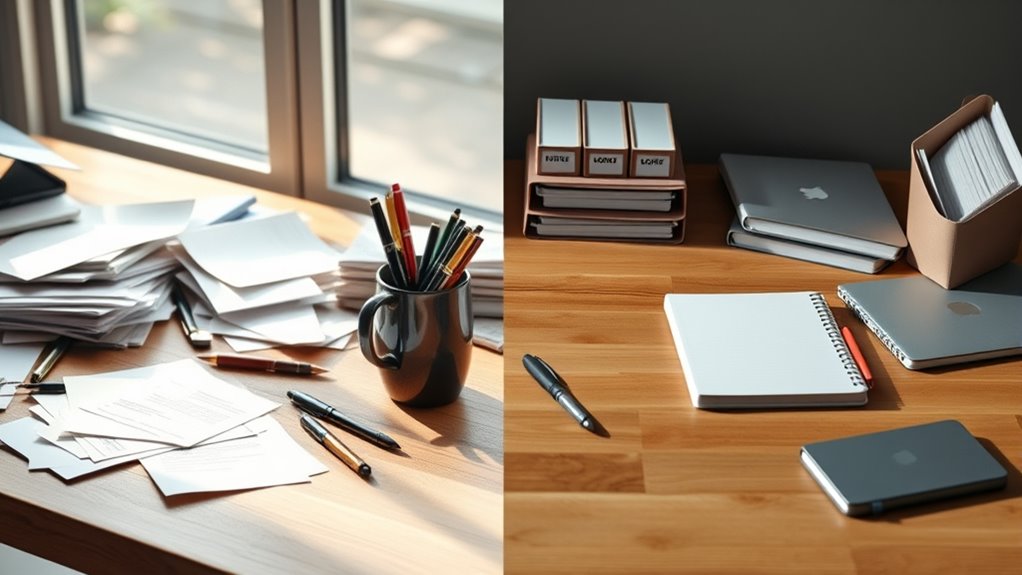
To effectively organize your desk, start by categorizing your items into clear groups such as office supplies, paperwork, and personal belongings. This step helps reduce clutter and enhances mental clarity through mental categorization. As you sort, consider digital decluttering too—delete or archive unnecessary files to prevent digital overwhelm. Prioritize items based on frequency of use and importance, keeping essential tools within easy reach. This process allows you to focus on what truly matters and minimizes distractions. Create distinct sections or containers for each category, making it easier to locate items quickly. Effective organization techniques help reinforce mental clarity and reduce overwhelm. Additionally, incorporating ergonomic tools like comfortable pens or supportive desk accessories can improve your overall workspace comfort and efficiency. Embracing a minimalist mindset can further help sustain an organized environment by encouraging mindful possessions management. Regularly assessing and adjusting your setup supports ongoing workspace organization and prevents clutter from accumulating again. Maintaining a consistent decluttering routine ensures your workspace remains tidy and supports ongoing mental clarity.
Implement a Daily Cleanup Routine

Choose a specific time each day to tidy your desk so it becomes a habit. Keep your cleanup simple by using only a few easy-to-access supplies. Consistency turns this quick routine into a powerful tool for maintaining a clear mind. Incorporating routine habits can further enhance your ability to stay organized and reduce stress.
Set a Specific Time
Setting a specific time each day for your desk cleanup creates a routine that becomes second nature. By integrating this into your morning routine, you guarantee your workspace stays organized and your mind stays clear. Use time blocking to dedicate a few minutes—whether it’s right after arriving or before leaving—to tidy up. Consistency turns the task into a habit, reducing clutter buildup. Choose a consistent time that fits your schedule, so it’s easier to stick with it. Establishing this routine minimizes distractions and boosts productivity.
- Pick a daily cleanup time and stick to it
- Use reminders or alarms for accountability
- Pair cleanup with your morning routine
- Keep it short but effective
- Adjust the time as needed for optimal flow
Use Simple Supplies
Using simple supplies makes your daily cleanup quicker and more efficient. Keep minimal supplies on hand—just the essentials like a cloth, a small trash bin, and a few organizers. Budget-friendly tools, like inexpensive bins or reusable wipes, can streamline your routine without breaking the bank. These simple tools help you avoid clutter caused by unnecessary or complicated supplies. When your supplies are straightforward, you waste less time searching for items or dealing with overwhelming options. Stick to a routine that relies on a few reliable, easy-to-use tools. This consistency ensures your desk stays tidy daily, making it easier to maintain focus and reduce stress. The goal is to create a sustainable, hassle-free cleanup process that keeps your workspace neat and your mind clear.
Optimize Storage Solutions

Maximizing your storage solutions is key to keeping your desk clutter-free. Well-organized storage helps you find what you need quickly and reduces visual chaos. Consider installing modular shelving to customize your space and maximize vertical storage. Drawer organizers are perfect for separating small items like pens, paper clips, and sticky notes, preventing them from piling up. Use labeled containers or bins to group similar items together, making everything easy to locate. Wall-mounted file holders or magazine racks can hold documents and magazines, freeing up desktop space. Regularly evaluate your storage options to guarantee they serve your needs and adapt as your workspace evolves. Efficient storage transforms your desk into a streamlined, distraction-free zone, making it easier to focus and work effectively.
Use Mindful Organization Techniques

Implementing mindful organization techniques transforms the way you manage your workspace by encouraging intentional and thoughtful arrangement of your items. Start with mindful sorting—assess what you truly need and discard the rest. As you organize, focus on intentional placement, placing items where they’re most accessible and logical. Avoid haphazard stacking or cluttered piles; instead, create designated spots for each category of items. Use containers or trays to keep things tidy and ensure your workspace reflects your priorities. Regularly pause to evaluate your setup, adjusting as needed to maintain clarity and purpose. This deliberate approach not only declutters your desk but also fosters a calm and focused mindset. Mindful organization helps you stay present and intentional every time you sit down to work.
Minimize Distractions and Clutter Triggers

Distractions and clutter triggers can quickly disrupt your focus, making it harder to stay productive. Visual clutter, like scattered papers or overflowing drawers, pulls your attention away from tasks. Sensory triggers, such as noisy surroundings or distracting notifications, also break concentration. To minimize these, start by clearing unnecessary items from your desk. Use storage solutions to keep only essentials within reach. Turn off non-essential notifications and create a quiet workspace. Limit items that cause visual clutter, and keep surfaces tidy.
- Remove non-essential objects
- Organize supplies in drawers
- Silence notifications
- Use minimal desk decor
- Create a designated work zone
Incorporate Personal Touches Mindfully

While personal touches can make your workspace more inviting, it’s important to add them thoughtfully so they don’t create visual clutter. Use personalized decor sparingly—choose a few meaningful items that bring you joy without overwhelming your desk. Sentimental items, like a photo or a small keepsake, can boost motivation, but keep their display simple and uncluttered. Limit yourself to one or two pieces to maintain a clean, focused environment. Regularly reassess these items, removing anything that no longer serves a purpose or adds to the clutter. By integrating personal touches intentionally, you create a workspace that feels welcoming without sacrificing organization or clarity. Remember, the goal is to enhance your space without detracting from its functionality.
Maintain Your Organized Space for Long-Term Clarity

Once you’ve personalized your workspace thoughtfully, the next step is to develop habits that keep it organized over time. Mindful maintenance is key to maintaining long-term clarity and preventing clutter from piling up again. Regularly assess your desk at the end of each day, putting things back in their designated spots. Incorporate simple clutter control techniques, like limiting unnecessary items and using storage solutions. Set a weekly schedule for tidying up, so clutter doesn’t accumulate. Stay conscious of your habits, avoiding impulsive cluttering. Consistency helps your space stay functional and inspiring. By staying proactive and intentional, you create a sustainable environment that supports focus and peace of mind.
- Designate daily cleanup times
- Limit personal items to essentials
- Use labeled storage containers
- Review and discard outdated papers
- Create a clutter-free zone
Frequently Asked Questions
How Often Should I Reassess My Workspace Organization?
You should reassess your workspace organization at least once a month with a dedicated workspace review. Setting an organization schedule helps you stay on top of clutter and guarantees your space remains functional. Regularly evaluating your setup allows you to identify areas needing improvement, keep your environment inspiring, and boost productivity. Make it a habit, and you’ll maintain an organized space that supports your work and mental clarity.
What Tools Are Best for Maintaining a Clutter-Free Desk?
Think of your desk tools as a well-tended garden. Use clear storage solutions like labeled bins or drawer organizers to keep clutter at bay. Invest in cable clips to prevent tangles and desktop trays for essential items. Regularly update your desk organization, just as you’d prune a garden, ensuring your workspace stays tidy and efficient. These tools help you maintain a clutter-free desk, boosting focus and productivity every day.
How Can I Stay Motivated to Keep My Desk Organized?
You can stay motivated to keep your desk organization on track by setting small, achievable goals and rewarding yourself for maintaining order. Use motivation techniques like visualizing a clutter-free workspace and reminding yourself of the benefits, such as increased productivity. Keep your workspace inspiring, and regularly declutter to maintain momentum. Remember, consistency is key—making desk organization a daily habit helps you stay committed and motivated in the long run.
What Are Signs My Workspace Is Becoming Cluttered Again?
Your workspace starts to resemble a stormy sea when clutter creeps back in. You notice clutter triggers like piled papers, scattered supplies, or overflowing inboxes, signaling your habits are slipping. Items that once had a specific place now clutter your desk, and your focus drifts like a ship lost at sea. Recognizing these signs early helps you steer back to calm, maintaining organized workspace habits before chaos takes over.
How Do I Handle Sentimental Items During Decluttering?
When handling sentimental keepsakes, acknowledge your emotional attachment but prioritize what truly matters. Set aside items that evoke strong positive memories, and consider taking photos of others to preserve the memory without the clutter. If an item no longer serves a purpose or causes stress, gently let it go. Trust your instincts and remember that decluttering is about creating space for what genuinely brings you joy and peace.
Conclusion
By decluttering your desk, you’re not just clearing space—you’re carving out mental clarity. Imagine your workspace as a blank canvas, ready to inspire focus and creativity. As you maintain your organized zone, you’ll find your mind becomes as calm as a still lake. Remember, a tidy desk is the mirror of a focused mind—so keep it clean, keep it clear, and watch your productivity soar like a bird set free.