
For a tidy, productive workspace, aim to declutter your desk daily by removing stray papers and organizing essentials. Spend a few minutes weekly tidying your workspace, adjusting ergonomic setups, and clearing digital clutter. Every two weeks, do a deeper clean by disinfecting surfaces and reorganizing drawers. Schedule monthly reviews to reassess supplies and streamline. Incorporate seasonal decluttering to keep it fresh, and creating a maintenance plan helps sustain long-term order. Keep going to discover how to make your routine effortless.
Key Takeaways
- Declutter your desk daily to maintain an organized workspace and prevent clutter buildup.
- Perform weekly cleanups to clear unnecessary papers and organize digital files for optimal efficiency.
- Conduct biweekly deep cleaning tasks, including disinfecting surfaces and organizing drawer contents.
- Schedule seasonal decluttering to review and donate unused items, refreshing your workspace periodically.
- Create personalized maintenance routines with set reminders to ensure consistent, sustainable desk organization.

Logitech G413 SE Full-Size Mechanical Gaming Keyboard - Backlit Keyboard with Tactile Mechanical Switches, Anti-Ghosting, Compatible with Windows, macOS - Black Aluminum
Take your gaming skills to the next level: The Logitech G413 SE is a full-size keyboard with gaming-first...
As an affiliate, we earn on qualifying purchases.
Daily Desk Decluttering Routine
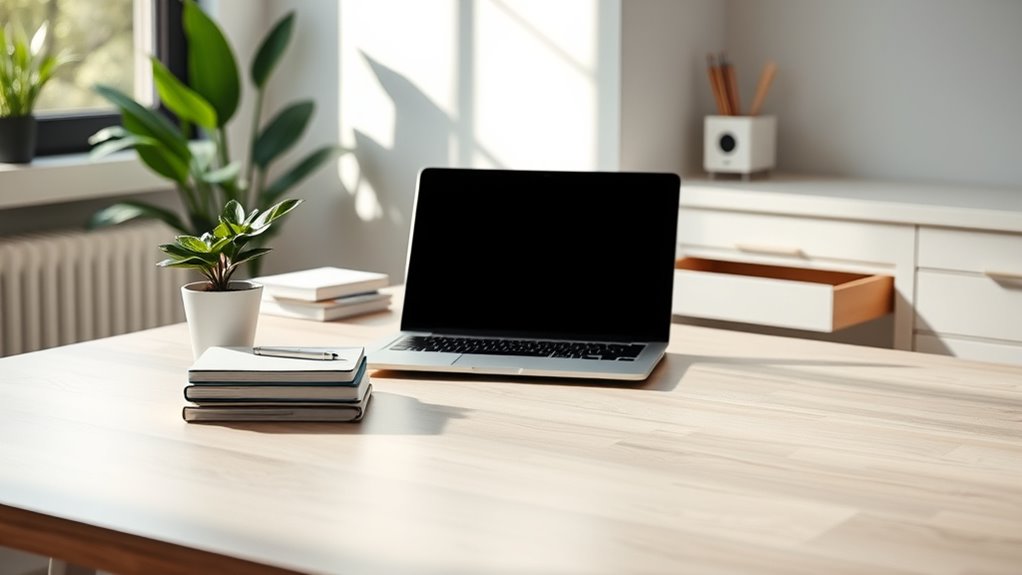
Establishing a daily desk decluttering routine keeps your workspace organized and boosts productivity. Start by tidying up your immediate area, removing any stray papers, and putting away items used less frequently. Focus on optimizing workspace ergonomics by adjusting your chair, monitor, and keyboard to promote comfort and reduce strain. Use ergonomic accessories like wrist supports, monitor stands, or footrests to create a healthier setup. Clearing clutter daily prevents the buildup of distractions and ensures essential tools are within easy reach. Incorporate quick habits such as wiping down surfaces and organizing supplies to maintain a clean environment. Developing a consistent routine ensures your workspace remains tidy and functional over time. This routine not only keeps your desk neat but also encourages better posture and focus throughout your workday. Consistency is key to sustaining an efficient and comfortable workspace. Wall organization systems can further enhance your workspace by creating visual interest and reducing clutter. Additionally, incorporating vertical storage solutions can maximize space and keep frequently used items accessible, especially when considering home theatre projectors and related equipment to optimize your entertainment setup.

XPPen Drawing Tablet with Screen Full-Laminated Graphics Drawing Monitor Artist13.3 Pro Graphics Tablet with Adjustable Stand and 8 Shortcut Keys (8192 Levels Pen Pressure, 123% sRGB)
PLEASE NOTE:XPPen Artist13.3 Pro drawing tablet Need to connect with computer,you need to use it with your computer...
As an affiliate, we earn on qualifying purchases.
Weekly Cleanup and Organization

To keep your workspace truly organized, setting aside time for a weekly cleanup is essential. During this session, focus on improving office ergonomics by adjusting your chair, keyboard, and monitor for ideal comfort. Clear off unnecessary papers and supplies to prevent clutter from accumulating. Don’t forget to tackle digital clutter by deleting unused files and organizing your folders. A tidy desk not only boosts productivity but also creates a more comfortable environment. Use this time to ensure everything has a designated spot, making future cleanups easier. Regular maintenance helps you stay on top of clutter and maintain an efficient workspace. Incorporating proper wall surface maintenance into your routine can also help keep your environment looking fresh and organized. By dedicating a little time each week, you’ll enjoy a cleaner, more ergonomic, and more focused work area.

Logitech Z207 2.0 Stereo Computer Speakers with Bluetooth
Versatile setup with speakers that connect easily to computers and other devices via Bluetooth wireless or 3.5mm cable
As an affiliate, we earn on qualifying purchases.
Biweekly Deep Cleaning Tasks

Every two weeks, take time to clear surface clutter and tidy up your desk. Make sure to organize drawer items so everything has a designated spot, and don’t forget to disinfect your workspace areas. These deep cleaning tasks keep your workspace fresh and efficient. Regular decluttering can also help reduce stress and improve focus during your workday. Incorporating storage tips into your planning can help you schedule cleaning sessions during times when your workspace is less busy. Additionally, using organizers and containers can streamline your decluttering process and make maintenance easier. Implementing power tool and equipment maintenance routines can also prevent buildup of dust and debris, ensuring your workspace remains safe and functional.
Clear Surface Clutter
Over time, surface clutter can quickly accumulate, making your workspace feel chaotic and overwhelming. To combat this, focus on clearing surface clutter every two weeks. Start by removing unnecessary items, including old papers and gadgets, to create a clean, functional space. Practicing ergonomic adjustments ensures your workspace supports good posture, reducing fatigue. As part of your routine, incorporate digital decluttering by organizing files on your computer and deleting unused emails. This minimizes distractions and frees up mental space. Use a cleaning cloth to wipe down your desk and accessories, maintaining a fresh environment. Keeping your workspace tidy not only enhances productivity but also promotes a sense of calm. Regularly clearing surface clutter aims to create an organized, efficient, and comfortable work area. Additionally, implementing organizational tools like self watering plant pots can also help keep your desk tidy and visually appealing. Consistently applying cleaning routines can further prevent clutter from reaccumulating and support a productive workspace. Incorporating awareness of AI’s impact on privacy can help you stay mindful of digital privacy while decluttering. Developing a routine that includes furniture arrangement can optimize your space and prevent clutter buildup.
Organize Drawer Items
Organizing drawer items is an essential part of maintaining a tidy workspace, and it’s best done as a biweekly deep cleaning task. Regularly sorting your drawer contents helps you keep important tools within reach and reduces clutter. Use this time to improve digital filing systems by decluttering paper stacks and organizing files electronically. Effective cable management also becomes easier when drawers are tidy, preventing tangles and confusion.
| Keep Items | Discard or Relocate |
|---|---|
| Frequently used pens, notepads | Old receipts, broken accessories |
| Digital accessories, chargers | Unused cables, outdated tech |
| Important documents | Duplicates, expired materials |
| Small office supplies | Excess clutter, irrelevant items |
This approach streamlines your workflow, making your workspace more efficient and less stressful.
Disinfect Workspace Areas
To keep your workspace safe and hygienic, it’s important to regularly disinfect all surfaces and high-touch areas. Every two weeks, dedicate time to thoroughly clean your desk. Start by disinfecting your keyboard, paying attention to the keys and crevices where germs hide. Don’t forget to sanitize your phone, as it’s one of the most touched items throughout the day. Wipe down your mouse, mouse pad, and other frequently used surfaces with disinfectant wipes or sprays. Use a microfiber cloth dampened with disinfectant for larger surfaces like your desk or monitor. This routine reduces bacteria buildup and prevents illness. Consistent disinfection not only promotes a healthier environment but also keeps your workspace looking and feeling fresh. Using proper disinfection techniques can maximize the effectiveness of your cleaning efforts. Incorporating regular cleaning routines can further enhance your workspace hygiene and minimize germ transmission. Regularly cleaning and disinfecting your workspace can also help prevent the spread of germs and maintain a productive environment. Additionally, adopting professional cleaning standards ensures thorough sanitation and long-term cleanliness.

Creative Pebble 2.0 USB-Powered Desktop Speakers with Far-Field Drivers and Passive Radiators for Pcs and Laptops (Black)
Single USB cable for computers and laptops | enjoy a hassle-free Audio experience with a single USB cable...
As an affiliate, we earn on qualifying purchases.
Monthly Review and Reorganization

Performing a monthly review and reorganization guarantees your desk stays tidy and functional. This is the perfect time to assess your current setup and implement personalized organization strategies that suit your workflow. Use clutter reduction techniques like sorting papers into designated folders or recycling unnecessary items. Take a few minutes to clear away any accumulated debris and evaluate what supplies are still useful. Consider rearranging frequently used items for easier access and removing anything that no longer serves a purpose. By regularly refining your organization, you prevent clutter from building up and ensure your workspace remains efficient. Recognizing the importance of cleaning supplies helps maintain a hygienic environment. Incorporating space-efficient storage solutions can further optimize your limited workspace. Staying informed about merchant services risks can also help you identify potential vulnerabilities that might impact your operational flow. Implementing ergonomic principles into your workspace setup can promote better comfort and reduce physical strain, enhancing overall productivity. Utilizing proper cleaning techniques ensures your workspace stays sanitized and safe. This proactive approach helps you stay focused, reduces stress, and keeps your desk a productive environment. Maintaining this routine ensures your workspace adapts to your evolving needs.
Seasonal Decluttering Strategies

Building on your monthly review routine, implementing seasonal decluttering strategies keeps your workspace fresh and adaptable. Seasonal organization helps you assess what items are truly necessary, reducing clutter buildup over time. During each season, dedicate time to sort through papers, supplies, and décor, discarding or donating what no longer serves a purpose. This proactive approach prevents clutter from accumulating and becoming overwhelming. By aligning decluttering with seasons, you create a routine that’s easier to maintain and more effective in managing your workspace. Additionally, seasonal decluttering allows you to refresh your environment, making it more inspiring and functional. Incorporating symbol recognition into your decluttering process can help you identify items of significance or meaning, further enhancing your organization.
Incorporate these strategies regularly to keep your desk organized, clutter-free, and ready for whatever the season brings.
Signs Your Desk Needs Immediate Attention

Have you noticed your desk becoming more chaotic than usual? If so, it’s a sign it needs immediate attention. First, check for ergonomic adjustments—if your chair or monitor position feels off, it’s time to declutter and reorganize for better comfort. Second, look for digital clutter—if your files and emails are overwhelming, it hampers productivity. Third, watch for physical clutter that hampers your work flow, like stacks of papers or misplaced supplies. Fourth, pay attention if you’re experiencing discomfort or neck strain, which often results from poor organization. When these signs appear, it’s a clear cue that your workspace requires urgent decluttering to restore efficiency and comfort. Ignoring these signs can lead to longer-term discomfort and decreased focus.
Creating a Personalized Maintenance Schedule
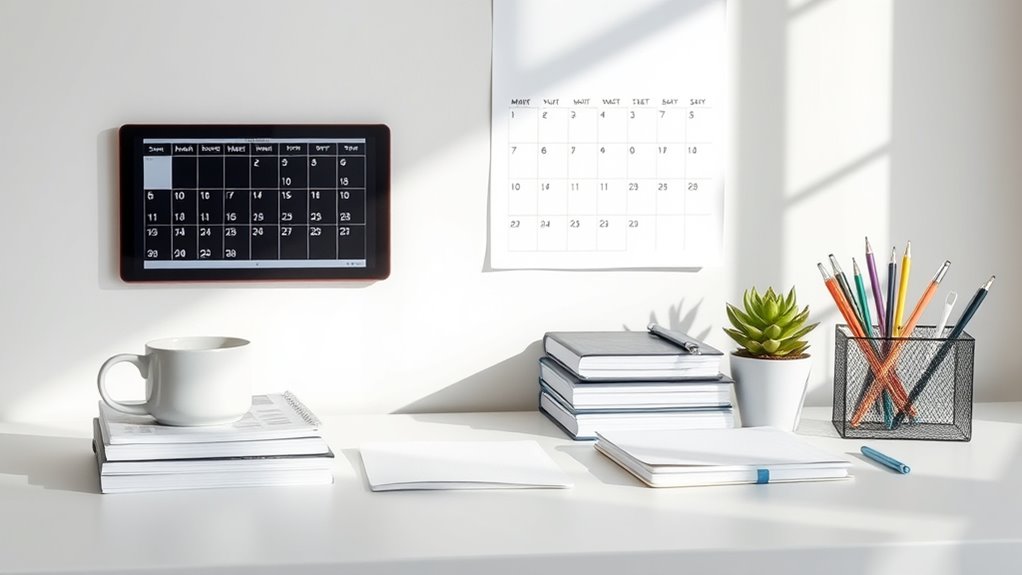
Creating a personalized maintenance schedule is essential for keeping your desk organized and efficient. Your schedule should fit your daily routines and work habits, ensuring consistency without feeling overwhelming. Start by identifying a regular interval—weekly, bi-weekly, or monthly—that works best for you. A well-crafted maintenance plan includes specific tasks like wiping surfaces, sorting paperwork, and discarding unnecessary items. Set reminders or alarms to stay accountable and prevent clutter from piling up. Adjust your schedule as needed to accommodate changing workloads or preferences. Remember, the goal is to make maintenance a habit rather than a chore. By customizing your schedule, you’ll develop a routine that keeps your workspace tidy and boosts your productivity.
Tools and Supplies for Efficient Decluttering
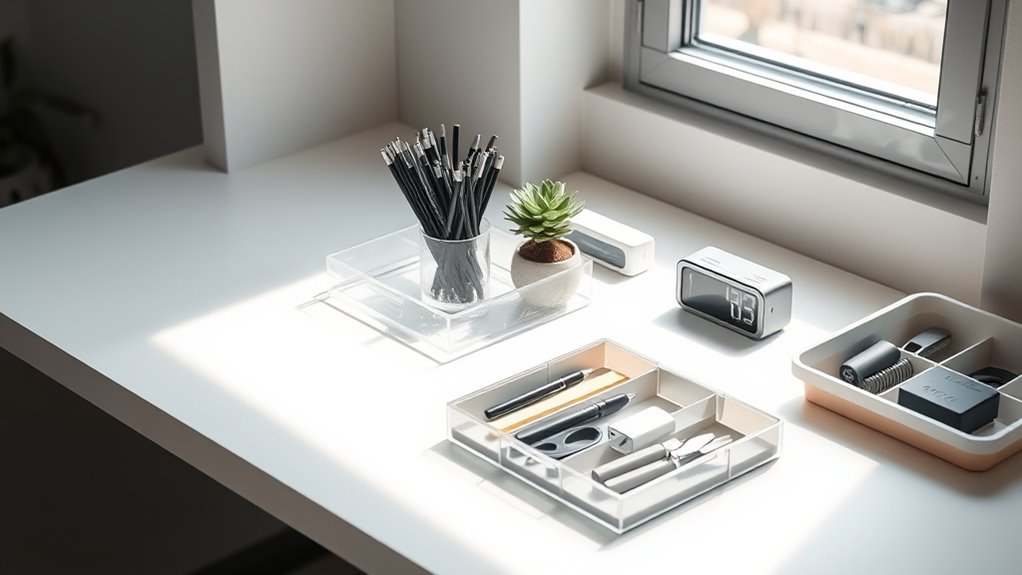
Choosing the right organizational tools can make your decluttering process smoother and more effective. You’ll want storage solutions that fit your space and supplies that help you sort items quickly. With the right tools and supplies, organizing your desk becomes a manageable, even satisfying, task.
Organizational Tools Selection
Selecting the right organizational tools is essential to making your desk clutter-free and functional. To optimize your workspace, choose tools that suit your needs and style. Consider these options:
- Ergonomic accessories like adjustable keyboard stands or supportive wrist rests to improve comfort and efficiency.
- Decorative organizers that add personality while keeping essentials tidy, such as colorful trays or stylish pen holders.
- Drawer dividers to separate small items, preventing them from piling up.
- Modular shelving units for flexible storage solutions that grow with your needs.
Storage and Sorting Supplies
To keep your desk organized and clutter-free, using the right storage and sorting supplies is essential. Storage bins help contain items and prevent clutter from spreading, making it easy to access what you need quickly. Choose clear bins so you can see their contents without opening them. Label makers are invaluable for categorizing and identifying supplies, files, or folders easily. Clear labels save time and reduce the frustration of searching through piles of paper or clutter. Invest in a variety of sizes to accommodate different items, from small office supplies to larger documents. Regularly updating labels and reorganizing storage bins ensures your system stays effective. These tools streamline your decluttering efforts and maintain a tidy, efficient workspace.
Benefits of Regular Workspace Upkeep

Maintaining a tidy workspace offers numerous benefits that can boost your productivity and overall well-being. When your desk is organized, you can focus better and reduce distractions. Regular upkeep also helps you maintain an ergonomic setup, preventing strain and discomfort. Additionally, it makes finding essential desk accessories quicker, saving you time. Here are some key advantages:
A tidy workspace boosts focus, reduces stress, and improves comfort, making your workday more efficient and enjoyable.
- Enhanced focus and efficiency
- Reduced stress from clutter
- Better ergonomic comfort
- Easier access to tools and supplies
Tips for Maintaining Long-Term Tidiness

Building on the benefits of regular workspace upkeep, establishing habits that promote long-term tidiness guarantees your desk stays organized with minimal effort. Start by scheduling quick daily tidy-up sessions to keep clutter at bay. Incorporate ergonomic adjustments to improve comfort and reduce the temptation to adapt your workspace haphazardly. Proper ergonomic adjustments, like adjusting chair height or monitor position, help prevent discomfort that can lead to disorganized clutter. Keep essential items within easy reach and create designated spots for everything. Regularly evaluate your workspace, removing unnecessary items and making adjustments as needed. Developing these habits ensures your workspace remains functional and tidy, making it easier to stay organized without frequent deep cleans. Consistency is key to maintaining a clean, efficient, and ergonomic workspace over the long term.
Frequently Asked Questions
What Are the Best Storage Solutions for a Clutter-Free Desk?
You should use desk organizers and storage containers to keep your workspace tidy. Opt for multi-compartment desk organizers for pens, papers, and small items, and stackable storage containers for larger supplies. These solutions help maximize space and keep essentials within reach. Regularly rearranging and decluttering your desk guarantees your storage stays effective. With the right desk organizers and storage containers, you create a clutter-free environment that boosts productivity and focus.
How Can I Stay Motivated to Maintain an Organized Workspace?
Think of your workspace as a garden that needs regular tending. To stay motivated, set small, achievable goals and celebrate each success. Use motivational strategies like visual reminders of your progress, and find accountability partners who check in on your decluttering journey. These strategies keep you inspired, making maintaining an organized desk feel less like a chore and more like nurturing a thriving garden.
What Are Common Clutter Triggers in Office Environments?
Common clutter triggers in office environments include digital distractions like constant notifications and emails, which pull your focus away and cause clutter buildup on your desk. Paper accumulation from printouts, memos, and drafts also contributes markedly. When you’re overwhelmed by digital clutter and paper piles, it’s easy to lose track of what’s important, making it harder to stay organized. Recognizing these triggers helps you develop better habits to maintain a tidy workspace.
How Does Decluttering Improve Productivity and Mental Health?
Decluttering your desk boosts productivity and mental health by enhancing mental clarity and reducing stress. When your workspace is organized, you can focus better and make decisions faster, leading to improved efficiency. Less clutter means fewer distractions, helping you stay calm and centered throughout the day. Regularly tidying your desk creates a peaceful environment, so you feel more in control and less overwhelmed, supporting overall well-being and work success.
Are There Specific Habits to Prevent Future Desk Clutter?
Think of your desk as a garden; regular desk tidying keeps it flourishing. To prevent clutter habits, set a daily 5-minute routine to clear away unnecessary items and put things back in their place. Use trays or organizers to contain clutter and develop the habit of putting things away immediately. Consistent small efforts act like watering your garden, ensuring your workspace stays tidy, efficient, and inspiring every day.
Conclusion
By following a consistent decluttering schedule, you’ll keep your workspace efficient and stress-free. Did you know that a clutter-free desk can boost your productivity by up to 40%? Regular maintenance prevents chaos from building up, saving you time and mental energy. Make decluttering a habit, and your workspace will stay organized and inspiring—making every workday smoother and more enjoyable. Start today, and watch your environment transform!