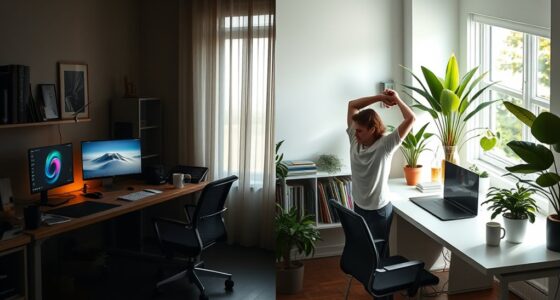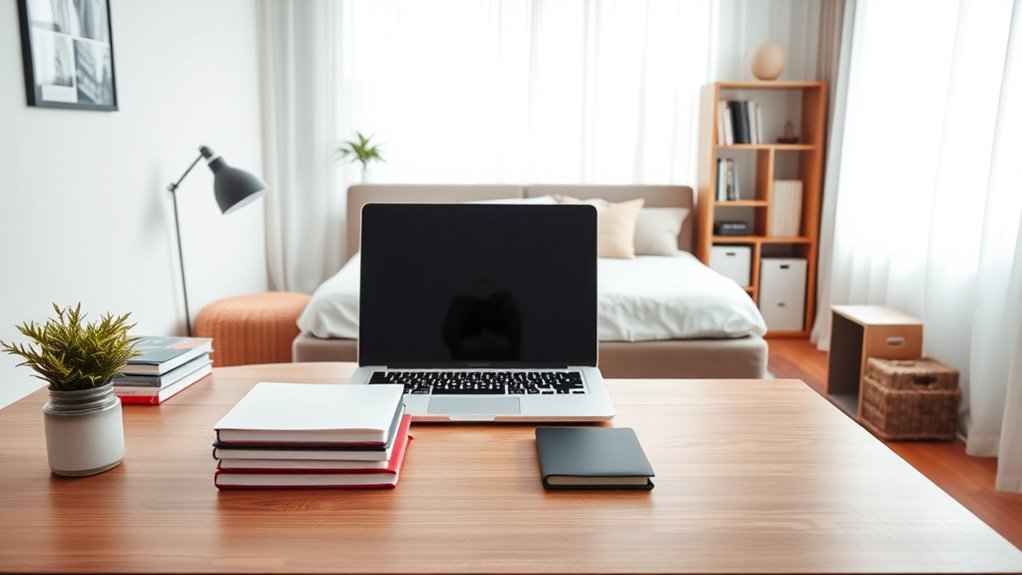

To balance work and personal life in one room, designate a specific workspace with clear boundaries using visual cues like color zones or physical barriers. Establish a routine with consistent start and end times, and practice shift rituals such as tidying up or stretching. Keep personal and work items separate with organized storage, and adjust lighting to signal different modes. Setting boundaries with household members helps maintain focus—and if you want more tips, there’s plenty to learn below.
Key Takeaways
- Designate a specific area within the room for work, separated visually or physically from personal spaces.
- Use color coding, decor, and lighting to distinguish between work and relaxation zones.
- Implement physical barriers like foldable screens or shelves to reinforce workspace boundaries.
- Establish routines and transition rituals to mentally shift between work mode and personal time.
- Keep personal and work items organized in separate storage spaces to maintain clarity and boundaries.
Designate a Dedicated Workspace

Creating a dedicated workspace is essential for maintaining work-life balance when working from home. By setting aside a specific area, you help your mind switch between personal and professional modes. Invest in ergonomic furniture, like an adjustable chair and desk, to keep comfort high and prevent strain. Proper noise control is also vital; use rugs, curtains, or noise-canceling headphones to minimize distractions and create a focused environment. Keeping this space organized and separate from your living areas reinforces boundaries, making it easier to disconnect after work hours. Remember, a well-designed workspace boosts productivity and mental clarity, ensuring you can work efficiently while still enjoying your personal time. This clarity helps prevent burnout and fosters a healthier work-life balance. Additionally, workspace ergonomics play a crucial role in maintaining comfort and preventing long-term health issues. Incorporating proper lighting can further enhance focus and reduce eye strain during work sessions. Ensuring adequate lighting conditions can also improve your mood and overall well-being during work hours. Regularly assessing your workspace for space and organization can help maintain an optimal environment that supports your productivity and comfort, especially since system security is vital to protect your personal data when working remotely.
Use Visual Cues to Signal Work and Personal Time
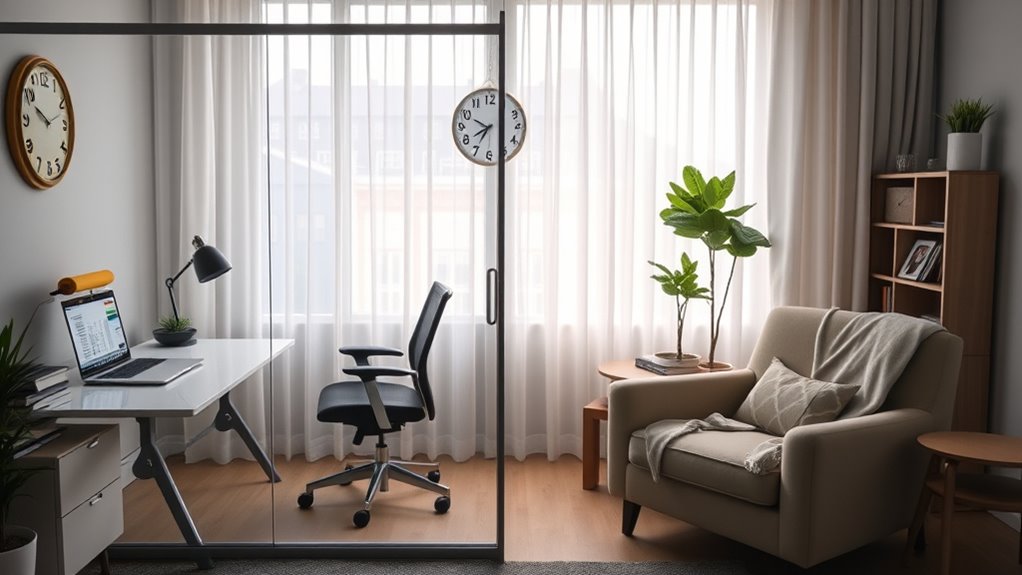
Using visual cues can clearly mark your work and personal time, helping you switch modes effortlessly. Try color coding zones or adding specific decor to signal when you’re working or relaxing. Physical barriers, like a foldable screen, can also reinforce these boundaries and keep your space organized. Incorporating adjustable components or versatile furniture can further enhance your space’s adaptability to different needs like hybrid bikes’ versatility. Additionally, incorporating self-watering plant pots or similar organizational tools can help maintain a tidy and efficient environment without constant fuss. To better manage your workspace, consider implementing risk management strategies to handle unexpected disruptions effectively.
Color Coding Zones
Color coding your zones offers a simple yet effective way to distinguish work time from personal time. By using different color zones, you create clear room differentiation, minimizing confusion and maintaining boundaries. For example, assign a blue zone for work, a green zone for relaxation, and a yellow zone for breaks. This visual cue helps your brain switch modes quickly, enhancing focus and relaxation. To illustrate, here’s a quick overview:
| Zone | Color | Purpose |
|---|---|---|
| Work Area | Blue | Focus and productivity |
| Relaxation | Green | Rest and leisure |
| Break Area | Yellow | Short pauses |
| Storage | Gray | Organization and clutter control |
Using distinct colors for each zone makes room differentiation intuitive, supporting your work-life balance. Color coding can also help reinforce boundaries for those working remotely, making it easier to transition between professional and personal activities at home. Additionally, consistent color schemes can improve visual clarity and reduce decision fatigue when managing multiple zones. Incorporating visual cues like color coding is especially helpful in maintaining a clear separation between work and relaxation areas, which can prevent burnout and promote overall well-being. Recognizing the importance of proper storage ensures your workspace remains organized, further supporting a healthy boundary between work and personal life. Engaging in self-awareness about your environment can further enhance your ability to maintain these boundaries effectively.
Dedicated Workspace Decor
Decorating your workspace with visual cues helps clearly signal when you’re in work mode versus personal time. Use artificial plants to create a dedicated, professional atmosphere that encourages focus during work hours. Place motivational posters or inspiring quotes on the walls to reinforce productivity and set a clear boundary between work and relaxation. These visual elements make it obvious when you’re in your work zone, helping you switch gears smoothly. When it’s time to unwind, remove or cover these cues to shift your mindset. Keep your decor simple and intentional, avoiding clutter that could blur the lines between work and personal life. By thoughtfully decorating your workspace, you establish a visual signal that fosters discipline and helps maintain a healthy work-life balance. Regularly assess your setup for potential distraction factors, ensuring your environment remains conducive to focus and relaxation. Additionally, incorporating Gold IRA regulations into your workspace design can remind you of disciplined investment practices and the importance of compliance in your financial planning. Staying informed about regulatory compliance can further support your ability to balance work and personal responsibilities effectively. To further enhance your environment, consider integrating remote hackathons or virtual collaboration tools to stay connected with teams and projects without cluttering your physical space. Being aware of professional productivity strategies can also help you optimize your workspace for better efficiency and clarity.
Use Physical Barriers
Physical barriers can be an effective way to clearly distinguish your work space from your personal area. By creating spatial separation, you send a clear visual cue that work time is over once you crossing the barrier. Use physical barriers like a foldable screen, a bookshelf, or a curtain to define your work zone. These barriers not only help you mentally switch between roles but also prevent work-related clutter from spilling into your personal space. When you step beyond the barrier, it signals that your workday has ended, helping you relax and enjoy personal time. Incorporating design elements such as color or texture can further reinforce these boundaries and make the separation more intuitive. Using visual cues consistently can reinforce these boundaries, making it easier to maintain a healthy work‑life balance within one room. Additionally, establishing clear boundaries can help train your mind to associate specific areas with work or leisure, fostering better separation. Implementing spatial organization strategies can also enhance your ability to switch between tasks seamlessly, and understanding the importance of work-life balance is crucial for overall well-being.
Implement a Clear Daily Routine

Establishing a clear daily routine is essential for maintaining work-life balance when working in a single room. Start each day with morning planning to set your goals and define your work hours. This helps you mentally switch into work mode and stay focused. As the day progresses, stick to consistent start and end times to create boundaries. In the evening, take time for reflection to evaluate what you accomplished and identify areas for improvement. This routine reinforces discipline and signals to your mind when it’s time to work and when to unwind. Incorporating aquatic exercise into your routine can also help reduce stress and improve mental clarity, making it easier to maintain focus during work hours. By maintaining a structured schedule, you prevent work from bleeding into personal time, making it easier to disconnect and enjoy your evenings. Consistency is key to establishing a healthy separation between work and relaxation, and setting boundaries helps reinforce these limits effectively.
Keep Personal and Work Items Separate
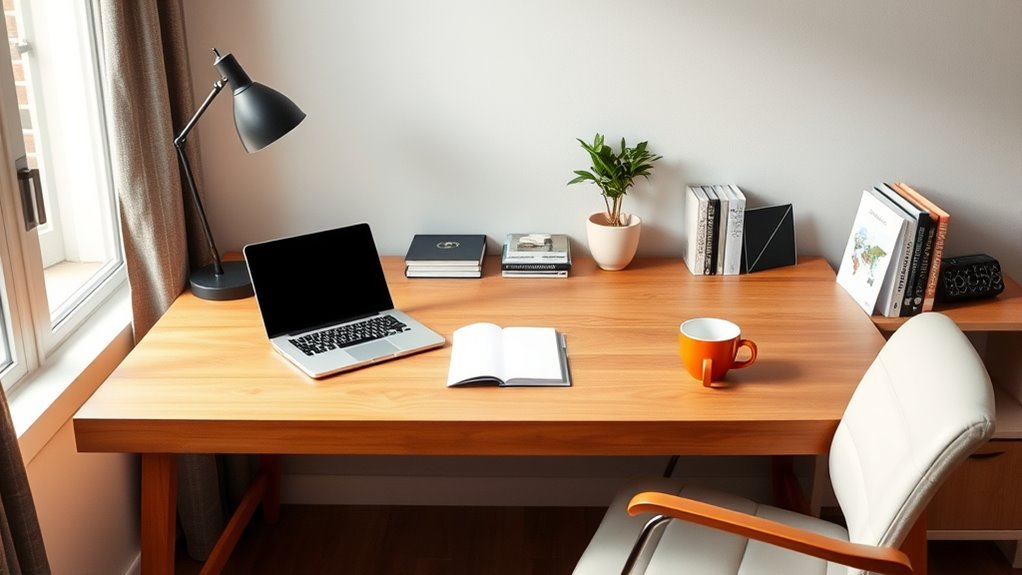
To keep your space organized, designate specific storage areas for personal and work items. Use different containers or baskets to separate them clearly, making it easier to find what you need. Label each container so you can quickly identify which items belong where and avoid mix-ups.
Designate Specific Storage Spaces
Creating designated storage spaces is essential for keeping your personal and work items separate, which can considerably improve your work-life balance. When you assign specific areas for different items, you enhance storage organization and reduce clutter. For example, use a dedicated drawer or shelf for work supplies and another for personal belongings. Clear boundaries help you easily locate what you need and prevent work items from invading your personal space. Consistent storage practices simplify clutter management, making cleanup quicker and easier. This approach not only keeps your room tidy but also signals to your brain when it’s time to switch between work and relaxation. By establishing these specific storage spaces, you create a functional environment that supports both productivity and downtime.
Use Different Containers or Baskets
Using different containers or baskets is an effective way to keep your personal and work items separate within your one-room space. Storage solutions like labeled baskets or designated bins help you easily identify and access what you need, reducing clutter and improving clutter management. For instance, assign a basket for work-related supplies such as pens, notebooks, and chargers, and another for personal items like keys, snacks, or personal care products. This simple organization tactic prevents work items from mingling with personal belongings, making it easier to switch between work and relaxation modes. By compartmentalizing your belongings, you create clear boundaries within your space, which contributes to a more focused work environment and a more relaxing personal area.
Label Personal and Work Items
Labeling your personal and work items guarantees they stay separate and easy to find. Effective personal organization relies on clear item categorization, so take the time to label containers, drawers, and storage bins accordingly. Use descriptive tags or markers to distinguish between items meant for work and those for personal use. This simple step helps prevent confusion and keeps your space tidy. When you know exactly where everything belongs, you save time searching and reduce clutter. Consistent labeling makes it easier to maintain boundaries between work and leisure, supporting a healthier work-life balance. Plus, it encourages you to stay organized and disciplined, ensuring your room functions efficiently for both personal relaxation and professional tasks.
Adjust Lighting to Differentiate Spaces
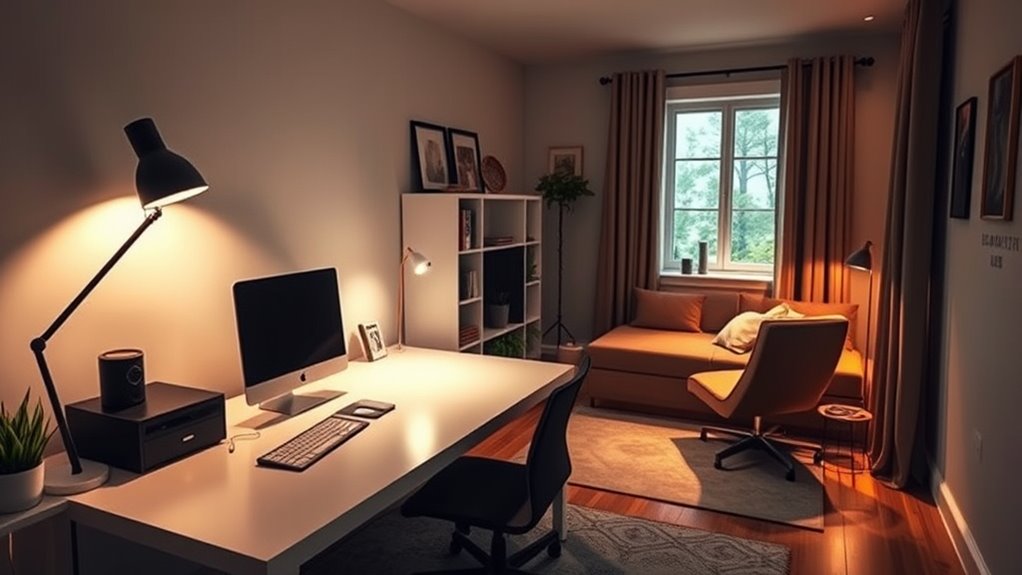
Adjusting the lighting in your one-room workspace helps clearly define different areas, making it easier to switch between work and relaxation. Use lighting contrast to create visual separation—brighter, cooler lights work well for your work zone, while softer, warmer lighting fosters a relaxing atmosphere in your relaxation area. This distinction enhances your room ambiance, signaling to your brain when it’s time to focus or unwind. Consider installing adjustable lamps or layered lighting options, such as task lights and ambient fixtures, to customize your space easily. Proper lighting not only improves your concentration but also helps prevent eye strain. By thoughtfully adjusting your lighting, you reinforce the boundaries between work and leisure, supporting a healthier work-life balance within the same room.
Establish Boundaries With Household Members
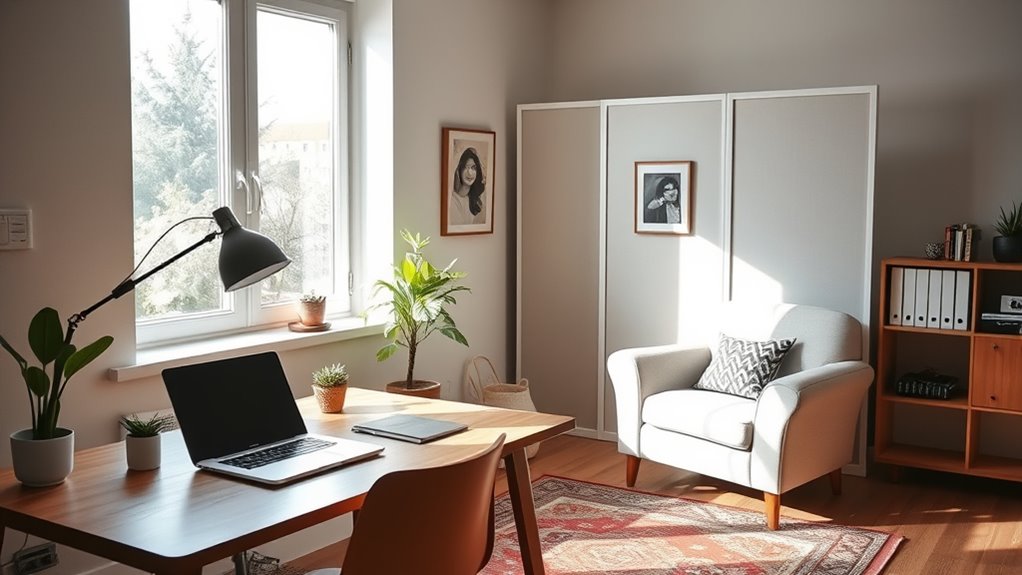
Once you’ve set different lighting zones to signal work and relaxation areas, the next step is to establish clear boundaries with household members. Effective household communication is key—explain your work hours and the importance of respecting them. Discuss family scheduling to ensure everyone knows when you’re unavailable, helping to prevent interruptions. Set expectations early, like designated “office hours” or quiet times, and encourage household members to respect these boundaries. Use visual cues, such as a sign or a closed door, to reinforce your work zone. Consistent communication minimizes misunderstandings and helps everyone adapt to your work-from-home routine. By establishing these boundaries upfront, you create a respectful environment that supports your focus and work-life balance.
Practice Transition Rituals to Switch Gears
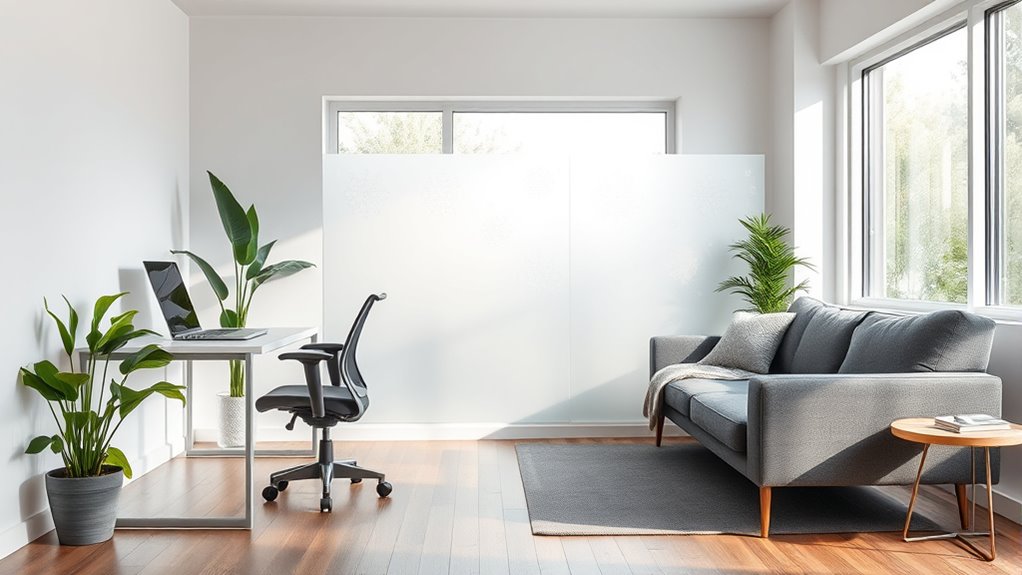
Practicing change rituals helps you clearly signal the end of your workday and prepare your mind for personal time. These mindful *shifts* foster mental preparation, making it easier to switch gears. To create effective rituals, try:
Practicing change rituals signals work’s end and eases mental transition into personal time.
- Closing your laptop and putting away work materials, signaling the end of work.
- Taking a brief walk or stretching to physically mark the *shift*.
- Deep breathing exercises to calm your mind and reset your focus.
- Setting a specific mental cue, like saying “done for today,” to reinforce the boundary. These simple steps help you develop a routine that separates professional from personal life, reducing stress and improving overall balance. Consistent transition rituals support your mental clarity and make your work-life boundary more tangible.
Frequently Asked Questions
How Can I Stay Motivated Working Alone at Home?
To stay motivated working alone at home, focus on time management and self-discipline. Set clear goals daily, create a dedicated workspace, and stick to a routine. Break tasks into manageable chunks and reward yourself for completing them. Avoid distractions, stay organized, and remind yourself of your long-term objectives. This approach keeps you engaged, boosts productivity, and maintains your motivation throughout the workday.
What Are Effective Ways to Avoid Work Distractions?
Distractions are like weeds in a garden, so you need strong focus techniques. Use time management strategies like the Pomodoro Technique to stay on track, setting specific work intervals and breaks. Turn off notifications, create a dedicated workspace, and set boundaries with others. These steps help you maintain focus, minimize interruptions, and boost productivity, allowing you to work efficiently without drifting into distractions.
How Do I Handle Household Interruptions During Work Hours?
To handle household interruptions during work hours, you should set clear boundaries, like designated times for child supervision and pet management. Communicate your work schedule to family members, so they know when you’re unavailable. Use visual cues, such as a closed door or a sign, to signal focus periods. When interruptions happen, calmly redirect attention, and if needed, take short breaks to tend to children or pets, minimizing disruptions.
What Technology Tools Can Improve My Home Office Setup?
Don’t let outdated tech hold you back—invest in ergonomic furniture and guarantee you have high-speed internet for seamless work. These tools boost comfort and productivity, making your home office feel more professional and efficient. Use ergonomic chairs and desks to prevent strain, and upgrade your internet for reliable connectivity. This way, you stay focused, minimize disruptions, and create a clear boundary between work and home life, even in one room.
How Can I Maintain Social Connections While Working From Home?
To maintain social connections while working from home, you should schedule virtual coffee breaks with colleagues or friends regularly. Join online networking events or industry webinars to expand your professional circle. Engaging in casual chats helps you stay connected and energized. Make it a habit to prioritize these interactions, so you feel less isolated and maintain meaningful relationships despite the physical distance.
Conclusion
By creating distinct zones within your single room, you gently guide your mind between work and relaxation. When you set clear boundaries and adopt simple rituals, you’ll find it easier to leave work behind as the day ends. Think of your space as a calming harbor, where each area has its purpose. With a little intentional effort, you’ll enjoy a smoother shift from daily tasks to peaceful moments, nurturing your well-being in the cozy confines of your home.