

Choosing the best wifi mesh system for a home office can be challenging due to the variety of options available. The TP-Link Deco X55 AX3000 stands out as the overall top pick thanks to its robust WiFi 6 performance and extensive coverage. The eero 6 Mesh WiFi System offers simplicity and reliable connectivity for smaller setups, while the TP-Link Deco 7 Pro WiFi 7 Mesh System provides future-proof speeds with advanced technology. The main tradeoffs involve balancing coverage, speed, device support, and ease of setup. Keep reading to see how these options compare and which one fits your home office needs best.
Key Takeaways
- WiFi 6 systems like the Deco X55 deliver better speeds and device capacity, ideal for busy home offices.
- Coverage area varies significantly; larger homes benefit from multi-unit setups like Deco X55 or Deco 7 Pro.
- Ease of setup and management can differ; systems like eero are designed for straightforward installation.
- Future-proofing with WiFi 7, as seen in Deco 7 Pro, offers higher speeds but at a premium price.
- Device support and security features, such as antivirus and parental controls, influence value and usability.
| TP-Link Deco X55 AX3000 WiFi 6 Mesh System – Covers up to 6500 Sq.Ft, 3-Pack |  | Best Overall for Large Homes and High Device Capacity | WiFi Standard: WiFi 6 (AX3000) | Coverage: 6500 sq.ft. | Number of Units: 3 | VIEW LATEST PRICE | See Our Full Breakdown |
| eero 6 Mesh WiFi System (3-Pack) – Supports Internet Plans up to 500 Mbps, Coverage up to 4,500 sq ft, Connects 75+ Devices |  | Best for Small to Medium Home Offices with Smart Home Integration | Coverage: up to 4,500 sq ft | Supported internet speed: up to 500 Mbps | Number of devices supported: 75+ | VIEW LATEST PRICE | See Our Full Breakdown |
| TP-Link Deco M5 Mesh WiFi System (3-Pack) – Whole Home Coverage up to 5,500 sq. ft., Supports 100+ Devices, Includes Antivirus and Parental Controls | 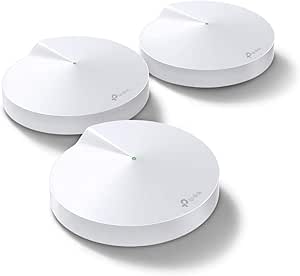 | Best Value for Secure, Large-Area Coverage | Coverage Area: up to 5,500 sq. ft. | Number of Units: 3 | Device Support: 100+ | VIEW LATEST PRICE | See Our Full Breakdown |
| eero 6+ Mesh WiFi System (3-Pack) |  | Best for Large Homes with Smart Device Integration | Speed: Up to 1 Gbps | Coverage: 4,500 sq. ft. | Devices Supported: 75+ | VIEW LATEST PRICE | See Our Full Breakdown |
| TP-Link Deco 7 Pro BE63 Tri-Band WiFi 7 Mesh System (3-Pack) |  | Best for High-Speed, Large-Scale Coverage with Future-Proof Tech | Wi-Fi Technology: WiFi 7 | Speed: 5188 Mbps (6GHz), 4324 Mbps (5GHz), 574 Mbps (2.4GHz) | Coverage: Up to 7,600 sq.ft. | VIEW LATEST PRICE | See Our Full Breakdown |
More Details on Our Top Picks
TP-Link Deco X55 AX3000 WiFi 6 Mesh System – Covers up to 6500 Sq.Ft, 3-Pack
The TP-Link Deco X55 stands out for its expansive coverage of up to 6500 sq.ft., making it ideal for large home offices that need seamless connectivity across multiple rooms. Compared with the eero 6 Mesh, which supports fewer devices and covers less ground, the Deco X55 offers greater scalability and security features like TP-Link’s HomeShield. While its higher price tag may be a hurdle, the added device support and Ethernet backhaul options justify the investment for those with demanding setups. This system excels in environments where extensive coverage and device support are critical, but it may be overkill for smaller, simpler home offices that don’t need such breadth.
Pros:- Extensive coverage up to 6500 sq.ft., suitable for large homes
- Supports up to 150 devices, ideal for smart offices with many peripherals
- Easy setup via the Deco app with advanced security features
Cons:- Requires a modem for most ISPs, adding extra setup complexity
- Higher price compared to basic mesh systems
Best for: Home office users with large properties, multiple smart devices, and high bandwidth needs
Not ideal for: Small home offices or users on a tight budget who only need basic Wi-Fi coverage
- WiFi Standard:WiFi 6 (AX3000)
- Coverage:6500 sq.ft.
- Number of Units:3
- Ethernet Ports per Unit:3
- Total Ethernet Ports:6
- Supports Ethernet Backhaul:Yes
Bottom line: This system is best for large, device-rich home offices requiring extensive coverage and network security.
eero 6 Mesh WiFi System (3-Pack) – Supports Internet Plans up to 500 Mbps, Coverage up to 4,500 sq ft, Connects 75+ Devices
The eero 6 Mesh WiFi System provides reliable coverage up to 4,500 sq.ft. and supports over 75 devices, making it well-suited for small to medium home offices. Its support for Wi-Fi 6 ensures faster, more efficient connections, especially for streaming and smart home devices. Compared to the TP-Link Deco M5, which offers similar coverage but less device support, the eero 6’s seamless setup and Zigbee hub capabilities make it a strong choice for smart office environments. However, its maximum internet plan support of 500 Mbps could limit future bandwidth needs, making it less ideal for users expecting higher speeds or heavy data transfer.
Pros:- Supports over 75 devices, suitable for connected smart offices
- Wi-Fi 6 support delivers faster, more efficient connections
- Dual functionality as a Zigbee smart home hub
Cons:- Limited support for internet plans above 500 Mbps
- Coverage might vary depending on home layout and interference
Best for: Small to medium-sized home offices with multiple smart devices and internet plans up to 500 Mbps
Not ideal for: Power users with gigabit internet plans or large, device-heavy setups
- Coverage:up to 4,500 sq ft
- Supported internet speed:up to 500 Mbps
- Number of devices supported:75+
- Number of units:3 (1 router + 2 extenders)
- Wi-Fi standard:Wi-Fi 6 (802.11ax)
- Ethernet ports:2 gigabit ports
Bottom line: This system offers excellent smart home integration for small to medium offices, but may fall short for high-speed, large-scale setups.
TP-Link Deco M5 Mesh WiFi System (3-Pack) – Whole Home Coverage up to 5,500 sq. ft., Supports 100+ Devices, Includes Antivirus and Parental Controls
The TP-Link Deco M5 offers a compelling balance of coverage, security, and device support for home offices that span up to 5,500 sq.ft. It supports over 100 devices and includes built-in security features like antivirus and parental controls, which are often extras in other systems. Compared with the eero 6, the Deco M5 provides slightly broader coverage and supports wired backhaul, which can boost speeds and stability in complex layouts. While setup remains straightforward, some users may find the initial configuration a bit detailed, especially when managing security features. Overall, this system delivers excellent value for those prioritizing security and extensive coverage.
Pros:- Supports up to 5,500 sq.ft. coverage with 3 units
- Includes antivirus and parental controls for enhanced security
- Supports wired backhaul for improved performance
Cons:- Requires a modem for most ISPs, adding initial setup steps
- Wired backhaul support may need additional configuration
Best for: Budget-conscious users needing secure, wide-area Wi-Fi for busy home offices
Not ideal for: Small offices or users who prefer plug-and-play simplicity without security customization
- Coverage Area:up to 5,500 sq. ft.
- Number of Units:3
- Device Support:100+
- Wi-Fi Standard:Dual-Band (802.11a/b/g/n/ac)
- Ethernet Ports:2 per unit (6 total)
- Includes security features:Antivirus, Parental Controls
Bottom line: This mesh system offers a smart, secure solution for larger home offices at a competitive price point.
eero 6+ Mesh WiFi System (3-Pack)
The eero 6+ offers a compelling balance of speed and coverage, making it ideal for sizable home offices needing reliable connectivity. Its gigabit speeds and support for over 75 devices outperform many basic systems like the Deco M5, especially when multiple smart devices are involved. However, compared with the TP-Link Deco 7 Pro, it lacks WiFi 7 speeds and some advanced features, which could matter for future-proofing. The subscription requirement for enhanced security adds ongoing costs, and setup can be tricky for less tech-savvy users. Overall, this system suits busy, device-rich environments seeking dependable Wi-Fi without the latest WiFi 7 technology.Pros:- Supports gigabit internet speeds for fast, stable connections
- Extensive coverage up to 4,500 sq. ft. for big spaces
- Supports over 75 devices simultaneously, ideal for smart homes
- Built-in smart home hub adds convenience
Cons:- Requires subscription for advanced security features
- Setup may be complex for non-technical users
- Priced higher than basic mesh systems
Best for: Large home office environments with multiple smart devices and gigabit internet needs
Not ideal for: Tech enthusiasts seeking cutting-edge WiFi 7 performance or those avoiding subscription fees
- Speed:Up to 1 Gbps
- Coverage:4,500 sq. ft.
- Devices Supported:75+
- Number of Units:3
- Wi-Fi Standard:Wi-Fi 6
- Smart Home Hub:Yes
Bottom line: This is a strong choice for large, device-heavy home offices prioritizing speed and smart home integration.
TP-Link Deco 7 Pro BE63 Tri-Band WiFi 7 Mesh System (3-Pack)
The Deco 7 Pro BE63 stands out by delivering WiFi 7 speeds, supporting over 200 devices, and covering up to 7,600 sq. ft., making it ideal for large, modern home offices. Its tri-band setup and AI-driven seamless roaming outperform the eero 6+ in raw speed and device capacity, especially for those with many connected gadgets. However, the premium price and need for a compatible modem mean it’s not suited for budget-conscious buyers or those with existing setups. Some users might find the advanced features and setup process overwhelming. This system fits tech-savvy users seeking cutting-edge performance and extensive coverage, with the flexibility for future upgrades.Pros:- Blazing fast WiFi 7 speeds supporting multi-gigabit connections
- Coverage up to 7,600 sq. ft. for sprawling home offices
- Supports over 200 devices with seamless AI-driven roaming
- Includes multiple wired ports, including 2.5G ports for wired connections
Cons:- High price point that may be prohibitive for some
- Requires compatible modem for optimal performance
- Complex setup for users unfamiliar with WiFi 7 configurations
Best for: Tech-savvy users with large home offices, multiple devices, and a need for WiFi 7 speeds
Not ideal for: Budget-conscious buyers or those with simpler needs who won’t utilize WiFi 7’s full potential
- Wi-Fi Technology:WiFi 7
- Speed:5188 Mbps (6GHz), 4324 Mbps (5GHz), 574 Mbps (2.4GHz)
- Coverage:Up to 7,600 sq.ft.
- Number of Units:3
- Number of Streams:6
- Ports:4x 2.5G WAN/LAN, 1x USB 3.0
Bottom line: This mesh system is best suited for advanced users with large, device-rich home offices seeking future-proof, high-speed connectivity.

How We Picked
I evaluated these mesh systems based on performance metrics such as speed, coverage, and stability, as well as usability factors like setup complexity and app control. Power and expandability were key, especially for busy home offices with multiple devices. Build quality and firmware updates also played a role, ensuring long-term reliability. The ranking reflects a balance between value, advanced features, and ease of use, prioritizing systems that suit typical home office environments and demanding workloads.Factors to Consider When Choosing Best Wifi Mesh Systems For Home Offices
When selecting a wifi mesh system for your home office, consider several important factors to ensure your network is fast, reliable, and easy to manage. Coverage area is critical; larger spaces require systems with more nodes or higher bandwidth. Speed support, especially WiFi 6 or WiFi 7, can future-proof your setup and handle multiple devices simultaneously. Ease of installation and management through user-friendly apps matter for quick setup and ongoing control. Security features like antivirus and parental controls add peace of mind. Lastly, pricing should reflect your performance needs and long-term investment goals.Coverage and Scalability
Understanding your home’s size and layout is essential to choosing a system that covers every corner without dead zones. Larger homes benefit from systems with higher coverage per unit, like the Deco X55 or Deco 7 Pro, which can be expanded with additional nodes. Consider whether the system supports easy scalability, so you can add more units if your needs grow. Avoid systems that promise extensive coverage but lack reliable expansion options, as this can lead to inconsistent performance and dead spots.
Speed and Technology Standards
For a home office, fast and stable internet is non-negotiable. WiFi 6 offers significant improvements in speed, capacity, and efficiency, making it suitable for high-bandwidth activities like video conferencing and large file transfers. WiFi 7, present in the Deco 7 Pro, pushes these boundaries further with even faster speeds and lower latency, though it comes at a higher cost. Choosing the latest standard can future-proof your setup but consider whether your internet plan can support these speeds to justify the investment.
Ease of Setup and Management
Most modern mesh systems aim for simple, app-based setup, but usability varies. Systems like eero are renowned for straightforward installation and intuitive controls, making them ideal for users less comfortable with networking. More advanced users might prioritize detailed customization options available in systems like Deco X55 or Deco 7 Pro. Consider how much control you want over network settings versus a plug-and-play experience, and check reviews for real-world ease of use.
Security and Additional Features
Security features such as built-in antivirus, automatic updates, and parental controls can be game changers, especially in homes with multiple users. Some systems include integrated security suites, providing peace of mind against malware and intrusions. Evaluate whether these features are included or require additional subscriptions, as they impact overall value. Reliable security is essential for protecting sensitive work data and maintaining a safe online environment.
Price and Long-term Value
While premium systems offer advanced features and faster standards, they come with higher price tags. Balance your immediate needs with future growth; investing in a system like Deco 7 Pro makes sense if you’re planning a large, demanding home office setup. Conversely, smaller or less intensive setups might find excellent value in more affordable options like the Deco M5 or eero 6. Consider ongoing costs, such as subscription services for security, when evaluating overall investment.
Frequently Asked Questions
Will a mesh system improve my WiFi performance if I already have a router?
Yes, a mesh system can significantly improve coverage and reduce dead zones in larger or multi-floor homes, especially if your current router struggles to reach certain areas. Mesh systems distribute the network load across multiple nodes, offering more consistent speeds throughout your space. However, if your existing router is relatively new and supports high speeds, upgrading to a mesh might provide marginal gains unless coverage is a primary concern.
Is WiFi 6 necessary for a home office, or is WiFi 5 sufficient?
WiFi 6 offers notable advantages, including higher speeds, better handling of multiple devices, and improved efficiency, which benefits busy home offices with many connected gadgets. For most users, WiFi 5 can be sufficient if your internet plan’s speed matches its capabilities and your device support is limited. However, investing in WiFi 6 future-proofs your network and ensures better performance as your device ecosystem grows.
How important is security in choosing a mesh system for my home office?
Security is vital, especially in a home office where sensitive work information and personal data are involved. Look for mesh systems with built-in security features like automatic firmware updates, antivirus, and parental controls if needed. These features help protect your network from cyber threats and unauthorized access, providing peace of mind. Some systems include security subscriptions, so consider whether these add value for your specific needs.
Can I use a mesh system with my existing ISP modem/router combo?
Yes, most mesh systems can be configured to work with existing ISP-provided modems or routers, often by operating in bridge mode. However, it’s important to check compatibility and whether your current device supports the features you need. Using a mesh system as a secondary network can improve coverage without replacing your entire setup. Be aware that some ISPs may restrict certain configurations, so reviewing their policies beforehand can save trouble.
How much should I budget for a good mesh system for a home office?
Expect to spend between $150 and $300 for a reliable mesh system suitable for a home office, depending on features and coverage. Entry-level models like the Deco M5 are budget-friendly while still offering solid performance, whereas advanced systems like the Deco 7 Pro or WiFi 6+ models cost more but provide higher speeds, better future-proofing, and additional security features. Consider your current and anticipated needs to determine whether investing in a higher-end system makes sense for your setup.
Conclusion
For users seeking the best overall performance and coverage, the TP-Link Deco X55 AX3000 makes a compelling choice, especially for larger or demanding home offices. Those prioritizing simplicity and quick setup might prefer the eero 6 Mesh WiFi System, which offers reliable coverage with minimal fuss. For future-proofing and high-speed needs, the TP-Link Deco 7 Pro WiFi 7 Mesh System stands out, though at a higher cost. Budget-conscious buyers or smaller setups will find excellent value in the Deco M5 or eero 6 options, balancing performance and affordability. Ultimately, your ideal choice depends on your coverage area, device load, and budget constraints.