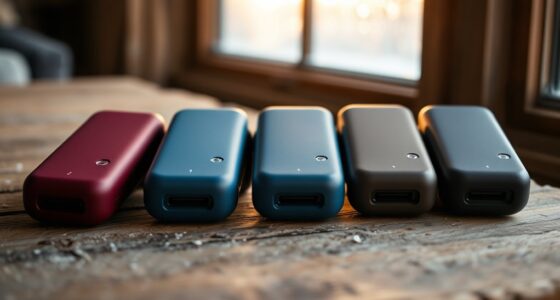

Finding the best audio interface for minimal studios involves balancing simplicity with sound quality. The Universal Audio Volt 176 USB stands out as the overall top pick with its professional-grade preamps and streamlined design, ideal for those who want quality without complexity. The Focusrite Scarlett Solo 3rd Gen offers excellent value and straightforward usability, making it perfect for beginners. Meanwhile, the Yamaha URX22C provides high-resolution support in a compact package for more demanding projects. The main tradeoffs in this category often revolve around balancing budget, ease of use, and future expandability. Keep reading to see how these options compare and find the best fit for your minimal studio setup.
Key Takeaways
- Top picks excel by combining simplicity with high-quality audio performance, making them suitable for minimal setups.
- The best value options often deliver solid sound at a lower price but may lack advanced features or expandability.
- Premium models like the Universal Audio Apollo Solo offer superior preamps and build quality, ideal for professional use but at a higher cost.
- Size and connectivity options significantly influence suitability; compact interfaces with USB-C support are preferred for small spaces.
- Tradeoffs often involve balancing ease of use against features like multiple inputs, high-resolution support, and software bundles.
| Universal Audio Volt 176 USB Audio Interface |  | Best Overall for Classic Studio Sound in Minimal Setups | Preamp Type: UA 610 preamps with Vintage mode | Compatibility: MacOS, Windows, iPad, iPhone (iOS 14+) | Power Requirement: External Volt power supply | VIEW LATEST PRICE | See Our Full Breakdown |
| Universal Audio Apollo Solo Heritage Edition |  | Best for Professional-Grade Recording with Premium Plugins | Plug-in Suite: 5 award-winning titles from Teletronix, Pultec, UA | Processing: UAD SOLO Core Processing | Preamp Emulations: Unison mic preamp and guitar amp models | VIEW LATEST PRICE | See Our Full Breakdown |
| Universal Audio Volt 1 USB Audio Interface |  | Best for Beginners and On-the-Go Recording | Resolution: 24-bit / 192 kHz | Compatibility: MacOS, Windows, iPad, iPhone (iOS 14+) | Power supply: External Volt power supply | VIEW LATEST PRICE | See Our Full Breakdown |
| Yamaha URX22C 2-in/2-out USB-C Audio/MIDI Interface with 32-bit/192kHz Support |  | Best for Durability and MIDI Integration in Minimal Setups | Audio Resolution: 32-bit/192kHz | Inputs: 2 combo XLR/TRS, 1 Hi-Z | Outputs: 2 TRS main outputs | VIEW LATEST PRICE | See Our Full Breakdown |
| Fender AudioBox GO USB Audio Interface for Guitarists, Vocalists, and Producers |  | Best for Portable, All-in-One Recording on the Move | Connectivity: USB-C | Sample Rate: 24-bit/96 kHz | Inputs: XLR mic/line combo +48V, TS instrument | VIEW LATEST PRICE | See Our Full Breakdown |
| Focusrite Scarlett Solo 3rd Gen USB Audio Interface for Guitarists, Vocalists, Podcasters, and Producers |  | Best for High-Quality, Compact Recording | Pre-amps: High-performing with Air mode | Inputs: 2 high-headroom instrument inputs | Sample Rate: up to 24-bit/192kHz | VIEW LATEST PRICE | See Our Full Breakdown |
More Details on Our Top Picks
Universal Audio Volt 176 USB Audio Interface
This model stands out for delivering rich, album-ready sound with vintage preamp emulation, making it ideal for creators who prioritize a professional, warm tone in small studios. Compared with the simpler Volt 1, the Volt 176 offers more versatile features like analog compression and compatibility with iOS devices, but it demands an external power supply, which adds to clutter in minimal setups. The inclusion of UA’s classic preamp emulation helps users achieve studio-quality recordings without a large footprint, though limited bundled software means some users might need additional investments. This pick makes the most sense for those who want high-fidelity sound and are okay with a slightly more complex setup.
Pros:- Rich, album-ready tone with vintage preamp emulation
- Versatile compatibility across Mac, Windows, and iOS
- Includes analog compressor for polished mixes
Cons:- Requires external power supply, adding clutter
- Needs an adapter for iPads with USB-C
- Limited information on bundled software
Best for: Small studio owners seeking professional-grade sound with classic analog character
Not ideal for: Minimalists who prioritize simplicity and portability over external power requirements
- Preamp Type:UA 610 preamps with Vintage mode
- Compatibility:MacOS, Windows, iPad, iPhone (iOS 14+)
- Power Requirement:External Volt power supply
- Additional Accessories:Apple Lightning to USB Camera Adapter
Bottom line: This interface is perfect for small studios aiming for a warm, professional sound, accepting some added complexity.
Universal Audio Apollo Solo Heritage Edition
This pick makes the most sense for serious recording enthusiasts who want near-zero latency and access to top-tier plug-ins, standing out from the Volt 176 with its premium build and advanced processing. While the Apollo Solo offers superior plug-in emulations and high-quality monitoring, it’s more costly and limited to Mac users with the LUNA system, which could be a drawback for Windows users or beginners. Compared to the Volt 1 or Volt 176, it delivers a more polished, studio-like experience but requires a bigger investment. This interface is ideal for those who need professional sound quality and are willing to pay for top-tier software integration and hardware robustness.
Pros:- Includes a suite of 5 award-winning plug-ins
- Near-zero latency tracking with vintage emulations
- Robust build quality and portable design
- Compatible with major DAWs
Cons:- LUNA system is Mac-only, limiting Windows users
- Premium features may be too costly for casual users
- Higher price point
Best for: Producers and serious home studio owners who value premium plug-ins and high fidelity
Not ideal for: Beginners or Windows-only users who may find the premium features and price point restrictive
- Plug-in Suite:5 award-winning titles from Teletronix, Pultec, UA
- Processing:UAD SOLO Core Processing
- Preamp Emulations:Unison mic preamp and guitar amp models
- Compatibility:Mac (LUNA), Windows (VST, AU, AAX)
- Monitoring:High-quality headphone amplifier
- Build:Premium components and robust design
Bottom line: This is a top choice for those who need high-end recording capabilities and can invest in premium software and hardware.
Universal Audio Volt 1 USB Audio Interface
This pick makes the most sense for newcomers or mobile musicians who want reliable, high-quality sound without fuss. The Volt 1’s 24-bit/192 kHz resolution and vintage preamp emulation deliver a clear, warm tone, rivaling the Volt 176 but in a more streamlined package. Unlike the Apollo Solo, it lacks advanced plug-ins and processing but offers a straightforward interface that’s easy to set up. Compared to the Fender AudioBox GO, it offers slightly higher resolution and more refined preamp modeling, though it requires an external power supply and an adapter for iPads, which could complicate portability. It’s ideal for users who want quality and simplicity in a compact form.
Pros:- High-quality 24-bit/192 kHz audio resolution
- Vintage preamp emulation for warm tone
- Compatible with multiple devices including mobile platforms
- Includes UAD plug-ins and tutorials
Cons:- Requires external power supply
- Needs an adapter for iPads with USB-C
- Limited connectivity options
Best for: Beginners and mobile musicians seeking easy setup with professional sound
Not ideal for: Advanced producers or those needing multiple inputs for complex recording sessions
- Resolution:24-bit / 192 kHz
- Compatibility:MacOS, Windows, iPad, iPhone (iOS 14+)
- Power supply:External Volt power supply
- Additional requirements:Apple Lightning to USB Camera Adapter
Bottom line: This interface offers a perfect blend of quality and portability for beginners eager to produce professional sounds on the move.
Yamaha URX22C 2-in/2-out USB-C Audio/MIDI Interface with 32-bit/192kHz Support
This pick makes the most sense for musicians and producers who need reliable, high-resolution audio with MIDI connectivity, distinguishing itself from the Volt 1 and Volt 176 through its full-metal chassis and built-in effects. While it offers 32-bit/192kHz support, its limited input/output count makes it less suited for complex setups, unlike the Yamaha AG series or larger interfaces. The inclusion of Cubase AI and Steinberg effects makes it appealing for users seeking integrated software, but the complexity of the interface might be overwhelming for absolute beginners. It’s ideal for those who value durability and MIDI features in a compact form.
Pros:- High-resolution 32-bit/192kHz audio quality
- Full-metal durable housing
- Includes professional software and effects
- MIDI I/O built-in
Cons:- Limited to 2 inputs and outputs
- Requires USB-C port, possibly needing adapters
- Complex for beginners
Best for: Musicians and producers requiring durable hardware with MIDI and high-res audio in small studios
Not ideal for: Users needing more than two inputs or a simple plug-and-play experience
- Audio Resolution:32-bit/192kHz
- Inputs:2 combo XLR/TRS, 1 Hi-Z
- Outputs:2 TRS main outputs
- Connectivity:USB-C
- Power:Phantom power +48V
- Housing:Full-metal
Bottom line: Ideal for users seeking a rugged interface with MIDI and high-fidelity audio, accepting a basic input/output setup.
Fender AudioBox GO USB Audio Interface for Guitarists, Vocalists, and Producers
This pick makes the most sense for musicians, podcasters, and content creators who need a compact, reliable interface with simple controls. The AudioBox GO offers 24-bit/96 kHz conversion, which is adequate for most home and mobile recordings, and its versatile inputs support microphones and instruments. Compared with the Volt 1, it’s more portable and easier to set up, but the lower maximum sample rate and fewer advanced features mean it’s less suited for detailed mixing or professional mastering. Its seamless integration with Fender’s app and third-party software makes it a practical choice for on-the-go creators who prioritize ease of use over maximum fidelity.
Pros:- Compact, portable design ideal for mobile recording
- High-quality 24-bit/96 kHz conversion
- Versatile inputs for mics and instruments
- Seamless app and software integration
Cons:- Limited to 2 input channels
- Maximum sample rate of 96 kHz
- Basic included software, with more features requiring upgrades
Best for: Mobile musicians and podcasters needing a reliable, portable interface
Not ideal for: Users with complex multi-mic setups or those needing higher sample rates for studio mixing
- Connectivity:USB-C
- Sample Rate:24-bit/96 kHz
- Inputs:XLR mic/line combo +48V, TS instrument
- Outputs:Two balanced ¼-inch TRS
- Headphone Output:Zero-latency monitoring
- Power:Bus-powered via USB-C
Bottom line: Perfect for mobile creators seeking a straightforward, portable interface with reliable sound quality.
Focusrite Scarlett Solo 3rd Gen USB Audio Interface for Guitarists, Vocalists, Podcasters, and Producers
This interface is ideal for minimal studios seeking professional sound at a budget-friendly price. Its high-quality pre-amps with Air mode elevate vocal and instrument recordings, making it a strong alternative to more expensive interfaces like the Universal Audio Volt 176. While its two inputs are sufficient for simple setups—such as vocals and guitar—it falls short for complex multi-mic or instrument arrangements. The compact design is perfect for those with limited space and portability needs, and the included software bundle provides essential tools for starting out. However, the necessity of USB connection and the limited input count may restrict more advanced or expanding projects. This device makes the most sense for solo musicians, podcasters, or small-scale producers who value quality and simplicity over extensive input options.
Pros:- High-performing pre-amps with Air mode for enhanced clarity
- Studio-grade converters ensure professional sound quality
- Includes essential recording software for quick setup
- Compact, portable design fits small studio spaces
Cons:- Limited to two inputs, restricting multi-mic recordings
- Requires USB connection, not standalone
- Overkill for casual casual users who only need simple playback
Best for: Solo musicians, podcasters, or minimal studio owners needing excellent sound quality in a small, portable package.
Not ideal for: Producers or bands requiring multiple inputs and outputs for recording larger ensembles or complex live setups, as the unit’s input count is limited.
- Pre-amps:High-performing with Air mode
- Inputs:2 high-headroom instrument inputs
- Sample Rate:up to 24-bit/192kHz
- Outputs:2 low-noise balanced outputs
- Software Included:Pro Tools Intro+, Ableton Live Lite, Hitmaker Expansion
- Warranty:3 years
Bottom line: This interface is best suited for solo artists and small-scale producers prioritizing high-quality recordings in a minimal, portable form factor.

How We Picked
We evaluated these audio interfaces based on a combination of performance, user-friendliness, build quality, and value. Priority was given to models that are simple enough for minimal setups but still deliver professional sound quality. We also considered size and connectivity options to ensure they fit seamlessly into small, clutter-free studios. Cost was a factor, but we prioritized devices that provide a strong balance of features and affordability. The ranking reflects a combination of expert recommendations, user reviews, and overall versatility for small studio environments.Factors to Consider When Choosing Best Audio Interfaces For Minimal Studios
Choosing the right audio interface for a minimal studio involves understanding your specific needs and future plans. Focus on factors that affect usability, sound quality, and expandability to ensure your setup remains efficient and effective over time.Size and Portability
In minimal studios, space is often at a premium, so selecting a compact, lightweight interface is essential. Devices with USB-C connections tend to be more modern and versatile, reducing cable clutter. Consider whether you need a portable option for mobile recording, or if a slightly larger model with more inputs suits your workflow better. Avoid interfaces that are bulkier or have unnecessary features that won’t fit your small setup, as they can add clutter without providing real benefit.
Number of Inputs and Outputs
Minimal setups typically require only a few inputs—often one or two—so prioritize interfaces that match this need. Overly complex models with multiple channels can become confusing and unnecessary, adding cost and complexity. However, think about potential future needs; a two-input interface can still be versatile for solo musicians or podcasters. Remember, more inputs mean more flexibility but often at a higher price and larger footprint.
Sound Quality and Preamp Quality
For high-quality recordings in a small studio, focus on interfaces with good preamp performance. Clear, transparent sound helps your recordings sound professional without requiring extensive processing. Cheaper interfaces may compromise on preamp quality, resulting in noise or coloration that can affect your recordings. Investing in a model with reputable preamps ensures better results, especially if you plan to record vocals or acoustic instruments frequently.
Connectivity and Compatibility
Most minimal studios benefit from USB-C or USB 3.0 interfaces due to faster data transfer and ease of connection with modern computers. Compatibility with your operating system and DAW software is also critical; check for driver support and updates. If you plan to connect MIDI devices, ensure the interface offers MIDI I/O. Avoid interfaces that require proprietary cables or adapters, which can create clutter or compatibility issues over time.
Software and Bundle Value
Many audio interfaces come with bundled software, plugins, or DAWs, which can add value, especially for beginners. However, beware of overly complicated bundles that might be unnecessary for minimal setups. Focus on interfaces that include essential features without excessive extras, allowing you to expand your software environment as needed. Free or included DAWs can save money, but ensure they meet your recording and editing needs before making a choice.
Frequently Asked Questions
Is a higher sample rate necessary for a minimal studio?
Not necessarily. While higher sample rates like 192kHz can offer marginal improvements in audio fidelity, they also demand more processing power and storage space. For most home or minimal studios, 44.1kHz or 48kHz is sufficient for high-quality recordings and streaming. Choose an interface that supports higher rates if you plan to do professional mastering or need the highest possible fidelity, but for everyday use, standard sample rates are more practical.
Should I prioritize preamp quality over features like multiple inputs?
Preamp quality often has a more direct impact on your recording sound than the number of inputs. If you plan to record vocals or acoustic instruments, investing in a good preamp can make a noticeable difference. However, if your workflow is straightforward, with only a microphone or guitar, a simple interface with good preamps will suffice. Balancing these factors depends on your immediate needs and future plans, but generally, preamp quality should not be sacrificed for extra inputs in minimal setups.
Can I upgrade my minimal studio interface later?
Yes, most interfaces are modular enough to allow upgrades as your needs grow. Many models support software updates and higher-resolution recording options. When choosing an initial interface, consider compatibility with future gear and whether it has sufficient inputs and outputs for potential expansion. Starting with a versatile, well-supported device ensures that upgrading later will be smoother and more cost-effective, avoiding the need to replace your entire setup prematurely.
Is a built-in MIDI connection necessary for minimal studios?
If you work primarily with audio sources and don’t use MIDI controllers or instruments, a MIDI connection isn’t essential. However, if you plan to integrate MIDI gear or virtual instruments into your workflow, choosing an interface with MIDI I/O is a smart move. It saves the need for extra adapters and keeps your setup cleaner. Evaluate your current and future needs—if MIDI is not a priority now, you can always add it later with an external device.
How much should I budget for a good minimal studio interface?
For a minimal studio, you can find quality interfaces in the $100–$200 range that deliver excellent sound and usability. Higher-end models, around $300–$500, offer better preamps, build quality, and expandability, which may be worth the investment if you plan to upgrade your studio over time. Avoid overly cheap interfaces that compromise on audio quality or reliability. Ultimately, balancing your budget with your desired features will help you find the best fit for your minimal setup.
Conclusion
If you’re just starting out or need a simple, reliable interface, the Focusrite Scarlett Solo 3rd Gen offers excellent value with straightforward operation and good sound quality. For those seeking the best overall performance, the Universal Audio Volt 176 USB provides professional-grade preamps in a compact form, perfect for serious minimal studios. Budget-conscious users aiming for decent quality without fuss should consider the Yamaha URX22C. If you want a premium experience, the Universal Audio Apollo Solo Heritage Edition delivers superior sound with expandability. Ultimately, your choice depends on your specific needs—whether simplicity, quality, or future-proofing—and the size of your workspace.