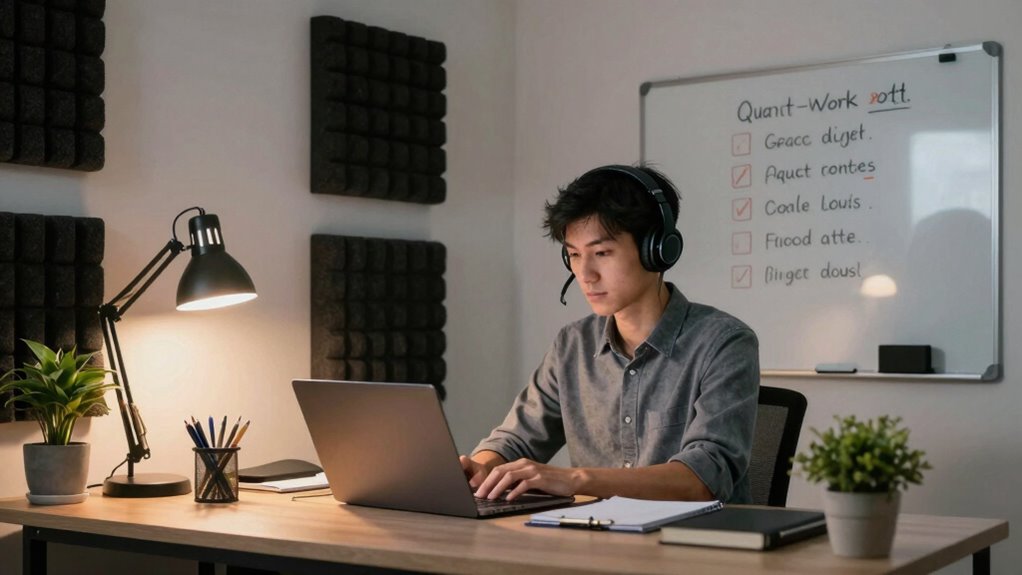

To minimize noise disruptions, set up a dedicated workspace free from distractions and use virtual backgrounds during calls. Wear noise-canceling headphones and activate focus modes when needed. Communicate clear boundaries with family or housemates about your work hours, and use visual cues to signal quiet times. Schedule work during quieter periods and utilize ambient sound apps or sound masking tools to drown out noise. Keep adjusting your environment to stay productive—if you want to learn more, keep going.

Get your wardrobe favorites delivered free with Prime
- Fast, free delivery on millions of items
- Prime Video, Amazon Music and more included
- Member-only deals all year
Key Takeaways
- Establish dedicated, clutter-free workspaces and use virtual backgrounds to minimize visual and auditory distractions.
- Utilize noise-canceling headphones and sound masking tools to block or reduce ambient noise effectively.
- Communicate clear boundaries and work hours with family or housemates to prevent interruptions.
- Schedule work during quieter times and adjust tools based on environmental noise fluctuations.
- Regularly assess and update noise management strategies to maintain an optimal, focused remote work environment.

Working remotely offers flexibility, but it also introduces new challenges, especially when it comes to noise distractions. One of the most common issues is background noise that can interrupt your focus during meetings or disrupt your workflow. To manage this, you can start by setting up a dedicated workspace where external sounds are minimized. Using a virtual background during video calls can help create a professional environment and block out noisy distractions behind you. It’s a simple yet effective way to maintain privacy and keep your focus on the task at hand.
Equipping yourself with noise-canceling headphones is another essential habit. These headphones actively block out ambient sounds, allowing you to concentrate better and participate in calls without background noise interference. They’re especially useful if you work in a noisy household or shared space. When wearing noise canceling headphones, you also signal to your team that you’re in deep focus mode, which helps in reducing interruptions. Combine this with a quiet, clutter-free workspace, and you’ll find your productivity markedly improves.
Establishing clear boundaries with family or housemates also plays a key role in noise management. Communicate your work hours and request minimal disturbances during those times. Using visual cues, like a “Do Not Disturb” sign or a closed door, can reinforce these boundaries. When noise does happen, having strategies ready—like quickly switching on your virtual background or adjusting your noise-canceling settings—can help you regain focus swiftly. Additionally, incorporating sound masking techniques can further enhance your environment by reducing the impact of unpredictable noises.
Another effective habit is scheduling your work around quieter times of the day if possible. Early mornings or late evenings tend to be less noisy and more conducive to deep work. During busier times, you can rely on your noise-canceling headphones and virtual backgrounds to create a sense of separation from the chaos. Additionally, consider using white noise or ambient sound apps that mask disruptive sounds without overwhelming your senses. These tools can effectively drown out distracting noises and help you stay immersed in your tasks.
Finally, staying mindful of your environment daily is key. Regularly assess whether your workspace still meets your noise management needs and make adjustments as necessary. Whether it’s updating your virtual background to a quieter scene or investing in better headphones, small ongoing efforts make a substantial difference. Being aware of biodiversity in your environment can also inspire sustainable choices that create quieter, more natural surroundings. By developing these anti-noise habits, you’ll create a more focused, productive remote work experience that minimizes disruptions and keeps you engaged throughout your day.
noise-canceling headphones for remote work
As an affiliate, we earn on qualifying purchases.
As an affiliate, we earn on qualifying purchases.
Frequently Asked Questions
How Do I Politely Ask Colleagues to Reduce Noise During Calls?
You can politely ask colleagues to reduce noise during calls by practicing silent communication first, like sending a quick chat message. Say something like, “Hey, could you please lower your volume? I want to stay respectful of everyone’s focus.” Emphasize respectful interruptions by framing your request kindly, showing understanding and appreciation for their cooperation. This approach maintains a positive atmosphere while ensuring your call remains clear and productive.
What Are the Best Noise-Canceling Tools for Remote Work?
Like a shield blocking out chaos, noise-canceling tools protect your focus. Consider headphones with active noise cancellation, such as Bose QuietComfort or Sony WH-1000XM4, which are excellent for remote work. Pair them with soundproofing techniques like door seals or rugs, and adopt noise awareness strategies by scheduling quiet hours. These tools and habits help create a peaceful environment, boosting your productivity and reducing distractions during calls.
How Can Remote Team Leaders Enforce Noise Reduction Policies?
You can enforce noise reduction policies by setting clear noise level regulations and communicating expectations consistently. Encourage your team to use acoustic treatment like soundproofing or white noise machines to minimize disruptions. Regularly check in on their work environment, provide resources, and foster an open dialogue about noise concerns. By establishing standards and supporting their efforts, you help create a quieter, more productive remote workspace for everyone.
Are There Specific Times When Quieter Work Environments Are Essential?
Quiet hours are essential during concentrated, collaborative, or creative tasks, where clear communication and focus matter most. You should set specific times when noise is minimized, like early mornings or late evenings. Employ soundproofing techniques such as noise-canceling headphones, rugs, or wall panels to block background bustle. By establishing quiet times and utilizing soundproofing strategies, you create a calm, consistent environment that enhances productivity and reduces distractions.
How Do Different Home Environments Impact Noise Management Strategies?
Your home environment considerably influences your noise management strategies. Good home acoustics, like adding rugs or curtains, help absorb sound and reduce echo, making your space quieter. If you live near noisy neighbors or busy streets, using noise-canceling headphones or white noise machines becomes essential. Adjusting your workspace setup and setting boundaries with household members also help manage noise effectively, ensuring you stay focused regardless of neighborhood noise.
sound masking white noise machine
As an affiliate, we earn on qualifying purchases.
As an affiliate, we earn on qualifying purchases.
Conclusion
By adopting these anti-noise habits, you’ll create a more focused and productive remote work environment. Remember, over 60% of remote workers say noise is their biggest distraction, so minimizing disturbances isn’t just helpful — it’s essential. Implementing simple habits like using noise-canceling headphones or setting designated quiet hours can make a huge difference. Stay consistent, and you’ll notice your concentration and team collaboration improve considerably, making remote work both efficient and enjoyable.
virtual background for video calls
As an affiliate, we earn on qualifying purchases.
As an affiliate, we earn on qualifying purchases.
focus mode noise-canceling headphones
As an affiliate, we earn on qualifying purchases.
As an affiliate, we earn on qualifying purchases.
Halloween Picks
halloween
As an affiliate, we earn on qualifying purchases.