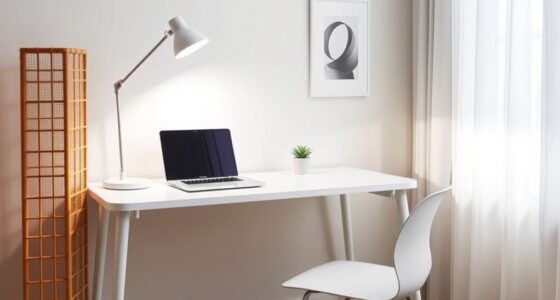
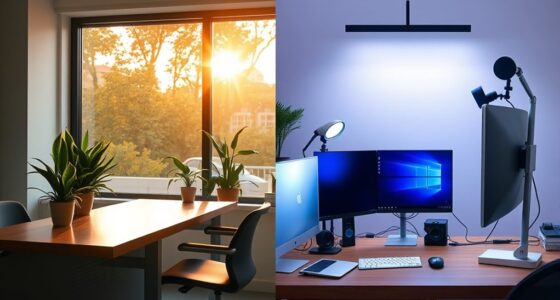
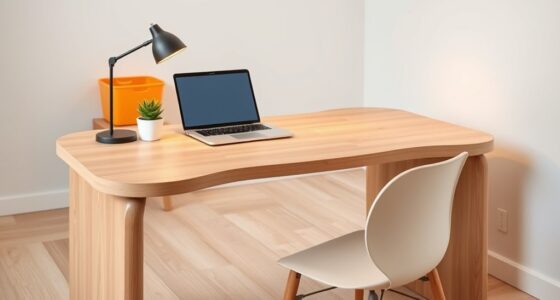
To create a Zen office inspired by Japanese minimalism, focus on simplicity, harmony, and mindful organization. Use neutral colors, natural textures, and clutter-free spaces to promote calm and clarity. Incorporate natural light and plants to foster tranquility, and arrange furniture for balance and symmetry. Prioritize quality over quantity, ensuring each element serves a purpose. By embracing these principles, you’ll cultivate a peaceful workspace that enhances focus and well-being—discover more ways to transform your office into a serene retreat.
Key Takeaways
- Incorporate neutral colors and natural materials to create a calming, harmonious workspace aligned with Japanese minimalism principles.
- Emphasize clutter-free environments with strategic storage solutions and intentional negative space for mental clarity.
- Use soft, diffused lighting and natural elements like plants to promote tranquility and focus.
- Arrange furniture symmetrically and proportionally to foster balance, harmony, and visual serenity.
- Prioritize functionality and mindfulness by selecting purposeful items that support work and evoke beauty.

OAKOA Aesthetic Desk Organizer – Aesthetic Office Desk Accessories – Boho Pen Holder – Neutral Beige Desk Accessories – Home Office Essentials for Women – Cute Pencil Holder
Design Excellence: Elevate your workspace with our aesthetic desk organizer. Minimalist modern design complements any office decor and…
As an affiliate, we earn on qualifying purchases.
As an affiliate, we earn on qualifying purchases.
The Philosophy Behind Japanese Minimalism

Japanese minimalism is rooted in a philosophy that emphasizes simplicity, harmony, and mindfulness. You’re encouraged to embrace aesthetic minimalism, focusing on reducing clutter and emphasizing clean lines. This approach often incorporates meditative practices that foster clarity and calmness, helping you stay present in the moment. The philosophy values quality over quantity, so every item in your space should serve a purpose or evoke beauty. By removing unnecessary distractions, you create an environment that promotes concentration and peace. This mindful approach influences every element, from furniture choices to layout, encouraging you to cultivate a sense of balance. Additionally, attention plays a crucial role in maintaining a serene workspace, allowing you to fully engage with your environment and creative process. Incorporating minimalist design principles can further enhance the sense of tranquility and efficiency in your workspace. For example, selecting waterless planters can help maintain a clutter-free environment while nurturing greenery, aligning with minimalist ideals. Moreover, understanding the global influence of Japanese minimalism can inspire you to adapt these principles beyond your workspace, fostering a more balanced lifestyle. Ultimately, Japanese minimalism guides you towards a serene workspace where intentionality and harmony reign supreme, and carefully chosen decorative elements reinforce this aesthetic.

Knibeo Moon Boho Desk Decor – 7.9 X 7.9 Inch Waterproof Rubber Round Mouse Pad, Neutral Office Decor, Western Aesthetic
【Non-Slip Base】This mouse pad uses a non-slip rubber base, which is easy to clean and not easy to…
As an affiliate, we earn on qualifying purchases.
As an affiliate, we earn on qualifying purchases.
Designing With Simplicity in Mind
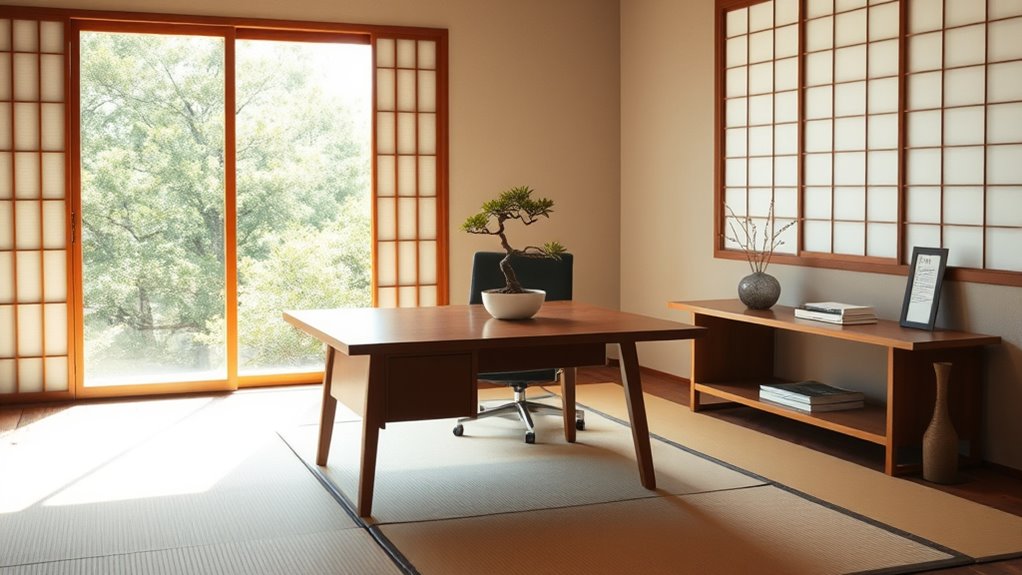
Designing With Simplicity in Mind When designing with simplicity in mind, focus on embracing negative space to create a calm atmosphere. Use neutral tones to keep the environment tranquil and free of visual clutter. Prioritize functionality to guarantee every element serves a purpose and supports your work. Incorporating minimalist principles from minimalist principles can help you achieve a balanced and efficient workspace. Additionally, selecting the right paint sprayer tips ensures smooth finishes without excess detail, reinforcing the minimalist aesthetic. Considering the name choices for your workspace can also enhance its overall harmony and style.
Embrace Negative Space
Often overlooked, negative space is a powerful tool that can transform a cluttered environment into a calming and focused workspace. By intentionally leaving areas empty, you create a sense of openness that aligns with feng shui principles, promoting energy flow and balance. Embracing negative space also highlights cultural symbolism, emphasizing simplicity and mindfulness. It guides your attention, reducing distractions and fostering tranquility. Use the table below to understand how negative space influences your office design: aesthetic appeal. Incorporating an understanding of design integration complexities from modern merchant services can help ensure your workspace remains both minimalist and functional.
Use Neutral Tones
Using neutral tones in your office design creates a calming and cohesive environment that promotes focus and productivity. Color psychology shows that soft, muted shades like beige, gray, and off-white reduce stress and enhance mental clarity. These tones serve as a subtle backdrop, allowing your ergonomic furniture and thoughtful decor to stand out without overwhelming the senses. Neutral colors also make it easier to incorporate natural light, further boosting your well-being and concentration. By choosing a simplified color palette, you foster a serene atmosphere that encourages mindfulness and reduces visual distractions. This minimalist approach aligns with Japanese design principles, helping you create a workspace that feels balanced, inviting, and conducive to sustained focus. Incorporating data-driven marketing strategies can also optimize your workspace environment by analyzing how different colors and layouts impact productivity.
Prioritize Functionality
Prioritizing functionality means designing your office with simplicity and purpose at the forefront. Focus on creating a space that enhances productivity and comfort. Imagine a creative workspace where:
- Your desk is clear, with only essential tools like a sleek laptop, a minimalist notebook, and a pen holder.
- Office ergonomics are optimized, with an adjustable chair and monitor height to prevent strain.
- Storage solutions are discreet yet accessible, such as wall-mounted shelves or drawers that keep clutter out of sight. Incorporating rural-inspired decor can also add a calming, rustic touch that promotes tranquility. Utilizing organized storage helps maintain a clean, efficient environment that supports both work and well-being. Additionally, integrating minimalist design principles can further streamline your workspace, reducing distractions and fostering focus. Embracing simplicity in design can lead to a more focused and serene environment conducive to productivity.

Caromolly Light Therapy Lamp, Sunlight Lamp 10000 Lux with Remote Control, 3 Color Temperature & 4 Brightness Level & Timer, Daylight Lamp for Home, Office, Decoration
UV-Free Light Therapy Lamp: Our happy therapy light lamp emits 10,000 lux(max) mimetic natural light, which provides a…
As an affiliate, we earn on qualifying purchases.
As an affiliate, we earn on qualifying purchases.
Choosing the Right Materials and Colors
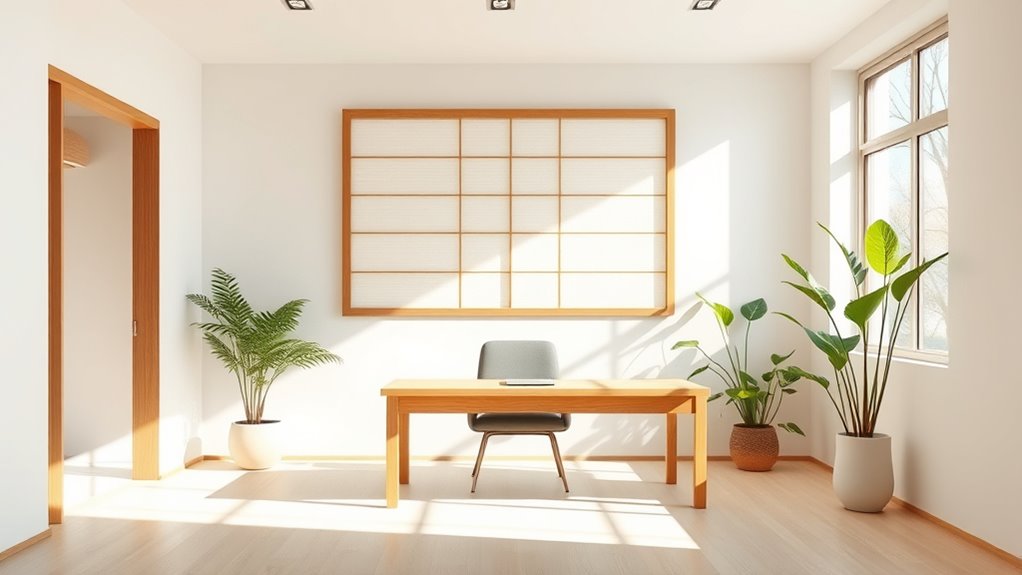
When selecting materials and colors for your office, focus on natural palettes that promote calm and focus. Opt for sustainable materials that align with eco-friendly values and add subtle texture variations to create visual interest without clutter. These choices help establish a serene, balanced environment that supports your well-being. Incorporating eco-friendly materials can also enhance the overall harmony of your workspace.
Natural Color Palettes
Choosing the right materials and colors for a natural palette can transform your office into a calming, inviting space. Focus on hues that reflect nature, considering color psychology and cultural influences. Opt for soft beiges, muted greens, or warm browns to evoke tranquility and balance. To create visual harmony, envision:
- A bamboo desk with subtle grain patterns that bring texture and warmth.
- Cotton or linen curtains in earthy tones that soften natural light.
- Wooden shelving or accents in light oak, emphasizing simplicity and natural beauty.
Additionally, incorporating natural textures such as woven baskets or jute rugs can further enhance the organic feel of the space. Selecting appropriate color schemes that align with the natural environment can reinforce this calming atmosphere. These choices foster a peaceful atmosphere, aligning with Japanese minimalism’s emphasis on serenity. By selecting colors and materials thoughtfully, you reinforce a sense of calm and mindfulness, essential for an effective Zen office environment. Incorporating textures and materials that emphasize natural elements further enhances the tranquil ambiance, supported by the integration of secure and seamless payment solutions that ensure smooth operations within the workspace.
Sustainable Material Choices
Selecting sustainable materials for your office not only benefits the environment but also enhances the overall sense of harmony and mindfulness in your space. Choose eco-friendly finishes like low-VOC paints, natural oils, or waxes that emit fewer toxins and support a cleaner indoor air quality. Prioritize renewable resources such as bamboo, cork, or reclaimed wood, which grow quickly and reduce reliance on finite resources. These materials bring warmth and texture without sacrificing sustainability. When selecting surfaces and furnishings, look for certifications like FSC or Green Guard to ensure responsible sourcing. Additionally, using user-friendly interfaces can simplify the process of selecting and maintaining sustainable materials. Incorporating sustainable manufacturing practices ensures that the production of your office furnishings aligns with eco-conscious principles, further reducing your environmental footprint. Being mindful of material durability can help extend the lifespan of your furnishings, decreasing waste and the need for frequent replacements. By consciously choosing eco-friendly finishes and renewable resources, you create an environment that aligns with minimalist principles and promotes a calm, balanced workspace rooted in respect for nature.
Subtle Texture Variations
In a Zen-inspired office, subtle texture variations can greatly enhance the sense of calm and visual interest without overwhelming the space. You want textured accents and tactile surfaces that invite touch and create depth. Consider:
- Smooth, polished wood desks that reflect light softly.
- Woven fabric cushions or screens that add gentle, organic texture.
- Matte ceramic planters with subtle ridges or variations for a tactile experience.
These elements balance simplicity with richness, guiding your eye smoothly across the room. By carefully selecting materials with nuanced textures and muted colors, you foster serenity and focus. The key is to avoid distraction—let the subtle texture variations serve as quiet visual anchors, enriching your environment without overpowering it.

Costa Farms Money Tree (Pachira Aquatica) Live Indoor Bonsai-Style Plant, 12-16 Inches Tall, Braided Trunk Houseplant in Decorative Pot, Easy Care Pet-Friendly Decor
FARM-DIRECT PACKAGING & ARRIVAL: Each Money Tree is hand-selected at the greenhouse and secured in breathable, reinforced transit-safe…
As an affiliate, we earn on qualifying purchases.
As an affiliate, we earn on qualifying purchases.
Decluttering for Clarity and Focus
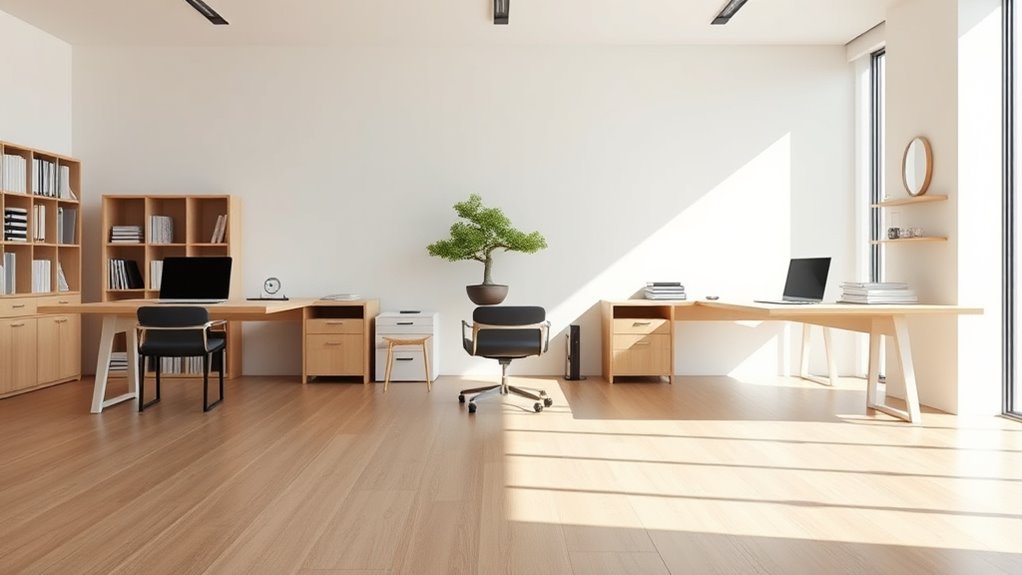
Decluttering your workspace can considerably enhance your clarity and focus by removing unnecessary distractions. Start by organizing your physical space, keeping only essential items to promote a sense of calm. Pay attention to office ergonomics, ensuring your desk and chair support good posture, which boosts productivity. Simultaneously, practice digital decluttering by deleting irrelevant files, emails, and notifications that clutter your screen. A tidy digital environment minimizes mental overload and streamlines your workflow. Clear surfaces and a streamlined digital presence encourage mindfulness, reducing stress and fostering concentration. Remember, a minimalist setup isn’t about deprivation but about creating a space that nurtures clarity, focus, and efficiency. With fewer distractions, you’ll find it easier to immerse yourself fully in your work.
Incorporating Natural Elements

Bringing natural elements into your workspace can substantially boost your mood and focus, complementing the clarity gained from decluttering. To achieve this, start by adding indoor plants like bamboo, succulents, or ferns, which purify the air and add a calming touch. Next, maximize natural lighting by positioning your desk near windows or using sheer curtains that diffuse sunlight softly. Finally, consider incorporating natural textures through materials like wood or stone in furniture or décor. Visualize a clean desk with a small potted plant, sunlight streaming in through a window, and a wooden desk surface—these elements create a serene environment. By thoughtfully integrating these natural features, your workspace will foster tranquility and focus, aligning with Japanese minimalist principles.
Creating Balance and Symmetry
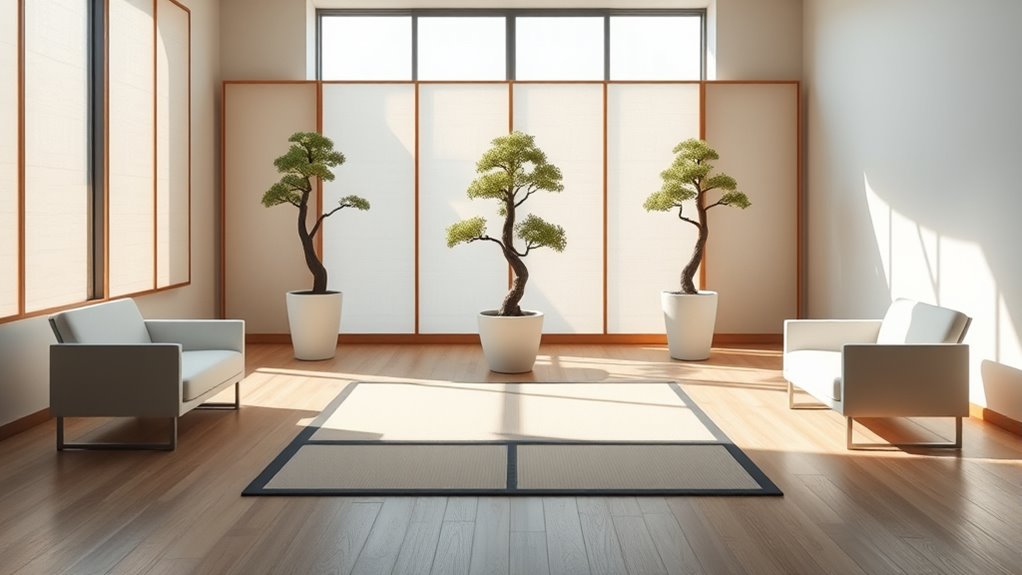
Achieving visual harmony in your workspace is essential for fostering focus and calmness. To create balance and symmetry, arrange your furniture thoughtfully, ensuring items are proportionate and aligned. Use aesthetic lighting, such as soft, diffused lamps, to enhance the sense of harmony without overwhelming the space. Place ergonomic furniture strategically, maintaining even spacing to avoid clutter and chaos. Symmetry doesn’t mean everything has to be identical but should feel balanced—mirroring shapes, colors, or placements to promote tranquility. Focus on simplicity, avoiding unnecessary decor that disrupts the flow. When your desk, storage, and lighting work together in a cohesive way, you’ll cultivate a serene environment that encourages mindfulness and productivity.
Maintaining Serenity Through Organization

To maintain serenity in your workspace, organized surfaces and storage solutions are essential because clutter can easily disrupt your focus and sense of calm. Start with color coordination: choose a neutral palette that promotes relaxation and keeps visual noise at bay. Use ergonomic furniture to support your posture, making your workspace both functional and comfortable. Keep your desk clear by:
- Storing supplies in sleek drawers or boxes that match your color scheme
- Using wall-mounted shelves to free up surface space
- Placing only essential items within reach, like a minimalist lamp or a notebook
These steps create a harmonious environment, fostering mindfulness and concentration. When everything has its place and aligns aesthetically, maintaining serenity becomes effortless.
Frequently Asked Questions
How Can I Adapt Japanese Minimalism to a Modern Office Environment?
To adapt Japanese minimalism to your modern office, focus on integrating traditional aesthetics like clean lines, natural materials, and clutter-free spaces. Embrace cultural integration by incorporating elements such as shoji screens or bonsai plants to create a calming environment. Keep furniture simple and functional, emphasizing spaciousness and serenity. This approach fosters focus, reduces stress, and promotes productivity, blending timeless tradition with contemporary design principles seamlessly.
What Budget Considerations Are Involved in Implementing Zen-Inspired Design?
When implementing Zen-inspired design, you should start with accurate cost estimation to stay within your budget. Focus on essential elements like natural materials, simple furniture, and minimalist decor, which can be cost-effective if planned carefully. Incorporate budget planning early to prioritize key features and avoid overspending. By balancing quality and simplicity, you can create a serene, functional workspace without exceeding your financial limits.
How Does Japanese Minimalism Influence Employee Productivity and Well-Being?
Japanese minimalism boosts your productivity and well-being by creating a calm workspace. You’ll find that incorporating mindfulness practices and soothing color psychology helps reduce stress and increase focus. When your environment is simple and clutter-free, you can concentrate better and feel more balanced. This mindful design approach encourages clarity, enhances creativity, and promotes overall mental health, helping you work more efficiently and enjoy your time at the office.
Can Small Office Spaces Effectively Incorporate Natural Elements?
Imagine a tiny oasis amid your busy workspace. Small offices can indeed incorporate natural elements effectively by adding indoor plants and maximizing natural lighting. These elements create a calming atmosphere, boost productivity, and improve well-being. You can hang plants near windows or place them on desks, while large windows or skylights flood the space with natural light. Small changes make a big difference, transforming your workspace into a peaceful sanctuary.
What Common Mistakes Should I Avoid When Designing a Zen Office?
You should avoid clutter and guarantee color harmony to create a true Zen office. Prevent clutter by keeping surfaces clear and only essential items visible. Use a neutral, calming color palette to promote tranquility and focus. Don’t overload the space with bright or conflicting colors, as this disrupts harmony. Remember, simplicity enhances peace—so aim for minimalism, thoughtful organization, and cohesive tones to foster a serene work environment.
Conclusion
By embracing Japanese minimalism, you naturally create a calm, focused workspace that sparks clarity and creativity. Sometimes, the simplest choices—like a single bamboo plant or a clean desk—bring a sense of balance you didn’t realize you needed. It’s funny how decluttering and thoughtful design can unexpectedly transform your day-to-day experience, making every moment in your zen office feel more intentional and peaceful. So, why not start small and see where this mindful approach takes you?