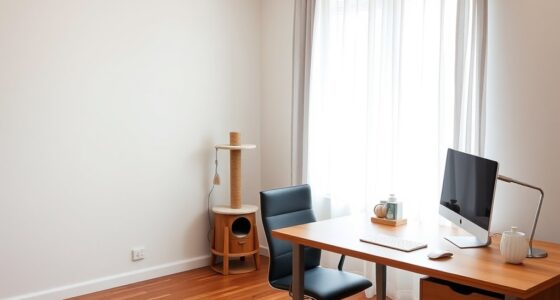
Neutral tones like beige, taupe, and gray help create a calm, clutter-free workspace that boosts your focus. These colors reduce visual noise and overstimulation, allowing you to concentrate better and feel more relaxed. They promote mental clarity and balance, making it easier to stay motivated and organized. When you choose the right neutral palette, you set the stage for improved productivity—so if you want to learn more, keep exploring how color influences your work environment.
Key Takeaways
- Neutral tones like beige, taupe, and gray create calm environments that reduce distractions and promote focus.
- These colors minimize visual noise, helping workers maintain mental clarity and prevent overstimulation.
- Neutral palettes foster a sense of stability and order, enhancing motivation and sustained engagement.
- Using neutral shades with textured finishes adds depth without overwhelming the senses, supporting concentration.
- Thoughtful application of neutral tones aligns workspace aesthetics with psychological benefits for improved productivity.

Four Candies Moor Series Gel Pens, Aesthetic Black & Brown Ink Pens with 0.5 mm Fine Point, Boho School Office Supplies Neutral Beige Desk Accessories, Set of 12
Ultra-Smooth Fine Point: 0.5mm precision tips deliver consistently smooth, skip-free writing with rich black/brown gel ink—ideal for detailed…
As an affiliate, we earn on qualifying purchases.
As an affiliate, we earn on qualifying purchases.
The Science Behind Color and Mood

Colors can profoundly influence your mood and behavior, and scientists have uncovered the ways in which they do so. Color associations shape how you respond to different hues, often based on cultural perceptions. For example, red might evoke excitement or urgency in some cultures, while in others, it symbolizes luck and celebration. These associations can impact your motivation, focus, and overall emotional state at work. Research shows that your brain reacts differently to various colors, activating specific emotional responses. Understanding these connections helps you choose workspace colors that boost productivity and well-being. Recognizing that cultural perceptions influence color meaning allows you to tailor your environment to suit your personal and professional needs effectively. Additionally, energetic alignment can amplify the positive effects of color choices in your workspace, creating a more harmonious and motivating environment. Moreover, awareness of AI vulnerabilities, such as biases and safety concerns, highlights the importance of designing environments that foster trust and focus. Being aware of battery technologies and how they relate to energy efficiency can also inform choices about sustainable workspace improvements, ultimately supporting a healthier work environment. Furthermore, understanding how Dad – Amazing Life Together inspires positive relationships can enhance team cohesion and emotional well-being in professional settings.

KDHTY Boho Floral Mental Health Mouse Pad,School Counseling Office Must Haves,Motivational Therapy Office Decor for Calming Corner,Wrist Rests Non-Slip Rubber Base Computer Mouse Pads
【Perfect Size for Versatile Spaces】 At 9.5×7.12 Inch, this compact mouse pad fits seamlessly into any desk setup….
As an affiliate, we earn on qualifying purchases.
As an affiliate, we earn on qualifying purchases.
Why Neutral Tones Promote Calmness

Neutral tones, such as beige, gray, and soft whites, create a tranquil environment that helps reduce stress and promote relaxation. They foster soothing atmospheres by minimizing visual noise and overstimulation, allowing your mind to settle. These subtle color cues encourage a sense of stability and calmness, making it easier to focus and feel grounded. When your workspace features neutral tones, you’re less likely to experience distractions caused by bold or bright colors. Instead, the gentle palette helps you feel more at ease, supporting mental clarity and emotional balance. Incorporating color psychology principles into your workspace design can further enhance these calming effects. Additionally, selecting reliable merchant services can ensure smooth financial transactions that complement the calming workspace environment you aim to create. By choosing these muted shades, you set a peaceful tone that promotes calmness, enabling you to work more efficiently without feeling overwhelmed or anxious. Using color associations to select the right shades can also optimize the psychological benefits of neutral tones, especially when considering how visual harmony impacts emotional well-being. Moreover, integrating aesthetic decor elements such as soft textures and minimalist accessories can amplify the sense of serenity within your workspace.

PureCozy Area Rug 4×6 Beige Washable Office Entryway Vintage Medallion Carpet Non Slip Retro Indoor Mat Low Pile Soft Distressed Small Rug for Bedroom Kitchen Laundry Dining Room
Classic Vintage Style: PureCozy area rug has a trendy faded style and a unique retro pattern, tribal design…
As an affiliate, we earn on qualifying purchases.
As an affiliate, we earn on qualifying purchases.
The Impact of Beige and Taupe on Concentration

Beige and taupe extend the calming effect of neutral tones into your workspace, subtly enhancing your ability to concentrate. Beige psychology suggests that this color promotes stability and reduces distractions, helping you stay focused on tasks. Taupe focus benefits from its understated elegance, creating an environment that minimizes overstimulation and encourages sustained attention. These shades are versatile, blending well with other colors while maintaining a peaceful atmosphere. When your surroundings are dominated by beige or taupe, you’re likely to experience less mental fatigue and increased clarity. Incorporating these tones in your workspace can improve your productivity by fostering a sense of vibrational balance and calmness that keeps your mind engaged without feeling overwhelmed. Using natural materials like wood and linen can further enhance this rustic aesthetic, creating a cohesive and soothing environment. Additionally, understanding the color psychology behind these shades helps in designing spaces that support mental well-being and focus. Recognizing the influence of exfoliation benefits from skincare ingredients like glycolic acid can also inspire a holistic approach to creating environments that promote well-being across different aspects of life. Emphasizing the importance of cultural intelligence can also aid in creating inclusive and harmonious workspaces across diverse teams.

Large 3D Textured Framed Boho Neutral Abstract Wall Art for Living Room, 3 Piece Modern Artwork for Walls, Minimalist Beige Brown Tan Geometric Paintings for Hallway, Stair, Office Wall Decor 24×36 In
[Framed Wall Art]: A set of 3 pieces large 3d textured framed contemporary minimalist neutral beige brown tan…
As an affiliate, we earn on qualifying purchases.
As an affiliate, we earn on qualifying purchases.
Gray Shades and Their Effect on Stress Reduction

Gray shades are known for their calming and soothing qualities, making them an effective choice for reducing stress in the workspace. They promote mental health by creating a tranquil environment that minimizes distractions. In color therapy, gray is associated with neutrality and balance, helping you feel grounded and focused. Incorporating different shades of gray can lower anxiety levels, fostering a sense of calm during hectic workdays. Here’s a quick overview:
| Shade | Effect on Stress | Suitable For |
|---|---|---|
| Light Gray | Enhances calmness | Meditation areas |
| Charcoal | Reduces tension | Conference rooms |
| Slate | Promotes focus | Workstations |
| Silver | Eases mental fatigue | Break rooms |
Using gray thoughtfully can improve your mental health and productivity. Additionally, understanding IRA investment strategies can help optimize your retirement planning and reduce future stress related to financial security. Proper color choices in the workspace, such as selecting neutral tones, can significantly enhance overall well-being and focus. Incorporating color psychology principles into office design can maximize these benefits. Research indicates that the psychological effects of color can influence mood and behavior in professional environments.
Combining Neutral Colors for a Harmonious Environment

Incorporating a mix of neutral colors creates a balanced and cohesive workspace that fosters harmony and productivity. When selecting color combinations, aim for contrast and consistency to achieve aesthetic harmony. Consider these strategies:
- Use different shades of beige, gray, and taupe to add depth without disrupting the calming atmosphere.
- Combine matte and gloss finishes to create subtle variation in texture, enhancing visual interest.
- Balance light and dark neutrals to prevent the space from feeling flat, while maintaining a unified look. Additionally, understanding how color psychology influences mood can help in selecting the most effective neutral tones for promoting concentration and calmness, especially when considering how psychological effects impact workspace efficiency.
- Integrating sound design techniques such as appropriate ambient sounds can further enhance focus and create a more immersive environment. A thoughtful approach to personality traits can also guide the selection of colors that resonate with individual work styles, boosting overall productivity. Recognizing how emotional responses are affected by color choices can lead to more intentional and effective workspace design.
Psychological Benefits of Minimalist Color Palettes

Minimalist color palettes help reduce visual clutter, making your workspace feel cleaner and more organized. This simplicity can boost your mental clarity, allowing you to focus better on tasks. Additionally, calming colors in a minimal setting can lower your stress levels and create a more peaceful environment. Incorporating soothing colors can further enhance these psychological benefits by promoting relaxation and mental well-being.
Reduced Visual Clutter
When your workspace features a simple, cohesive color palette, it becomes easier to focus and feel less overwhelmed. Reduced visual clutter minimizes distractions, allowing your mind to concentrate more effectively. Minimalist color schemes eliminate excess visual stimuli, making it easier to distinguish important elements through effective color contrast. This clarity reduces sensory overload caused by visual complexity, helping you stay centered on tasks. To maximize benefits:
- Limit color variety to maintain harmony and simplicity.
- Use neutral tones to create a calm environment and avoid unnecessary visual noise.
- Remove unnecessary items that add visual complexity, keeping only essential objects in view.
These strategies support a cleaner, more organized workspace that promotes concentration and enhances your overall productivity.
Enhanced Mental Clarity
A simple, cohesive color palette in your workspace can substantially boost mental clarity by reducing cognitive load. Neutral tones create a calm environment that minimizes distractions, helping you focus better. Through color therapy, these minimalistic palettes support emotional well-being by promoting stability and balance. When your surroundings are visually uncluttered, your mind can process information more efficiently, leading to clearer thinking and improved decision-making. A harmonious color scheme eliminates unnecessary visual stimuli, allowing your brain to conserve energy for important tasks. This streamlined approach enhances mental clarity, making your workspace a sanctuary for concentration and productivity. By choosing colors that foster tranquility, you set the stage for sustained focus and a more organized, peaceful mindset throughout your day.
Lowered Stress Levels
Choosing a simple, cohesive color palette in your workspace can substantially lower stress levels by creating a sense of calm and order. Neutral tones reduce visual clutter, making it easier to focus and relax. Incorporating mindful office ergonomics ensures your environment supports your well-being, further decreasing stress. Color therapy techniques suggest that subdued shades promote tranquility and emotional stability. To enhance this effect, consider:
- Using muted hues to minimize sensory overload.
- Incorporating natural light to amplify the calming influence of neutral tones.
- Maintaining an organized space that complements the minimalist color scheme.
These strategies help foster a serene atmosphere, making stress less overwhelming. By aligning your workspace’s design with psychological principles, you create a more balanced, stress-free environment conducive to productivity.
How Neutral Tones Influence Productivity Levels

Neutral tones, such as beige, gray, and white, can substantially influence your productivity in the workspace. These colors shape your color perception, creating an environment that minimizes distractions and promotes focus. When your workspace features neutral tones, it enhances the overall workplace aesthetics, making it easier to concentrate on tasks without visual overstimulation. The simplicity of these hues reduces cognitive overload, allowing you to process information more efficiently. Additionally, neutral tones foster a sense of calm and organization, which can boost your motivation and efficiency. By creating a balanced and harmonious environment, you’re more likely to stay engaged and productive throughout your workday. Ultimately, choosing neutral tones can help you maintain clarity and focus, driving better work outcomes.
Choosing the Right Neutral Palette for Your Workspace

Selecting the right neutral palette for your workspace involves considering how different shades can influence your mood and productivity. To create an effective environment, focus on color matching and paint selection that aligns with your goals.
Choosing the right neutral tones can boost focus and harmony in your workspace.
Here are key steps to guide you:
- Choose shades that complement your existing decor and natural light, enhancing overall harmony.
- Opt for paints with subtle undertones—warm or cool—based on whether you want to energize or calm your space.
- Test samples before committing, ensuring the chosen neutrals foster focus without causing distractions.
Case Studies: Neutral Colors in Successful Offices

Many successful offices have harnessed the power of neutral colors to create environments that boost focus and collaboration. These spaces often feature carefully selected office furniture and wall art choices that complement the calming palette. For example, a tech firm used beige tones paired with sleek furniture, fostering concentration. Another company incorporated soft gray hues, with minimalistic wall art, enhancing productivity. This table highlights common strategies:
| Office Type | Design Approach |
|---|---|
| Creative Agency | Neutral tones with vibrant wall art accents |
| Law Firm | Light gray walls, dark office furniture |
| Tech Startup | Beige and white furniture, subtle wall decor |
| Financial Office | Soft taupe, minimalist artwork |
| Design Studio | Warm neutrals, statement wall art |
These choices show that neutral colors, combined with thoughtful office furniture and wall art, can create successful, focused environments.
Tips for Incorporating Neutral Hues Into Your Office Design

Incorporating neutral hues into your office design can transform the space into a calm and productive environment. Start by focusing on effective color pairing; combine shades like beige, gray, and taupe to create a cohesive look that promotes focus. Next, prioritize texture integration—add soft textiles, matte finishes, or natural wood elements to introduce depth and tactile interest. This not only enhances visual appeal but also prevents the space from feeling sterile. Finally, balance neutral tones with subtle accent pieces, such as artwork or plants, to add warmth without overwhelming the senses. By carefully selecting and blending neutral shades through color pairing and texture integration, you craft an environment that encourages concentration and reduces distractions.
Frequently Asked Questions
How Do Neutral Tones Compare to Vibrant Colors in Boosting Creativity?
Neutral tones tend to boost focus and stability, helping you channel your creative energy more effectively without distraction. While vibrant colors can stimulate mood enhancement and spark spontaneous ideas, they might also overwhelm your senses and hinder deep concentration. You find that neutral shades create a calm environment, allowing your creativity to flourish steadily. For sustained productivity and balanced mood, neutral tones often outperform vibrant colors in fostering a focused, inspiring workspace.
Are There Specific Neutral Shades That Are Better for Long Work Sessions?
Think of shade selection as crafting a calm, steady stream for your mind. For long work sessions, choose neutral shades like soft taupe, gentle beige, or cool gray—these create a consistent environment that minimizes distractions. Prioritize color consistency to maintain focus and avoid eye strain. These shades help your brain stay engaged, making your workspace a peaceful haven where productivity flows smoothly without sudden visual shifts.
Can Neutral Colors Help Reduce Visual Fatigue in Digital Workspaces?
Yes, neutral colors can help reduce eye strain in digital workspaces. They create softer color contrast, making screens easier on your eyes during long work sessions. Using gentle shades like beige, gray, or soft taupe minimizes visual fatigue by preventing harsh glare and reducing eye fatigue. When combined with proper lighting and screen settings, neutral tones promote comfort and focus, helping you work more efficiently without unnecessary visual discomfort.
How Does Lighting Affect the Perception of Neutral Tones in an Office?
Lighting is the lens through which neutral tones come alive, shaping your perception. Natural light acts as the sun’s gentle touch, enhancing the subtlety of neutral shades and keeping your workspace vibrant and inviting. Artificial illumination, on the other hand, can cast cool or warm glows that alter your mood and focus. Proper lighting guarantees neutral tones appear balanced and calming, helping you stay productive and focused throughout the day.
What Are Common Mistakes When Incorporating Neutral Colors Into Workspace Design?
You often overuse monochrome palettes, making your workspace feel dull and uninspiring, which can harm focus. Neglecting color accents is another mistake; adding subtle pops of color helps energize the space without overwhelming it. To avoid these issues, balance neutral tones with strategic accents and varied textures. This keeps your environment visually interesting and promotes productivity, ensuring your workspace feels both calming and stimulating.
Conclusion
By embracing neutral tones in your workspace, you create an environment that fosters focus and reduces stress. These colors subtly influence your mood and productivity, making your workspace more harmonious and efficient. Isn’t it worth considering how a simple color shift could transform your workday? When you choose the right neutrals, you set the stage for clarity and calm—ultimately guiding you toward greater success and well-being.