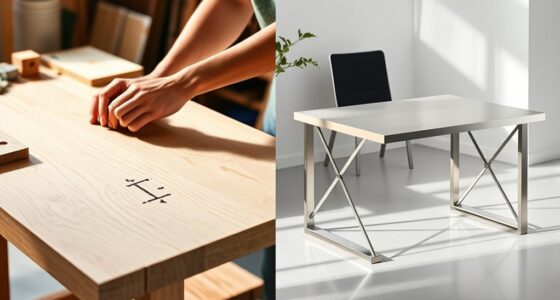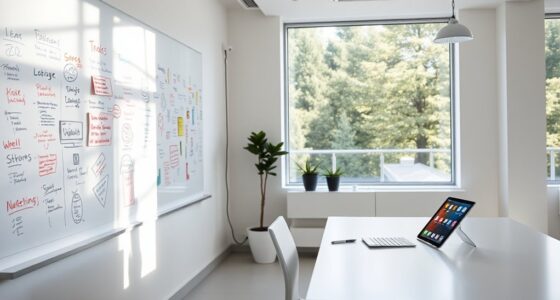
Applying white space through minimalist design in your office creates a calm, organized environment that boosts focus and productivity. Focus on simple lines, neutral tones, and clutter-free surfaces to promote mental clarity. Use strategic layout techniques and functional furniture to maximize open space without sacrificing comfort. Regular decluttering maintains balance and prevents overcrowding. Keep exploring how to create a balanced, inspiring workspace that energizes your daily tasks and fosters creativity.
Key Takeaways
- White space reduces visual clutter, promoting focus and mental clarity in a minimalist office environment.
- Incorporating white space enhances natural light distribution, creating a calming and open workspace.
- Strategic use of white space balances functional elements and décor, preventing overcrowding and fostering harmony.
- White space supports organization, making it easier to maintain cleanliness and declutter regularly for sustained minimalism.
- Proper application of white space encourages a sense of order, boosting productivity and reducing stress in the office.
Understanding the Principles of Minimalist Design
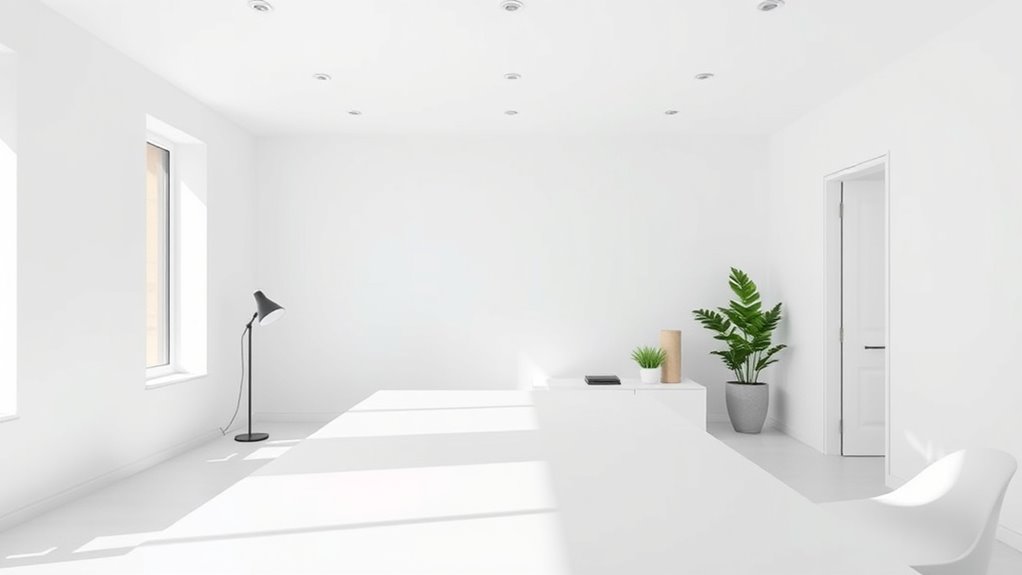
Minimalist office design revolves around the idea that less is more, emphasizing simplicity and functionality. When you adopt this approach, you focus on clean lines, uncluttered spaces, and purposeful elements that serve a clear purpose. Color psychology plays a key role; neutral tones like whites, grays, and beiges promote calm and focus, while subtle accents can energize or soothe. Cultural influences also shape minimalist principles, as different cultures prioritize various aesthetics and values—some emphasizing harmony and balance, others minimalism rooted in tradition. By understanding these principles, you create a workspace that fosters productivity and tranquility. Additionally, sustainable materials and eco-friendly practices can enhance minimalist design by reducing environmental impact and promoting wellness. Incorporating local resources can also support sustainable choices and strengthen community ties. Recognizing the importance of contrast ratio in visual clarity can help in selecting appropriate lighting and display elements for a more effective workspace. Moreover, understanding environmental considerations ensures that your design aligns with sustainable and eco-conscious practices. Incorporating biophilic design elements can further improve well-being by connecting occupants with nature. Minimalist design isn’t just about aesthetics; it’s about crafting an environment that aligns with your needs, reduces distractions, and promotes clarity.
The Psychological Benefits of White Space in Workspaces

White space in your workspace can substantially lower your stress levels, making your environment feel calmer and more inviting. It also helps you focus better and gain clarity on your tasks without distractions. By embracing simplicity, you create a mental space that boosts your overall well-being and productivity. Furthermore, visual clutter reduction can be enhanced by reducing visual clutter, allowing your mind to better engage with your work. Incorporating the right painting techniques can also help maintain a clean and organized appearance in your office environment. Additionally, understanding projector bulb maintenance and ensuring proper lighting can create an optimal environment that complements minimalist design principles. Paying attention to the headphone jack compatibility and setup can further improve your focus and reduce interruptions during work.
Reduced Stress Levels
When your workspace feels cluttered, it can heighten feelings of stress and overwhelm. White space creates a calming environment that reduces these feelings. Here are three ways it helps:
- Less visual chaos: Open, uncluttered spaces minimize distractions, easing your mind. Incorporating minimalist design principles can further enhance the sense of order and peace in your workspace. Additionally, choosing the right electric bike conversion kit can help reduce commuting stress by offering a reliable and efficient way to travel. Embracing dog names that reflect simplicity and elegance can also contribute to a more serene environment. Recognizing the influence of WWE Raw’s Financial Impact on entertainment trends highlights the importance of a balanced environment to maintain focus and productivity.
- Enhanced comfort: Using ergonomic accessories reduces physical strain, lowering stress levels.
- Soothing atmosphere: Ambient lighting creates a soft, relaxing glow, promoting tranquility. Utilizing natural lighting can significantly boost mood and alertness, contributing to a more peaceful workspace.
Enhanced Focus and Clarity
Having a workspace free of clutter sharpens your ability to concentrate and think clearly. White space reduces visual noise, allowing your mind to focus on essential tasks without distraction. Color psychology plays a role here; neutral tones and simple hues promote calmness, helping you stay alert and attentive. An organized workspace supports this clarity by minimizing distractions and making it easier to locate necessary items quickly. When your environment is tidy and thoughtfully designed, your mental energy is directed toward work rather than chaos. This sense of order enhances focus, making it easier to process information and solve problems efficiently. Ultimately, intentional workspace organization combined with white space creates an environment that fosters enhanced clarity and productivity.
Choosing a Color Palette That Enhances Simplicity

Choosing a color palette that enhances simplicity starts with selecting neutral and muted tones that create a calm and balanced environment. When you focus on color coordination, you ensure the space feels cohesive without visual clutter. To achieve this, consider these key tips:
- Opt for soft shades like beige, gray, or pastels to promote tone harmony and reduce visual noise.
- Limit your palette to two or three colors to maintain consistency and avoid overstimulation.
- Use accent colors sparingly, focusing on subtle contrasts that complement your primary tones.
- Incorporate natural materials such as wood, linen, or stone to add texture and authenticity without overwhelming the minimalist aesthetic. Additionally, understanding visual hierarchy can help in guiding the viewer’s attention effectively within the space.
This approach keeps your office feeling open and uncluttered, encouraging focus and productivity. By carefully selecting colors rooted in harmony, you reinforce the minimalist aesthetic and create an environment that feels both serene and purposeful.
Decluttering Strategies for a Clean Office Environment
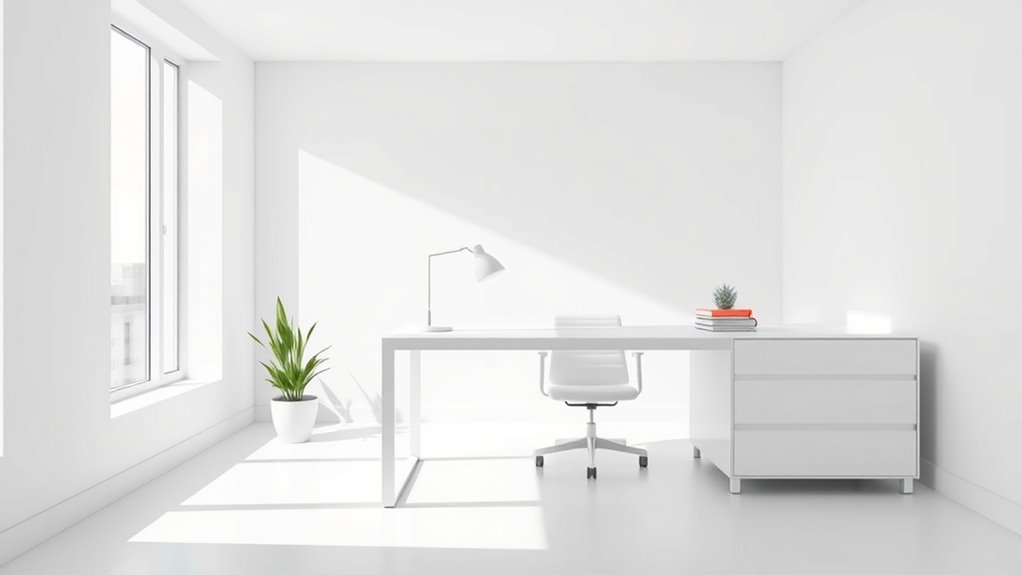
A cluttered workspace can quickly hinder your focus and productivity. To maintain a clean office environment, start with effective storage solutions, like wall-mounted shelves or filing cabinets, to keep essentials organized and out of sight. Use organizational tools such as labeled bins, drawer dividers, and cable organizers to streamline your space. Regularly declutter by setting aside time each week to remove unnecessary items, papers, or supplies that no longer serve a purpose. Adopt a minimalist mindset by evaluating what truly adds value to your work and discarding the rest. Keep surfaces clear by storing personal items, stationery, and documents efficiently. Incorporating mindfulness techniques such as visualization can help you stay focused on maintaining a serene environment. Additionally, practicing minimalist design principles can help you create a more open and calming workspace. Understanding the importance of Vetted products and strategies ensures that your decluttering efforts are effective and sustainable. Incorporating organized storage options can further streamline your workspace and prevent clutter from accumulating. Furthermore, incorporating health benefits of organized spaces can motivate ongoing maintenance of your clutter-free environment. These decluttering strategies create a serene environment that enhances concentration and promotes a sense of order, making your office a more productive space.
Furniture and Decor: Selecting Functional and Sleek Pieces

Selecting furniture and decor that combine functionality with a sleek design is essential for a minimalist office. Prioritize pieces that support your workflow without adding clutter.
Here are three key choices:
- Invest in ergonomic chairs that promote comfort and good posture, reducing fatigue during long work sessions.
- Use modular storage options to keep supplies organized and hidden, maintaining a clean look.
- Opt for simple desks with clean lines, avoiding unnecessary embellishments while providing ample workspace.
- Incorporate interior design basics to ensure your space balances beauty with practicality and enhances overall atmosphere. Additionally, understanding AI’s role in design innovation can help optimize your office layout and decor choices for maximum efficiency and aesthetic appeal.
These selections ensure your office remains uncluttered, stylish, and efficient. By choosing functional furniture that emphasizes sleekness, you create an environment that supports productivity and calmness. Remember, less is more when it comes to minimalist office decor.
Layout Techniques to Maximize White Space Effectively
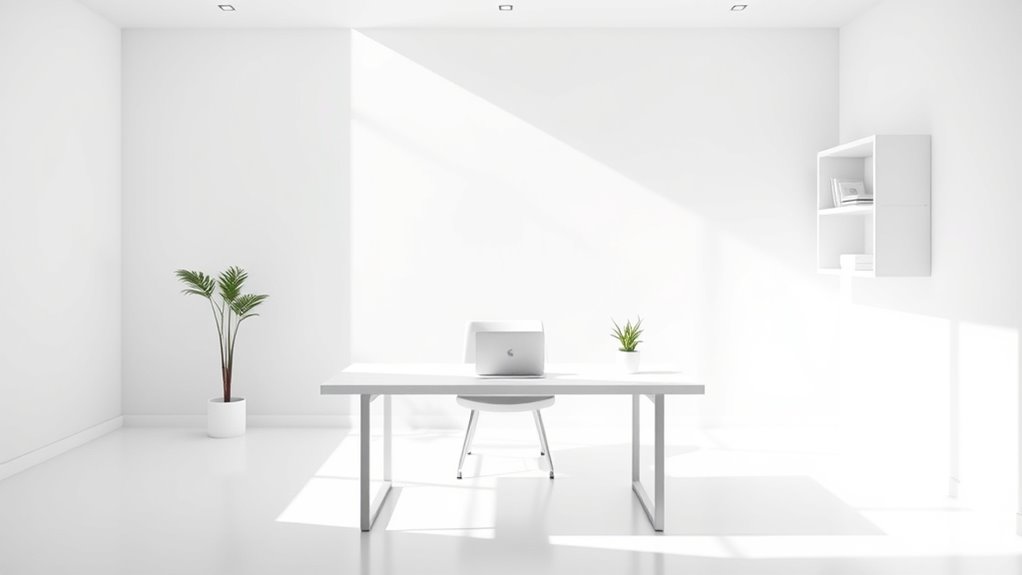
To effectively maximize white space in your minimalist office, focus on strategic layout techniques that create a sense of openness and freedom. Arrange ergonomic seating to avoid clutter and promote comfort, keeping enough space for movement. Position desks near windows to harness natural lighting, which enhances the feeling of spaciousness. Use a grid layout to keep furniture organized and avoid overcrowding. Prioritize clear pathways, allowing your space to breathe. Consider floating furniture or wall-mounted storage to free up floor area. Keep surfaces clear and maintain consistent spacing between elements.
| Focus Area | Technique | Effect |
|---|---|---|
| Lighting | Maximize natural light | Bright, open atmosphere |
| Seating | Ergonomic seating placement | Comfort and flow |
| Space Management | Strategic furniture arrangement | Spacious, uncluttered look |
Maintaining Balance: Avoiding Overcrowding in Your Office

To keep your office balanced, focus on strategic space allocation so each area has its purpose without feeling crowded. Create clutter-free zones to promote calm and efficiency, and choose decor carefully to enhance simplicity. These steps help you avoid overcrowding while maintaining a clean, organized workspace.
Strategic Space Allocation
Maintaining a balanced office layout is essential to prevent overcrowding and guarantee a productive environment. Strategic space allocation helps you utilize your space effectively while fostering comfort and focus. Start by prioritizing ergonomic furniture to support health and efficiency, ensuring each workstation fits your needs without crowding. Maximize natural lighting by placing desks near windows, reducing the need for excess artificial light and creating an inviting atmosphere. Consider these key points:
- Allocate enough room for movement to avoid congestion.
- Designate specific zones for work, meetings, and breaks.
- Use open layouts with minimal partitions to enhance flow and visibility.
Applying these principles helps you create a harmonious space where productivity thrives without feeling cramped.
Clutter-Free Zones
Creating designated clutter-free zones is essential for maintaining an organized and efficient office space. Use smart storage solutions like shelves, drawers, or hidden compartments to keep supplies out of sight but easily accessible. Clear surfaces help you focus and reduce visual stress. Adjust your lighting arrangements so that each zone has adequate illumination without creating glare or shadows, which can add to the feeling of chaos. Proper lighting also highlights your clutter-free areas, encouraging cleanliness. Keep only essential items within these zones and regularly reassess to prevent overcrowding. By intentionally designing these spaces, you create a calm environment that promotes productivity and mental clarity, reinforcing the minimalist aesthetic and ensuring your office remains functional and inviting.
Thoughtful Decor Choices
Thoughtful decor choices play a crucial role in maintaining balance and preventing your office from becoming overcrowded. To achieve this, focus on artful arrangements and strategic statement accents that add personality without clutter.
Consider these tips:
- Use minimal art pieces to create impactful visual interest, avoiding overcrowding walls.
- Incorporate a few statement accents, like bold vases or unique desk accessories, to reflect your style.
- Choose furniture and decor with clean lines and simple designs to maintain harmony and avoid visual chaos.
Inspiring Examples of Minimalist Office Designs
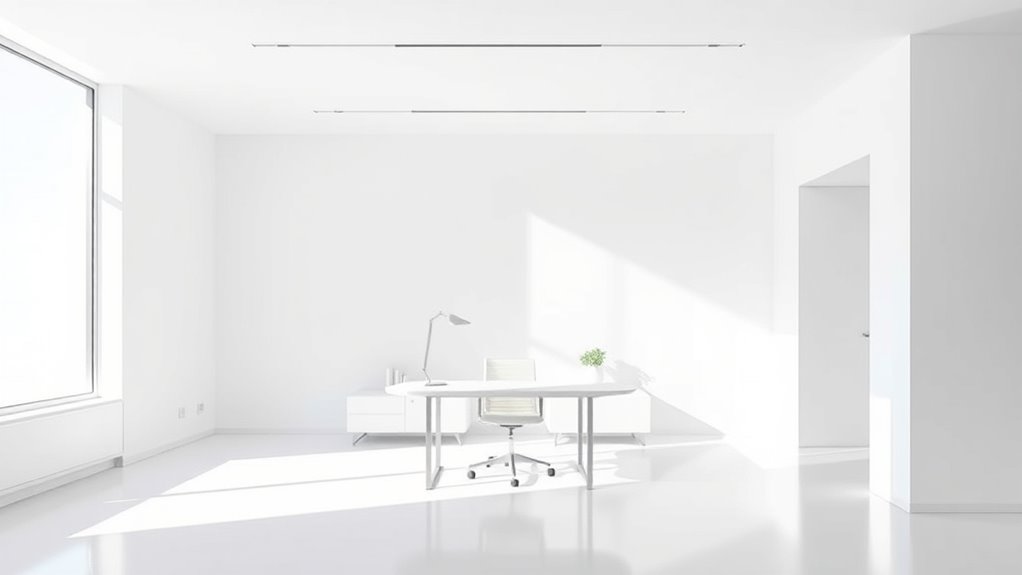
Some of the most inspiring minimalist office designs showcase how simplicity can boost productivity and foster creativity. These spaces emphasize clean lines, open layouts, and clutter-free environments that promote focus. You might notice how incorporating ergonomic accessories guarantees comfort without sacrificing style, creating a seamless workflow. Natural lighting plays a critical role, flooding the room with brightness and reducing eye strain, which enhances mental clarity. These offices often feature neutral color palettes and strategic white space to prevent overwhelm, allowing your mind to breathe. The balance of functionality and aesthetics inspires you to adopt similar principles—reducing excess, prioritizing essential elements, and creating an environment that energizes and motivates you every day.
Frequently Asked Questions
How Can I Incorporate White Space Without Making My Office Feel Empty?
You can incorporate white space by intentionally leaving areas of your office uncluttered, creating visual balance without making the space feel empty. Use simple furniture and decor to reduce clutter, which highlights key elements and fosters a calm environment. Strategically place items to make certain open spaces guide the eye naturally, promoting focus. This approach enhances your office’s aesthetic and functionality without sacrificing warmth or comfort.
What Are Cost-Effective Ways to Implement Minimalist Design?
You can implement minimalist design on a budget with DIY decor tips and budget-friendly upgrades. Start by decluttering your space to create white space and focus on essentials. Use inexpensive materials like neutral paint, simple shelving, or repurposed furniture to keep costs low. Add plants or artwork you already own for a fresh look. These small changes make your office feel open and stylish without overspending.
How Does Minimalist Design Impact Employee Productivity?
You’ll notice that minimalist design boosts your productivity by reducing distractions and fostering focus. Color psychology plays a role, calming nerves and energizing your mind. Ergonomic furniture ensures comfort, preventing fatigue and enhancing efficiency. The clean environment encourages clarity and creativity, making it easier to tackle tasks. When you embrace minimalism, you create a workspace that motivates you, keeps you engaged, and propels your performance to new heights.
Can Minimalist Offices Accommodate Collaborative Work Areas?
Yes, minimalist offices can accommodate collaborative work areas by using open plan layouts and modular furniture. You can create flexible spaces that encourage teamwork without clutter, maintaining clean lines and simplicity. Modular furniture allows you to easily reconfigure the space for different projects or group sizes, making collaboration seamless. This approach keeps your office organized, functional, and visually appealing, fostering effective teamwork in a minimalist environment.
What Maintenance Routines Are Recommended for Minimalist Office Spaces?
You should establish regular cleaning schedules to keep your minimalist office looking pristine and clutter-free. Focus on dusting surfaces, vacuuming floors, and wiping down furniture weekly. Additionally, check furniture upkeep periodically, tightening screws and inspecting for wear. By maintaining a consistent routine, you preserve the sleek, clean aesthetic of your minimalist space, ensuring it remains functional and inspiring without unnecessary clutter or damage.
Conclusion
Embrace the power of white space and watch your office transform into a sanctuary of clarity and focus. By stripping away clutter and embracing minimalist design, you’ll unleash productivity levels you never thought possible—your space will become so serene, it might just whisper secrets of success. With every carefully chosen piece and every empty corner, you’re not just decorating; you’re creating a masterpiece of simplicity that fuels your creativity and keeps chaos at bay.