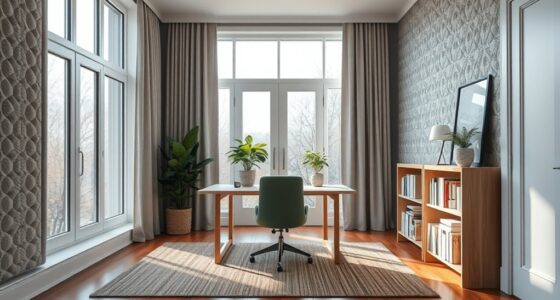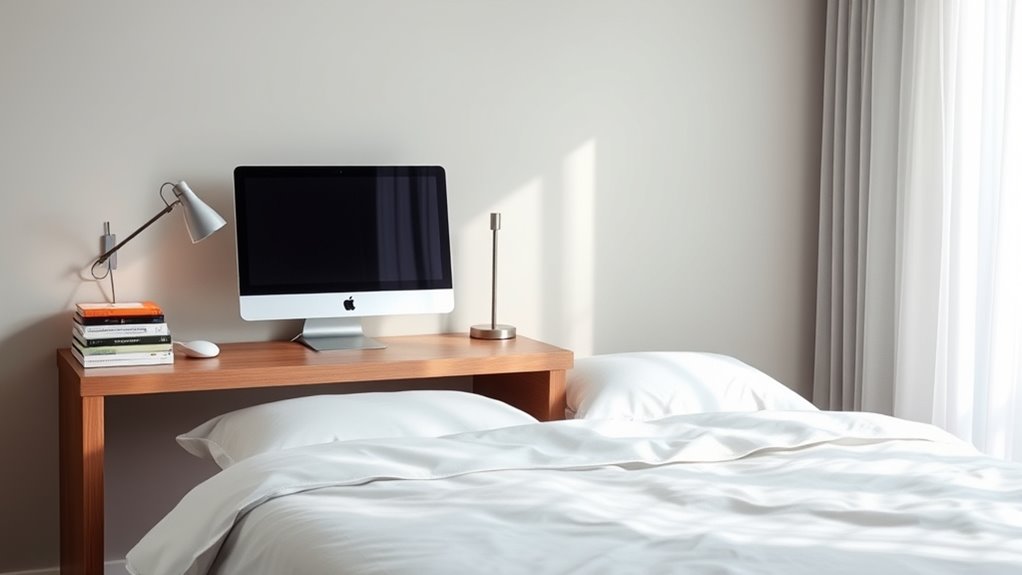

To prevent your workspace from taking over your sleep space, set clear boundaries by creating a designated work area away from your bed. Use ergonomic furniture and natural lighting to boost comfort and productivity during work hours, then switch to softer evening lighting to signal winding down. Keep your bedroom organized and physically leave your workspace when you’re done to reinforce boundaries. To learn how to maintain a healthy balance, keep exploring these strategies.
Key Takeaways
- Establish clear physical boundaries by using room dividers or furniture to separate your workspace from the sleeping area.
- Designate specific work hours and create a routine to mentally switch between work and relaxation modes.
- Use ergonomic furniture and adjustable lighting to promote comfort during work and signal winding down in the evening.
- Keep your workspace organized and free of personal clutter to prevent work from encroaching on your sleep environment.
- Physically leave or cover your workspace after hours to reinforce the boundary between work and restful sleep.
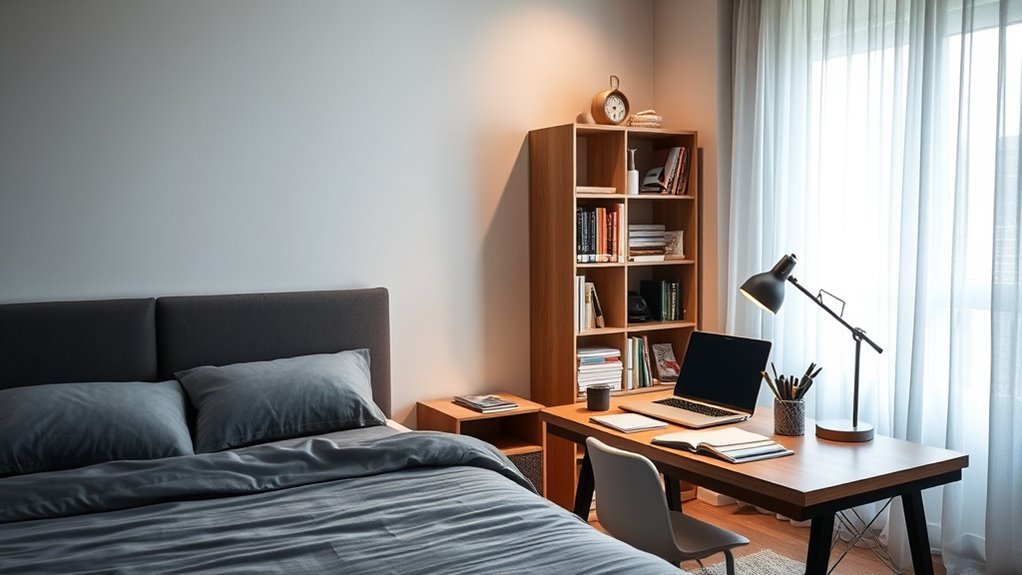
Working from your bedroom might seem convenient at first, but it can quickly lead to distractions, blurred boundaries, and decreased productivity. To prevent your workspace from taking over your sleep space, you need to create a clear separation between your work area and your personal sanctuary. One of the most effective ways to do this is by investing in ergonomic furniture. Choose a desk and chair that support good posture and comfort, helping you stay focused during work hours and avoid physical strain. An ergonomic setup encourages better movement and reduces discomfort, so you won’t associate your bedroom with aches or fatigue. When your furniture promotes health and efficiency, it becomes easier to mentally switch between work and relaxation modes, even if both happen in the same room.
Lighting solutions also play a pivotal role in maintaining a productive yet restful environment. During work hours, natural light is your best friend — it boosts your mood and keeps you alert. Position your desk near windows if possible, and supplement with adjustable task lighting to reduce eye strain. When evening comes, switch to softer, warm lighting to signal to your brain that it’s time to wind down. Avoid harsh overhead lights or bright screens late at night, as they can disrupt your circadian rhythm and make it harder to fall asleep. Proper lighting helps delineate your work zone from your sleep zone, reinforcing boundaries within your bedroom. It also prevents your workspace from becoming a permanent fixture that invades your relaxation time. Incorporating appropriate lighting solutions can further support your sleep hygiene and overall well-being.
Creating a dedicated workspace within your bedroom isn’t just about physical furniture and lighting; it’s about establishing mental boundaries too. Set specific work hours and stick to them, so your brain knows when to focus and when to relax. Keep your workspace organized and free of personal clutter, which can subconsciously signal that work is still ongoing. When you finish your workday, physically leave your desk or cover it up to reinforce the end of your work session. This helps your mind associate the bedroom with rest, not work. Remember, the goal is to make your bedroom a haven for sleep and rejuvenation, not a constant office. With thoughtful choices in ergonomic furniture and lighting solutions, you can strike a balance that keeps your workspace productive without compromising your sleep environment.
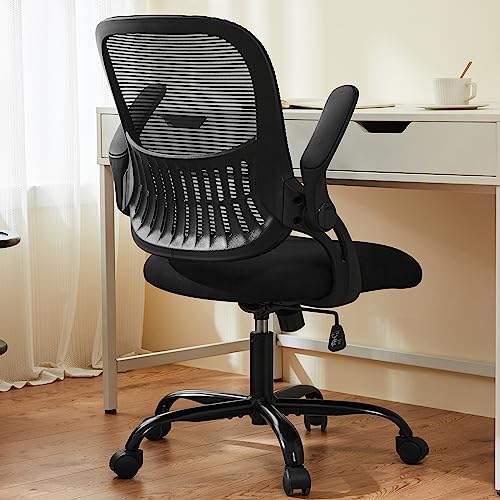
Sweetcrispy Office Computer Desk Chair, Ergonomic Mid-Back Mesh Rolling Work Swivel Task Chairs with Wheels, Comfortable Lumbar Support, Comfy Flip-up Arms for Home, Bedroom, Study, Student, Black
【Ergonomic Lumbar Support】- The ergonomically designed backrest of our ergonomic office chair has prominent lumbar support to fit…
As an affiliate, we earn on qualifying purchases.
As an affiliate, we earn on qualifying purchases.
Frequently Asked Questions
How Can I Create a Clear Boundary Between Work and Sleep Areas?
You can create clear boundaries by decorating your workspace with energetic colors based on color psychology, like blues or greens, and keeping your sleep area calm with soothing tones. Use distinct decorating themes for each zone, such as a modern office look versus a cozy bedroom style. Keep furniture separate and avoid placing work-related items in your sleep space, helping you mentally switch between work and rest.
What Are the Best Storage Solutions for a Small Bedroom Office?
Looking to maximize your small bedroom office? Hidden closet solutions can conceal clutter and free up space, while multifunction furniture like beds with built-in drawers or fold-away desks keeps everything tidy. Imagine a sleek, organized room where storage seamlessly blends with your decor, giving you room to work and relax. These clever solutions transform your space, making your bedroom both functional and peaceful—no more sacrificing style for storage.
How Does Lighting Affect Productivity and Sleep Quality in a Shared Space?
Lighting quality directly impacts your productivity and sleep hygiene in a shared space. Bright, natural light boosts alertness and focus during work hours, while softer, warmer lighting in the evening helps you wind down. If your workspace has poor lighting, it can cause eye strain and disrupt your sleep patterns. To maintain a healthy balance, use adjustable lighting options that suit different times of day, supporting both productivity and restful sleep.
What Are Some Ergonomic Tips for Working Comfortably in a Bedroom Setup?
Did you know that 75% of people experience discomfort from poor ergonomics? To work comfortably in your bedroom, focus on maintaining an ergonomic posture by keeping your back straight and shoulders relaxed. Use comfortable seating with proper lumbar support, and adjust your desk and monitor height to avoid strain. Taking regular breaks and stretching also helps prevent discomfort, ensuring you stay productive without sacrificing your comfort or sleep quality.
How Can I Reduce Noise Distractions in a Bedroom Workspace?
To reduce noise distractions in your bedroom workspace, try using soundproofing techniques like adding rugs, heavy curtains, or wall panels to absorb sound. Invest in noise-canceling devices such as headphones or white noise machines to block out distractions. You can also position your desk away from noisy sources and seal gaps around windows and doors. These strategies help create a quieter environment, so you stay focused and can relax afterward.

Airlonv LED Desk Lamp for Office Home, Eye-Caring Desk Light with Stepless Dimming Adjustable Flexible Gooseneck, 10W USB Adapter Desk Lamp with Clamp for Reading, Study, Workbench (Black)
Stepless Dimming Mode: The desk light offers effortless switching of color temperatures (2700K-6500K) and stepless dimming (1% -…
As an affiliate, we earn on qualifying purchases.
As an affiliate, we earn on qualifying purchases.
Conclusion
Your bedroom should be your sanctuary, a peaceful harbor where dreams set sail, not a stormy sea of work. By drawing clear boundaries, you protect the lighthouse of your sleep from the fog of your office. Remember, a well-defined space is like a sturdy anchor, grounding you in rest and relaxation. Keep your workspace outside your bedroom’s door, and let your sleep space glow with the calm that guides you to morning’s light.

Room Divider, 4 Panel Folding Privacy Screen, 88” Portable Separating with 3 Metal Feet, Partition Room Dividers, Lightweight Freestanding Wall Divider Screen for Office Bedroom Hospital(Black)
💡【Provide Privacy Space】The 4 panel room dividers can divide the room well and provide you with a strong…
As an affiliate, we earn on qualifying purchases.
As an affiliate, we earn on qualifying purchases.

gianotter Wood Desk Organizers and Accessories with File Holder, 4-Tier Desk Accessories & Workspace Organizers with Drawer and Pen Holder, Desk Reference Organizer (Wood)
【Space Saving】: The compact design of this wood desk organizer maximizes vertical space while keeping all office supplies…
As an affiliate, we earn on qualifying purchases.
As an affiliate, we earn on qualifying purchases.