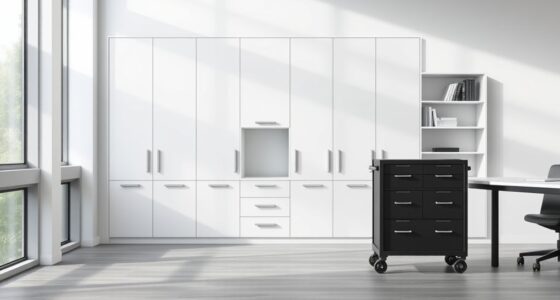
To evaluate “essential” versus “extra” items in your workspace, ask whether each piece directly benefits your comfort, focus, or productivity. Remove clutter by prioritizing furniture, tech, and accessories that support your work goals. Decor should enhance motivation without hindering functionality. Keep it simple and organized, ensuring each element serves a clear purpose. If you want tips on maintaining a balanced, functional workspace, keep exploring these key considerations.
Key Takeaways
- Determine if each item directly supports work tasks, comfort, or productivity goals.
- Remove clutter by discarding items that do not enhance functionality or reduce fatigue.
- Prioritize essentials that improve ergonomics, focus, and efficiency over decorative or non-essential pieces.
- Assess whether technology and furniture choices align with sustainability and long-term workspace needs.
- Regularly review your setup to ensure each element contributes meaningfully to your work environment.
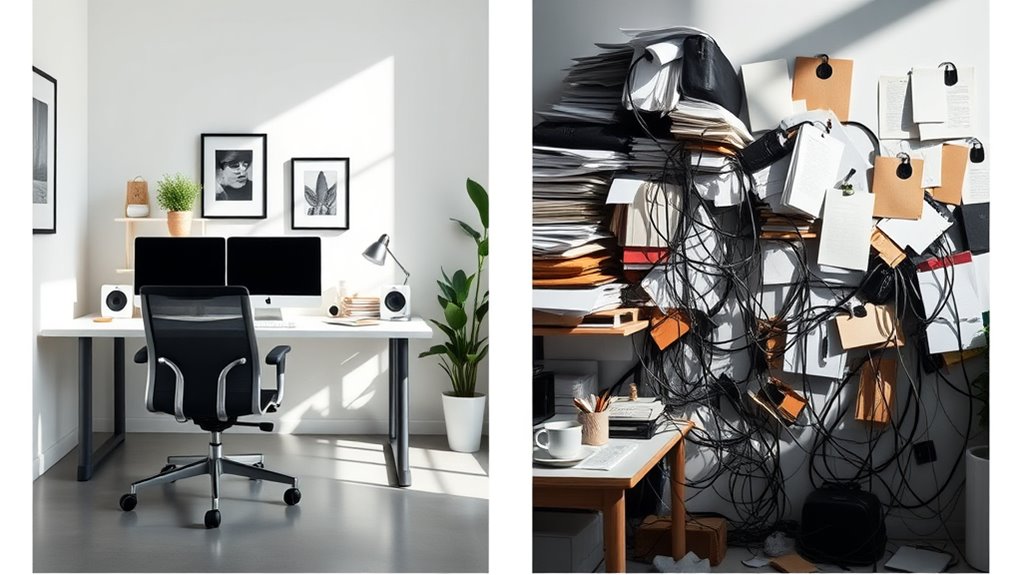
Designing a productive workspace requires carefully balancing what’s essential with what’s extra. When you focus on creating an environment that maximizes efficiency and comfort, you need to prioritize the elements that truly support your work. One of the first steps is understanding ergonomic considerations—these are vital for ensuring your workspace promotes good posture, reduces strain, and prevents injuries. An ergonomic desk setup means choosing a chair that supports your back, positioning your monitor at eye level, and ensuring your keyboard and mouse are within easy reach. These essentials might seem straightforward, but neglecting them can lead to discomfort and decreased productivity over time. When you’re evaluating what’s necessary, ask yourself if a piece of equipment or furniture genuinely improves your work experience or if it’s just adding clutter. Anything that enhances comfort, reduces fatigue, or improves focus should be considered essential, while items that serve only aesthetic purposes or personal preferences might be classified as extra.
Aesthetic priorities are also important, but they shouldn’t overshadow functionality. While a visually appealing workspace can boost motivation and create a positive atmosphere, it’s easy to get carried away with decorative elements that don’t serve a practical purpose. When assessing design choices, consider whether they contribute to a clean, organized environment that minimizes distractions. For instance, a stylish desk organizer that keeps your supplies within reach is both functional and attractive, whereas a decorative statue might be aesthetically pleasing but unnecessary. Striking a balance means selecting decor and accessories that elevate the space without cluttering it or compromising ergonomics. If an item adds to the overall ambiance without hindering your workflow or comfort, it can be deemed an extra. Otherwise, it’s better to keep the focus on essentials that support productivity.
Furthermore, incorporating energy-efficient cloud servers into your technology infrastructure can significantly enhance the sustainability and security of your workspace, aligning with modern digital practices. Ultimately, evaluating what’s essential versus extra involves asking yourself how each element contributes to your work goals. Does it improve your comfort, efficiency, or focus? Or is it simply there because it looks nice? By maintaining this mindset, you ensure your workspace remains practical yet inviting. Remember, ergonomic considerations are non-negotiable—they directly impact your health and performance. Aesthetic priorities, on the other hand, should enhance your environment without sacrificing functionality. When you consciously make these distinctions, you create a workspace that’s both effective and inspiring, avoiding unnecessary clutter while fostering a space where you can do your best work every day.
Frequently Asked Questions
How Can Employee Feedback Influence Workspace Prioritization?
Employee feedback plays a pivotal role in workspace prioritization by highlighting what truly enhances employee engagement and productivity. You should actively listen to their suggestions for workspace customization, which helps identify vital features versus extra amenities. Incorporating their insights ensures the workspace aligns with their needs, boosts morale, and fosters a more comfortable, efficient environment. Ultimately, feedback guides you in making informed decisions that balance essential elements and desirable extras.
What Metrics Best Measure Workspace Effectiveness?
You want to know if your workspace truly works? Focus on metrics like ergonomic comfort and aesthetic appeal, because they’re the heartbeat of effectiveness. Survey employee satisfaction on comfort and beauty, track productivity changes, and observe how well spaces support collaboration. These measures tell you if your workspace hits the mark or needs tweaking, making sure your environment boosts performance without sacrificing style or comfort.
How Do Budget Constraints Impact Essential Vs Extra Choices?
Budget constraints force you to prioritize by conducting a cost-benefit analysis, helping you determine which workspace features are essential and which are extra. You’ll need to allocate resources carefully, focusing on elements that provide the greatest impact for your investment. By balancing cost and benefit, you ensure your workspace remains functional and efficient without overspending on non-essentials, ultimately maximizing your overall resource allocation.
Can Flexible Workspaces Change the Essential Vs Extra Balance?
Flexible workspaces can definitely shift your essential vs. extra balance by allowing you to incorporate ergonomic solutions that prioritize comfort and productivity. You might also include aesthetic enhancements that create a welcoming environment without overspending. This adaptability helps you focus on what truly matters—like efficient layouts and ergonomic furniture—while still adding optional features that enhance the overall experience, all within your budget constraints.
How Should Future Growth Plans Affect Workspace Evaluations?
When planning for future growth, you need to keep your eyes on the prize by considering scalability considerations and technology integration. This way, your workspace can grow with your needs without missing a beat. Think ahead about adaptable layouts and tech upgrades, so you don’t paint yourself into a corner. Planning today guarantees your workspace remains flexible and efficient, even as your team and goals evolve.
Conclusion
Remember, designing your workspace is like tending a garden—focus on the essentials that help growth, while extras are the colorful blooms that brighten the space. By carefully evaluating what truly supports productivity versus what merely adds flair, you create an environment that’s both functional and inspiring. Keep this balance in mind, and your workspace will flourish like a well-tended garden—bountiful and beautiful, rooted in what matters most.