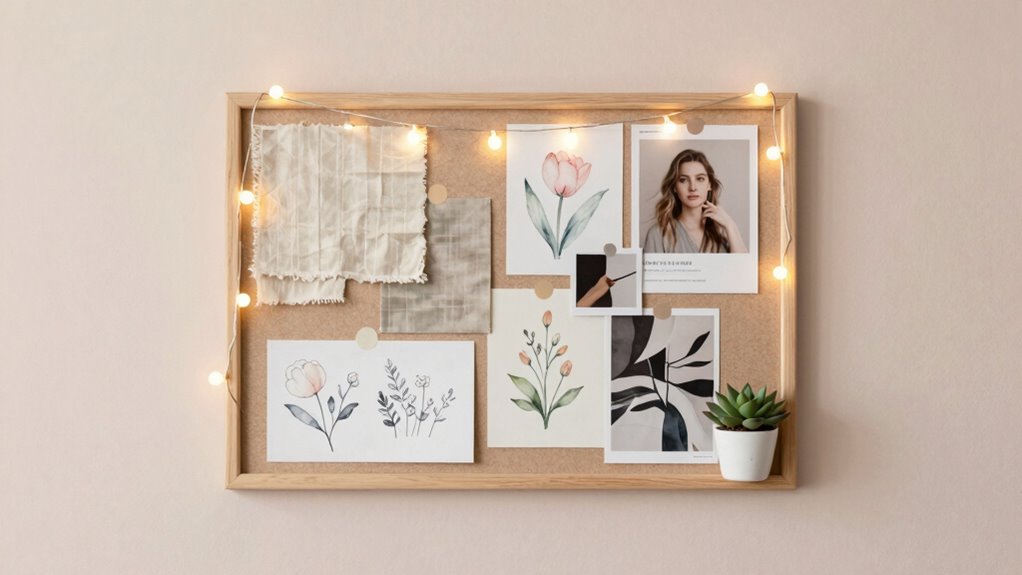

To create an inspiration board that energizes without overstimulating, focus on a simple layout with a cohesive color palette of a few primary shades. Use a mix of textures like smooth paper and rough fabric to add interest without chaos. Keep the board organized with clear sections or grids, and regularly update it to stay fresh. By balancing visual elements thoughtfully, you’ll maintain clarity and motivation. Keep exploring to discover more ways to keep your creative space inspiring yet calm.

Get your wardrobe favorites delivered free with Prime
- Fast, free delivery on millions of items
- Prime Video, Amazon Music and more included
- Member-only deals all year
Key Takeaways
- Use a limited, harmonious color palette to create a calm and cohesive visual environment.
- Organize materials and ideas into sections or themes to prevent clutter and promote clarity.
- Incorporate a mix of textures thoughtfully to add interest without overwhelming the senses.
- Keep the layout clean with structured grids or frames to guide focus and maintain balance.
- Regularly update and declutter the board to avoid visual noise and preserve inspiration.

When you’re feeling stuck or in need of a creative boost, inspiration boards can be powerful tools to spark new ideas and focus your vision. They serve as visual anchors, helping you clarify your goals and stay motivated. To keep your inspiration board effective without overwhelming your space, it’s essential to think carefully about how you arrange the elements. One key aspect is color coordination. Instead of cluttering your board with every hue, select a harmonious palette that resonates with your project. Stick to a few primary colors and use shades of these to create a cohesive look. This not only simplifies your visual field but also helps you see the bigger picture more clearly. By maintaining a consistent color scheme, you avoid overstimulation and keep your mind focused on the creative process rather than being distracted by conflicting colors. Incorporating biodiversity-friendly materials can also subtly reinforce your commitment to sustainable living practices while inspiring your creativity. Material selection also plays a significant role in creating a balanced inspiration board. Choose materials and textures that complement each other and reflect the mood or theme you’re working toward. For example, pairing smooth paper or fabric swatches with rougher textures like burlap or wood samples can add depth without cluttering the space. Be selective about what you include—less is often more when aiming for clarity. Use quality materials to ensure that your board feels intentional rather than chaotic. Incorporating a few well-chosen items can inspire ideas, but too many can create visual noise. When selecting materials, think about their tactile qualities and how they interact visually, ensuring they work together rather than compete for attention. Additionally, visual hierarchy can help guide your eye across the board and prioritize key ideas or themes. Organization is just as important as what you choose to include. Keep your inspiration board clean and structured—consider using frames, grids, or designated sections to separate different themes or ideas. This approach prevents the board from becoming a jumble of images and samples, which can cause overstimulation. To further enhance clarity, consider visual balance in your layout to distribute elements evenly and create a harmonious overall appearance. Remember, your goal is to create a visual summary that guides your project, not a cluttered collection of everything you like. Regularly refresh your board by removing outdated or less relevant items, maintaining a clear and focused space that encourages your creativity rather than stifles it. Paying attention to color harmony can also help strengthen the overall coherence of your inspiration board. With thoughtful color coordination, deliberate material selection, and a clean layout, your inspiration board becomes a calming, motivating tool that fuels your creative process without overwhelming your environment. Additionally, understanding the importance of number formatting can help you organize and quantify your ideas more effectively, ensuring clarity in your creative planning.
As an affiliate, we earn on qualifying purchases.
Frequently Asked Questions
How Can I Keep My Inspiration Board Organized Without Clutter?
You can keep your inspiration board organized by practicing mindful curation, selecting only the most meaningful images and ideas to prevent clutter. To maintain a sensory balance, limit the number of elements and use neutral backgrounds or borders. Regularly review and refresh your board, removing what no longer inspires you. This approach helps you stay focused and inspired without overwhelming your space, ensuring your board remains a calm, creative source.
What Materials Are Best for Creating a Minimalist Inspiration Board?
For a minimalist inspiration board, choose sleek materials like cork, magnetic boards, or thin metal sheets, which offer clean lines and easy customization. Opt for neutral tones and simple frames to maintain aesthetic balance. Material selection should focus on lightweight, uncluttered options that blend seamlessly into your space. This approach keeps your board functional and visually calm, helping you stay inspired without overwhelming your room.
How Often Should I Update My Inspiration Board?
You should update your inspiration board as often as your creative mood needs a boost—think of it as tuning your visual harmony. Regular refreshes, monthly or seasonally, can enhance your mood and keep ideas fresh. By maintaining a balanced, clutter-free space, you foster a calming environment that fuels inspiration without overstimulation. Listening to your creative flow guarantees your inspiration board remains a powerful tool for ongoing motivation.
Can Digital Inspiration Boards Be Effective for Creative Work?
Digital inspiration boards can be highly effective for your creative work. They allow you to easily organize your ideas and mood images, making creative visualization seamless. With digital tools, you can update your board quickly, keeping your inspiration fresh without cluttering your space. Plus, digital organization helps you access your ideas from anywhere, boosting your productivity and fueling your creativity whenever inspiration strikes.
How Do I Choose Colors That Won’t Overstimulate My Space?
Did you know that calming palettes can boost focus by up to 20%? To choose colors that won’t overstimulate your space, focus on color psychology—opt for soft blues, gentle greens, or muted neutrals. These hues promote relaxation and clarity, creating a soothing environment. Avoid bright, jarring colors, and stick with calming shades to enhance your creativity without overwhelming your senses.
harmony color palette for inspiration board
As an affiliate, we earn on qualifying purchases.
As an affiliate, we earn on qualifying purchases.
Conclusion
Inspiration boards boost your brilliance by blending balance with boldness. Keep your creative space calm yet engaging, avoiding overstimulation while still sparking ideas. Remember, simplicity sustains your spirit and stimulates your senses without sapping your strength. By balancing beauty with boundaries, you build a backdrop that boosts your best ideas. So, set your space smartly—allowing inspiration to ignite, not overwhelm. Stay centered, stay inspired, and let your creativity comfortably flourish.
textured fabric swatches for craft projects
As an affiliate, we earn on qualifying purchases.
As an affiliate, we earn on qualifying purchases.
organized corkboard with sections
As an affiliate, we earn on qualifying purchases.
As an affiliate, we earn on qualifying purchases.
Fall Picks
fall essentials
As an affiliate, we earn on qualifying purchases.