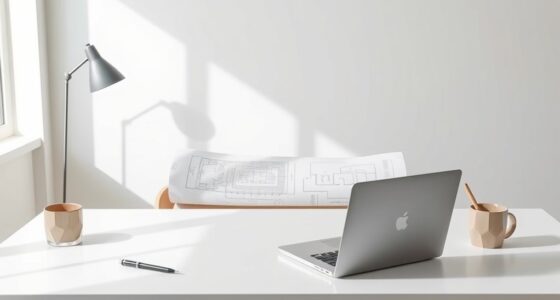
Workspace Feng shui and minimalism share the common goal of fostering clarity, balance, and positive energy in your environment. Feng shui emphasizes harmonious placement of objects, natural elements, and energy flow, while minimalism focuses on simplicity and decluttering to create calm. Both approaches can complement each other, resulting in a workspace that enhances focus and well-being. To discover practical ways to combine these philosophies effectively, explore more insights below.
Key Takeaways
- Both emphasize creating a clutter-free, balanced environment that promotes mental clarity and reduces stress.
- Feng shui focuses on energy flow and natural elements, while minimalism prioritizes simplicity and neutral aesthetics.
- They can be integrated by arranging minimalist spaces according to feng shui principles for harmony and focus.
- Both aim to enhance well-being, productivity, and personal energy through intentional workspace design.
- Combining them results in a workspace that is both visually calming and energetically balanced.

Creating an ideal workspace involves more than just choosing the right furniture; it’s about cultivating an environment that boosts your productivity and well-being. When you consider workspace feng shui versus minimalism, you’re exploring two distinct but potentially complementary approaches to achieving that goal. Feng shui emphasizes harmony, balance, and the flow of energy—specifically personal energy—within your space. It encourages you to arrange your environment in a way that promotes positive chi, which can help you feel more energized, focused, and balanced throughout your day. Elements like plants, calming colors, and balanced decor help to harmonize the environment, making it easier for you to maintain focus and stay grounded. Minimalism, on the other hand, champions simplicity and decluttering, creating a clean, uncluttered space that minimizes distractions and fosters clarity. Both philosophies aim to create a workspace that supports your mental state, but they approach it from different angles.
In feng shui, aesthetic balance is vital. You’ll want to pay attention to the placement of your desk, the flow of natural light, and the positioning of objects to ensure energy moves freely and doesn’t get blocked. When done correctly, this can enhance your personal energy, making you feel more motivated and less stressed. Elements like plants, calming colors, and balanced decor help to harmonize the environment, making it easier for you to maintain focus and stay grounded. Minimalism, however, strips down your workspace to its essentials—fewer items, neutral colors, and simple lines—reducing visual noise and mental clutter. This approach naturally promotes a sense of calm and allows your mind to breathe, which can be just as effective at boosting your energy and focus as feng shui. Additionally, incorporating energy flow principles can help optimize your workspace for better productivity and well-being.
While these philosophies might seem different, they can actually complement each other. You can arrange your minimalist workspace in a way that respects feng shui principles—placing your desk to face the door, maintaining a clear space behind you for support, or incorporating natural elements for balance. The key is to be intentional about your environment, making sure it nurtures your personal energy and aesthetic balance. If you combine the two, you get a space that’s both visually harmonious and free from distractions, helping you to work more effectively and feel more centered. Ultimately, whether you lean more toward feng shui or minimalism, the goal is to create a workspace that aligns with your needs, energizes you, and promotes a sense of well-being.

BEIZHAN Dragon Pen Holder for Desk, Pen Holder Figure, Chinese Feng Shui Desk Organizer, Animal Figure for Office/Study Display Decoration
TRADITIONAL CHINESE DESIGN: Exquisitely carved stone dragon pen holders featuring auspicious smiling lion and dragon designs with intricate…
As an affiliate, we earn on qualifying purchases.
As an affiliate, we earn on qualifying purchases.
Frequently Asked Questions
Can Workspace Feng Shui and Minimalism Coexist Harmoniously?
Yes, workspace feng shui and minimalism can coexist harmoniously. You can create a balanced environment by focusing on color harmony, choosing calming, unified colors that promote focus and relaxation. Clutter management is key; decluttering your space helps maintain the simplicity of minimalism while allowing positive energy flow. Combining these approaches enhances productivity and tranquility, making your workspace both aesthetically pleasing and energetically aligned.
Which Approach Boosts Productivity More: Feng Shui or Minimalism?
Feng shui definitely boosts productivity more than minimalism alone. You’ll feel an incredible surge of positive energy flow and clarity when you optimize your space for harmony. While minimalism reduces clutter, feng shui actively enhances energy flow, which fuels your focus and creativity. Combining both creates a powerful environment where your productivity skyrockets. So, prioritize feng shui for a workspace that energizes and inspires you every single day.
How Do Personal Preferences Influence Workspace Design Choices?
Your personal style and aesthetic preferences directly influence your workspace design choices. You’ll feel more comfortable and motivated when your environment reflects what you love, whether that’s calming minimalism or vibrant Feng Shui elements. By aligning your workspace with your tastes, you create a space that fosters productivity and well-being. Trust your instincts, incorporate your favorite colors and textures, and personalize your setup to make it uniquely yours.
Are There Specific Colors That Suit Both Feng Shui and Minimalism?
You’ll find that neutral colors like whites, beiges, and soft grays suit both feng shui and minimalism, creating a calming environment. Incorporating subtle accents of blues or greens enhances color harmony without disrupting the clean, simple aesthetic. This approach guarantees design consistency, making your workspace feel balanced and harmonious. By choosing these colors, you promote positive energy flow while maintaining minimalist elegance effortlessly.
What Are Common Pitfalls When Combining These Two Philosophies?
You might struggle with conflicting aesthetics and clutter accumulation when combining Feng Shui and minimalism. The theory that minimalism always promotes simplicity can be misleading, as clutter can still build up in ways that disrupt energy flow. To avoid pitfalls, stay mindful of maintaining balance—don’t sacrifice Feng Shui principles for minimalism’s sleek look or vice versa. Prioritize intentionality, ensuring your workspace remains both calming and functional.
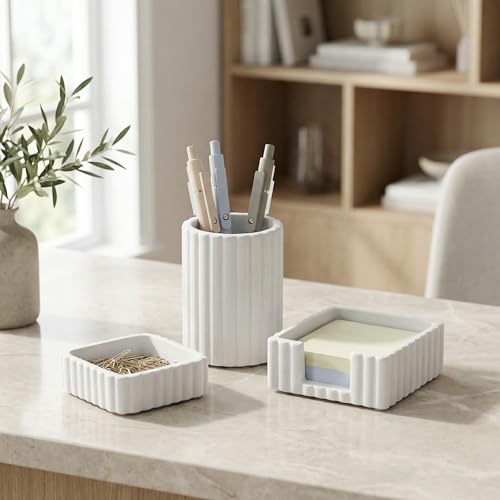
KIBAGA Modern Aesthetic Desk Accessories Set of 3 – Stylish Concrete Organizers for Pens & Office Supplies – A Cute and Functional Addition to Your Workspace Decor
Ultimate Desk Organizer Set for Focus & Inspiration: Transform your workspace with KIBAGA’s concrete desk organizer set, featuring…
As an affiliate, we earn on qualifying purchases.
As an affiliate, we earn on qualifying purchases.
Conclusion
Imagine your workspace as a serene garden, where every plant and stone has purpose. Feng Shui guides you to create harmony, while minimalism offers clarity through simplicity. When you blend these principles, your space becomes a tranquil oasis, like a peaceful lake reflecting a clear sky. Embrace this balance, and you’ll find your environment not just organized, but a sanctuary that nurtures your focus and creativity, much like a well-tended garden blooming in perfect harmony.
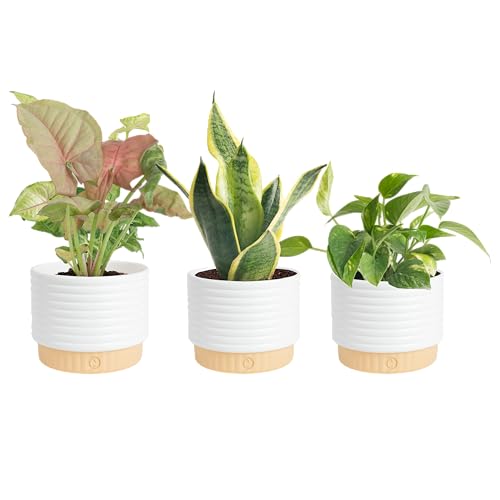
Costa Farms Live Indoor House Plants (3-Pack), Hand Selected Easy to Maintain Indoor Assorted Houseplants in Plant Pots, Curated Air Purifying Mix, Low Light, Home Office Decor Plant Gift
BEAUTIFUL HOME DÉCOR BUNDLE: This 3-pack offers incredible value to instantly decorate multiple spaces with live houseplant room…
As an affiliate, we earn on qualifying purchases.
As an affiliate, we earn on qualifying purchases.

Problem Solving Flowchart Definition Plaque Desk Decor Office Shelf, Funny Work Colleague Gifts for Men Women Engineer, Accountant, Christmas Birthday Humorous Gift Idea for Boss XUV111
~SIZE~ 4 x 4 inches, free enough to stand freely. Perfect as a desk accessory or to place…
As an affiliate, we earn on qualifying purchases.
As an affiliate, we earn on qualifying purchases.