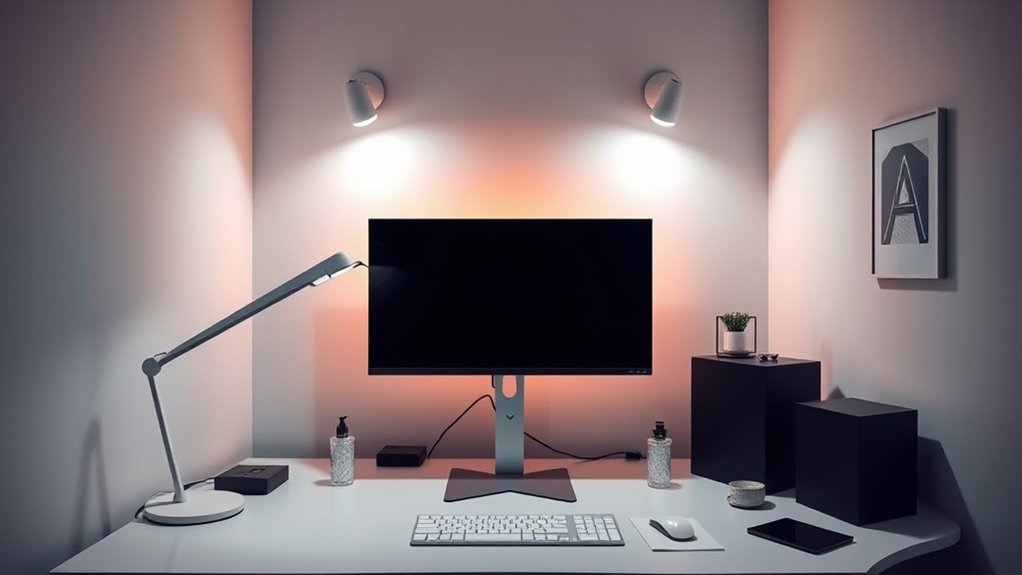
To optimize your office lighting, choose minimalist lamps with adjustable brightness to focus light without clutter. Add bias lighting behind your monitor to reduce glare and eye strain, making extended work sessions more comfortable. Incorporate natural light by positioning your desk near windows and using shades to control glare. Balancing these elements helps improve focus and reduces fatigue. Keep exploring to discover more strategies that create the perfect, eye-friendly workspace environment.
Key Takeaways
- Use minimalist lamps with adjustable, soft, warm lighting to provide focused task illumination without clutter.
- Incorporate bias lighting behind monitors to reduce screen contrast and lessen eye strain during extended work periods.
- Position screens at eye level and utilize natural light to support ergonomic posture and minimize glare.
- Regularly assess and fine-tune lighting, including blinds and lamp placement, for balanced, glare-free workspace illumination.
- Opt for dimmable, color-temperature adjustable lighting options to enhance visual comfort and reduce fatigue.
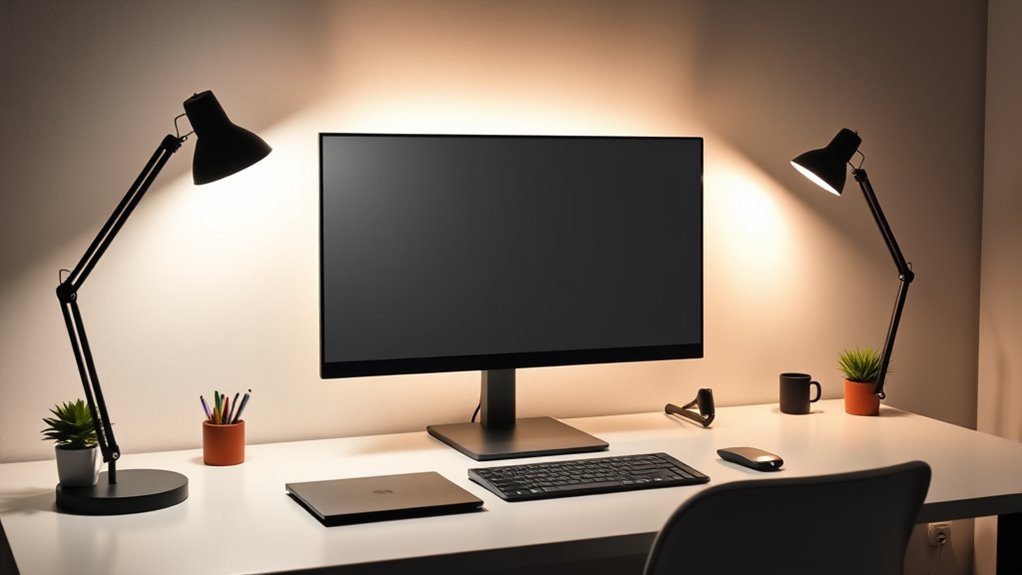
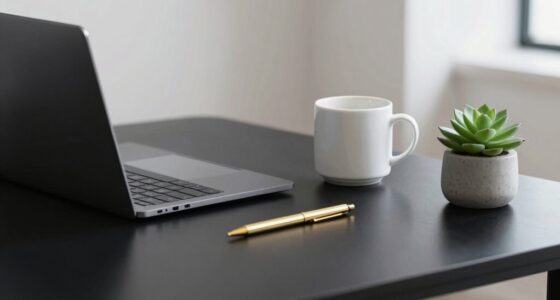
Are you making the most of your office lighting? Proper lighting can boost your productivity, reduce eye strain, and create a more comfortable workspace. To achieve this, you should focus on optimizing your environment through ergonomic desk setups and natural light integration. An ergonomic desk setup ensures your screen is at eye level, your chair supports good posture, and your workspace is arranged to minimize glare and reflections. When combined with natural light, this setup becomes even more effective. Position your desk near windows to take advantage of sunlight, but be mindful of direct glare that can cause discomfort. Use adjustable blinds or shades to control the amount of natural light entering your space, allowing you to balance brightness and avoid harsh shadows or reflections on your screen. Integrating natural light not only reduces the need for excessive artificial lighting but also enhances your mood and energy levels throughout the day.
Optimize your workspace with ergonomic setups and natural light for better comfort and productivity.
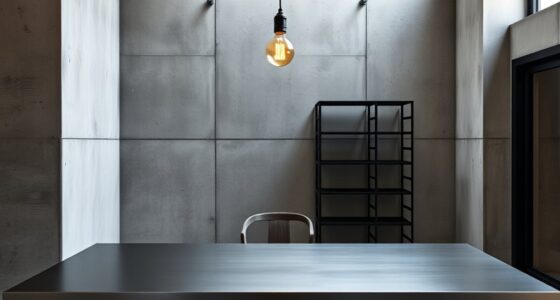
Incorporating minimalist lamps into your office can further refine your lighting scheme. These lamps typically feature simple, clean designs that provide focused illumination without overwhelming your workspace. Opt for adjustable models so you can direct light exactly where it’s needed, whether you’re reading a document or working on a detailed project. A well-chosen minimalist lamp complements your ergonomic setup by providing task lighting that reduces eye strain and improves visibility. Their understated design prevents clutter and creates a calming environment, which is essential for maintaining focus during long work hours. Avoid overly bright or colorful lamps that might distract or cause visual fatigue. Instead, aim for soft, warm light that mimics natural daylight, helping your eyes relax and reducing fatigue.
Bias lighting is another essential element often overlooked. Placed behind your monitor, bias lighting reduces the contrast between your screen and the surrounding environment, easing eye strain during extended use. It creates a more uniform visual field, which helps prevent your eyes from constantly adjusting to different brightness levels. This simple addition can drastically decrease discomfort and improve your overall viewing experience. When choosing bias lighting, look for options that are dimmable and allow you to set the color temperature. Cooler tones mimic daylight and are ideal during work hours, while warmer hues can create a cozy atmosphere during breaks.
Finally, always be mindful of your environment’s overall lighting. Adjust your setup as needed to avoid glare, reflections, and uneven lighting that can cause headaches or eye fatigue. Regularly reassess your workspace, making small tweaks to your natural light integration, desk positioning, or lamp placement. By fine-tuning these elements, you’ll create a balanced, comfortable workspace that promotes focus and well-being. Proper office lighting isn’t just about brightness; it’s about creating an environment where your eyes are protected, your posture is supported, and your productivity can thrive.

Logitech G413 SE Full-Size Mechanical Gaming Keyboard - Backlit Keyboard with Tactile Mechanical Switches, Anti-Ghosting, Compatible with Windows, macOS - Black Aluminum
Take your gaming skills to the next level: The Logitech G413 SE is a full-size keyboard with gaming-first...
As an affiliate, we earn on qualifying purchases.
Frequently Asked Questions
How Do I Choose the Best Minimalist Lamp for My Workspace?
To choose the best minimalist lamp for your workspace, focus on ergonomic desk setups that prioritize comfort and efficiency. Look for sustainable lighting options like energy-efficient LEDs with adjustable brightness and color temperature. Consider size and design to match your aesthetic, ensuring it provides ample, glare-free light for your tasks. A versatile, eco-friendly lamp enhances your workspace, reducing eye strain while supporting your commitment to sustainability.
What Are the Health Benefits of Bias Lighting?
Ever notice how bias lighting can improve your health? It reduces eye strain by providing ambient lighting that complements your screen, helping your eyes adjust better. By controlling color temperature, bias lighting minimizes glare and prevents fatigue. This setup boosts comfort and focus, especially during long work sessions. Incorporating bias lighting isn’t just about aesthetics; it actively supports your eye health and overall well-being.
How Can I Prevent Eye Strain During Long Work Hours?
To prevent eye strain during long work hours, you should guarantee your workspace is well-lit with balanced lighting, like bias lighting, and avoid glare. Sit in an ergonomic chair to maintain proper posture, reducing strain. Keep your desk organized to minimize clutter and distractions, and take regular breaks to rest your eyes. Adjust your screen brightness and contrast to match your environment, promoting comfort and reducing fatigue.
Are There Specific Lighting Colors That Improve Focus?
Bright blue and cool white lighting, like a clear sky on a perfect day, can sharpen your focus. Lighting color psychology shows these colors boost alertness and concentration. Opt for color temperature options around 5000K to 6500K, which mimic natural daylight. These choices help your brain stay alert, making work feel less like a chore and more like a breeze, keeping you energized and productive all day long.
What Maintenance Is Required for Office Lighting Fixtures?
You should regularly clean your lighting fixtures to maintain excellent brightness and prevent dust buildup. Check their condition periodically to guarantee bulb replacement schedules are on track, which helps extend lighting fixture longevity. Replace burnt-out bulbs promptly to avoid flickering and uneven lighting. Additionally, inspect wiring and connections for safety. Proper maintenance keeps your office lighting efficient, prolongs fixture lifespan, and creates a comfortable, focused workspace.

ONEMIX 42" LED Desk Lamp with Clamp, Architect Desk Light with Remote, Adjustable 4-Segment Bar, 1800LM Bright, Eye-Caring Desk Lamp for Home Office, Reading, Study, Dual Monitors, Workbench(Black)
Ultra-Wide & Super-Bright Light Bar: This 42-inch LED desk lamp features a 4-segment architect-style light bar with independently...
As an affiliate, we earn on qualifying purchases.
Conclusion
Now that you know how to optimize your office lighting with minimalist lamps, bias lighting, and eye-friendly choices, you’re all set to create a comfortable workspace. Good lighting can boost your mood, reduce eye strain, and keep you focused. Isn’t it worth investing a little time and effort into your environment? With the right setup, you’ll feel energized and productive every day—so why not start making those changes today?

LitONES Led Desk Lamps for Home Office with Base, Tall Desk Lamp with 50 Light Modes & Memory and Timer Func Computer Light, Flexible Adjustable Table Lamps for Video Conference, Architect or Study
𝐄𝐲𝐞-𝐂𝐚𝐫𝐢𝐧𝐠, 𝐒𝐨𝐟𝐭, 𝐆𝐥𝐚𝐫𝐞-𝐅𝐫𝐞𝐞 𝐈𝐥𝐥𝐮𝐦𝐢𝐧𝐚𝐭𝐢𝐨𝐧 – This 15W LED desk lamp features LitONES’ exclusive 4-layer optical soft panel with...
As an affiliate, we earn on qualifying purchases.

Micomlan Led Desk Lamp with Clamp, Architect Desk Lamp for Home Office with Atmosphere Lighting, 24W Ultra Bright Auto Dimming Computer Light Stepless Dimming and Tempering LED Table Light
7 Rotatable Joints: Micomlan swing arms led desk light features 7 strongly damped joints with 3 ultra bright...
As an affiliate, we earn on qualifying purchases.