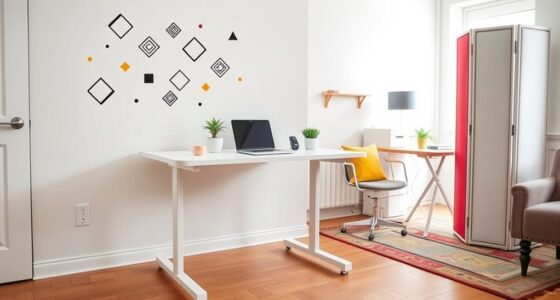
To keep a shared home office for two simple, stay organized with clear zones and designated spots for each person’s supplies. Use room dividers or plants for privacy and noise control, and invest in adjustable furniture for comfort. Keep technology straightforward and reliable to avoid frustration. Establish routines like tidy-up times and clear work hours to prevent clutter and overlapping schedules. If you continue exploring, you’ll discover more ways to create a balanced, productive workspace for both of you.
Key Takeaways
- Use room dividers or plants to create visual separation and reduce distractions for each person.
- Assign designated zones and storage to keep supplies organized and prevent clutter.
- Establish clear work hours and routines to maintain boundaries and prevent overlap.
- Incorporate adjustable ergonomic setups tailored to individual comfort and productivity.
- Utilize shared digital tools for scheduling and communication to streamline collaboration.

Sharing a home office with someone else can be a productive and enjoyable experience if you set clear boundaries and establish a good workflow. To achieve this, you need to focus on creating ergonomic setups that support comfort and prevent strain, especially since you’ll be spending long hours working side by side. Invest in adjustable chairs, height-friendly desks, and proper monitor placement. This not only boosts productivity but also reduces fatigue and potential health issues. When both of you have ergonomic setups tailored to your needs, it becomes easier to stay focused and comfortable throughout the day. Additionally, incorporating modern kitchen technology such as automated lighting or smart climate control can help create a more comfortable environment conducive to productivity. Privacy solutions are equally essential. Even in a shared space, you want to minimize distractions and maintain some sense of personal zone. Use room dividers, bookshelves, or plants to create visual barriers that help delineate each person’s workspace. Noise-canceling headphones are also a smart addition, allowing you to concentrate during calls or deep work sessions without disturbance. Consider establishing “quiet hours” or designated times when both of you agree to minimize interruptions, reinforcing respect for each other’s work routines. Organizing the shared workspace is key to keeping it simple and efficient. Use clearly marked storage solutions—like labeled bins, drawers, or wall-mounted shelves—to keep supplies tidy and accessible. Having designated spots for essentials minimizes clutter, which can easily become overwhelming in a dual setup. Make it a habit to tidy up at the end of each day, ensuring the space remains inviting and ready for the next work session. A tidy environment fosters focus and reduces stress, especially when juggling two different schedules. Communication is crucial to prevent misunderstandings and maintain harmony. Regularly check in with each other about workload, deadlines, and workspace needs. This openness allows you to adjust setups or schedules as necessary, ensuring both of you feel supported and respected. Setting boundaries regarding work hours and personal space helps prevent burnout and keeps the work-life balance intact. Finally, keep technology simple and reliable. Use shared digital tools for scheduling, file sharing, and communication to streamline your workflow. This reduces confusion and helps coordinate tasks smoothly. With a few thoughtful adjustments—ergonomic setups, privacy solutions, organization, and clear communication—you can make your shared home office a space that boosts productivity while feeling comfortable for both of you.
Frequently Asked Questions
How Can We Prevent Work-Related Conflicts in a Shared Space?
You can prevent work-related conflicts by establishing clear communication boundaries and discussing expectations openly. Use scheduling strategies to allocate specific work hours, ensuring both of you respect each other’s time. Regularly check in to address concerns and adjust routines as needed. This proactive approach helps maintain harmony, prevents misunderstandings, and keeps your shared workspace productive and stress-free. Clear boundaries and planning are key to a smooth dual workspace.
What Are the Best Storage Solutions for Dual Workstations?
You should choose storage organization solutions that maximize space optimization, like vertical shelves, under-desk drawers, and stackable bins. Use labeled containers to easily find items and keep surfaces clutter-free. Opt for multi-purpose furniture, such as desks with built-in storage, to save space. Regularly declutter and maintain your storage to guarantee both workstations stay functional and organized, making your shared home office efficient and stress-free.
How Do We Manage Noise Levels Between Two Users?
To manage noise levels, start with soundproofing strategies like installing acoustic panels or weatherstripping doors to minimize sound transfer. Use noise-canceling tools such as headphones or white noise machines to block distractions and create a focused environment. Encourage open communication about noise levels and establish quiet hours. These steps help maintain a productive workspace for both of you, keeping disruptions to a minimum and fostering a comfortable, collaborative atmosphere.
What Ergonomic Setups Are Ideal for Two People?
You need an ergonomic setup that feels like it’s custom-made for each of you! Invest in ergonomic furniture with adjustable chairs and desks to prevent back pain and boost comfort. Pair it with adjustable lighting to reduce eye strain and keep your workspace bright or cozy as needed. This way, both of you can work happily and healthily side by side, without sacrificing comfort or productivity.
How Can We Personalize the Space Without Cluttering?
To personalize your shared home office without clutter, add decorative accessories that reflect your personalities, like stylish desk organizers or unique lamps. Incorporate personalized wall art for a touch of individuality, but keep it minimal to avoid visual overload. Use a dedicated space for each person’s favorite items, and opt for sleek storage solutions to maintain a tidy, inspiring environment that feels personalized yet organized.
Conclusion
Creating a shared home office for two is all about simplicity and organization. Imagine you and your partner each having designated zones, with clear storage and minimal clutter. For instance, Jane and Tom scheduled weekly cleanups and kept their desks clear, making collaboration smooth. By keeping your workspace simple and respecting each other’s zones, you’ll boost productivity and harmony. A clutter-free environment helps both of you focus, making your shared office a space that works effortlessly for everyone.