
To declutter your computer and find peace of mind, start by evaluating your storage and setting clear goals, like freeing space or organizing files. Create a logical folder structure with consistent naming conventions using descriptive names and dates. Regularly delete duplicates and outdated files, and use tools to automate backups and sorting. Maintaining your system and using the right software can prevent future clutter. Keep exploring for more tips to keep your digital space tidy.
Listen free for 30 days with Audible
Thousands of audiobooks and originals — cancel anytime.
As an affiliate, we earn on qualifying purchases.
Key Takeaways
- Evaluate storage to identify large, outdated, and unnecessary files for removal or archiving.
- Create a consistent folder hierarchy with clear naming conventions for easy navigation.
- Use duplicate detection tools to find and delete redundant files, freeing up space.
- Automate routine tasks like backups, auto-sorting, and scheduled cleanups to maintain organization.
- Regularly review and refine your file structure to prevent clutter buildup and ensure peace of mind.
As an affiliate, we earn on qualifying purchases.
Assessing Your Digital Space and Setting Goals
Before you begin decluttering, understanding what’s taking up space on your computer is essential. Start by evaluating your digital space to identify large files, outdated documents, and unnecessary applications. This process helps you see your digital footprint’s scope and how it affects your data privacy. By knowing what’s stored, you can determine what to keep and what to delete, reducing clutter and potential security risks. Setting up a file organization system can further streamline your digital environment and prevent future buildup. Set clear goals for your decluttering project, like freeing up a specific amount of storage or organizing files into folders. Remember, a clutter-free computer not only speeds up your device but also enhances your data privacy, making it easier to manage sensitive information securely. This initial evaluation sets the foundation for a more streamlined digital life.
As an affiliate, we earn on qualifying purchases.
Creating a System for File Organization
Creating a system for file organization is essential to maintaining a clutter-free digital space. Start by designing a clear folder hierarchy that reflects your work and personal needs. Use main folders for broad categories like “Work,” “Personal,” or “Projects,” then create subfolders to further organize specific topics. Consistent naming standards are vital—use descriptive, straightforward names and include dates or version numbers when relevant. This consistency helps you quickly locate files and reduces confusion. Regularly review and refine your system to keep it efficient. Additionally, implementing a clear file naming system can significantly improve your ability to search and identify documents quickly. Incorporating file metadata can further enhance your organization by providing additional context and searchability. Adopting standardized naming conventions ensures uniformity across your files, making it easier to manage large volumes of data. Using automatic sorting tools can also help keep your files organized without manual effort. To optimize your workflow, consider utilizing search functions that leverage metadata and naming conventions for faster retrieval. By establishing a logical folder hierarchy and sticking to naming standards, you’ll streamline your digital environment, making it easier to find what you need and preventing clutter from creeping back in.
As an affiliate, we earn on qualifying purchases.
Cleaning Up Unnecessary Files and Duplicates
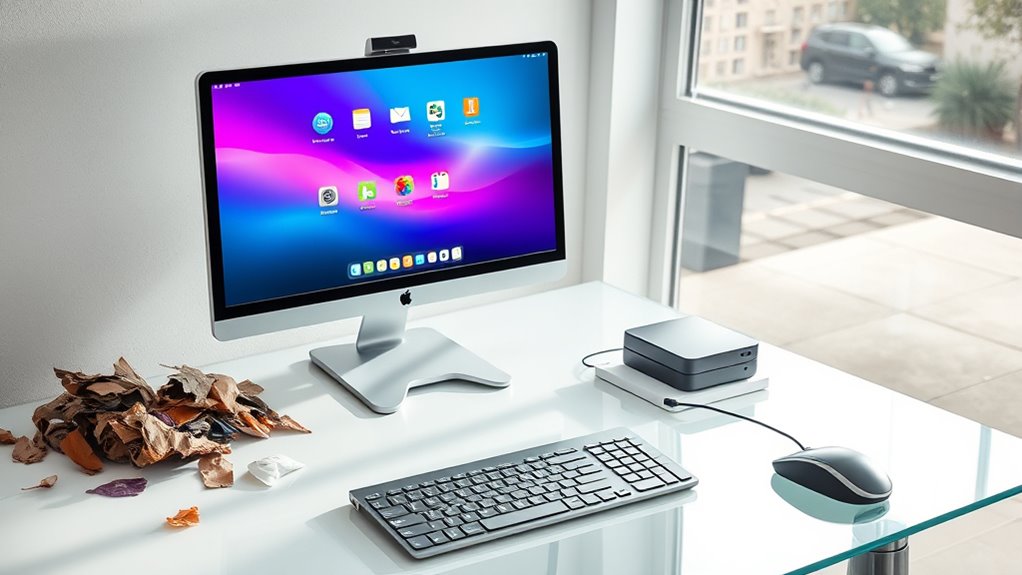
Start by searching for duplicate files that take up unnecessary space on your computer. Next, remove obsolete data such as outdated documents and downloads you no longer need. Clearing these files will help your system run more smoothly and free up valuable storage. Additionally, organizing your files with proper tools can streamline your workflow and maintain a clutter-free digital environment. To ensure your system remains trustworthy and secure, consider verifying the authenticity of your software sources and updates. Regular backups and security practices are also essential to protect your data from loss or malicious threats. Incorporating routine maintenance can further enhance your computer’s performance and prevent future clutter buildup.
Detect Duplicate Files
Detecting duplicate files is a crucial step in decluttering your computer because these unnecessary copies can quickly consume storage space and cause confusion. Using duplicate detection tools helps identify files with high file similarity, making it easier to spot duplicates. These tools analyze file properties like size, name, and content to find exact or similar copies. When you identify duplicates, you can free up valuable space and streamline your file organization. Keep in mind that some duplicates may have slight differences, so review carefully before deleting. Proper duplicate detection prevents accidental loss of important data and keeps your system tidy. Incorporating safe operating procedures when deleting files ensures you don’t remove anything vital. Remember, the goal is to simplify your digital space without sacrificing any essential files. Regularly checking for duplicates maintains a clutter-free, efficient computer environment.
Remove Obsolete Data
Have you ever noticed how quickly unnecessary files pile up on your computer, cluttering your storage? Removing obsolete data is essential to keep your system efficient. Start by deleting outdated files like old downloads, expired documents, and unused software. Use tools or built-in search features to identify duplicate files and obsolete data. Regularly cleaning these files frees up space and improves performance. Incorporating wall organization systems can also inspire better digital file management habits, making it easier to maintain a tidy system.

Declutter & Defend: The Essential Guide to Digital Minimalism and Data Privacy for Non-Techies
As an affiliate, we earn on qualifying purchases.
As an affiliate, we earn on qualifying purchases.
Establishing a Consistent Naming Convention
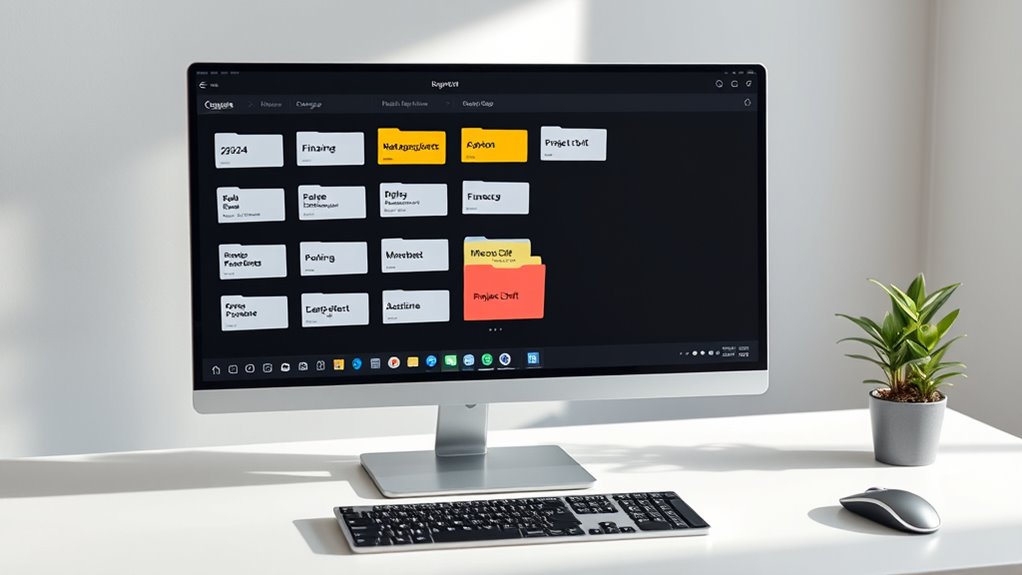
To keep your files organized and easy to find, establishing a consistent naming convention is essential. A clear system helps you quickly identify folder contents and manage file versioning without confusion. Consider these tips:
- Use descriptive, specific folder naming to indicate content at a glance
- Incorporate dates in YYYY-MM-DD format for easy chronological sorting
- Maintain uniformity in file naming, such as using underscores or dashes consistently
- Add version numbers (v1, v2) to track updates easily
- Avoid special characters that can cause issues across different operating systems
- Understanding Father and Daughter Bond can help you organize personal files related to nutrition and wellness.
Categorizing Files Into Appropriate Folders
Organizing your files into appropriate folders is essential for maintaining an efficient system. A clear file hierarchy helps you locate documents quickly and reduces clutter. Start by creating a logical folder taxonomy based on categories like work, personal, or projects. Within each main folder, add subfolders to further categorize files, such as invoices, reports, or photos. Consistency is key—use the same naming conventions to keep everything orderly. Avoid mixing unrelated files in the same folder to prevent confusion. Regularly review and refine your folder structure to adapt to new files and workflows. Additionally, aligning your folder organization with best practices from Maximize Space and Organization can help you develop a systematic approach that minimizes chaos. Incorporating effective labeling techniques can further enhance your organization system. Utilizing digital decluttering strategies can also help keep your files tidy and accessible over time. Implementing a consistent naming convention ensures that files are easy to identify and sort. By establishing a well-structured folder hierarchy, you’ll streamline your digital space, making it easier to find what you need and maintain peace of mind.
Utilizing Cloud Storage and Backup Solutions
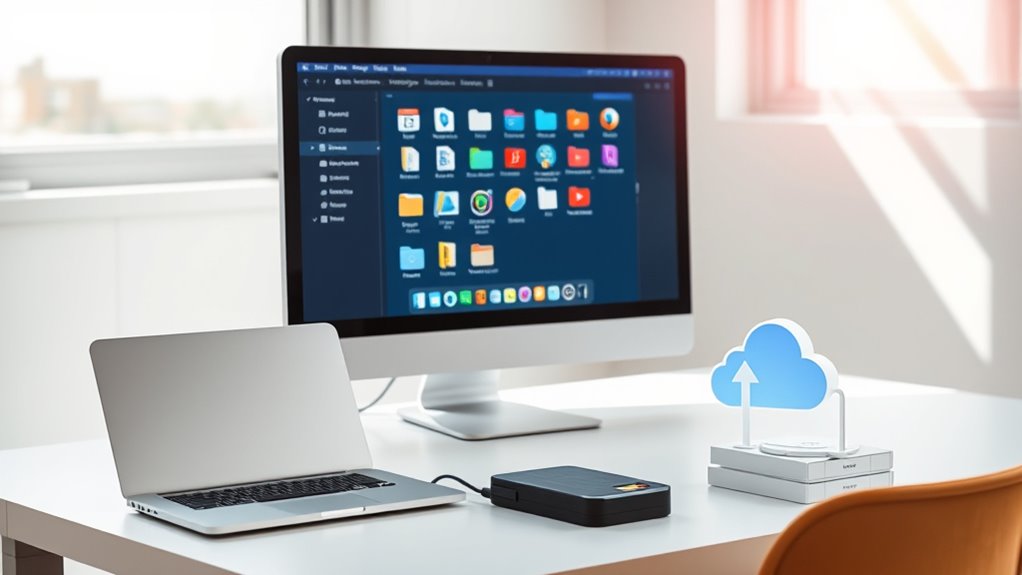
Using cloud storage and backup solutions is essential for safeguarding your digital files against loss or hardware failure. Relying on these tools guarantees your important documents, photos, and projects stay safe and accessible from any device. Cloud storage allows you to store files remotely, freeing up space on your local drive. Backup solutions automatically save copies of your files, so you’re prepared for unexpected issues. To maximize these benefits, consider:
- Choosing reputable cloud storage providers
- Setting up automatic backups regularly
- Organizing files within cloud folders
- Using version history features
- Ensuring encryption for sensitive data
Implementing these strategies helps keep your digital life organized, protected, and stress-free. Cloud storage and backup solutions are your best defense against data loss, ensuring peace of mind.
Automating Routine Organization Tasks
Automating routine organization tasks saves you time and keeps your files tidy. You can set up auto-sorting to categorize new downloads, schedule regular cleanups to remove clutter, and use consistent naming conventions for easy searching. These simple steps make maintaining a clutter-free computer effortless. Additionally, incorporating sound healing science principles, such as using specific frequencies for alert sounds, can create a calming digital environment that enhances focus and reduces stress during your organization sessions. Regularly reviewing your files and understanding how Glycolic Acid benefits your skin can also motivate you to keep your digital space organized and refreshed. Exploring hackathons can also inspire innovative ways to automate and optimize your file management systems, making your digital organization more efficient.
Set Up Auto-Sorting
Have you ever felt overwhelmed by a cluttered computer desktop or a chaotic Downloads folder? Setting up auto-sorting can help you regain control. By configuring automatic sorting rules, you ensure files are organized into a clear folder hierarchy without extra effort. Here’s what you can do:
- Create rules for naming conventions
- Assign specific file types to designated folders
- Use date-based sorting for recent downloads
- Set up rules for recurring file categories
- Automate moving files from Downloads to organized folders
This process minimizes manual work and keeps your files tidy. Auto-sorting uses rules to categorize files as they arrive, reducing clutter and making it easier to find what you need. Establishing a folder hierarchy streamlines your workflow and provides peace of mind.
Use Scheduled Cleanups
Scheduled cleanups streamline your routine file organization by automatically removing unnecessary or outdated files at regular intervals. This digital cleanup preserves you time and keeps your system clutter-free without manual effort. By setting up scheduled maintenance, you ensure your computer stays organized and runs efficiently, reducing the risk of storage overload. Many operating systems and cleanup tools offer automation options, allowing you to choose cleanup frequency—daily, weekly, or monthly. Once configured, these automated tasks handle temporary files, duplicates, and old downloads, freeing you from constant manual intervention. Regular scheduled cleanups keep your digital space tidy and optimized, giving you peace of mind. Incorporating this routine into your digital organization process makes maintaining a clutter-free computer effortless and consistent.
Implement Naming Conventions
Implementing consistent naming conventions for your files and folders can considerably streamline your digital organization. Using clear file naming standards helps you quickly locate and identify documents, saving time and reducing frustration. Establish a consistent nomenclature by including relevant details like dates, project names, or versions. This approach minimizes confusion and keeps your files structured. Consider these tips:
- Use descriptive, concise names for easy recognition
- Incorporate dates in a standardized format (e.g., YYYY-MM-DD)
- Avoid special characters that can cause compatibility issues
- Use underscores or hyphens to separate words for clarity
- Stick to a uniform pattern across all files and folders
Maintaining Your Organized System Regularly
To keep your computer organized over time, you need to develop a regular maintenance routine. Consistent file maintenance prevents clutter from building up and keeps your system efficient. Set aside a specific time weekly or monthly to review your files, delete unnecessary items, and reorganize as needed. Practicing digital discipline helps you resist saving random downloads or stray documents, maintaining your tidy structure. Develop habits like naming files clearly and saving them in designated folders immediately. This ongoing effort ensures your system stays manageable and reduces stress when searching for files. Remember, regular upkeep is key to long-term organization. By committing to these routines, you’ll enjoy peace of mind knowing your digital workspace remains streamlined and easy to navigate.
Using Tools and Software to Simplify Management
Using tools and software can considerably streamline your digital organization efforts, making it easier to maintain a clutter-free computer. Integrating management tools helps automate tasks, such as sorting files or deleting duplicates, saving you time. Customizing software settings allows you to tailor your system to your needs, ensuring consistent organization. Consider tools like file management apps, automated cleanup utilities, or cloud storage solutions to stay organized effortlessly. These options help you:
Streamline your digital space with management tools that automate organization and keep your system clutter-free effortlessly.
- Automate file sorting and naming conventions
- Schedule regular backups and cleanup
- Set rules for folder organization
- Sync files across devices seamlessly
- Adjust settings for notifications and alerts
Tips for Preventing Future Digital Clutter
Ever wonder how to keep your digital space tidy long after clearing out the clutter? Embracing digital minimalism helps you focus on what truly matters, reducing unnecessary files and distractions. To prevent future clutter, set up clear naming conventions and folder structures now, so you can quickly locate files later. Regularly review and delete outdated or unnecessary documents, making this a habit rather than an exception. Implement productivity strategies like scheduled cleanups and automatic backups to stay organized with minimal effort. Limit downloads and app installations to essentials, avoiding the trap of accumulating unused files. By adopting these habits, you create a streamlined digital environment that promotes efficiency and peace of mind, making future decluttering much easier and less stressful.
Frequently Asked Questions
How Often Should I Review and Reorganize My Digital Files?
You should review and reorganize your digital files at least once every three to six months to maintain digital minimalism. During these sessions, focus on updating file naming conventions for clarity and consistency, and delete unnecessary files. Regular checks help prevent clutter from building up and ensure your system stays organized, making it easier to find what you need quickly and reducing digital stress.
What Are the Best Tools for Automatic File Sorting?
Imagine your digital workspace as a tidy library, where folder automation swiftly sorts your files like a skilled librarian. Tools like Hazel or DropIt excel at folder automation, automatically organizing downloads and documents. Tagging software such as TagSpaces adds labels for easy retrieval, transforming chaos into clarity. These tools save you time, reduce stress, and keep your files perfectly in order, giving your digital life a calm, organized rhythm.
How Can I Recover Accidentally Deleted Important Files?
If you’ve accidentally deleted important files, don’t panic. Use file recovery tools like Recuva or Disk Drill to restore them quickly. Check your computer’s Recycle Bin or Trash first, as they often hold deleted files temporarily. For more advanced recovery, connect your drive to a backup system or use professional data recovery services. Acting fast increases your chances of successful file recovery after accidental deletion.
How Do I Handle Files Shared Across Multiple Devices?
You should use a reliable cloud service to handle files shared across multiple devices, ensuring syncing issues are minimized. Regularly check for sync errors and resolve conflicts to prevent version control problems. Keep your files organized with clear naming conventions and folders, so you can easily identify the most recent versions. This way, you maintain consistency and avoid confusion, making your file management seamless across all your devices.
What Security Measures Should I Take for Cloud Storage?
Think of your cloud storage as a cozy vault—you want it secure and welcoming. You should use encrypted backups to keep your data safe from prying eyes and set access permissions carefully, so only trusted people can see your files. Regularly update your passwords and enable two-factor authentication. These steps make sure your digital belongings stay protected while you enjoy the convenience of cloud storage.
Conclusion
Did you know that the average person spends over 4 hours a week searching for misplaced files? By decluttering your computer and establishing a solid organization system, you can reclaim that time and reduce stress. Regular maintenance and smart tools make it easier to stay on top of your digital space. Start today, and enjoy the peace of mind that comes with a tidy, efficient computer—your productivity will thank you!
College move-in / dorm season Picks
dorm essentials
As an affiliate, we earn on qualifying purchases.