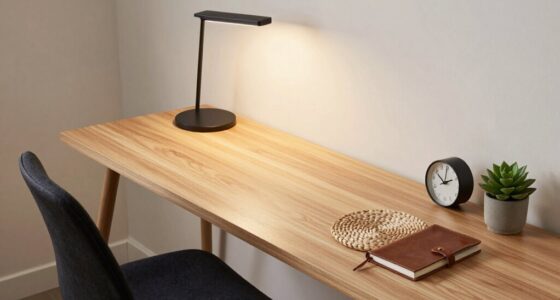
Choosing sustainable furniture made from eco-friendly and recyclable materials allows you to create a minimalist office that’s both stylish and environmentally responsible. By selecting products with durable designs and reclaimed or recycled components, you reduce waste and support eco-conscious practices. Eco-friendly manufacturing processes further lessen your carbon footprint while promoting healthier indoor spaces. Staying mindful of these materials helps you cultivate a workspace aligned with your values—continue to explore how these choices can transform your office environment.

Get your wardrobe favorites delivered free with Prime
- Fast, free delivery on millions of items
- Prime Video, Amazon Music and more included
- Member-only deals all year
Key Takeaways
- Choose furniture made from recyclable, eco-friendly materials like reclaimed wood and recycled metals to reduce environmental impact.
- Prioritize minimalist designs that emphasize durability and quality to ensure longevity and lessen the need for replacements.
- Opt for furniture manufactured using renewable energy and low-waste processes to minimize carbon footprint.
- Incorporate biodegradable composites and sustainable materials that align with eco-conscious values and aesthetics.
- Use non-toxic finishes and sustainable sourcing to create healthy indoor environments supporting overall well-being.

Have you ever wondered how your furniture choices impact the environment? When you select pieces for your minimalist office, it’s essential to consider the materials used and how they’re manufactured. Opting for furniture made from recyclable materials can substantially reduce waste and lessen your carbon footprint. Recyclable materials are designed to be reused or repurposed at the end of their life cycle, preventing them from ending up in landfills. This approach aligns perfectly with the principles of sustainable furniture, helping you create an eco-friendly workspace that’s both functional and environmentally responsible.
Choosing recyclable furniture reduces waste and your carbon footprint for an eco-friendly, sustainable workspace.
Choosing furniture crafted through eco friendly manufacturing processes is another vital step. These manufacturing methods prioritize reducing energy consumption, minimizing waste, and avoiding harmful chemicals. When furniture is produced using such practices, it guarantees that your office environment remains healthier for you and the planet. Many companies now use sustainable production techniques, like using renewable energy sources or non-toxic finishes, which further supports your commitment to eco-conscious living. By selecting products that emphasize eco friendly manufacturing, you’re actively supporting industries that prioritize sustainability and environmental stewardship.
In addition to recyclable materials and eco friendly manufacturing, it’s worth considering furniture that is designed for longevity. Minimalist offices thrive on simplicity and durability, so investing in high-quality pieces that last reduces the need for frequent replacements. This not only saves you money but also limits the environmental impact associated with manufacturing, shipping, and disposing of furniture. When furniture is built to last, it minimizes waste and contributes to a more sustainable lifestyle. Look for designs that emphasize clean lines and timeless style, which tend to be more versatile and less likely to go out of fashion.
Furthermore, many eco-friendly furniture brands now incorporate reclaimed wood, recycled metal, or biodegradable composites into their designs. These materials further reinforce the idea of sustainability by maximizing resource efficiency and reducing reliance on virgin materials. Incorporating such elements into your office creates a space that reflects your values while maintaining a sleek, minimalist aesthetic. Remember, every choice counts—by prioritizing recyclable materials and supporting eco friendly manufacturing, you’re creating a workspace that’s not only stylish and functional but also kind to the environment. Your commitment to sustainable furniture demonstrates that you can maintain a minimalist, clutter-free office while making a positive impact on the planet. Additionally, choosing furniture made from renewable resources ensures that your sustainable efforts extend to every aspect of your workspace.
Frequently Asked Questions
How Do Green Materials Compare in Durability to Traditional Furniture?
Green materials often compare favorably in durability to traditional furniture, offering excellent material longevity and environmental resilience. You’ll find that sustainably sourced woods and recycled composites withstand daily use, resisting wear and tear just as well as conventional options. While some green materials may require specific care, they generally provide long-lasting performance, making them a smart choice for a minimalist office where durability and eco-friendliness are key.
Are Sustainable Furniture Options Cost-Effective Long-Term Investments?
Sustainable furniture options are often cost-effective long-term investments because a thorough cost analysis shows they reduce maintenance and energy costs over time. By considering material sourcing, you find eco-friendly, durable materials that last longer, saving you money. Though initial costs may be higher, the durability and lower environmental impact make these options financially advantageous for the future. You’ll enjoy both savings and sustainability benefits in your minimalist office.
What Certifications Verify a Furniture’s Eco-Friendly Claims?
Think of eco label standards as the medieval seal of authenticity, ensuring you’re getting genuine green furniture. You should look for third-party verification, which confirms that a product meets strict environmental criteria. Certifications like FSC, LEED, and GreenGuard verify a furniture’s eco-friendly claims, giving you confidence that the materials are sustainably sourced and safe for your minimalist office environment. Always verify these labels before making a purchase.
How Can I Ensure Minimal Environmental Impact During Furniture Disposal?
You can guarantee minimal environmental impact during furniture disposal by participating in local recycling programs and following proper disposal guidelines. Break down furniture into recyclable parts when possible, and choose disposal options that prioritize reuse or recycling. Avoid trashing your furniture, and instead, contact recycling centers or charities that accept furniture donations. This way, you help reduce waste and support sustainable practices in your minimalist office.
Do Green Materials Require Special Maintenance or Cleaning?
Did you know eco-friendly cleaning can extend the life of green materials by 30%? You won’t need special maintenance or cleaning for these sustainable furnishings. Just use mild, eco-friendly cleaning products and avoid harsh chemicals. Regular dusting and gentle wiping keep your furniture looking new. Follow simple maintenance tips like avoiding excess water and sharp tools, and your eco-friendly pieces will stay durable and beautiful without extra effort.
Conclusion
By choosing green materials for your office furniture, you subtly embrace a more mindful approach to your workspace. It’s an elegant way to support sustainability without sacrificing style or functionality. With each thoughtful selection, you help foster a healthier environment, all while cultivating a minimalist aesthetic that feels both refined and inviting. In making these conscious choices, you gently contribute to a more sustainable future—an understated yet impactful statement of sophistication and care.
Halloween Picks
halloween
As an affiliate, we earn on qualifying purchases.