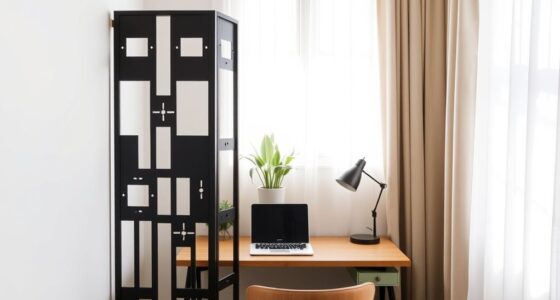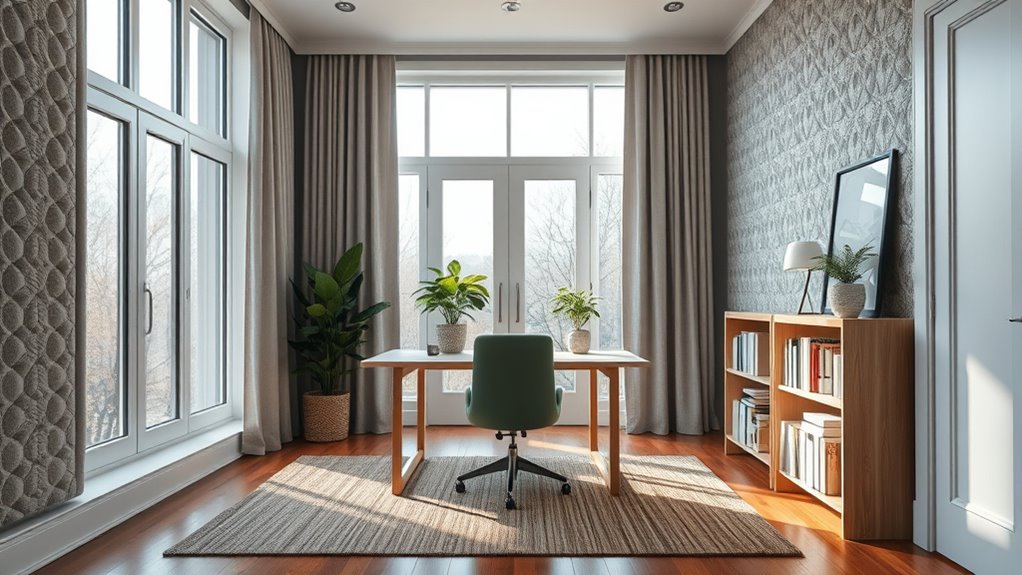

To soundproof your home office without major renovations, start by adding acoustic panels to absorb echoes and reduce bouncing noise. Seal gaps around doors with weatherstripping or door seals to block external sounds. Use rugs or carpets on the floor and heavy curtains on windows to dampen noise and echoes. Arrange furniture like bookshelves to absorb sound, and add soft furnishings for extra insulation. Keep exploring for more simple tips to create a quieter, more focused workspace.

Get your wardrobe favorites delivered free with Prime
- Fast, free delivery on millions of items
- Prime Video, Amazon Music and more included
- Member-only deals all year
Key Takeaways
- Install acoustic panels on walls to absorb sound and reduce echo effectively.
- Use door seals and weatherstripping to block noise leaks around doors.
- Add thick rugs and heavy curtains to dampen footsteps, echoes, and outdoor noise.
- Arrange furniture, such as bookshelves filled with books, to serve as additional sound barriers.
- Incorporate soft furnishings like cushions and wall hangings for layered, cost-effective sound absorption.
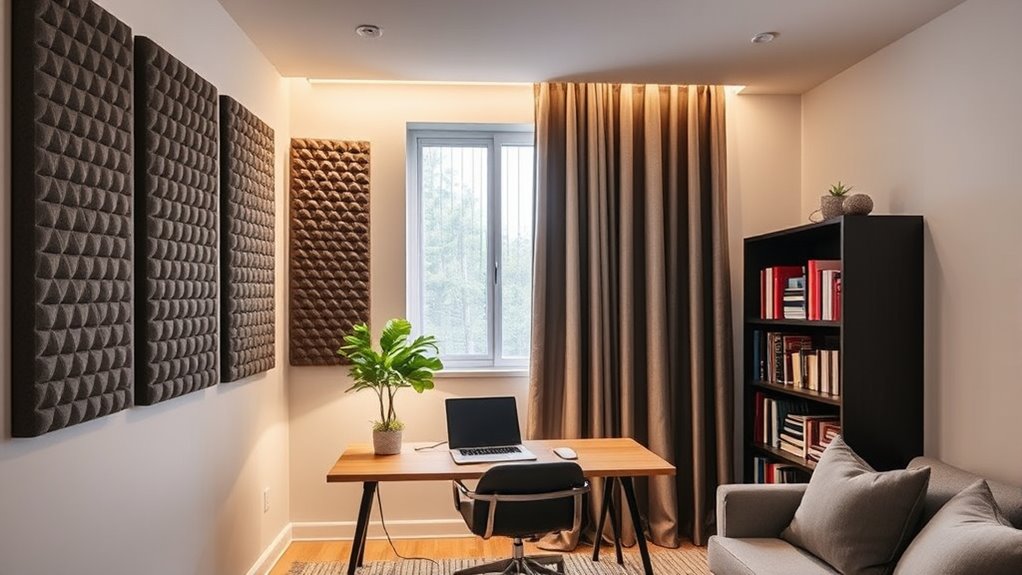
Creating a quiet environment in your home office can considerably boost your focus and productivity. To achieve this without tearing down walls or undertaking major renovations, start by addressing the common sources of noise. One effective way is to add acoustic panels to your walls. These panels absorb sound waves, reducing echo and preventing noise from bouncing around the room. They’re easy to install—just stick or mount them onto your walls—and come in various sizes and styles to match your decor. Acoustic panels are especially useful if you work in a noisy household or have neighbors close by, as they help contain sound within your space.
In addition to acoustic panels, paying attention to door seals can make a substantial difference. Doors are often overlooked as noise leaks, especially if they don’t fit tightly into their frames. Installing door seals or weatherstripping around your door helps block out sounds from outside your office. These seals are inexpensive and simple to apply—just peel and stick or press them into place. When properly installed, they create a tight barrier that keeps noise from seeping in through gaps. This step alone can drastically improve your concentration, as external noise becomes less intrusive.
Beyond acoustic panels and door seals, consider placing rugs or carpets on the floor. Hard surfaces reflect sound, amplifying noise, so soft materials absorb it. A thick rug under your desk can dampen footsteps and ambient sounds, making your workspace calmer. Additionally, using heavy curtains or drapes over windows can block outdoor noise and reduce echoes within the room. They also add a layer of insulation, further muffling sounds from outside.
Furniture placement also matters. Positioning bookshelves filled with books against shared walls can act as additional sound barriers. Filling shelves with dense books helps absorb sound waves, preventing them from transmitting through the wall. If possible, arrange your desk away from external walls or noisy windows to minimize exposure to external sounds.
Finally, consider adding soft furnishings like cushions, fabric-covered pinboards, or even fabric wall hangings. These items not only personalize your space but also serve as sound absorbers. Combining these strategies—acoustic panels, door seals, rugs, curtains, and thoughtful furniture placement—creates a layered approach that markedly reduces noise without the need for extensive renovations. This can be further enhanced by soundproofing materials that are designed specifically for home environments. By taking these simple, cost-effective steps, you’ll create a more peaceful, focused environment that enhances your productivity and makes working from home more enjoyable.
Frequently Asked Questions
Can Plants Help Reduce Noise in My Home Office?
Yes, plants can help reduce noise in your home office. Their benefits include noise absorption, as their leaves and stems break up sound waves, making your space quieter. Additionally, plants improve air quality and create a calming environment, which boosts productivity. To maximize noise reduction, choose larger, leafy plants and place them strategically around your workspace. Incorporating greenery not only enhances aesthetics but also contributes to a more peaceful, sound-absorbing atmosphere.
Are There Temporary Soundproofing Solutions That Won’T Damage Walls?
Think of your home office as a fragile glass orb, vulnerable to outside noise. Temporary barriers like heavy curtains or furniture can act as gentle shields, while acoustic panels cling without damage, like a soothing embrace. These solutions are easy to install and remove, offering quick relief from sound distractions. You get the peace you need without risking harm to your walls, preserving your space’s integrity.
How Effective Are Door Seals and Draft Stoppers for Soundproofing?
Door seals and draft stoppers are quite effective for soundproofing your home office. Door seals create a tight barrier, preventing sound from escaping or entering through gaps, while draft stoppers block noise at the base of the door. Together, they considerably reduce noise transmission, making your workspace quieter. While not perfect, these solutions are affordable, easy to install, and offer noticeable improvements in creating a more peaceful, focused environment.
Can Furniture Placement Improve Sound Insulation in My Office?
Think of furniture as the orchestra’s conductor, guiding sound waves away from your ears. You can improve sound insulation by strategically placing decorative rugs and acoustic panels to absorb echo and block noise. Positioning bookshelves or soft furniture against shared walls creates a buffer, reducing noise transmission. Moving your desk away from noisy walls and adding plush furniture can turn your office into a peaceful sanctuary, much like a cozy cocoon.
Do Window Inserts or Film Significantly Block Noise From Outside?
Window inserts or film can substantially block outside noise and improve noise reduction in your home office. They work by adding an extra layer of window insulation, which reduces sound transmission through glass. You’ll notice less outdoor noise, making your workspace more peaceful. For best results, choose high-quality window insulation products designed for noise reduction, and guarantee proper installation to maximize their effectiveness.
Conclusion
By implementing these simple soundproofing tips, you can transform your home office into a sanctuary of focus and peace—much like a quiet library hidden away from the world. Remember, small changes can make a big difference, turning your space into a fortress of concentration. So go ahead, take control of your environment, and enjoy the serenity that comes with a quieter, more productive workspace. Your perfect home office is just a few steps away.
Columbus Day / Indigenous Peoples' Day Picks
long weekend sales
As an affiliate, we earn on qualifying purchases.