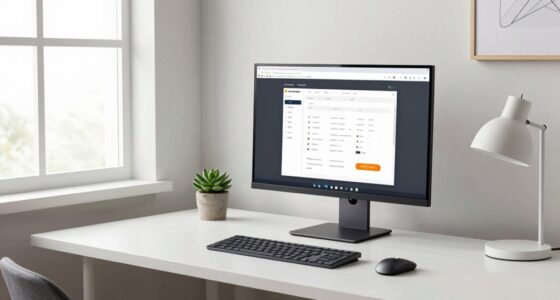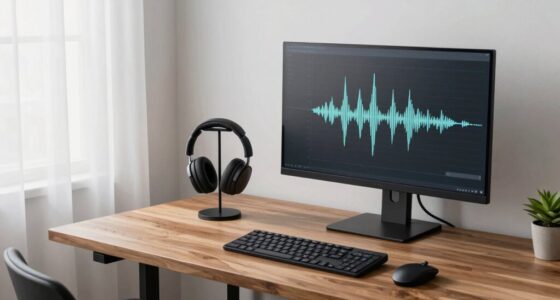
To build a better workspace at home, focus on ergonomic furniture like adjustable chairs and spacious desks to prevent strain. Maximize natural light and layer artificial lighting to reduce eye fatigue. Keep your area organized with designated zones for different tasks and add personal touches like plants to boost creativity. Improve acoustics to minimize distractions and create a focused environment. Prioritize comfort and functionality, and you’ll discover more ways to enhance your home office for peak productivity.

Get your wardrobe favorites delivered free with Prime
- Fast, free delivery on millions of items
- Prime Video, Amazon Music and more included
- Member-only deals all year
Key Takeaways
- Invest in ergonomic, adjustable furniture that supports proper posture and comfort during long work hours.
- Maximize natural light and incorporate layered artificial lighting to reduce eye strain and enhance focus.
- Designate specific zones for drawing, computer work, and meetings to promote organization and productivity.
- Implement acoustic treatments and soundproofing to create a quiet, distraction-free environment.
- Personalize the workspace with artwork and plants to inspire creativity and improve well-being.
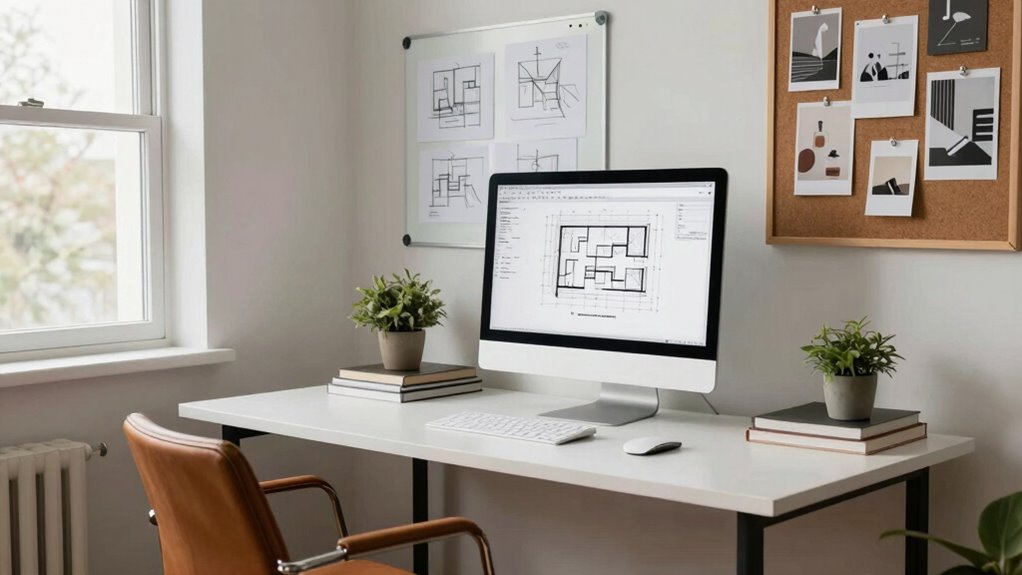
Working from home offers architects the flexibility to design their own space, but creating an environment conducive to productivity and creativity requires intentional planning. Your workspace should support your workflow, minimize discomfort, and foster inspiration. To do this effectively, start with ergonomic furniture. Investing in a quality, adjustable office chair and a spacious desk tailored to your height can make a significant difference. Ergonomic furniture helps prevent strain and fatigue, allowing you to work longer hours without discomfort. A well-designed chair provides proper lumbar support, while a desk that accommodates your standing or sitting preferences keeps your posture aligned. Remember, comfort isn’t just a luxury—it’s essential for sustained focus and health.
Lighting optimization is equally important. Natural light should be your first choice; position your desk near windows to maximize daylight exposure. Sunlight not only enhances mood but also reduces eye strain and improves your overall well-being. If natural light is limited, supplement with layered artificial lighting. Use a combination of ambient, task, and accent lights to create a balanced environment. A desk lamp with adjustable brightness helps you focus on detailed work, while overhead lighting should be diffuse enough to eliminate harsh shadows. Avoid glare on screens by positioning lights thoughtfully and choosing window treatments that control sunlight during bright hours. Proper lighting reduces eye fatigue, improves concentration, and boosts your energy levels throughout the day.
Beyond furniture and lighting, consider the overall layout of your workspace. Keep your primary work area free of clutter to promote clear thinking. Designate specific zones for different tasks—such as drawing, computer work, and meetings—so your environment supports varied activities. Incorporating storage solutions to keep essential tools within reach but out of sight when not in use can further enhance organization and efficiency. Creating a dedicated designated workspace can also help reinforce boundaries between work and personal life, which is crucial for maintaining focus and mental health. Personal touches, like artwork or plants, can enhance your mood and spark creativity without overcrowding your space. Additionally, lighting conditions can significantly impact your productivity and well-being, making your workspace more effective. Paying attention to acoustic treatment can also help create a quieter environment, further reducing distractions and supporting concentration. Building a workspace that aligns with your needs as an architect involves attention to ergonomic furniture, lighting optimization, organization, and acoustics. When these elements come together, your home office becomes a place where you can thrive creatively and professionally.
ergonomic adjustable office chair
As an affiliate, we earn on qualifying purchases.
As an affiliate, we earn on qualifying purchases.
Frequently Asked Questions
How Can I Improve My Wi-Fi Signal for Remote Work?
To improve your Wi-Fi signal for remote work, consider using wireless boosters or signal extenders. Place these devices strategically, such as near your workspace and away from thick walls or electronic interference, to maximize coverage. Regularly update your router’s firmware for peak performance. You might also reposition your router for better line-of-sight. These steps help guarantee a stronger, more reliable connection so you can work efficiently from home.
What Are the Best Ergonomic Furniture Options for Small Spaces?
Did you know that ergonomic chairs can reduce back pain by up to 54%? For small spaces, opt for compact desks that maximize your area without sacrificing functionality. Pair them with ergonomic chairs to support proper posture and comfort during long work sessions. Look for adjustable features and space-saving designs, so your workspace stays organized and healthy, even in tight quarters.
How Do I Reduce Noise Distractions in a Home Office?
To reduce noise distractions, start with soundproofing techniques like adding weatherstripping on doors, sealing gaps, or using acoustic panels. Incorporate noise-canceling devices such as headphones or white noise machines to block out background sounds. You can also position your desk away from noisy areas and use soft furnishings like rugs and curtains to absorb sound, creating a quieter, more focused home office environment.
What Lighting Solutions Are Ideal for Detailed Architectural Work?
For detailed architectural work, you need ideal lighting solutions like ample natural daylight and focused task lighting. Position your workspace near windows to maximize natural light, which reduces eye strain and boosts creativity. Complement this with adjustable task lamps that provide bright, even illumination on your work surfaces. Use daylight-balanced bulbs to mimic natural light and guarantee color accuracy. This setup helps you work efficiently, with less fatigue and better attention to detail.
How Can I Organize Tools and Materials Efficiently at Home?
Think of your tools as the pieces of a puzzle, each needing its perfect spot. Use smart storage solutions like labeled bins, wall-mounted racks, and drawer dividers to keep everything accessible and orderly. Prioritize tool organization by grouping similar items together, making your workspace flow seamlessly. This rhythm of organization not only saves time but also keeps your creative energy focused, transforming chaos into a harmonious environment for your architectural projects.
As an affiliate, we earn on qualifying purchases.
Conclusion
Now that you’ve laid the foundation for your ideal workspace, imagine the possibilities that lie ahead. With just a few more tweaks, your home office could transform into a creative haven, fueling your best ideas yet. But what’s the final touch that will truly elevate your environment? Stay tuned—there’s one essential step that could make all the difference. The key to opening your full potential might be closer than you think, waiting to be discovered.
layered artificial lighting for home office
As an affiliate, we earn on qualifying purchases.
As an affiliate, we earn on qualifying purchases.
soundproofing panels for home workspace
As an affiliate, we earn on qualifying purchases.
As an affiliate, we earn on qualifying purchases.
Columbus Day / Indigenous Peoples' Day Picks
long weekend sales
As an affiliate, we earn on qualifying purchases.