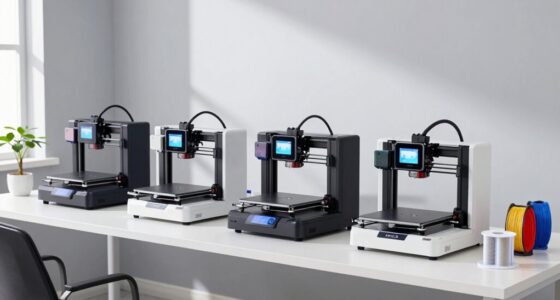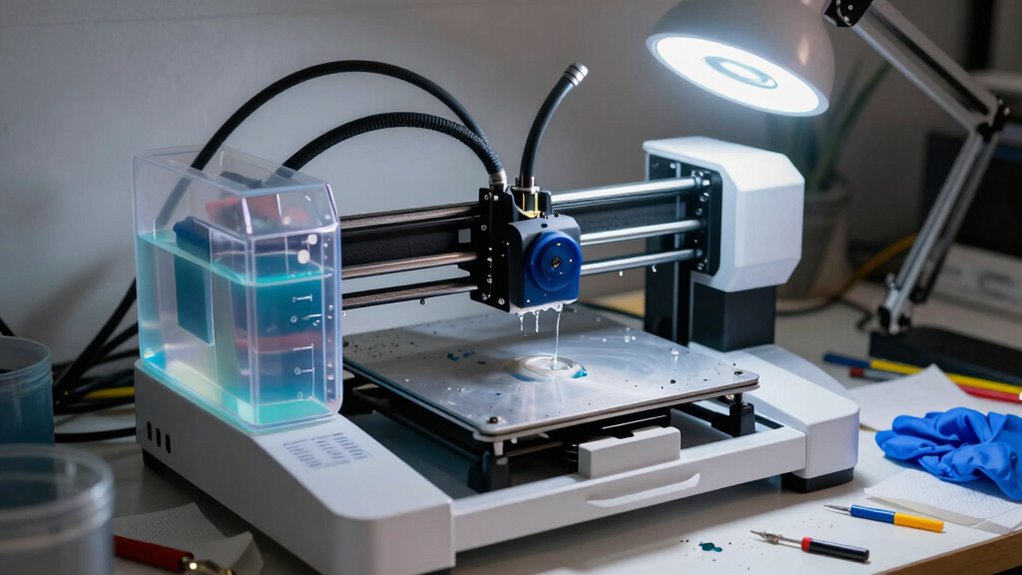

Using resin printers means you need a dedicated, well-ventilated workspace to handle the strong odors and avoid health risks. You’ll have to carefully clean and cure prints, often handling chemicals like alcohol and uncured resin that can stain or harm surfaces. Safety gear, proper disposal, and organized storage are essential to prevent spills and contamination. If you’re interested in mastering these workspace challenges, there’s more to uncover below.
Key Takeaways
- Resin printers require a dedicated, well-ventilated workspace to manage fumes, spills, and curing processes safely.
- Post-processing involves careful handling, cleaning with isopropyl alcohol, and proper curing to prevent resin damage or hazards.
- Safety protocols include wearing gloves, masks, and protective gear to avoid skin contact and inhalation of hazardous fumes.
- Workspace organization is crucial to prevent accidental spills, contamination, and to facilitate efficient cleanup.
- Responsible disposal of waste resin and contaminated materials is essential to minimize environmental impact and health risks.
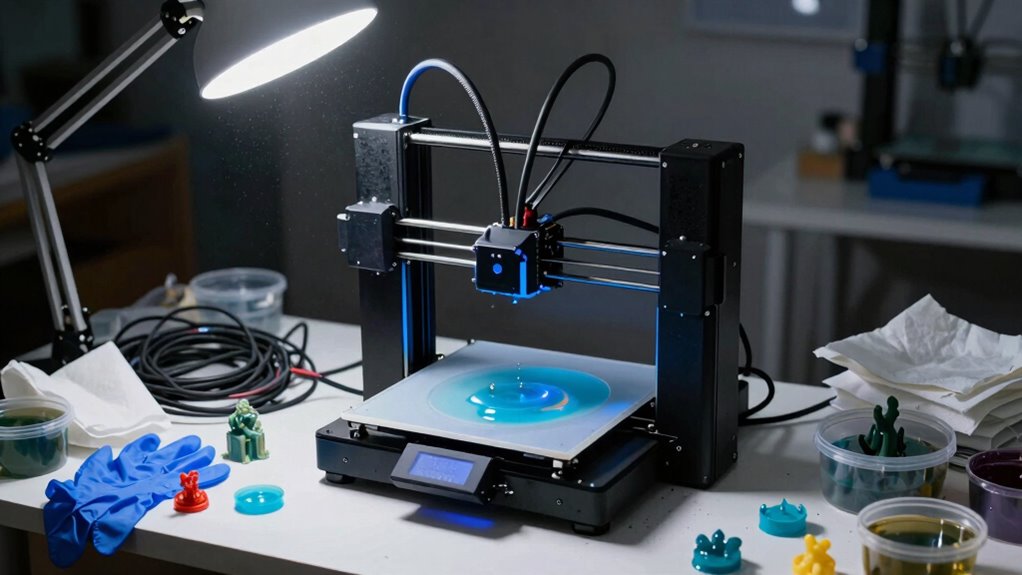
Resin printers offer high-resolution results and detailed prints, but they also bring unique workspace challenges that you need to address. One of the most immediate concerns is managing post-processing issues. Once your print is complete, you can’t just leave it as-is; it requires careful cleaning and curing. Handling the resin-coated models can be tricky, especially if you’re new to the process. You’ll need a dedicated area where spills and drips won’t cause damage. It’s essential to use gloves and protective gear to avoid skin contact, as uncured resin can be irritating or toxic. You also have to be prepared for the smell, which can be quite strong, so good ventilation is a must. Without proper workspace planning, resin handling can quickly become messy and unsafe, impacting not just your project but your health and environment.
The workspace setup should include a designated station for post processing. You’ll want a well-ventilated area with a smooth, non-porous surface for cleaning your prints. Isopropyl alcohol is typically used to remove excess resin, but it evaporates quickly and can be flammable, so keep it away from open flames or heat sources. Be mindful of spills—resin can be difficult to clean once it’s cured, so quick action is necessary to prevent permanent stains or damage. You might consider laying down protective mats or trays to catch drips, which simplifies cleanup and keeps your workspace tidy. Additionally, you’ll need proper storage for your resin bottles, keeping them sealed tightly to prevent spills or evaporation. Proper resin handling is crucial to maintaining a safe and efficient workspace. It’s not just about pouring resin into the printer; it’s about doing so safely and accurately. You’ll need to avoid overfilling or spilling, which can cause waste and cleanup headaches. When pouring resin, do it slowly and carefully, using tools like funnels if necessary. Always label your resin bottles clearly and store them in a cool, dark place to extend their shelf life. Proper environmental considerations can help you dispose of waste responsibly and minimize ecological impact. Understanding the hazards of uncured resin can further help you implement safety protocols and avoid health risks. Proper disposal methods should also be part of your workspace setup to ensure that waste resin and contaminated materials are handled correctly. Additionally, investing in protective gear such as respirators or masks can further ensure safety during the resin handling process. When you’re finished, make sure to cap the bottles securely to prevent leaks, and dispose of any waste resin according to local regulations. Proper resin handling minimizes waste, reduces hazards, and keeps your workspace cleaner.
As an affiliate, we earn on qualifying purchases.
Frequently Asked Questions
What Safety Equipment Is Recommended When Operating Resin Printers?
When operating resin printers, you should wear protective gloves to prevent skin contact with hazardous chemicals, and guarantee proper ventilation systems are in place to minimize inhalation of fumes. Always handle resin carefully, avoiding spills, and work in a well-ventilated area. Using these safety measures helps protect your health and keeps your workspace safe from resin-related hazards. Remember, safety should always come first when working with resin printers.
How Much Space Is Typically Needed for a Resin Printing Setup?
Think of your resin printing setup as a delicate ecosystem — it needs space to thrive. You’ll typically need about 2-3 square feet of clear workspace for the printer itself, plus extra room for workspace organization and resin storage. Keep your workspace tidy, with designated areas for resin bottles and tools, so you avoid spills and accidents. Proper spacing guarantees safety, efficiency, and a smoother printing experience.
Are There Environmental Concerns With Resin Disposal?
Yes, there are environmental concerns with resin disposal. You should practice eco-friendly disposal by carefully handling leftover resin and cleaning solutions, avoiding pouring chemicals down the drain. Always follow chemical safety guidelines to prevent contamination and health hazards. Use designated waste containers for cured resin and unused liquid resin, and check local regulations for proper disposal methods. This way, you minimize environmental impact and guarantee safety in your workspace.
How Do Resin Printers Compare in Speed to Filament Printers?
When it comes to print speed, resin printers often race ahead of filament ones. Resin printers, like swift sprinters, deliver detailed models in a fraction of the time, thanks to their layer-by-layer curing process. Filament printers chug along, building each layer more slowly. So, if you need quick, high-resolution results, resin printers are your lightning-fast choice, outpacing filament printers in speed and precision every time.
What Are the Most Common Maintenance Issues With Resin Printers?
You’ll often face maintenance issues like resin curing buildup, which can clog the vat or affect print quality, and print bed leveling problems that lead to failed prints. Regularly cleaning the resin vat prevents curing residue from hardening, and checking bed leveling ensures your prints stick properly. Staying on top of these tasks helps maintain peak performance, reducing downtime and improving your overall printing experience.
As an affiliate, we earn on qualifying purchases.
Conclusion
As you step back from your resin printer, the once pristine workspace now bears the silent proof to your craftsmanship—glossy drips, tangled cords, and scattered tools whisper of your dedication. The faint aroma of chemicals lingers like a ghost, reminding you of the delicate balance between innovation and chaos. Yet, with each challenge, you sculpt not just objects, but resilience, transforming your cluttered space into a crucible of creativity where precision meets perseverance.
isopropyl alcohol for resin cleaning
As an affiliate, we earn on qualifying purchases.
As an affiliate, we earn on qualifying purchases.
As an affiliate, we earn on qualifying purchases.