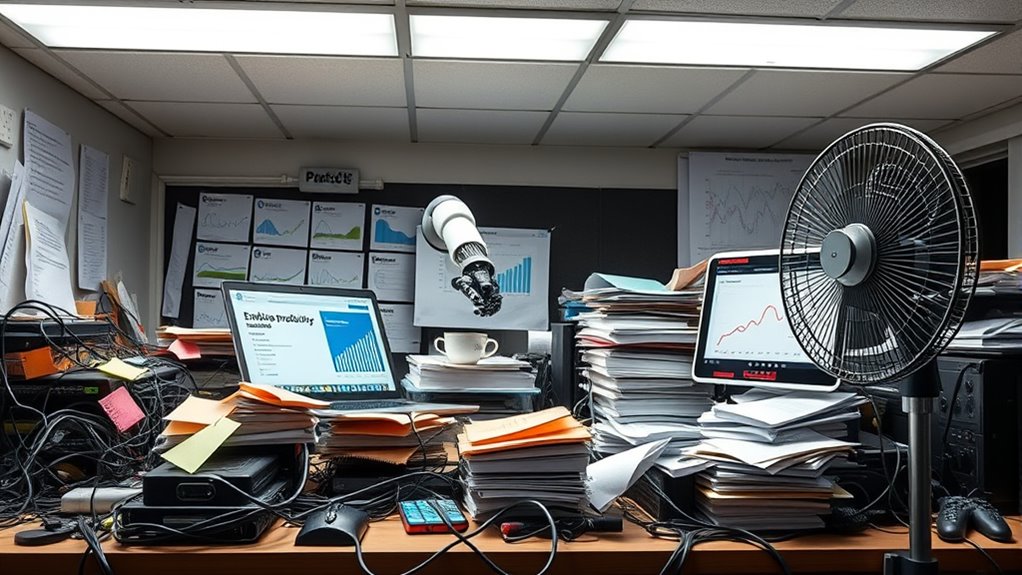

Relying too heavily on automation and productivity hacks can backfire by causing overlooked mistakes, erosion of human skills, and ethical issues like biased decisions. Overusing these tools might make tasks feel impersonal, reduce critical thinking, and lead to flawed outcomes. While automation promises efficiency, overdoing it can undermine quality and fairness. To avoid these pitfalls, it’s essential to strike a balance, and you’ll discover strategies to do just that as you explore further.
Key Takeaways
- Excessive automation can lead to loss of human skills and critical thinking abilities.
- Over-automation may cause errors if nuances and contextual insights are overlooked.
- Relying too heavily on productivity hacks can reduce empathy and personalized judgment.
- Automated systems might introduce biases, affecting fairness and decision accuracy.
- Balancing automation with human oversight ensures quality, ethical standards, and adaptability.
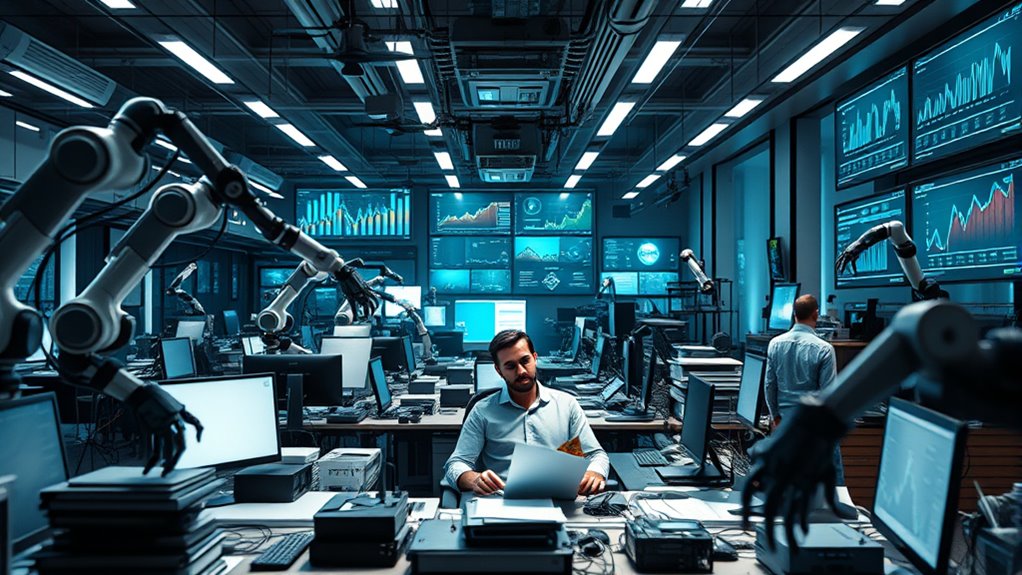
Is automation going too far? It’s a question many people are asking as technology continues to push into every corner of work and life. While automation promises increased efficiency and reduced errors, it can also lead to unforeseen consequences if not implemented thoughtfully. One major concern revolves around AI ethics, especially when automated systems replace tasks that once required human judgment. When you rely heavily on AI, you risk overlooking the nuances that manual processes handle better—like understanding context, detecting subtle errors, or making moral decisions. This shift can erode skills, create dependency, and even introduce biases if the algorithms aren’t carefully managed. As you automate more tasks, it’s *essential* to ask whether you’re sacrificing the human touch that *guarantees* fairness and accuracy. Moreover, a lack of color accuracy can sometimes cause misinterpretations of visual data, leading to flawed decisions or miscommunications. Automation’s push toward replacing manual processes isn’t inherently bad, but it can backfire if you ignore the importance of human oversight. Manual processes often involve critical thinking, ethical considerations, and complex problem-solving that automation can’t replicate. For example, in customer service, a chatbot might handle basic inquiries efficiently but could struggle with sensitive issues or nuanced questions that require empathy. If you over-automate in such areas, you risk alienating users or making decisions that lack moral judgment. Plus, excessive reliance on automation may cause you to lose sight of the bigger picture—missing out on the insights and creativity that humans bring to the table. When you neglect these aspects, the quality of your work can suffer, and errors might go unnoticed until it’s too late.
Furthermore, over-automation can lead to a disconnect from the fundamental principles of AI ethics. You might find yourself in situations where automated decisions impact people’s lives—like hiring, lending, or healthcare—without adequate human oversight. This can cause harm if biases embedded in algorithms go unchecked or if important context is ignored. It’s *imperative* to strike a balance: automate repetitive, mundane tasks, but keep humans involved where judgment, empathy, and moral reasoning are needed. By doing so, you preserve the integrity of your processes and uphold ethical standards. Additionally, understanding how contrast ratio influences image quality can help you better evaluate automated visual analysis systems used in security or quality control.
In the end, automation isn’t a one-size-fits-all solution. While it offers undeniable benefits, it’s easy to fall into the trap of overdoing it. Recognizing when manual processes are still *indispensable* helps you maintain quality, fairness, and ethical integrity. If you lean too heavily on automation, you risk losing the human insight that often makes your work meaningful and trustworthy. The key is to use automation wisely—leveraging its strengths without sacrificing the essential human elements that ensure responsible, ethical, and effective outcomes.
Frequently Asked Questions
How Do I Identify When Automation Has Become Counterproductive?
You’ll notice automation becomes counterproductive when over automation pitfalls emerge, such as increased errors or frustration. Watch for hidden productivity traps like overly complex workflows or loss of personal touch, which can slow you down. If tasks take longer or feel less satisfying, it’s a sign automation is backfiring. Regularly review your processes, and don’t hesitate to scale back or tweak automation to keep efficiency and quality intact.
What Are Signs of Burnout From Excessive Productivity Hacks?
Like a well-tuned engine, you might notice overload symptoms and a motivation decline when burnout hits. You feel drained despite constant activity, and your enthusiasm wanes. Your energy dips, tasks become overwhelming, and you struggle to stay focused. These signs warn that your productivity hacks are overworking you, turning your efficiency into exhaustion. Recognize these signals early, and give yourself permission to rest—otherwise, your drive could grind to a halt.
Can Automation Decrease Overall Work Quality?
Yes, automation can decrease your overall work quality if it leads to workflow fatigue or innovation stagnation. When you rely too heavily on automation, you might become complacent, missing out on essential details or creative problem-solving. This can cause errors, reduce engagement, and hinder improvement. To avoid this, balance automation with human oversight, regularly review processes, and stay open to innovative ideas to maintain high standards.
How Do I Balance Automation With Personal Touch?
Did you know that 78% of consumers value a personal connection with brands? To balance automation with personal touch, you should prioritize manual oversight for critical interactions, ensuring authenticity. Use automation to handle routine tasks, freeing up time to focus on building genuine relationships. This way, you maintain efficiency without sacrificing the personal touch that fosters trust and loyalty. Keep a human element at the core of your approach.
What Are the Risks of Dependency on Automation Tools?
Relying too much on automation tools can lead to workflow overload and automation fatigue, making you less adaptable and more dependent on technology. If your systems fail or become outdated, it’s harder to manage tasks manually, risking productivity dips. To avoid this, balance automation with personal effort, periodically review your tools, and stay engaged with your processes to maintain control and flexibility.
Conclusion
If you overload yourself with too many productivity hacks, you risk turning your workflow into a tangled web rather than a smooth highway. Automation can be a double-edged sword—helping you soar or trapping you in endless adjustments. Remember, like a tightrope walker balancing carefully, simplicity keeps you steady. Sometimes, less truly is more; don’t let the pursuit of efficiency turn into your own chaos. Find that sweet spot before automation becomes your undoing.