To build a minimalist productivity dashboard in Notion, start by organizing your workspace with only the essential components like tasks, deadlines, and goals, using clear headings and consistent formatting. Keep the layout simple with columns and sections, embedding calendars and reminders for seamless scheduling. Use a cohesive color scheme, minimal icons, and Automations to reduce clutter. Maintaining this clean setup boosts focus and efficiency—if you continue, you’ll discover how to streamline your workflow effortlessly.
Key Takeaways
- Keep the dashboard clutter-free by focusing only on essential tasks, goals, and calendars.
- Use consistent icons, neutral color schemes, and minimal visual elements to maintain a clean look.
- Organize content with sections, columns, and headings for intuitive navigation.
- Embed useful widgets like calendars and task lists, and automate repetitive tasks for efficiency.
- Regularly review and update the dashboard to remove outdated items and reflect current priorities.
Setting Up Your Notion Workspace for Minimalism
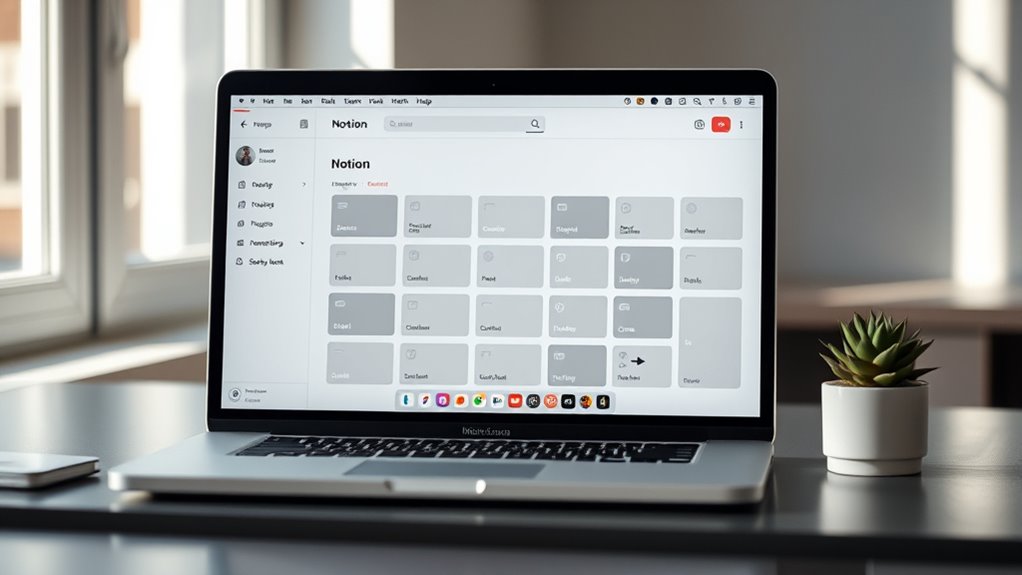
To create a minimalist productivity dashboard in Notion, you first need to set up a clean and uncluttered workspace. Focus on minimalist design principles by keeping your workspace organized and simple. Remove unnecessary pages or databases that don’t serve your core goals. Use clear headings and consistent formatting to enhance workspace organization, making it easier to navigate. Limit visual clutter by choosing a neutral color palette and avoiding excessive icons or decorations. A well-organized, minimal workspace helps you stay focused and reduces distractions. Remember, the goal is to create a calm environment that promotes productivity, not overwhelm. When your workspace is streamlined, it becomes easier to build a clean and effective dashboard later on. Incorporating Best Beaches into your planning can also inspire a relaxing and balanced workspace environment.
Choosing the Essential Components for Your Dashboard
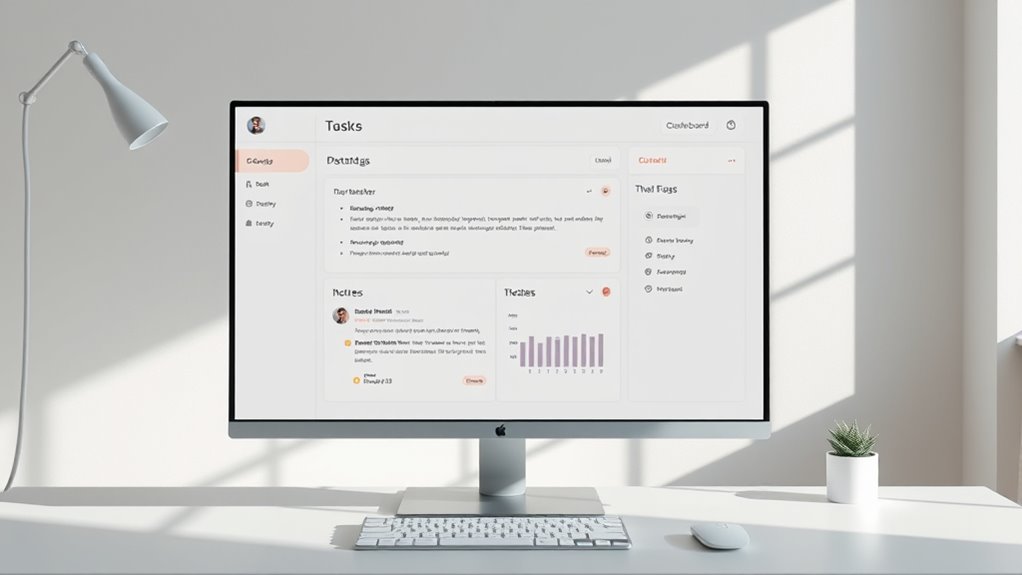
When designing your minimalist dashboard, focusing on only the most essential components guarantees it remains streamlined and effective. Use prioritization techniques to determine what truly matters—like daily tasks, upcoming deadlines, or key goals. Avoid clutter by selecting only the elements that support your productivity. Establish a clear visual hierarchy so important items stand out, guiding your attention naturally. Limit your components to essentials such as a task list, calendar, and quick links, ensuring each serves a purpose. Resist the temptation to include every possible feature; simplicity enhances focus. Regularly review and refine your components, removing anything non-essential. Incorporating contrast ratio considerations can further optimize your workflow, keeping your dashboard clean, functional, and aligned with your productivity goals. Additionally, considering breakpoints for responsiveness ensures your dashboard remains accessible and easy to use across various devices and screen sizes. To support your understanding of effective design principles, exploring Gold IRA concepts can offer insights into building resilient and adaptable systems. Recognizing breast cancer symptoms within your dashboard’s health tracking features can also promote early awareness and prompt action when necessary.
Creating a Clean Layout With Columns and Sections
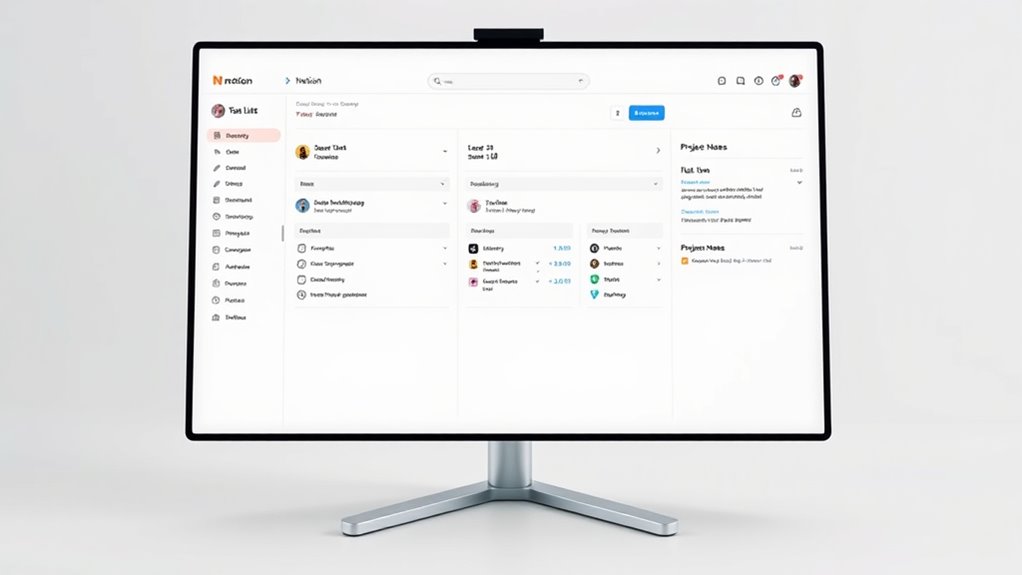
How can you organize your dashboard to maximize clarity and ease of use? Focus on creating a clean layout with columns and sections to enhance layout organization and establish a clear visual hierarchy. Start by:
Organize your dashboard with columns and sections for a clear, user-friendly layout.
- Dividing your page into columns for different areas like tasks, notes, and calendars.
- Using sections to group related items and reduce clutter.
- Applying consistent spacing to improve readability.
- Incorporating headings to guide the eye and emphasize priorities.
- Consider incorporating visual hierarchy principles to further improve the readability and effectiveness of your layout. Additionally, paying attention to design consistency helps maintain a cohesive look and feel throughout your dashboard. Recognizing the importance of resources and tools can also influence how you organize and access information quickly, ensuring your dashboard supports efficient workflows. This structure helps users scan information quickly, making your dashboard intuitive. By thoughtfully arranging content with columns and sections, you create a streamlined experience that highlights what matters most. A well-organized layout not only looks clean but also boosts productivity by reducing visual noise.
Adding and Customizing Task Lists and To-Do Items

Building on your organized layout, adding and customizing task lists and to-do items helps keep your dashboard functional and personalized. Start by creating checkboxes for quick task completion, then add properties like due dates, priority levels, or tags to enhance task prioritization. Use color coding or icons to visually differentiate between high, medium, and low-priority tasks. Incorporate progress tracking by adding status columns such as “Not Started,” “In Progress,” and “Completed,” allowing you to monitor your workflow at a glance. Regularly updating and customizing these task lists ensures your productivity system remains efficient, helping you stay on top of your goals with clarity and ease. Paying attention to filtering and sorting options can further improve task management and focus on the most urgent items. Additionally, understanding website performance metrics can help you identify areas for improvement in your dashboard’s usability and effectiveness. Recognizing relationship dynamics can also help you prioritize tasks related to personal or professional connections, ensuring balanced progress across different aspects of your life. Furthermore, implementing security features can safeguard your sensitive information as you customize your dashboard. Moreover, integrating digital literacy principles into your task management can foster responsible and informed use of your digital tools.
Incorporating Calendar and Reminder Features
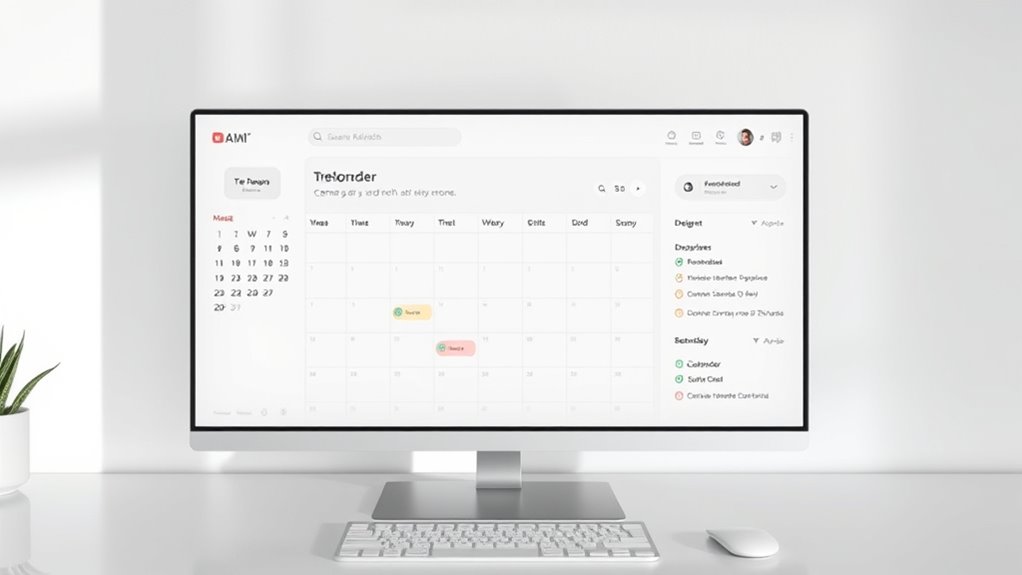
You can make your dashboard more effective by syncing your calendar seamlessly so your schedule stays up-to-date. Setting reminders thoughtfully guarantees you never miss important tasks, while customizing notifications keeps you informed without distraction. Incorporating visual interest through aesthetic elements can also enhance your overall productivity environment. Utilizing user experience (UX) optimization techniques ensures your files remain accessible and clutter-free, further streamlining your workflow. Additionally, understanding ergonomics principles can help you design a workspace that promotes comfort and reduces fatigue during long work sessions. To maximize efficiency, understanding market research can help tailor your setup to best suit your personal or professional needs. Let’s explore how to optimize these features for a streamlined, minimalist setup.
Syncing Calendar Efficiently
Syncing your calendar efficiently is essential to keeping your productivity dashboard up-to-date and reliable. To optimize calendar integration and maximize syncing automation, consider these steps:
- Use built-in integrations with platforms like Google Calendar or Outlook for seamless updates.
- Enable automatic syncing to prevent manual updates and ensure real-time data.
- Connect your calendar to Notion through third-party tools like Zapier or Automate.io for customized workflows.
- Regularly review sync settings to avoid duplicates or missed events.
- Detect passive voice in your calendar notifications to improve clarity and engagement.
- Incorporate space maximization techniques to ensure your calendar entries and notifications are clear and well-organized.
- Make sure your calendar is configured to data privacy settings to protect sensitive information during synchronization.
- Stay informed about AI-powered features that can further enhance your calendar management and automation capabilities.
Setting Reminders Effectively
To guarantee you never miss important tasks or deadlines, setting reminders effectively is essential, especially when integrating calendar and reminder features. Use these tools to enhance task prioritization by assigning deadlines and alerts that reflect your urgency levels. Clear, specific reminders help you focus on high-priority items and prevent overwhelm. Incorporate habit tracking into your reminders by setting regular alerts for daily or weekly routines, reinforcing consistency. Keep your reminders simple and actionable, avoiding overload or vague prompts. Regularly review and adjust reminders to match your evolving goals and workload. By doing so, you ensure your schedule stays organized, habits stay on track, and you maintain a steady flow of productivity without unnecessary distractions.
Customizing Notifications
Customizing notifications makes certain that your reminders and calendar alerts effectively support your workflow. Proper alert customization allows you to control when and how you’re notified, ensuring you stay focused without unnecessary interruptions. To optimize this, consider:
- Prioritizing notifications based on importance to avoid alert fatigue.
- Setting different alert types (sound, pop-up, email) for various tasks.
- Customizing notification timing to receive reminders at the right moment.
- Using notification filters to focus on high-priority items first.
Using Icons and Covers for Visual Simplicity

Choosing the right icons and covers can make your dashboard more intuitive and clean. Focus on simple, meaningful images that match your workflow, and keep them consistent throughout. This approach helps create a visually cohesive space that boosts your productivity.
Icon Selection Tips
Using icons and covers thoughtfully can instantly streamline your Notion workspace, making it easier to identify and access your pages at a glance. To choose effective icons, consider these tips:
- Use emoji symbolism that clearly represents each page’s purpose, helping your brain quickly associate visuals with content.
- Select icon colors based on color psychology to evoke the right mood—blue for calm, green for growth, etc.
- Keep icons simple and consistent, avoiding overly complex or distracting images.
- Limit your palette to maintain visual simplicity, preventing your workspace from feeling cluttered.
Cover Image Strategies
To achieve visual simplicity in your Notion workspace, selecting the right cover images and icons is essential. Focus on minimalist cover design by choosing plain, muted colors or subtle textures that don’t distract from your content. When it comes to cover image placement, keep it consistent and aligned with your overall aesthetic—avoid clutter or overly busy images. Use icons that are simple and clear, complementing your cover choices without overwhelming the page. Consistent spacing and careful selection help create a clean, cohesive look. Remember, the goal is to enhance readability and focus, so opt for covers and icons that add visual interest without sacrificing minimalism. This approach keeps your dashboard streamlined and user-friendly.
Visual Consistency Tips
Maintaining visual consistency across your Notion pages guarantees your workspace looks cohesive and polished. To achieve this, use icons and covers strategically for visual simplicity.
- Select icons that match your overall color harmony, creating a unified look.
- Choose covers with complementary tones to reinforce your color palette.
- Stick to consistent font pairing for headings and body text to enhance readability.
- Limit your cover images and icons to a few styles or color schemes for a clean, minimalist aesthetic.
These practices help streamline your workspace, making it easier to focus. Using icons and covers thoughtfully reduces visual clutter, reinforces your color harmony, and ensures your design remains simple yet effective.
Embedding Useful Widgets and External Links
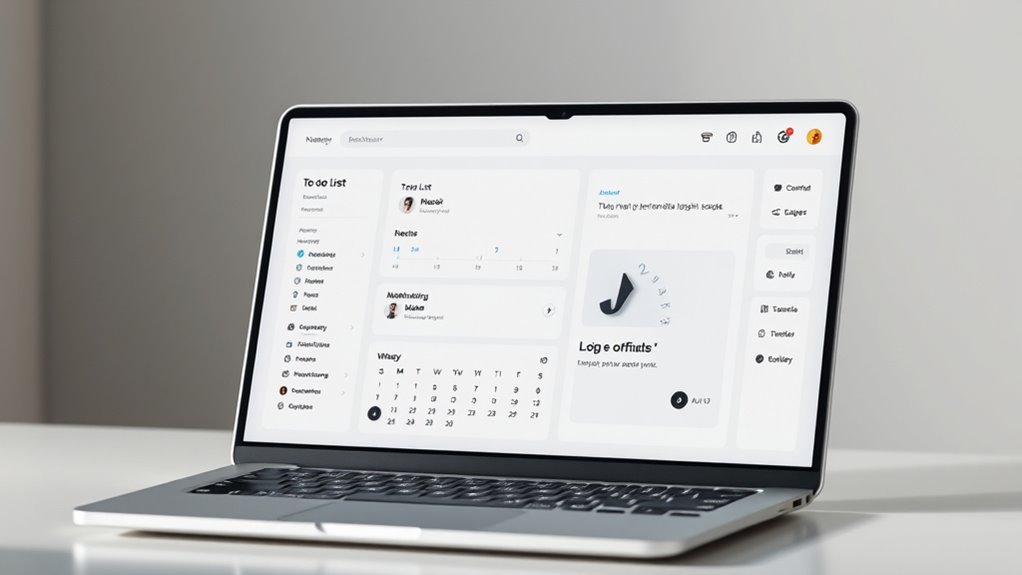
Have you ever wanted to access important tools or information directly within your Notion dashboard? Embedding useful widgets and external links makes this possible, streamlining your workflow. By integrating widgets like weather, calendars, or task managers, you enhance functionality without clutter. External links connect you to resources or tools outside Notion, keeping everything in one place. Here’s a simple visual to clarify:
| Widget Integration | External Links |
|---|---|
| Adds real-time data | Connects to web resources |
| Saves time | Keeps your workspace unified |
| Enhances productivity | Access outside tools easily |
| Customizable | Centralizes information |
| Minimalist design | Maintains clean aesthetic |
This setup creates a seamless, efficient dashboard that consolidates your essential tools and links.
Applying Consistent Color Schemes and Typography
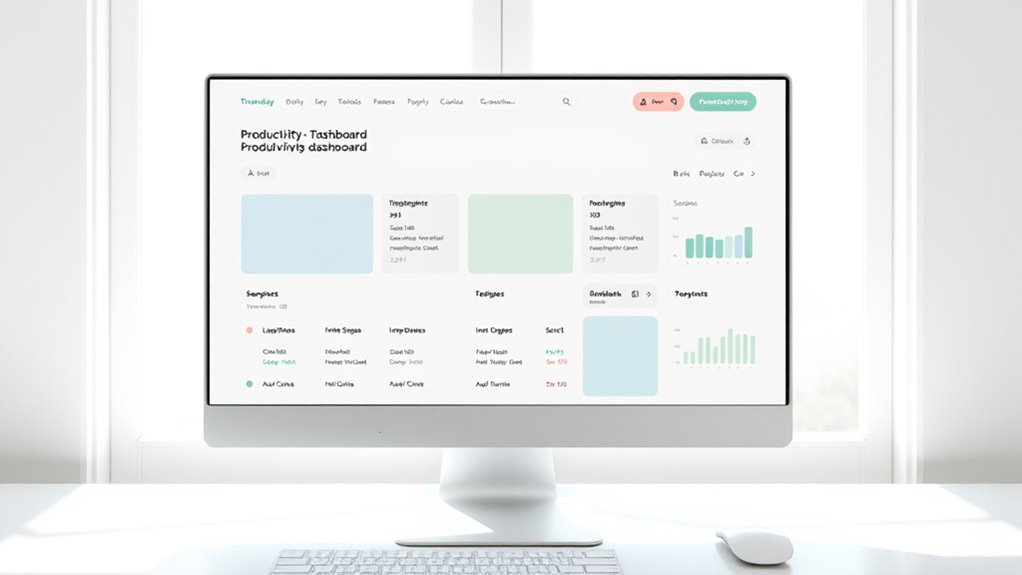
Applying a consistent color scheme and typography across your Notion dashboard is essential for creating a cohesive and professional look. Focus on establishing a clear color harmony by selecting a limited palette that complements your content. Use typography pairing to differentiate headings, subheadings, and body text, enhancing readability. Here are key steps to achieve this:
Consistent colors and fonts create a polished, cohesive Notion dashboard that enhances readability and professionalism.
- Choose a primary color palette that reflects your style and sticks to 2-3 main colors.
- Apply consistent typography styles for headings, body, and accents to maintain visual order.
- Use contrast intentionally—darker text on light backgrounds for clarity.
- Avoid unnecessary font variations to keep your dashboard simple and unified.
Streamlining Your Workflow With Templates and Automations
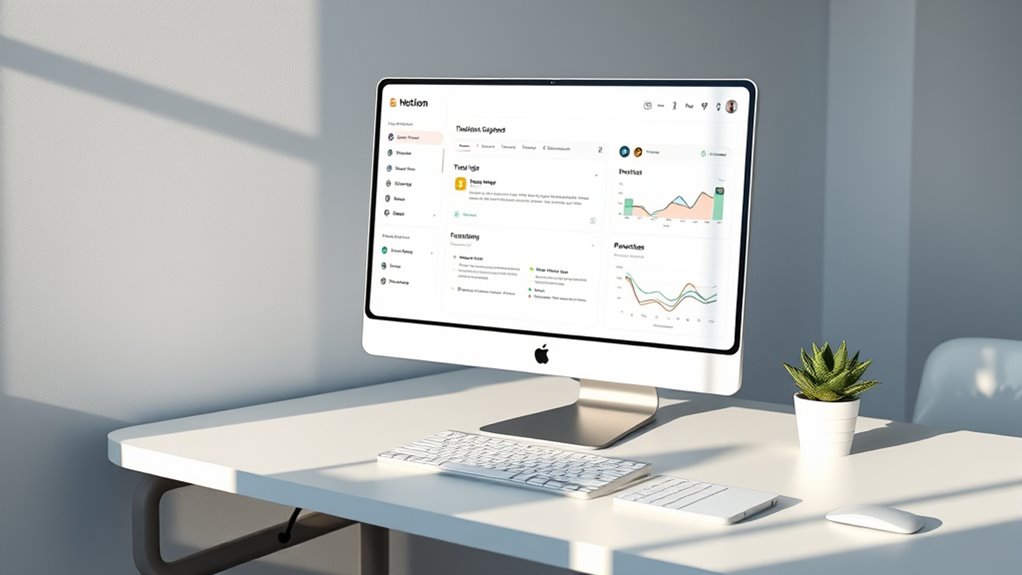
Are you looking to save time and reduce manual effort in your Notion workflow? Templates and automations are your best tools. Use templates to quickly set up recurring pages like task lists or habit trackers, ensuring consistency and efficiency. Automations can remind you of upcoming deadlines or daily habits, keeping you on track without extra effort. Streamlining your task prioritization becomes easier when you create custom templates for urgent, important, and routine tasks. Habit tracking templates automatically log your progress, helping you stay accountable. By integrating these features, you eliminate repetitive setup and manual updates, making your dashboard more streamlined and effective. Automations keep your workflow smooth, so you can focus on what matters most—productivity, not process.
Tips for Maintaining a Clutter-Free and Focused Dashboard

To keep your dashboard uncluttered and focused, it’s essential to adopt intentional organization strategies. Digital decluttering helps prevent overwhelm, while a minimalist design ensures only essential info is visible. Here are four tips:
Maintain a clean, focused dashboard with intentional organization and regular decluttering.
- Limit widgets and sections to essentials only, avoiding unnecessary clutter.
- Regularly review and remove outdated or irrelevant content.
- Use consistent iconography and color schemes to streamline visual flow.
- Set aside time weekly to tidy your dashboard, maintaining its simplicity.
Frequently Asked Questions
Can I Customize My Dashboard for Multiple Devices?
Yes, you can customize your dashboard for multiple devices. Notion’s device synchronization guarantees your updates stay consistent across all gadgets. Its responsive design adapts seamlessly, making your dashboard look and function well on smartphones, tablets, and desktops. You can create a streamlined experience tailored to each device, ensuring easy access and usability wherever you are. This flexibility helps you stay productive without compromising your preferred layout or features.
How Do I Keep My Dashboard Updated Automatically?
To keep your dashboard updated automatically, set up an automation with Notion’s API or third-party tools like Zapier or Automate.io. Use sync strategies that connect your data sources regularly, ensuring changes update in real time or at scheduled intervals. This way, your dashboard stays current without manual effort, allowing you to focus on your tasks while automation handles the updates seamlessly.
Is It Possible to Share My Dashboard With Others?
Did you know that over 60% of Notion users collaborate seamlessly? Yes, you can share your dashboard with others easily. Adjust sharing permissions to control who can view or edit. Use collaboration features like comments and real-time editing to work together smoothly. Simply invite others via email or share a link with permissions set. This makes teamwork more efficient and keeps your dashboard flexible for shared projects.
What Are Some Common Mistakes to Avoid in Minimalism?
To avoid common mistakes in minimalism, steer clear of visual clutter and feature overload. Keep your dashboard simple by only including essential elements that serve your productivity goals. Regularly review and remove unnecessary items to maintain clarity. Focus on clean layouts and consistent design, which help you stay organized without feeling overwhelmed. Remember, less is more—prioritize quality over quantity to create an effective, minimal workspace.
How Do I Integrate Third-Party Apps Into Notion?
To integrate third-party apps into Notion, you should explore API integrations and widget embedding. Use API integrations to connect external apps directly with Notion, enabling seamless data flow. For quick access, embed widgets like calendars or task managers into your dashboard. This approach keeps your workspace minimalist and functional, allowing you to customize your productivity tools without cluttering your interface. Just make certain the apps support these integration methods for smooth setup.
Conclusion
With your minimalist dashboard in Notion now shining like a well-tuned instrument, you’re ready to play your productivity symphony with clarity and focus. Keep it clean and simple, like a clear sky on a sunny day, and let it guide your daily tasks effortlessly. Regularly refine and update your workspace to guarantee it stays a sleek, powerful tool that helps you stay on track without clutter. Your productivity masterpiece is just a click away!