Whether you need blue light glasses or screen filters depends on your habits and sensitivity. If you spend long hours in front of screens or struggle with eye discomfort and sleep issues, these tools might help reduce eye strain and support better sleep. However, practical strategies like adjusting brightness, taking breaks, and limiting evening screen time can often be enough. Keep exploring to discover if and how these options might benefit you.
Key Takeaways
- Scientific evidence on the long-term benefits of blue light glasses and filters is inconclusive.
- They may reduce digital eye strain and improve sleep for some individuals with sensitivity.
- Practical strategies like taking breaks and adjusting screen settings are cost-effective alternatives.
- Consider personal needs, existing eye conditions, and professional advice before investing in protection devices.
- Durability, style, and affordability vary; choose options that fit your lifestyle and budget for better value.
Understanding Blue Light and Its Sources
Blue light is a high-energy, short-wavelength light that comes from both natural and artificial sources. You encounter blue light daily through sunlight and various blue light sources, such as LED screens, smartphones, tablets, and computer monitors. These artificial sources emit significant amounts of blue light, which can impact your eye health over time. While natural sunlight provides beneficial effects, excessive exposure to artificial blue light may cause eye strain and discomfort. Understanding where blue light originates helps you make informed decisions about protecting your eyes. Recognizing the sources of blue light allows you to manage your screen time and consider protective measures, especially if you spend long hours in front of digital devices, to maintain ideal eye health. Additionally, knowing about high-energy light can help you understand the potential risks associated with prolonged exposure, including digital eye strain, which has become increasingly common among frequent screen users. As technology continues to evolve, the market for blue light protection products is expanding, offering various options to reduce blue light exposure and support eye health. For example, some screen filters are designed to block or reduce blue light emissions, providing an extra layer of protection during long screen sessions. It is also useful to learn that blue light blocking glasses can be an effective way to minimize exposure, especially during extended periods of screen use.
How Blue Light Affects Your Eyes

Have you ever noticed your eyes feeling tired or sore after hours of screen time? That’s often a sign of eye fatigue caused by digital overload. Blue light, emitted from screens, penetrates deep into your eyes and can strain your visual system. Prolonged exposure may lead to discomfort, dryness, and blurred vision, making your eyes work harder than they should. This strain is a direct result of your eyes compensating for the constant glare and focus shifts when looking at digital devices. Over time, this can cause increased fatigue and discomfort, especially if you don’t take breaks. While blue light isn’t the only factor, it plays a significant role in how your eyes respond during extended screen use. Managing exposure can help reduce these symptoms. Additionally, Chevrolet Tuning techniques can optimize the performance of your vehicle, similar to how managing blue light exposure can improve your eye health. Incorporating screen time management strategies and using blue light filters can further mitigate eye strain and support overall eye health. Being mindful of your digital habits can also contribute to long-term eye comfort and wellbeing. Recognizing the importance of protective strategies like proper lighting and screen positioning can further reduce eye strain during prolonged use. Furthermore, staying aware of ergonomic adjustments can make a significant difference in minimizing eye fatigue.
The Potential Impact on Sleep and Circadian Rhythms
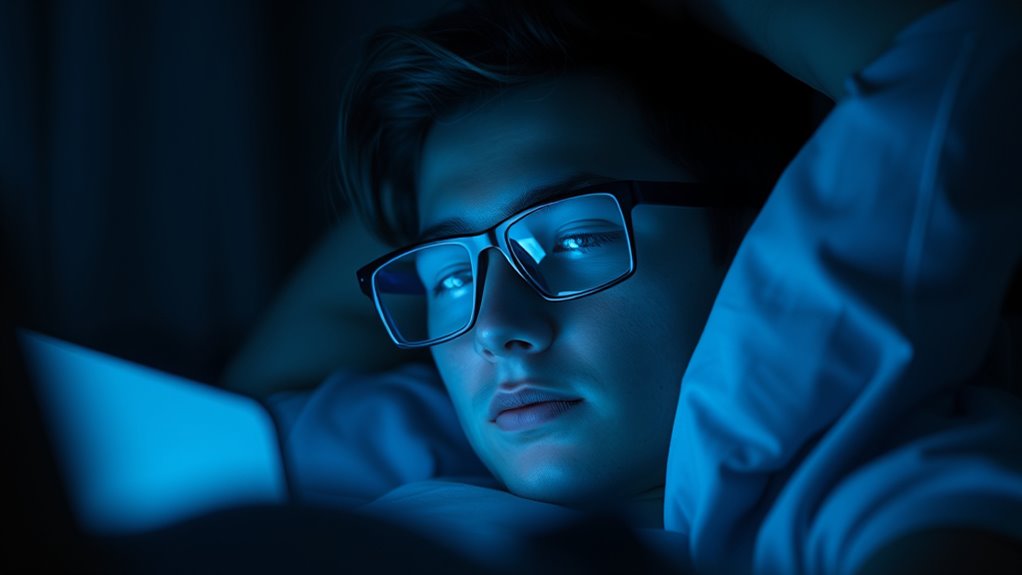
Did you know that exposure to blue light before bed can profoundly disrupt your sleep patterns? Blue light suppresses melatonin production, making it harder for you to fall asleep and stay asleep. This sleep disruption can lead to poorer sleep quality and daytime fatigue. Over time, frequent exposure can cause circadian misalignment, where your internal clock no longer matches the natural day-night cycle. When your circadian rhythms are out of sync, you might experience difficulties with alertness, mood, and overall health. The impact is especially noticeable if you use screens late at night, as blue light signals your brain that it’s daytime. Protecting your sleep environment by limiting blue light exposure before bed can help preserve your circadian rhythms and improve sleep quality. Additionally, understanding how light exposure influences circadian rhythms can help you make more informed decisions about your screen habits. Being mindful of sleep hygiene practices can further support your overall sleep health and well-being. Recognizing the importance of blue light filtering tools can also be beneficial in reducing exposure during evening hours. Incorporating remote hackathons or other virtual activities can provide engaging alternatives that don’t interfere with your sleep schedule, especially when done earlier in the day.
What Are Blue Light Glasses and Screen Filters?

Ever wonder how to reduce your exposure to blue light from screens? Blue light glasses and screen filters are designed for this purpose. Blue light glasses look like regular eyewear but have special coatings that block or filter blue light. Screen filters are physical overlays or software apps that you apply to your devices. To help you visualize, here’s a simple comparison:
| Feature | Blue Light Glasses | Screen Filters | Effectiveness |
|---|---|---|---|
| Appearance | Wear over your eyes | Attach or install on devices | Blocks blue light directly |
| Usage | During screen time | Before or during use | Reduces eye strain |
| Portability | Easy to carry around | Fixed to device | Convenient and versatile |
Both options aim to protect your eyes from blue light exposure and improve comfort during screen use. Additionally, understanding how blue light affects sleep can help you decide which option is best for your needs. Considering screen brightness and viewing habits can further enhance eye comfort while using digital devices. Being mindful of digital eye strain can also guide your choices in using protective tools effectively. Furthermore, some studies suggest that blue light filters may have varying levels of effectiveness depending on the design and implementation. Moreover, selecting the right blue light protection method depends on your personal preferences and daily routines.
Scientific Evidence Supporting Blue Light Protection
Scientific studies have investigated whether blue light protection devices truly reduce eye strain and improve sleep quality. While research on blue light and eye health continues, some findings suggest potential benefits. Here are key points from blue light research:
Research indicates blue light protection devices may help reduce eye strain and support better sleep, but findings are mixed.
- Certain studies show blue light blocking glasses can decrease eye strain during prolonged screen use. blue light exposure
- Some evidence indicates these devices may help regulate melatonin, supporting better sleep.
- Research is mixed; not all studies find significant improvements in eye health or sleep quality.
- Variability in study quality makes it hard to draw definitive conclusions about their effectiveness.
- Study quality varies across research, which impacts the reliability of the findings.
Limitations and Criticisms of Blue Light Blocking Devices

While some studies suggest blue light blocking glasses may reduce eye strain and improve sleep, there are notable limitations to their effectiveness. One major concern is device durability; cheap or poorly made glasses can break easily, reducing their long-term value. Additionally, fashion trends heavily influence their design, so you might find styles that quickly go out of fashion, making them feel outdated or less appealing over time. The actual blue light blocking capability varies between products, and some glasses only filter a small percentage of blue light, which may limit their benefits. Moreover, these devices don’t address other causes of eye strain, like poor lighting or extended screen time. Material quality also plays a crucial role in their performance and longevity. Additionally, the design and construction of the glasses can impact their effectiveness and comfort during prolonged wear. Blue light filtering efficiency varies across brands, impacting their overall effectiveness. Overall, while they might help, blue light blocking glasses aren’t a perfect, foolproof solution, especially considering the limitations of current technology.
Practical Tips for Reducing Blue Light Exposure
Reducing your blue light exposure doesn’t have to rely solely on special glasses or filters. Instead, focus on practical changes to your screen time habits and boost your eye health awareness. Here are some tips:
- Limit screen time before bed to reduce strain and improve sleep quality.
- Use the 20-20-20 rule: every 20 minutes, look at something 20 feet away for at least 20 seconds.
- Adjust screen brightness and contrast to comfortable levels.
- Take regular breaks from digital devices to give your eyes a rest.
Implementing these habits helps protect your eyes naturally and establishes healthier screen interactions, making eye health a priority without needing extra accessories.
Are Blue Light Accessories Necessary for Everyone?

Not everyone experiences the same level of eye strain from screens, so blue light accessories might not be essential for you. Your personal sensitivity, including existing eye conditions, plays a big role in whether these tools are worth considering. Understanding your needs can help you decide if blue light glasses or filters are a necessary part of your routine.
Eye Strain Reduction
Many people experience eye strain after long hours in front of screens, but whether blue light glasses or filters are necessary for everyone remains a topic of debate. To reduce eye strain and protect your eye health, consider these tips:
- Take regular breaks using the 20-20-20 rule: look at something 20 feet away for 20 seconds.
- Adjust your screen brightness to match ambient lighting.
- Use blue light filters or glasses if you notice persistent discomfort.
- Maintain proper screen distance to lessen eye fatigue.
While blue light contributes to eye strain, other factors like screen time duration and lighting conditions also play roles. Prioritizing these habits can help you minimize eye strain, whether or not you use blue light accessories.
Personal Sensitivity Factors
While adopting healthy screen habits can help reduce eye strain for most people, individual sensitivity to blue light varies considerably. Some individuals experience significant eye discomfort, headaches, or sleep disruptions even with minimal exposure, highlighting the importance of personal eye health awareness. If you notice increased eye fatigue or trouble sleeping, blue light accessories might benefit you. Conversely, others may tolerate screens well without extra protection. Your level of sensitivity often depends on factors like eye health, existing visual conditions, and how much you rely on screens daily. Be cautious of becoming overly dependent on blue light filters or glasses, which can contribute to technological dependence. Ultimately, assess your own response to screen time and consult with an eye care professional to determine if these accessories are necessary for you.
Cost-Effectiveness and Alternatives to Blue Light Protection

Considering the costs associated with blue light glasses and screen filters, it’s important to evaluate whether they offer good value for your money. While they can reduce blue light risk, the blue light benefits may not justify the expense for everyone. Here are some alternatives to contemplate:
- Adjust screen brightness and contrast to reduce eye strain.
- Take regular breaks using the 20-20-20 rule (every 20 minutes, look 20 feet away for 20 seconds).
- Enable built-in blue light reduction features on your devices.
- Practice good sleep hygiene and limit screen time before bed.
These options are often more cost-effective and can still help minimize blue light exposure, allowing you to balance protection with your budget.
Making an Informed Decision About Blue Light Gear

When choosing blue light gear, it’s important to contemplate the scientific evidence supporting their benefits. Your personal lifestyle, like screen time and work habits, also influences what options are best for you. Additionally, think about your budget and how accessible different products are to make an informed decision.
Scientific Evidence Overview
Scientific research on blue light glasses and screen filters offers mixed results, making it essential to evaluate the available evidence carefully. Some studies suggest blue light may contribute to digital eye strain, while others find minimal impact on visual health. To help you understand the current landscape, consider these key points:
- Evidence on blue light’s effect on sleep quality is inconclusive.
- Some research indicates potential for reducing eye strain, but results vary.
- No definitive proof shows blue light causes long-term damage to your eyes.
- The overall scientific consensus remains uncertain about the necessity of blue light gear for maintaining visual health.
Personal Lifestyle Factors
Your daily habits and environment play a significant role in determining whether blue light glasses or screen filters are worth investing in. If you spend long hours at a desk, poor workplace ergonomics can strain your eyes and make blue light protection more beneficial. Conversely, if you mostly work outdoors or get ample natural sunlight, your exposure to blue light is likely lower, reducing the need for specialized gear. Consider how often you stare at screens versus spending time outside. If outdoor exposure is frequent, natural light may offset some blue light concerns. Additionally, your overall lifestyle—such as screen time duration and sleep quality—affects your decision. By evaluating these personal factors, you can make a more informed choice about whether blue light glasses or filters suit your needs.
Cost and Accessibility
Deciding whether to invest in blue light glasses or screen filters often depends on their cost and how easily you can access them. You’ll want to contemplate:
- Price range—from affordable options to premium models with extra features.
- Screen durability—some filters are built into devices, making them less prone to damage.
- Fashion considerations—glasses come in various styles; if fashion matters, you might prefer trendy frames.
- Accessibility—online stores and local shops offer different selection levels, impacting your ability to find what suits your needs quickly.
Balancing cost with accessibility helps you choose gear that fits your budget and lifestyle. Remember, investing in quality might cost more upfront but can save you money long-term, especially if durability and style are priorities.
Frequently Asked Questions
Are Blue Light Glasses Suitable for Children and Teenagers?
Blue light glasses can be suitable for children and teenagers if you’re concerned about child safety and teenage eye health. They may help reduce eye strain from prolonged screen time and protect developing eyes. However, it’s crucial to set healthy screen habits first. Consult an eye care professional to determine if your child needs them, and make sure they’re used properly alongside other eye protection strategies for maximum safety.
How Long Should I Wear Blue Light Glasses Daily?
You should wear blue light glasses for about 2-3 hours daily, especially if your screen time is high. During this period, focus on screen time reduction and practice good eye health habits, like taking regular breaks and maintaining proper distance. Wearing them consistently helps minimize eye strain and protect your vision, but remember, they’re just one part of a holistic eye care routine for long-term eye health.
Can Blue Light Filters Improve Digital Eye Strain Instantly?
Blue light filters can provide some instant relief from digital eye strain by reducing glare and eye fatigue. While blue light filter efficacy varies for each person, many notice a quick improvement in discomfort after applying them. Keep in mind, though, that they aren’t a cure-all; combining filters with regular breaks and proper screen habits maximizes relief. So, yes, you might experience some instant benefits, but ongoing eye care remains essential.
Do All Screens Emit the Same Amount of Blue Light?
Not all screens emit the same amount of blue light. You’ll find differences in screen emission, with some devices emitting more blue light across the spectrum than others. For example, smartphones and tablets often emit higher levels, while e-readers and some monitors emit less. You should consider the blue light spectrum each screen produces, as this helps determine your exposure and whether protective measures like glasses or filters are necessary.
Are There Any Side Effects From Using Blue Light Blocking Devices?
Using blue light blocking devices can cause potential eye irritation or sleep disruption in some people. You might notice dryness or discomfort if your eyes strain from the filters or glasses. Additionally, blocking blue light may interfere with your natural sleep cycle, especially if you use them late at night. While generally safe, it’s best to monitor how your eyes and sleep patterns respond and adjust use accordingly.
Conclusion
While only about 20% of people experience eye strain from screens, nearly 70% report sleep issues linked to blue light exposure. Whether you need blue light glasses depends on your habits, but staying mindful of your screen time and taking breaks can make a difference. Before investing, weigh the scientific evidence and consider affordable alternatives. Making informed choices helps protect your eyes and sleep without unnecessary expenses.