Choosing between a laptop and a desktop depends on your work habits, space, and future needs. If you prioritize mobility and flexible work setups, a laptop’s portable design is ideal. But if you need better performance, ergonomic options, and easy upgrades, a desktop may serve you better. Consider your workspace constraints and long-term plans to make the best choice. Continue exploring, and you’ll find helpful tips to optimize your workstation setup.
Key Takeaways
- Assess your work tasks and preferred workspace setup to determine if portability or a fixed ergonomic station is more suitable.
- Consider space constraints and mobility needs; laptops offer flexibility, desktops provide stability and expandability.
- Evaluate performance requirements; desktops generally support higher power, better graphics, and easier upgrades.
- Balance budget and long-term investment; desktops often deliver more value for demanding tasks at a lower initial cost.
- Prioritize ergonomic comfort and workspace environment to choose a device that enhances productivity and reduces strain.
Assessing Your Work Needs and Usage Patterns

Before choosing between a laptop or desktop, it’s essential to evaluate how you plan to use your computer. Consider your typical work tasks and how long you spend at your workstation. An ergonomic setup is vital for comfort and productivity, so think about how easily you can adjust your workspace with each option. If you need multiple peripherals like a printer, external monitor, or specialized devices, peripheral compatibility becomes a key factor. Desktops generally offer better support for various peripherals and ergonomic configurations, making them ideal for long hours of work. Additionally, content ownership rights are often contentious between AI giants and creators, which underscores the importance of understanding device capabilities and limitations. Laptops, while portable, may limit your ability to set up an ergonomic workspace or connect multiple devices easily. Assessing these needs upfront helps you choose a device that fits your work habits and maximizes efficiency. Additionally, passive voice detection tools can help you improve your writing clarity by highlighting passive constructions to revise.
Evaluating Space and Portability Requirements

When deciding between a laptop and a desktop, evaluating your available space and portability needs is essential. If your home office is small or shared, a laptop offers the advantage of flexibility, making remote work easier without cluttering your space. It also allows you to work comfortably from different areas, supporting an ergonomic setup tailored to your needs. On the other hand, desktops require a dedicated space, which is ideal if you prefer a stable workstation and don’t need to move your setup often. Consider how often you’ll need to relocate your workstation or adjust your workspace for better ergonomics. Your choice should align with your space constraints and how portable you need your workstation to be for a productive, comfortable remote work environment.
Comparing Performance and Upgradability Options
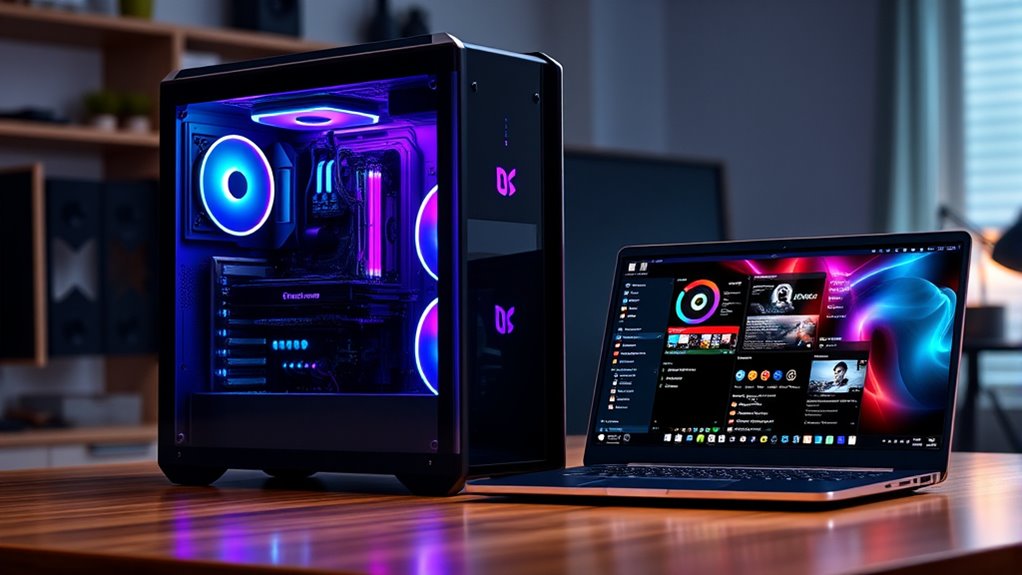
Performance and upgradability are key factors to contemplate when choosing between a laptop and a desktop. Desktops typically offer superior graphics capabilities, making them ideal for tasks like gaming or graphic design. They also tend to be more upgradable, allowing you to swap out components such as RAM, storage, or even the graphics card to boost performance over time. Power tools and heavy‑duty equipment are essential for building or upgrading PCs safely and efficiently. Laptops, on the other hand, usually have limited upgrade options but excel in battery life, giving you portability and longer usage away from power outlets. If you prioritize raw power and future-proofing, a desktop is the better choice. However, if you need flexibility and mobility, a laptop’s performance might meet your needs, even if it means sacrificing some upgradability.
Considering Budget and Long-Term Investment

Budget considerations play a crucial role in deciding between a laptop and a desktop, as initial costs and ongoing expenses can vary markedly. When comparing prices, look beyond the sticker price by examining price comparisons across different brands and models. While desktops often offer more power for a lower upfront cost, laptops provide portability that can justify a higher price. Consider brand reputation too; established brands may cost more but often deliver better durability and support, making them a smarter long-term investment. Think about your long-term needs—upfront savings might lead to higher maintenance or replacement costs later. Additionally, understanding the long-term performance of your workstation can help ensure it remains capable of handling your evolving work requirements. Investing in a workstation with reliable hardware components can significantly reduce the risk of breakdowns and repair costs down the line. It’s also important to consider the upgradeability of your chosen device, as desktops often provide more options for future enhancements. Moreover, assessing the hardware longevity can help predict how well your device will perform over time, saving money and hassle in the long run. Being aware of state tax implications related to your device purchase can also influence your overall cost-effectiveness, especially when considering different jurisdictions. Balancing your budget with the expected lifespan and performance of your chosen workstation ensures you make a financially sound decision that supports your work for years to come.
Making the Final Decision Based on Your Priorities

Ultimately, your decision should align with your specific priorities and how you plan to use your computer. If ergonomics considerations are critical, a desktop with an adjustable setup might be better, providing comfort during long work sessions. On the other hand, if aesthetic preferences matter, choose a sleek laptop that complements your home decor. Think about your workspace environment—do you need portability or a dedicated station? Portability allows flexibility but may sacrifice some ergonomic benefits. Consider how you want your workspace to look and feel, and whether you prioritize a tidy, minimalist aesthetic or a more functional, ergonomic setup. Your choice should balance these factors, ensuring your workstation supports both your productivity and your comfort preferences. Additionally, understanding ergonomic principles can help you optimize your workspace for health and efficiency.
Frequently Asked Questions
How Does the Noise Level Differ Between Laptops and Desktops During Intensive Tasks?
During intensive tasks, laptops typically produce less fan noise because of their smaller cooling systems, which are designed for quieter operation. Desktops, however, often have larger fans and more robust cooling systems, leading to louder fan noise under heavy loads. If noise level matters to you, a laptop might be the better choice, but keep in mind that desktops may require additional noise reduction measures for quieter performance.
What Are the Maintenance and Repair Considerations for Each Option?
Think of your workstation as a garden. With a desktop, you’re planting a sturdy tree—easy to tend with hardware upgrades and straightforward repairs. Laptops are like delicate flowers—requiring gentle care, regular software updates, and mindful handling. Desktops generally need less frequent maintenance, while laptops demand more attention to hardware wear. Choose based on how much you’re willing to invest in ongoing upkeep and repairs.
How Do Security and Privacy Features Compare Between Laptops and Desktops?
You’ll find laptops often come with biometric security like fingerprint readers or facial recognition, providing quick, personal access. Desktops may lack these features but can support robust encryption options for data security. Both devices can be configured for strong privacy, but laptops offer more portable biometric options, while desktops can be tailored with advanced encryption tools. Your choice depends on your need for mobility versus security customization.
Are There Ergonomic Advantages to Desktops Over Laptops for Long Hours?
You’ll find desktops offer significant ergonomic benefits for long hours, mainly due to better posture support. With a desktop, you can set up an adjustable monitor at eye level and customize your keyboard and mouse placement, reducing strain and preventing discomfort. Laptops limit your posture options, often causing neck and shoulder tension. Investing in a desktop setup helps you maintain proper ergonomics, boosting comfort and productivity during extended work sessions.
Which Device Offers Better Compatibility With Various Peripherals and Accessories?
Desktops offer better peripheral compatibility and accessory versatility than laptops. They connect easily with a wide range of peripherals like printers, external monitors, and specialized devices, making your setup more flexible. You can upgrade hardware and add accessories without hassle, ensuring your workstation adapts to your evolving needs. If you prioritize seamless compatibility and versatile accessory options, you’ll find desktops to be the more practical choice for your home office.
Conclusion
Ultimately, choosing between a laptop and desktop depends on what matters most to you. Did you know that 70% of remote workers prefer laptops for flexibility? If you need mobility and space-saving design, a laptop’s the way to go. But if you prioritize performance and easy upgrades, desktops shine. Know your needs, weigh your priorities, and you’ll find the perfect workstation to boost your productivity at home.