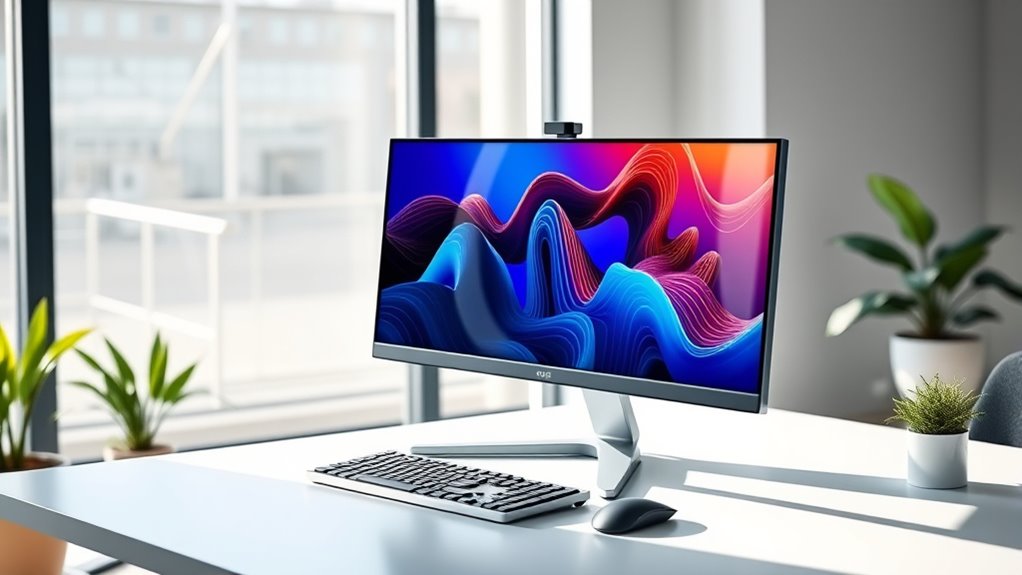
Using a single monitor helps you cut through digital clutter, making it easier to focus and work deeply on tasks. It streamlines your workflow, reduces distractions, and minimizes eye strain and mental fatigue. With fewer screens to manage, you can prioritize effectively and stay organized. Simple adjustments and smart tools can maximize your efficiency. Keep exploring, and you’ll discover how embracing a one-screen workflow can transform your productivity and clarity.
Key Takeaways
- A single monitor reduces visual clutter, enhancing focus and minimizing distractions for deeper concentration.
- It streamlines workflow and task management, making prioritization and switching more efficient.
- High-quality, flicker-free monitors improve visual clarity and reduce eye strain during extended work sessions.
- Simplifying workspace setup promotes better ergonomics and enhances overall mental clarity.
- Limiting to one screen fosters task-focused flow states, boosting productivity and reducing digital fatigue.
The Advantages of Minimal Distraction
Having just one monitor helps you stay focused by reducing visual clutter and minimizing distractions. When your workspace is simplified, you can concentrate more effectively on your tasks, boosting multitasking efficiency. With fewer screens vying for your attention, your mind isn’t pulled in multiple directions, allowing for clearer thought and quicker decision-making. The visual simplicity of a single monitor creates a calmer environment, making it easier to prioritize important work without getting sidetracked by unrelated windows or notifications. This streamlined setup encourages you to stay engaged with your current task, rather than switching back and forth between multiple screens. Additionally, a single monitor setup reduces potential hazards associated with hydrogen safety and the risks of explosion or leaks, promoting a safer workspace overall. Simplifying your workspace also enhances your visual ergonomics, which can help prevent strain and fatigue during long working hours. Incorporating ergonomic accessories like adjustable monitor stands can further improve posture and comfort. Implementing a single monitor setup supports better workspace organization, leading to a more efficient and less stressful work environment. Ultimately, embracing minimal distraction enhances your productivity and helps you work more efficiently, all while maintaining a clean, organized workspace.
Enhancing Focus and Deep Work
By reducing your workspace to a single monitor, you can effectively minimize distractions and keep your attention on the task at hand. This setup helps you deepen your concentration levels, making it easier to enter a state of flow. As a result, you’ll find it simpler to achieve sustained focus and produce high-quality work. Additionally, simplifying your workspace aligns with the principles of maximizing space and organization, promoting a clutter-free environment that supports mental clarity. Using a single monitor can also reduce the temptation to overcomplicate your setup, fostering a more streamlined workflow that enhances overall productivity. Incorporating an organized soundscape can further improve your focus and create an immersive work environment. Emphasizing focused workspaces tailored to your needs can maximize your ability to sustain deep concentration. Moreover, adopting a minimalist setup can positively impact your mental well-being by reducing stress associated with clutter and complexity.
Minimize Distractions Effectively
To truly maximize your focus, it is essential to minimize distractions effectively. Start with digital decluttering: close unnecessary tabs, disable non-essential notifications, and organize your digital workspace. Set clear multitasking boundaries by dedicating specific time blocks for tasks, avoiding constant context switching. Limit your alerts to essential apps only, reducing interruptions. Create a dedicated, clutter-free workspace that minimizes physical distractions. Establish routines that signal your focus periods, helping your brain stay in deep work mode. Prioritize tasks to prevent feeling overwhelmed. By controlling both digital and physical environments, you’ll sharpen your concentration and work more efficiently. Remember, a single monitor simplifies this process, making it easier to maintain focus and avoid temptation. Additionally, understanding the importance of a single-monitor setup can significantly enhance your ability to stay on task and reduce cognitive overload.
Deepen Concentration Levels
A clutter-free workspace and digital organization set the foundation for deeper focus, but true concentration requires actively training your mind to stay engaged. When you minimize visual distractions, your multitasking efficiency improves, allowing you to dive deeper into your work. Visual simplicity helps prevent your mind from wandering, making it easier to maintain sustained attention. By limiting your screen to a single monitor, you reduce the temptation to switch between tabs or apps, encouraging you to focus fully on one task at a time. This intentional setup nurtures a state of flow, where your brain can operate at peak levels of productivity and creativity. Over time, cultivating this disciplined environment deepens your farmhouse bedroom concentration levels, enabling you to produce higher-quality work with less mental fatigue. Additionally, minimizing screen clutter can help reduce digital fatigue, making it easier to sustain focus over longer periods, and can also support the development of single-tasking habits that enhance overall efficiency. Incorporating these practices aligns with the importance of understanding the resources and tools available for effective concentration. Furthermore, leveraging AI-driven productivity tools can assist in maintaining focus by blocking distractions and providing timely reminders to stay on track.
Streamlining Your Workflow and Tasks
A single monitor helps you cut down on distractions, making it easier to stay focused. With fewer screens, you can simplify task management and prioritize what matters most. This streamlined setup boosts your productivity and keeps your workflow smooth and efficient. Additionally, a high-quality monitor can improve visual clarity and reduce eye strain during long work sessions, especially when considering color accuracy and display ergonomics. Moreover, choosing a monitor with flicker-free technology can further enhance comfort during extended use, supporting a healthier and more comfortable workspace environment. Ensuring proper air quality in your workspace can also contribute to better concentration and overall well-being.
Minimize Distractions Effectively
When you focus on a single monitor, it becomes much easier to minimize distractions and keep your workflow streamlined. Digital minimalism encourages you to reduce clutter, which directly impacts your ability to stay focused. To achieve this, try:
- Closing unnecessary tabs and applications to limit visual noise.
- Organizing files and icons to avoid clutter and quicken access.
- Turning off notifications that interrupt your work.
- Keeping your workspace tidy to prevent physical and digital distractions.
Additionally, limiting your workspace to essential tools can improve your overall productivity and focus. Ensuring your equipment is certified and authentic, such as verified Patchology products, can also support a smoother workflow by reducing unexpected issues caused by subpar or counterfeit items. Regularly assessing your setup for digital clutter can further enhance your concentration and efficiency, promoting healthier digital habits that sustain long-term focus. Incorporating necessary cookies to streamline your browsing experience can also help maintain your workflow without unnecessary interruptions.
Enhance Focus and Productivity
By reducing digital clutter and closing unnecessary tabs, you can create a focused environment that makes it easier to streamline your tasks. This minimizes distractions and boosts your multitasking efficiency by preventing constantly shifting attention. With a single monitor, your screen real estate is fully dedicated to your current task, helping you stay engaged and organized. Instead of juggling multiple windows or screens, you can focus on one thing at a time, reducing mental fatigue and errors. This streamlined setup encourages deeper concentration and faster completion of tasks. When your workspace is clear and prioritized, you spend less time switching between applications and more time making progress. Overall, simplifying your digital environment enhances focus, making your workflow more productive and less stressful.
Simplify Task Management
Streamlining your workflow starts with simplifying task management, allowing you to focus on what truly matters. By adopting effective multitasking strategies and creating ergonomic setups, you reduce clutter and distractions. This helps you prioritize tasks efficiently and stay organized. Here are four ways to simplify your task management:
- Use a single, clear to-do list to track priorities.
- Allocate dedicated time blocks for focused work and breaks.
- Arrange your workspace ergonomically to reduce fatigue.
- Limit multitasking to avoid switching costs and maintain quality.
With a single monitor, you can better implement these strategies, minimizing the need to juggle multiple screens and apps. Simplified task management boosts your productivity and creates a smoother, more focused workflow.
Improving Visual Clarity and Reduced Clutter
With a single monitor, your workspace instantly becomes clearer and more organized. You eliminate multiple screens, reducing visual clutter and making it easier to focus. A well-designed monitor with high color accuracy enhances clarity, so images and text appear sharp and true to life. This minimizes eye strain and helps you read and interpret information more efficiently. An ergonomic design ensures your monitor is positioned correctly, improving posture and reducing discomfort during long sessions. When clutter is minimized, your workspace looks cleaner, and distractions fade away. This streamlined setup encourages a more focused workflow, allowing you to see everything clearly without toggling between multiple screens. Overall, consolidating to one monitor improves visual clarity while fostering a clutter-free environment.
Techniques for Effective Single-Screen Management
Managing your workspace effectively on a single monitor requires intentional organization and strategic habits. To optimize your workflow, adopt multitasking strategies that minimize switching and keep essential windows accessible. Maintain an ergonomic setup by positioning your monitor at eye level and using adjustable stands to prevent strain.
Here are four techniques:
- Use virtual desktops or tabs to organize tasks logically.
- Employ keyboard shortcuts to switch between applications swiftly.
- Resize and pin frequently used windows for quick access.
- Keep your workspace clean to reduce distractions and improve focus.
These habits help you stay productive without the clutter of multiple screens. By managing your single monitor with purpose, you’ll streamline your tasks and reduce fatigue, creating a more efficient work environment.
Tools and Apps That Support a One-Display Setup

To make the most of a single-monitor setup, you can leverage a variety of tools and apps designed to enhance your workflow and organization. Multitasking strategies like window management tools help you efficiently switch between tasks without cluttering your screen. Apps such as magnet, DisplayFusion, or FancyZones allow you to snap windows into predefined zones, maximizing space and reducing distractions. Additionally, productivity apps like F.lux or Iris help maintain ergonomic setups by adjusting screen brightness and color temperature, reducing eye strain during long hours. Virtual desktops or workspace managers enable you to organize different projects seamlessly within a single display. Using these tools, you can streamline your workflow, stay organized, and maintain comfort—all within a single monitor environment.
Overcoming Common Challenges of Single Monitor Use

While tools and apps can markedly improve your single-monitor experience, certain challenges still arise that can hinder your productivity. One common issue is multitasking challenges, which can make it hard to juggle multiple applications seamlessly. To address this, consider using window management tools to organize your workspace efficiently. Ergonomic considerations are also essential; poor positioning can cause discomfort or strain. Make sure your monitor is at eye level and take regular breaks to prevent fatigue. Additionally, mastering keyboard shortcuts can help you switch between tasks faster. Ultimately, limiting distractions on your screen helps maintain focus. By tackling these challenges head-on, you’ll optimize your one-screen workflow and enjoy a more productive, comfortable experience.
Real-Life Examples of Successful One-Screen Workflows
Real-life examples show that effective one-screen workflows are entirely achievable with the right setup and habits. Many professionals have overcome multitasking challenges by optimizing their workspace and maintaining ergonomic considerations. For instance, a graphic designer streamlined their process, reducing distractions and improving focus. A writer used dedicated zones for research and drafting, avoiding clutter and multitasking pitfalls. Here’s a glimpse of different workflows:
| Profession | Key Strategies | Results |
|---|---|---|
| Software Dev | Clear window organization, ergonomic chair | Faster coding, less fatigue |
| Content Creator | Single application focus, adjustable monitor | Increased productivity |
| Data Analyst | Shortcut mastery, minimal window switching | Better accuracy, less stress |
| Project Manager | Prioritized notifications, ergonomic setup | Seamless task flow |
| Customer Service | Streamlined info retrieval, ergonomic workspace | Improved response time |
Transitioning to a Single Monitor: Tips and Best Practices

Making the switch to a single monitor can seem intimidating at first, but with the right approach, it becomes a seamless shift that boosts your productivity. To succeed, focus on optimizing your workspace and refining your multitasking strategies. Here are four tips to get started:
- Arrange your monitor for ergonomic comfort, keeping the top of the screen at eye level.
- Use window management tools to organize your tasks efficiently.
- Prioritize tasks to minimize unnecessary switching between applications.
- Limit distractions by closing irrelevant tabs and notifications.
Frequently Asked Questions
How Does a Single Monitor Impact Multitasking Efficiency?
A single monitor can improve your multitasking focus by reducing distractions and helping you stay organized. With just one screen, you’re encouraged to prioritize tasks and keep your workspace organized, which boosts efficiency. You’ll find it easier to switch between projects without losing track of your progress, leading to a more streamlined workflow. Overall, a single monitor encourages better focus and organization, making multitasking more effective.
Can a Single Monitor Support All Types of Professional Workflows?
You can definitely make a single monitor work for most professional workflows, but it’s a balancing act. With high screen resolution and excellent color accuracy, you’ll see details clearly and work precisely. However, complex tasks like video editing or data analysis might be a stretch, like fitting a square peg in a round hole. Overall, a well-chosen monitor can support your needs, but be mindful of your specific requirements.
What Are the Ergonomic Benefits of Using One Screen?
Using a single screen promotes better ergonomic posture by reducing the need to turn your head and neck frequently, which minimizes strain. It also helps cut down eye strain because you focus on one consistent display rather than shifting between multiple monitors. With proper placement, you maintain a neutral position, decrease fatigue, and improve comfort during long work hours, making your workspace healthier and more efficient.
How Do I Choose the Right Monitor Size for a Single-Display Setup?
Think of your monitor as a window to your world—choose the right size to see clearly. For a seamless single-display setup, consider monitor size considerations like desk space and viewing distance. Opt for high display resolution options, such as 4K or QHD, to guarantee sharp images and detailed work. A 24-27 inch monitor often strikes the perfect balance, giving you ample workspace without overwhelming your environment.
Are There Specific Industries or Professions That Benefit Most From One Monitor?
You’ll find that creative industries and data analysis professionals benefit most from a single monitor. In creative fields like graphic design or video editing, a single, large screen helps you focus on detailed projects without distraction. Data analysts also prefer one monitor for smoother workflows, allowing you to seamlessly view data sets and reports side-by-side. This setup enhances efficiency, reduces clutter, and keeps your focus sharp across your tasks.
Conclusion
Embracing a single monitor is like tuning a finely crafted instrument—you’ll find clarity and harmony in your workflow. With fewer distractions, your focus sharpens, allowing ideas to flow seamlessly. While it may seem like a small change, this shift can transform your work into a smooth, unbroken melody. Give it a try, and watch how your productivity blossoms, turning chaos into a symphony of efficiency on a single, powerful screen.