
Despite the rise of digital tools, you still need a printer for essential tasks like official documents, backups, or when digital access isn’t available. Printed copies are reliable, easier to review, and often required for legal or organizational reasons. Modern printers are eco-friendly and designed to reduce waste, making responsible printing possible. If you’re curious about how printers fit into a mostly paperless world, there’s more to take into account about when and why you might still need one.
Key Takeaways
- Printers remain essential for official documents, signed contracts, and physical backups despite digital alternatives.
- Eco-friendly printers with low energy and ink use support sustainable practices when printing is necessary.
- Digital formats can fail; printed copies provide reliable, tangible access to important information.
- Certain professions benefit from printed materials for presentations, reviews, and hands-on activities.
- Balancing technology and eco-conscious choices ensures printing remains practical without harming the environment.
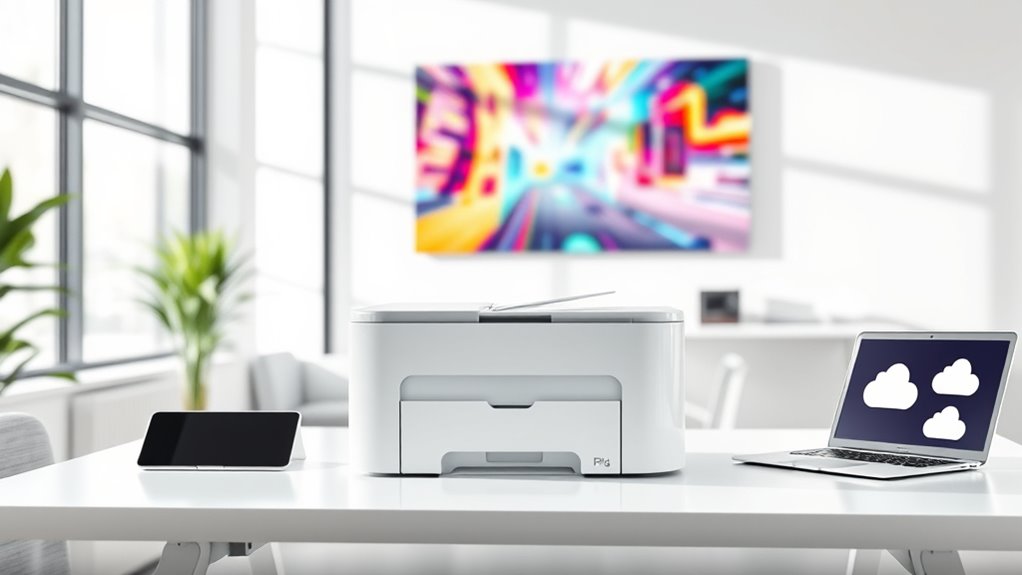
Although many industries have shifted toward a paperless future, printers still play a vital role in everyday life. You might think that with digital documentation becoming the norm, there’s little need for a physical printer anymore. While it’s true that digital files, cloud storage, and online collaboration tools have reduced reliance on paper, having a printer can still offer significant advantages. For instance, in situations where digital access isn’t reliable or convenient, printed copies serve as a dependable backup. Plus, some documents—like signed contracts or official reports—still often require a physical version for legal or organizational reasons.
Despite digital progress, printers remain essential for backups and official documents.
Moreover, modern printers are increasingly eco-friendly, making them less of an environmental burden than in the past. Eco-friendly printing options, such as printers that use less ink and energy or support recycled paper, enable you to reduce your ecological footprint. When you choose a printer with eco-conscious features, you’re actively participating in sustainable practices without sacrificing convenience. This is especially important as businesses and individuals grow more aware of their environmental impact and seek ways to minimize waste. Additionally, digital documentation, while convenient, isn’t always perfect. Screens can fail, files can be corrupted, and sometimes printed material is easier to review or annotate. Being able to print important documents quickly, especially in high-quality formats, ensures you’re prepared for various situations.
In some cases, having a printer provides efficiency in workflows. For example, architects, designers, and educators often need to produce physical copies for presentations, reviews, or classroom activities. While the trend is moving toward digital sharing, the tactile experience of paper remains relevant in many fields. Plus, with the integration of eco-friendly printing practices, you’re not just printing for the sake of it—you’re doing so responsibly. You can choose printers that support recycled inks, have automatic duplexing to cut paper use in half, or operate with lower energy consumption. These features make printing less wasteful and more aligned with sustainable values.
Furthermore, advances in projector technology are making visual presentations more dynamic, reducing some reliance on printed materials in certain contexts. Ultimately, whether you need a printer depends on your specific needs and habits. If you handle a lot of documents that require physical copies, or if you value having a reliable backup, investing in one makes sense. Modern printers, with their eco-friendly options and compatibility with digital documentation, strike a balance between convenience and environmental responsibility. Even in a digital world, the ability to print when necessary remains a practical and sometimes essential tool.
Frequently Asked Questions
Can Printers Be Environmentally Friendly?
Yes, printers can be environmentally friendly. You can choose models that support recycling programs, helping reduce waste. Using eco-friendly ink options minimizes harmful chemicals and boosts sustainability. Opting for energy-efficient printers also cuts down on electricity use. By maintaining your printer properly and recycling cartridges, you contribute to a greener environment. These steps make it easier to enjoy printing while respecting the planet’s health.
What Are the Costs of Maintaining a Printer?
Keep in mind, printers can be money pits if you’re not careful. You’ll face ongoing ink costs and maintenance expenses that can add up quickly. Regularly replacing ink cartridges, cleaning, and fixing jams drain your wallet over time. It’s like pouring water into a leaky bucket. Before you decide, weigh these costs against how often you print—sometimes, going paperless saves more than just trees.
Are There Alternative Ways to Share Printed Documents?
Yes, you can share printed documents through digital sharing or cloud printing. Digital sharing allows you to send files directly via email or messaging apps, eliminating the need to print. Cloud printing lets you print documents remotely from any device connected to the internet, making sharing more convenient. These alternatives reduce paper waste, save costs, and streamline your workflow, making traditional printing less necessary in today’s digital world.
How Secure Are Printed Documents Compared to Digital Ones?
Printed documents are like sealed vaults—generally more secure than digital ones, but not foolproof. Digital footprints can be traced, yet data encryption adds a layer of protection. You hold the key to security; proper handling of printed materials minimizes risks, while digital files require encryption and secure storage. Ultimately, both methods have vulnerabilities, but understanding their differences helps you decide which best safeguards your sensitive information.
Will Printers Become Obsolete Soon?
Printers may become obsolete soon as digital alternatives continue to improve, making paperless options more convenient and eco-friendly. However, printer longevity varies depending on your needs; some industries still rely heavily on printed documents for security or legal reasons. If you primarily work digitally, you might not need a printer anymore. But for occasional or specialized printing, investing in a durable model could still serve you well for years.
Conclusion
So, as you weigh your options, remember that the world is moving towards a paperless future. If you think a printer still fits your needs, be prepared for the changing landscape, or you might find yourself caught between a rock and a hard place. Sometimes, it’s better to adapt now rather than scramble later. The choice is yours, but staying ahead of the curve can save you from being left in the dust.