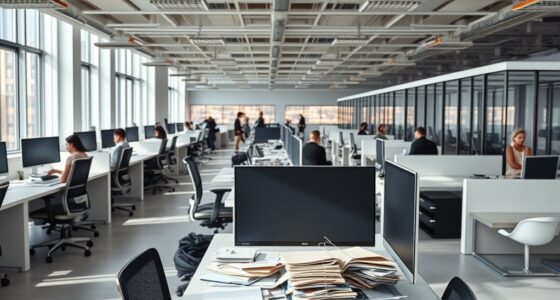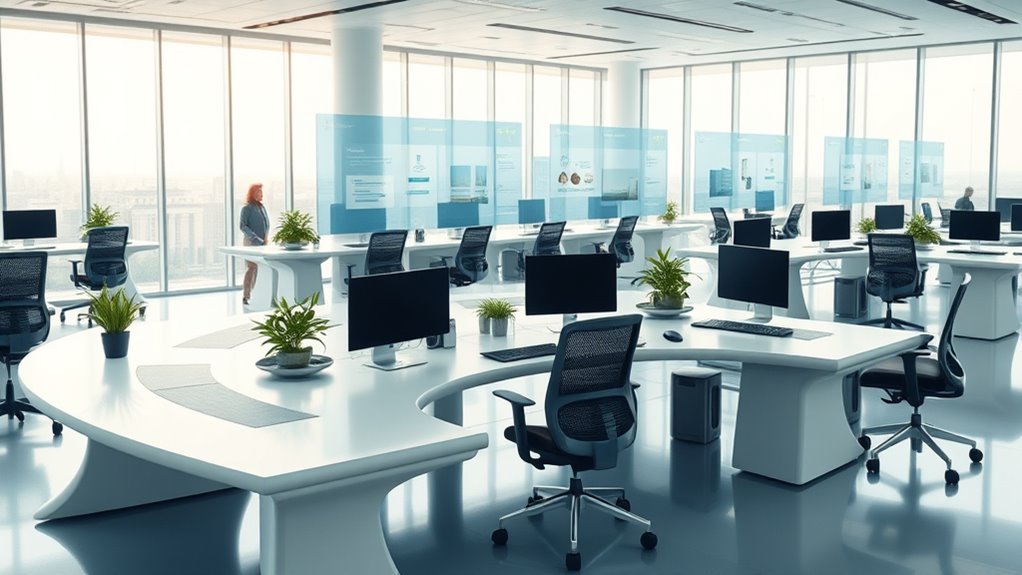

AI is increasingly shaping the design of future offices by creating smart, adaptable layouts tailored to your work needs. It analyzes data on how you interact, move, and collaborate to optimize space, lighting, and comfort. AI also integrates smart building systems for better energy use and environmental control. While ethical questions remain, responsible AI use can enhance your workspace’s inclusivity and efficiency. If you want to explore how AI is transforming work environments further, keep exploring what’s ahead.
Key Takeaways
- AI is increasingly used to analyze work patterns and optimize office layouts for productivity and collaboration.
- Smart building technologies powered by AI enhance energy efficiency and environmental comfort in workplaces.
- Ethical considerations, such as privacy and bias, are critical in AI-driven office design processes.
- Human-centered design remains vital to ensure AI creates inclusive, emotionally supportive work environments.
- The future of workspace design involves responsive, adaptable offices shaped by AI and real-time data insights.
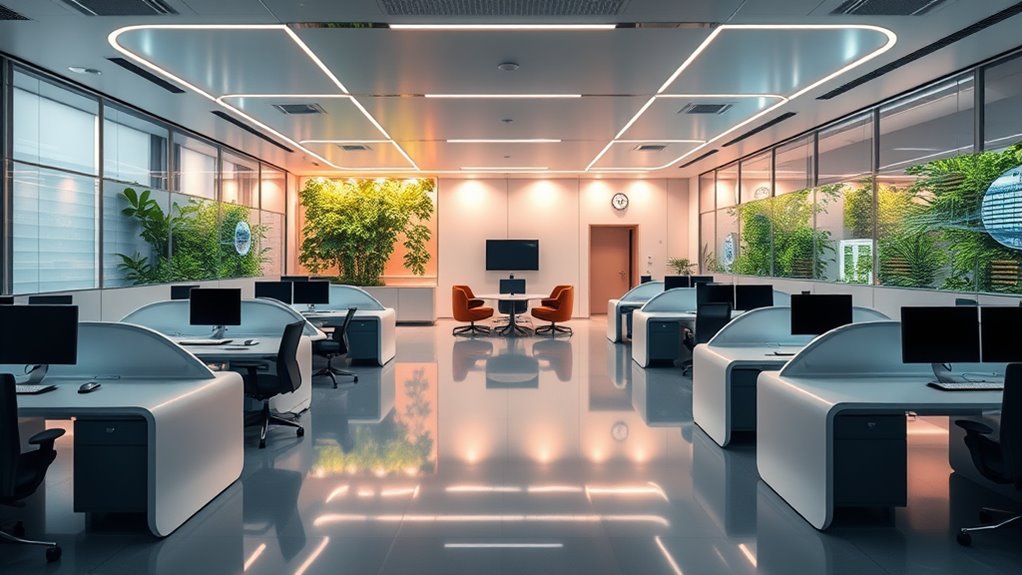
As artificial intelligence continues to evolve, it’s transforming how we design and experience future office spaces. You might wonder if AI will take over the creative process, shaping layouts and features that optimize productivity and comfort. The answer is yes, to a large extent. AI creativity is now enabling architects and designers to craft smart layouts tailored to specific needs, integrating data-driven insights about how people work, interact, and move through space. Instead of relying solely on traditional design principles, AI analyzes patterns and behaviors to suggest innovative configurations that maximize efficiency, natural light, and collaboration zones. It’s like having a creative partner that constantly learns and adapts, producing office environments that are both functional and inspiring. Additionally, AI can incorporate smart building technology to further enhance energy efficiency and user comfort in office design.
However, as you contemplate AI’s role in designing future offices, you also need to acknowledge the ethical implications involved. Using AI to shape workspaces raises questions about privacy, bias, and decision-making transparency. For instance, AI systems might inadvertently reinforce existing inequalities if they’re trained on biased data, leading to layouts that favor certain groups over others. Additionally, the collection of employee data to inform design decisions can pose privacy concerns, especially if there’s no clear consent or oversight. Making sure ethical AI use means establishing guidelines that prioritize fairness, transparency, and respect for individual privacy. As you embrace AI-driven design, it’s crucial to remain vigilant about these issues, making certain that the technology enhances inclusivity rather than undermines it.
Moreover, integrating AI into office design isn’t just about creating smarter layouts; it’s about fostering a balanced environment where human experience remains central. While AI can generate innovative, efficient designs, you still need to contemplate the emotional and social aspects of workspaces. The challenge lies in harnessing AI’s creativity without losing sight of human values, such as trust, collaboration, and well-being. That’s why ethical considerations must go hand in hand with technological advancements. As you move toward AI-designed offices, be proactive about addressing potential biases and safeguarding privacy. This way, you can make sure that AI serves as a tool for positive transformation rather than a source of unintended consequences.
In the end, AI’s role in designing future offices is promising but complex. It offers exciting possibilities for smarter, more adaptable work environments, driven by real-time data and innovative algorithms. Yet, you must navigate the ethical landscape carefully, promoting transparency, fairness, and respect for individual rights. When balanced correctly, AI can help craft offices that are not only efficient but also inclusive and human-centered, shaping the future of workspaces in a way that benefits everyone.
Frequently Asked Questions
How Will AI Address Privacy Concerns in Office Design?
AI addresses privacy concerns in office design by implementing strict privacy policies and prioritizing data security. You’ll find that AI systems are programmed to protect sensitive information, ensuring that personal data stays confidential. They also use encryption and secure storage methods to prevent unauthorized access. By adhering to transparent privacy policies, AI helps create a safe workspace where your data is protected, fostering trust and safeguarding your privacy at all times.
Can AI Incorporate Employee Preferences Into Workspace Layouts?
Yes, AI can incorporate your employee preferences into workspace layouts. Studies show that 78% of employees value customization options at work. By gathering employee input through surveys or real-time feedback, AI algorithms analyze data to create tailored environments that boost comfort and productivity. This personalized approach guarantees your workspace adapts to your needs, fostering engagement and satisfaction while optimizing overall office design.
What Role Does AI Play in Sustainable Office Design?
AI plays a key role in sustainable office design by optimizing energy efficiency and material sustainability. It analyzes data to reduce energy use through smart lighting and climate control, helping you save costs and cut emissions. AI also assesses materials for eco-friendliness, guiding you toward sustainable choices. By integrating these insights, AI guarantees your workspace is environmentally responsible, supporting your company’s sustainability goals while creating a healthier, more efficient environment for everyone.
How Adaptable Are Ai-Designed Offices to Future Technological Changes?
Your AI-designed office is incredibly adaptable, capable of evolving with lightning speed thanks to flexible configurations and future-proofing strategies. It intelligently anticipates technological shifts, ensuring your space remains cutting-edge for years to come. With AI’s dynamic adjustments, your workspace won’t just keep up — it’ll lead the way, transforming seamlessly as innovations emerge. This level of adaptability makes your office a futuristic marvel, ready for anything the tech world throws its way.
Will Ai-Designed Offices Reduce or Increase Real Estate Costs?
AI-designed offices are likely to reduce real estate costs through improved cost efficiency and space optimization. By intelligently analyzing your needs, AI can create layouts that maximize every square foot, minimizing wasted space and lowering expenses. This targeted approach helps you get more value from your investment, making your workspace more affordable and adaptable to future growth or changes. Overall, AI’s smart design benefits your bottom line by making your space work harder for you.
Conclusion
As AI takes the helm in designing your next office, it’s like having a visionary artist painting your workspace’s future, blending innovation with comfort. With smart layouts that adapt to your needs, your work environment transforms into a living, breathing space that boosts productivity and sparks creativity. Embrace this technological brushstroke, and watch your office evolve into a masterpiece where work and inspiration collide seamlessly, shaping a future as bright and dynamic as your ambitions.