Choosing between a co-working space and a home office depends on your work style and goals. If you thrive in a structured environment with social interactions, a co-working space can boost your productivity through focus and accountability. However, if you value flexibility and personalized surroundings, a home office offers control over your schedule and comfort. To discover the best fit for your needs and maximize your potential, explore the key differences further.

Get your wardrobe favorites delivered free with Prime
- Fast, free delivery on millions of items
- Prime Video, Amazon Music and more included
- Member-only deals all year
Key Takeaways
- Co-working spaces promote focus through dedicated workstations and professional surroundings, boosting productivity.
- Home offices offer flexible, personalized environments but may face distractions, impacting work efficiency.
- Co-working spaces foster motivation via social presence and accountability, enhancing overall work output.
- Home offices provide control over routines and comfort, which can improve productivity if boundaries are well managed.
- The most productive environment depends on individual work style, goals, and ability to maintain discipline and boundaries.
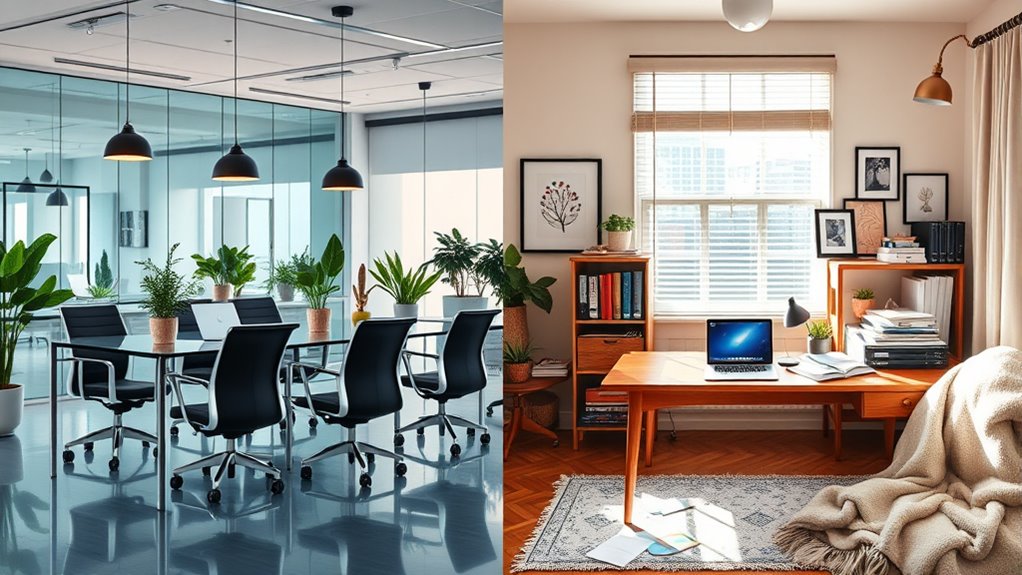
Have you ever wondered whether a co-working space or a home office is better for your productivity? It’s a common dilemma, especially when you’re trying to optimize your work environment. The office environment plays a vital role in how effectively you get things done. Co-working spaces are designed to foster focus, collaboration, and motivation, often providing a professional atmosphere that mimics a traditional office. They’re equipped with dedicated workstations, high-speed internet, and communal areas that encourage interaction. This setup can boost your productivity by reducing distractions and creating a sense of accountability. When you’re surrounded by other driven individuals, it’s easier to stay motivated and committed to your tasks.
On the other hand, working from home offers a different kind of environment—one that’s flexible and tailored to your personal preferences. You have the freedom to customize your space, which can make your workday more comfortable. However, the home office environment can also blur the lines between work and personal life, making it harder to maintain a healthy work-life balance. When your home doubles as your workspace, it’s tempting to work irregular hours or get distracted by household chores, family, or entertainment. This mixture of personal and professional life can lead to burnout or decreased productivity if boundaries aren’t managed carefully. Implementing routine management can help create structure and improve focus in both settings.
The decision between a co-working space and a home office ultimately depends on your work style and priorities. If you thrive in a structured environment and value social interaction, a co-working space might be the better choice. It can help you stay disciplined, foster networking opportunities, and keep your work separate from your personal life, which supports a better work-life balance. Conversely, if you prefer solitude, flexibility, and control over your environment, working from home could be more suitable. Just keep in mind that you’ll need to establish routines and boundaries to prevent your personal life from encroaching on your work time.
Both options have their advantages, but the key to boosting productivity lies in creating an environment that aligns with your habits and goals. Whether you choose a vibrant co-working space or a cozy home office, understanding how your surroundings influence your focus will help you make the most of your workday. Ultimately, it’s about finding the right balance and environment that fuels your motivation and keeps your work-life balance healthy.
Frequently Asked Questions
How Does Commute Time Affect Overall Productivity?
Long commute times can negatively impact your overall productivity by increasing stress and reducing time for work or rest. When you spend hours in transit, remote distractions and office noise often become less manageable, making it harder to focus. Shorter commutes help you start your day fresh, stay engaged, and maintain a better work-life balance, ultimately boosting your efficiency and satisfaction throughout the day.
What Role Does Social Interaction Play in Work Efficiency?
Social interaction considerably boosts your work efficiency by fostering virtual collaboration and expanding your networking opportunities. When you engage with colleagues, you share ideas more freely, solve problems faster, and stay motivated. Whether in a co-working space or through online platforms, connecting with others helps you stay engaged and creative. This active exchange of insights and support enhances your productivity, making work feel more connected and less isolating.
Are There Specific Jobs That Benefit More From Co-Working Spaces?
If you work in industry-specific tasks or creative professions, co-working spaces tend to boost your productivity. These environments foster collaboration, spark inspiration, and provide access to diverse ideas, making them ideal for tasks that thrive on teamwork or innovation. You benefit from networking opportunities and a vibrant atmosphere that fuels creativity, helping you stay motivated and focused on your project goals more effectively than working alone at home.
How Does Work-Life Balance Differ Between the Two Environments?
Imagine working from a co-working space, where clear boundaries help you disconnect after hours, versus a home office where flexible hours blur work and personal time. You find it easier to set boundaries in a co-working space, improving your work-life balance. At home, flexible hours can sometimes make it harder to switch off, leading to burnout. Ultimately, your environment influences how well you balance work and life.
What Are the Costs Associated With Each Workspace Option?
You’ll find that in a co-working space, costs include rent expenses and shared office equipment, which can add up monthly. At home, expenses are lower, mainly for office equipment like desks or printers you purchase yourself. While a home office saves you money on rent, you might spend more on quality office gear. Consider your budget and needs to determine which workspace offers the best value for you.
Conclusion
Ultimately, choosing between a co-working space and a home office depends on your work style. Did you know that 74% of remote workers report increased productivity when working in a dedicated workspace? If you thrive on social interactions and structured environments, a co-working space might boost your output. But if you value flexibility and minimal distractions, your home office could be the better fit. Consider what environment helps you stay focused and motivated every day.
Fall Picks
fall essentials
As an affiliate, we earn on qualifying purchases.